Skip to content

Posts from the ‘Books’ Category

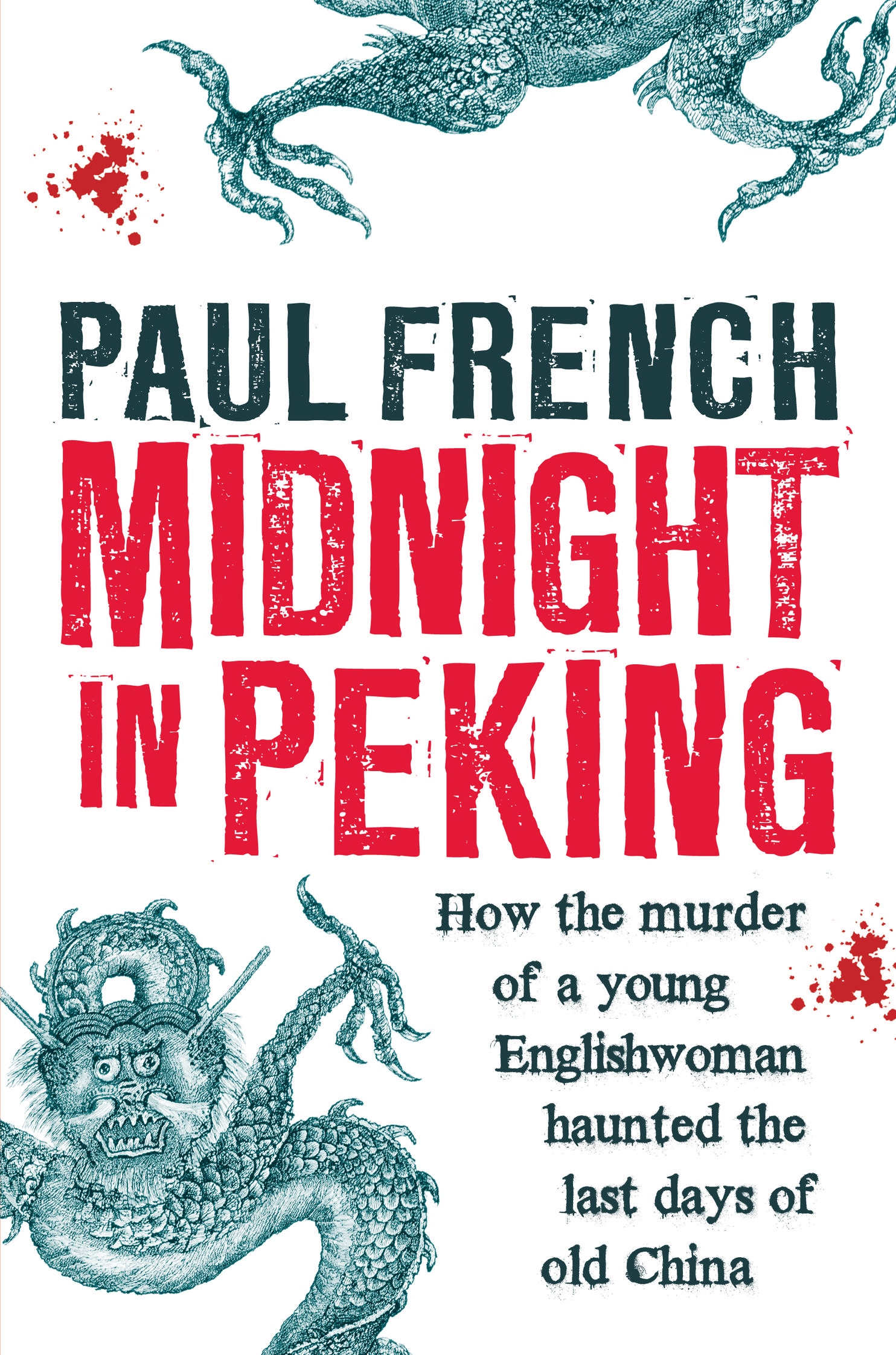
Midnight in Peking

I’ve been meaning to write something about Paul French’s fabulous new book Midnight in Peking for a while, but because I’ve been too busy to finish it I haven’t quite got round to it. What I have read of it is fantastic, not just because the story of the brutal and perplexing murder of a young British woman in Peking in 1937 the book investigates is so fascinating, but because Paul brings the world he is exploring so vividly and grippingly to life. I often suspect the sheer complexity of early 20th century Chinese history is rather lost on Anglophone audiences, but I’m not sure I’ve read a better illustration of those complexities, or the tenseness of the moment preceding the Japanese occupation than Paul’s book.

All of which is a roundabout way of saying that if you’re in Melbourne this weekend you should definitely make time to catch one of Paul’s sessions at Melbourne Writers’ Festival. I’ve seen Paul (who I got to know during my time in Shanghai in 2005) on panels before, and he’s just compulsively interesting, not just about the China of the 1920s and 1930s, but about contemporary China as well.

Details of Paul’s sessions are available on the MWF website, but I reckon the one to catch would be the conversation with Paul at 4:00pm on Sunday. I really do recommend you make time to catch it because if his past performances are anything to go by it’ll be great. And if you’d like to read the book you can check prices on Booko.

Ten Short Stories You Must Read In 2011

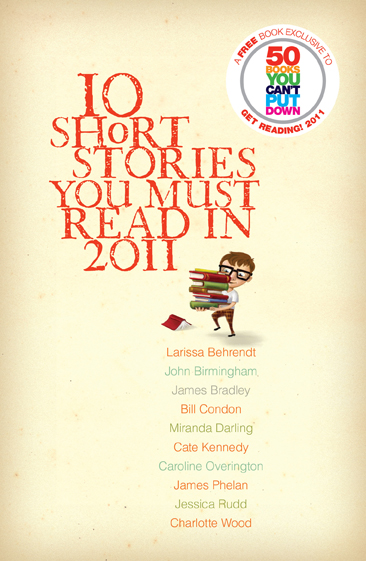
Today marks the launch of Get Reading 2011, an Australia-wide program designed to promote books and writing. As part of the campaign anybody who buys a book in a participating bookshop will receive a free book, Ten Short Stories You Must Read in 2011, featuring contributions from John Birmingham, Charlotte Wood, Caroline Overington, Cate Kennedy, Larissa Behrendt and myself (amongst others).

I haven’t seen an actual copy of the book yet, so I can’t wax lyrical about the contributions of my fellow authors, but I can say I’m pretty pleased with my story, ‘The Flats’, which is set near where I grew up in Adelaide, and is about three boys who accidentally see something terrible.

As I say, the collection is being given away for free with any purchase at all participating bookshops. My understanding is bookshops will also have copies of this year’s 50 Books You Can’t Put Down guide, but if you’re in a hurry you can also download it from the Get Reading website, which also has information on the various events taking place as part of the program and links to download the Get Reading 2011 app. You can also find Get Reading on Twitter and Facebook.

Get Reading 2011 runs until 30 September.

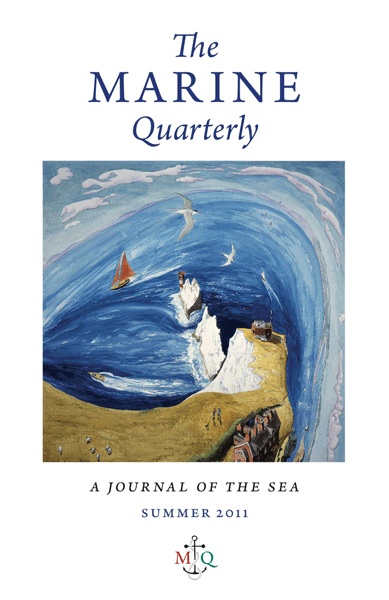
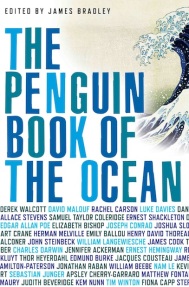
The Marine Quarterly reviews The Penguin Book of the Ocean

In amongst accounts of sailing the Falklands and advice on how to swim the English Channel, the Summer issue of the (rather fabulous) Marine Quarterly has a short review of The Penguin Book of the Ocean:

“It may be hard to get hold of the Penguin Book of the Ocean, edited by James Bradley, because it is published by Penguin Australia, and there are no plans to publish it in Britain. Goodness knows why. Many seagoing miscellanies are litanies of shipwreck and disaster. While I appreciate that a seagoing miscellany without shipwreck is like bread without salt, there are other aspects that should be considered. Bradley has done just that. He has reintroduced Rachel Carson’s marvellous The Sea Around Us, and unearthed passages of Thoreau, Hakluyt, Darwin, Steinbeck and Jonathan Raban, to name but a few, mingling them with plenty of very good poetry and a spot of surfing. As well as being a good read in its own right, this is a sampler for anyone looking for the foundations of a library of sea reading.”

Obviously you all own multiple copies of the book already, but with Father’s Day coming up on Sunday week, surely now’s the moment to buy another

Are books dead?

Many of you will have already read the condensed version of Ewan Morrison’s talk at the Edinburgh Book Festival, which was published in The Guardian on Monday. If you haven’t, you should: it provides a bracingly unsentimental account of the difficulties facing publishing in general and authors in particular as the print economy transitions to digital. Central to Morrison’s argument is an assumption the transition to ebooks will be rapid, that the same pressures from piracy and consumer behaviour that have reshaped the economics of other industries will drive book prices down to levels which are incapable of supporting authors, and that this in turn will lead to the fairly rapid collapse of the economy of advances and royalties that has sustained professional writers.

It’s unlikely to come as a surprise to regular readers of this blog that I largely agree with Morrison’s arguments. One of the odder aspects of the discussion of the challenges facing the publishing industry over the past few years is the collective delusion that somehow publishing will be shielded from the disruption experienced by industries such as the music industry. I’ve lost count of how many times I’ve heard people say things like “people will always want books”, “there’s something special about browsing in a bookshop” or “my seven year-old loves reading, therefore there’s no crisis”. All those things might well be true, but it’s not going to hold back a tide of change driven by a fundamental shift in the economics of the industry.

All that said, I think Morrison’s article should be read as much as provocation as thesis. There’s little doubt it’s framed within a well-founded unease about the increasing cultural power of behemoths such as Amazon, Google and Apple, or that it wants individuals and governments to at least question our assumption that we have no capacity to manage this transition (Robert Darnton has been making  similar argument in his campaign against the Google Book Settlement).

I’m with Morrison on this. Governments need to understand the interests of citizens and corporations are not the same thing, especially when it comes to the control of culture. But I also think Morrison’s provocations cause him to if not overreach, then certainly to assume the future will be neater than I think it probably will be.

The first thing that’s worth saying is that while I think Morrison is right in arguing that the attachment of older readers to the codex book is unlikely to be replicated in younger readers, I think he’s wrong in assuming this will mean an end of the book altogether. Certainly it’s worth noting that parallel to the rise in digital formats has been a rise in print-on-demand and bespoke publishing. How big the market for these will be is unclear, but I suspect what we’re really looking at is a generational change in the material economy of the book, which will see it move from being a low-cost (or relatively low-cost) consumer good to being a more exclusive, prestige object.

Of course even if I’m right about this, that’s unlikely to make a big difference to either the large-scale economics of publishing or the bottom lines of authors. That difference has to be found in the digital economy, which will, as Morrison suggests, probably supplant the current print economy within a decade.

Morrison’s argument is that piracy will dramatically undercut the economics of publishing in the same way it did in the music industry, and that in the process it will drive a change in consumer attitudes. I suspect he’s part-right on both scores: piracy is an issue, and will become a bigger one in years to come. And the demand for lower and lower prices is real and increasing, as the spats around authors and publishers stressing the fixed costs of book production show.

But Morrison neglects what seems to me the other big lesson of the music industry, which is that as the success of the iTunes Store demonstrates consumers are prepared to pay for content if it’s easily available and priced competitively.

The next question is, of course, whether consumers are prepared to pay enough to support something that looks like the publishing industry as it currently exists. I’m not going to pretend I have an answer to this, but my feeling is the answer is yes and no. The past couple of years have been pretty ugly for a lot of publishers, with a bad Christmas last year and rapidly declining sales in the first half of this year. The figures are complicated by the rise in digital sales, but in Australia while the volume of physical book sales has held up because of the sell-offs of stock by Redgroup, value has fallen, fiction is down 10% and sales of the top 10 books are down by as much as 50% (some publishers speak privately of declines in sales of 25 and 30% across the board). Although at least some of this decline can be attributed to the exceptional circumstances such as the recession and the collapse of Redgroup in Australia and Borders in the US, they’re not the whole story, and if profits keep falling it won’t be long before publishers start having to restructure their operations.

That bland term, “restructuring” is really code for layoffs, reduced commissioning and cancellation of projects. And as such it can’t help but hurt both the people who work in the industry and writers. Morrison correctly asserts the “advance economy” is under siege (“10k is the new 50k”), arguing this economy has enabled a generation of writers to develop their craft. I think he’s attributing too much importance to advances, and that it’s actually the system of royalties underpinned by copyright that enable writers to work, but he’s not entirely wrong, and as advances disappear it will be increasingly difficult for many authors, especially literary authors, to make a living wage.

Obviously this is bad news for many writers and publishers. But again I’d argue the real lesson of the music industry is that as the initial disruption passed other business models began to appear, from Spotify to Bandcamp, as creators and publishers found new ways of reaching audiences. Some involve disintermediating the music labels and selling direct, others use quite different business models. But what they do demonstrate is that in the right circumstances consumers will pay for content, and that there are alternative distribution mechanisms to the Amazon/Apple/Google monopolies.

I’m not going to pretend I know what these mechanisms will be. I have some ideas, but I think one thing we can safely assume is that there will be many more of them than we’re currently used to, and each will serve different markets in different ways. Whether these new models will be capable of sustaining writers in the way the old system did seems to me to be an open question. I suspect the truth will be, as it’s always been, that not many writers will make a lot from their work, but I also suspect it’s going to get a lot harder quite quickly, especially for writers such as myself. But writers and publishers who are prepared to adapt and experiment will succeed.

Which brings me to the last two things I want to say. The first is that I think one counterweight to the general bleakness of Morrison’s argument is that the experience of the music industry has been that the decline of the traditional models has allowed much greater diversity to emerge, alongside a boom in things like music festivals, and my guess is the breakdown in traditional models is already engendering something similar in publishing. The hegemony of the poem/short story/novel division is already under siege, with publishers launching projects such as Pan Macmillan’s digital-only Momentum imprint, which will publish novellas and works not suited to print, and it’s quite clear there’s a hugely energetic community of writers and artists creating works which don’t fit into traditional categories all around us.

The other is that I think Morrison is right, and it is vital we stop assuming we are unable to use these processes to benefit the public as well as corporations. It is possible to find ways of supporting creators, whether that’s through traditional mechanisms such as direct grants or less traditional systems of licensing such as that administered in Australia by the Copyright Agency. And that governments need to be very wary of the agglomerating strategies of Google and others. Once again there’s unlikely to be a one-size-fits-all solution, but I’m not sure there ever has been, either in business or for writers.

The Rules of Genre

Apologies for the late notice, but if you’re a NSW Writers’ Centre member, you’re in Sydney and you’re at a loose end tonight, you could do a lot worse than heading out to the NSW Writer’s Centre for tonight’s Writing Genre: is it all about the rules? which features Margo Lanagan, P.M. Newton and myself kicking the genre can around. The event is members only (though I’m not going to claim to know how rigorously that rule is enforced) and bookings can be made by emailing the Centre.

“We have pierced the veneer of outside things”: Four books about Antarctica

Frank Hurley, Aurora alongside the ice off Western Base, 1911-1914

I’ve just finished a long review of Alasdair McGregor’s excellent new anthology, Antarctica: that sweep of savage splendour. The review will appear in the September Australian Book Review, but in the meantime I thought I’d post a link to a review I wrote back in 2005 of four books about Antarctica (including McGregor’s very impressive biography of Frank Hurley, A Photographer’s Life) which may be of interest, as well as pointing to my review of Jon Ronson’s rather fab The Psychopath Test, which appeared in last week’s Weekend Australian.

New Richmond Fontaine!

The new Richmond Fontaine album, The High Country (which interestingly seems to be a single narrative, thus further closing the gap between Willy Vlautin’s songs and his fiction) is due out in September, but in the meantime, live versions of two of the tracks have popped up, together with the news Willy’s first novel, The Motel Life, has just been turned into a motion picture directed by the Polsky Brothers and starring Stephen Dorff, Dakota Fanning and Kris Kristofferson.

Thanks to Jane Palfreyman for the heads-up.


2011 Man Booker Prize Longlist Announced

Alan Hollinghurst

The big news overnight is the announcement of the longlist for this year’s Man Booker Prize. As usual it’s a mixed bag, with books by heavy-hitters such as Alan Hollinghurst rubbing shoulders with books by relative unknowns such as Esi Edugyan, but this year it’s also heavy on Canadians (Alison Pick, Patrick deWitt, Esi Edugyan) and debut novels (Stephen Kelman, A.D. Miller, Yvette Edwards and Patrick McGuiness). There are no Australians on the list.

I’ve only read a handful of the books on the list, so I’m not going to offer any organised views about it beyond saying that while it looks like an interesting and reasonably diverse selection of books, the proof, as always, will be in what kind of shortlist it shakes out into.

Of the books I have read, I’m pleased to see Sebastian Barry’s On Canaan’s Side has made the cut: I’m reviewing it for The Australian so I won’t go into too much detail, but I will say that while I’m not sure it’s quite as good as his extraordinary 2005 novel, A Long Long Way (if you haven’t read it do so, now) it’s a very fine novel. Likewise I’ve read part but not all of the Hollinghurst and while again I’m not convinced it has the urgency and unity of The Line of Beauty, it’s also very, very good. That said I reviewed Carol Birch’s Jamrach’s Menagerie, which is based on the wreck of the Whaleship Essex and was also longlisted for the Orange Prize, and while I like it, I’m a little surprised to see it turning up here, though that’s less because I don’t rate it as a book than because its brand of highly coloured, almost ecstatic historical fiction (think Golding rather than Mantel) seems a little at odds with the tone of the list as a whole.

Of the things I haven’t read I’ve heard uniformly terrific things about Julian Barnes’ The Sense of an Ending, and I’m interested to see Jane Rogers, a writer who has been more than a little neglected in recent years make the list with what sounds like a piece of dystopian science fiction.

As always the other question is what’s not been included. The books the media have noticed are missing are Graham Swift’s Wish You Were Here and Anne Enright’s The Forgotten Waltz. Of the two I’m unsurprised by the omission of the Swift, which I’ve reviewed for The Age, and while again I don’t want to preempt the review I will say is really quite bad. I’m more surprised about the Enright: while it’s not as striking or as urgent as either her short fiction or her 2007 Booker-winner, The Gathering, it’s a quite dazzling book at a textual and technical level, demonstrating not just great psychological and social acuity, but the marvellous combination of steeliness and orality that so distinguishes Enright’s prose. I’m also slightly surprised by the omission of Malcolm Knox’s The Life, which I assume was eligible for the prize, and should, all things being equal, have been in contention.

The other big omission is China Miéville’s Embassytown, which had been widely tipped to bring Miéville the mainstream recognition he so plainly deserves. I don’t want to revisit the genre vs literary argument here, but to my mind the failure to even longlist a novel as rich and prismatic as Embassytown says something about the narrowness of our literary culture.

I’m sure others can think of other SF and Fantasy books that perhaps should have been included, but I’d like to mention one in particular, which is Jo Walton’s Among Others. I have no idea whether it was even submitted, but if it wasn’t that seems a pity, since it’s both a wonderful novel and a book I suspect is likely to appeal to literary readers as much as it does to a segment of the SF and Fantasy readership. I’m planning to write something about it soon, so I won’t go on about it too much here, except to say I enjoyed it immensely, and it’s very definitely a book that deserves a wider readership.

Anyway, enough about me. You can read more about the list at The Guardian and The Independent (or anywhere, really), read the official announcement for more information about the prize and the judges, or find links to samples from the longlisted books on Galleycat. The shortlist is announced on Tuesday 6 September and the winner on Tuesday 18 October. The full longlist is below.

Update: Two more books I’m surprised aren’t on the list. The conclusion to Edward St Aubyn’s Melrose Trilogy, At Last, and my agent David Miller’s wonderful short novel about the death of Conrad, Today. I’m sure more will occur to me as the day goes on …

Julian Barnes – The Sense of an Ending
Sebastian Barry – On Canaan’s Side
Carol Birch – Jamrach’s Menagerie
Patrick deWitt – The Sisters Brothers
Esi Edugyan – Half Blood Blues
Yvvette Edwards – A Cupboard Full of Coats
Alan Hollinghurst – The Stranger’s Child
Stephen Kelman – Pigeon English
Patrick McGuinness – The Last Hundred Days
A.D. Miller – Snowdrops
Alison Pick – Far to Go
Jane Rogers – The Testament of Jessie Lamb
D.J. Taylor – Derby Day


Embassytown

Just a quick link to my review of China Miéville’s Embassytown in this morning’s Weekend Australian. As the review hopefully makes clear, I think it’s Miéville’s best book by some distance: brilliantly conceived, powerfully imagined, thrillingly fertile, and while I do think there’s a slight slackening in the second half, when the narrative frame opens out to take in the large-scale breakdown of the society it depicts, the first half is so good it hardly matters. All of which is a roundabout way of saying just read it, it’s fabulous.

If you’d like to know more about the book you might want to check out Justine Jordan’s profile of Miéville in last week’s Guardian, or my reviews of his last two novels, Kraken and The City and the City. And I know I’ve linked to it before, but if you’re interested you can also read an excerpt from the first chapter on the Tor website.

Prime Minister’s Literary Awards Shortlists Announced

Heartfelt congratulations to my friend, Delia Falconer, whose very personal tribute to her home town, Sydney, has been shortlisted for the Non-Fiction Category of the Prime Minister’s Literary Awards, along with Paul Kelly’s How to Make Gravy and Richard McGregor’s excellent study of the Chinese Communist leadership, The Party and books by Rod Moss and Patrick Wilcken.

I meant to write something about Delia’s book when it came out, and while that got away from me, I think it’s a terrific book: startlingly intelligent, idiosyncratic and written with a very striking blend of steel and fluidity. If you haven’t read it I very much recommend you do.

Congratulations also to the other shortlisted writers. I’ve only had a few moments to look at them, but at first glance I’d say two things. The first is that the Fiction shortlist is overtly and unashamedly literary. And the second is that these shortlists are likely to add fuel to the arguments about the under-representation of women writers that were triggered by last month’s announcement of the second all-male Miles Franklin shortlist in a row. I don’t want to suggest Young Adult Fiction isn’t serious writing, but I think it’s difficult not to be struck by the fact that the two shortlists that would usually be regarded as the more overtly intellectual and literary – Fiction and Non-Fiction – each contain four books by men and one by a woman, while the less overtly literary category of Young Adult Fiction contains five books by women and none by men (the Children’s category is rather more evenly split).

But all that said, my congratulations to all the shortlisted authors, and especially to Delia. I wish you could all win, but I guess it doesn’t work that way.

Non-Fiction
Delia Falconer, Sydney
Paul Kelly, How to Make Gravy
Richard McGregor, The Party
Rod Moss, The Hard Light of Day
Patrick Wilcken, Claude Levi-Strauss: The Poet in the Laboratory

Fiction shortlist
Stephen Daisley, Traitor
Roberta Lowing, Notorious
Roger McDonald, When Colts Ran
David Musgrave, Glissando
Kim Scott, That Deadman Dance

Young Adult Fiction Shortlist
Laura Buzo, Good Oil
Cath Crowley, Graffiti Moon
Cassandra Gold, The Three Loves of Persimmon
Joanne Horniman, About a Girl
Melina Marchetta, The Piper’s Son 

Children’s Fiction
Bronwyn Bancroft, Why I Love Australia
Lucy Christopher, Flyaway
Morris Gleitzman, Now
Bob Graham, April Underhill, Tooth Fairy
Boori Monty Prior and Jan Ormerod, Shake a Leg

Metamorphoses

How do you do that? she asks, seated on the stairs to his loft, How do you know which notes to play without sheets?

Memory, he says, I do it by memory.

It is Boxing Day, and Anna has woken to the sound of the piano. Downstairs Seth seated before it, his fingers moving slowly across the keys.

What is it? I’ve never heard anything like it.

Seth smiles, his fingers continuing to pick out the notes in ones and twos, each separated by a gap, the space between them seeming as important as the notes themselves, the way they fade into it, leaving the memory of their resonance hanging. She shivers.

It doesn’t have a name, he says, An artificial intelligence composed it.

In front of her she can see the muscles in his back shift beneath his skin, the articulated cage of his ribs beneath them.

I have a recording of it, but I prefer to play it myself. There’s an alien quality to it, a sense of another way of being I can get closer to.

It sounds . . . sad. No, she corrects herself, listening to the strange, ghostly sound of the piano, the dying notes, not sad, something else I can’t quite describe, Like the sound of wind in grass or moving water, that quietness, that colourless feeling. She hesitates. Maybe I can’t find the words because there are no words.

It’s like trying to describe the sound of geometry, isn’t it? Can you imagine what it must be like to be conscious, aware, but without matter, without form? Without place. A ghost in a machine.

Anna shakes her head. But listening to the slow patterns of this music she can hear the loneliness of this thing of bits and light, this artificial mind shifting like the aurora through the circuits of some optical computer, like the siren call of a whale in the oceanic night, the long, clicking song that goes unanswered.

 From The Deep Field.

Geordie Williamson wins 2011 Pascall Prize for Criticism

Geordie Williamson

There may have been higher profile events at Sydney Writers’ Festival, but as far as I’m concerned the one I was most pleased to be a part of was last night’s Pascall Prize Ceremony, at which it was announced Geordie Williamson has won the 2011 Pascall Prize for Criticism.

As with last year’s decision to hand the Prize to Mark Mordue, it’s a decision that’s immensely pleasing on two levels. First and foremost it’s an excellent decision: Geordie is, without a doubt, one of – if not the – best critic working in Australia at the moment. Whether on radio, in print or in person he brings a level of erudition, generosity and eloquence to his subject which is incredibly rare, and which is complemented by his genuine and passionate belief in the importance of writing and literature. More importantly though, he’s one of those rare critics for whom everything holds interest and value: at the ceremony last night he spoke of his belief that criticism should be an open hand rather than a fist, words that seem to me to sum up a lot of what’s wonderful about his writing (and indeed about Geordie himself).

That generosity of spirit is also manifested in Geordie’s passion for Australian writing. As anybody who’s heard his regular spot on ABC 702 will know, he’s a tireless advocate for Australian writers and Australian writing, but he also works incredibly hard behind the scenes. In recent years he’s been a judge on the Vogel Award, the NSW Premier’s Awards (both of which are gigs which involve a huge amount of work for almost no remuneration) as well as appearing almost constantly at Festivals and other events around the country.

But last night’s decision was also incredibly satisfying because Geordie is one of my closest friends, and if there’s one thing better than people who deserve good things getting them, it’s people you know getting good things they deserve.

All of which is a roundabout way of saying I’m delighted, both for Geordie personally and more generally, and that I’m sure I’m not the only one. As the old saying goes, it couldn’t happen to a nicer guy (and I couldn’t be more pleased).

If by chance you’re not familiar with Geordie’s writing, it appears regularly in The Australian, but he also a Tumblr page, Forest of Dead Words, and you can follow him on Twitter.

Update: Geordie’s acceptance speech is now online. You can also read Mark Mordue’s speech and the Judges’ Report and a short piece by one of the judges, Damon Young, over at Damon’s blog Darkly Wise, Rudely Great (which if you don’t read, you should).

Mardi McConnochie on The Voyagers

Mardi McConnochie (photo by Gene Ross)

My apologies for the flurry of posts, but I just want to recommend you take a look at Angela Meyer’s interview with my partner, Mardi McConnochie, about her fabulous new novel, The Voyagers, which explores not just the genesis of the novel, but some of the historical and sociological background underpinning it. And as I mentioned yesterday, if you’d like to catch Mardi at Sydney Writers Festival she’ll be appearing on a number of panels, including ‘A Question of Character’ tomorrow, Au Pairs’ on Saturday and ‘Over Here’ on Sunday, as well as in conversation with Sophie Cunningham on Friday. And if you haven’t bought The Voyagers yet you can grab the ebook from the Kobo Bookstore, check hard copy prices on Booko or read an extract on the Penguin website.

When Genres Attack Part 2

As I mentioned the other day, last Friday night I was part of a special event about genre at Shearer’s Bookshop in Leichhardt along with Sophie Hamley, P.M. Newton and Kirsten Tranter. Given my ongoing interest in the question it was a fascinating to hear Kirsten and Pam’s views on the subject, as well as to hear a bit from the very warm, engaged and surprisingly large audience (who I would have liked to have heard more from if we hadn’t run out of time).

A couple of people live-tweeted the event under the hashtag #genrecagefight, but there have also been interesting blogposts about the event by Zena Shapter, Dwight Towers, Kylie Mason and Mark from Shearer’s itself. If you’ve got a moment do check them out.

This might also be a good moment to flag that once my edits on the new novel are done (oh, bright, blessed day) I’m planning on launching a new blog alongside this one, aimed at exploring SF and the classics of SF. It’s probably still a few months off, but I’ll let you know more once I’m a bit less overwhelmed by work.

Totally Hip Book Reviews

I’m a little muzzy this morning from last night’s Sydney Writers’ Festival Opening Party (oh yes, the writer’s life is a fabulous one) but one thing I definitely remember from last night was a conversation in which I was recommending Ron Charles’ hilarious video reviews to somebody. Since that person’s identity has now fled my mind, I thought I might use that conversation as an excuse to post his rather fabulous review of Jonathan Franzen’s Freedom. Unfortunately Ron’s taking a breather from producing them for a while, but if you’d like to see more you can visit The Washington Post’s Totally Hip Book Review page or Ron’s Youtube Channel. In the meantime, enjoy!