The Hobbit
The trailer for The Hobbit has been released …

Dec 21
Dec 19
 Saturday’s Weekend Australian had the first part of their Best Books feature, covering contributors from A-K, and including a list of my favourite books of the year. You can read that list there, but since it was a cut-down list I thought I might do a rather more comprehensive list here (just as I did in 2009 and 2010).
The first thing that needs to be said is that my reading this year has been a bit disorganised. As well as doing a lot of reviewing, I spent a big chunk of the year rereading some of the SF and Fantasy I loved as a teenager, with a particular emphasis upon New Wave writers from the 1960s and 1970s. Some of that material hasn’t travelled well (and I can report I still struggle with Delany) but a lot of it is as good as it was 30 years ago. Certainly books such as Silverberg’s Downward to the Earth and Le Guin’s The Word for World is Forest have more than stood the test of time.
Of what I did read a lot was fabulous. Despite the inexplicable;e decision of the Booker Prize judges to exclude it, one of the real highlights of the first half of the year was the final part of Edward St Aubyn’s Melrose Trilogy, At Last, a book that while the least of the three was so brilliantly written and beautifully crafted it scarcely mattered.
Alan Hollinghurst’s The Stranger’s Child was also left off the Booker shortlist, a decision that probably reflects the way the book divides readers (Daniel Mendelsohn’s review in The New York Review of Books is certainly worth reading). I don’t think it’s perfect – certainly the satire lacks the urgency of The Line of Beauty, and it takes a while to hit its straps – but it’s complex and moving and very funny nonetheless, to say nothing of being thrillingly good line by line.
Another Booker exclusion, and no less baffling despite its subject matter was China Mieville’s Embassytown. I don’t want to get into a slanging match about literary awards and genre books, but there’s no question in my mind that Embassytown establishes Mieville as a major, major writer, or that the first half of Embassytown was the most intelligent and exciting thing I read this year.
It’s tantalising to wonder what David Foster Wallace would have made of Mieville: both grapple with similar questions, and while their styles are very different, both seek to push language into shapes it’s not accustomed to. But sadly it’s not a question we’ll ever have an answer to. What we do have is The Pale King, the book Foster Wallace was working on at the time of his death, and a work that only serves to underline the tragedy of his decision to take his own life. Even unfinished it contains everything that made Foster Wallace such a prodigy: the brilliant prose, the wit, the massive intellect, yet it also offers a lyricism that was absent in a lot of the earlier work, and stands as a monument not just to Foster Wallace but to the efforts of his editor, Michael Pietsch, who assembled the book out of its constituent parts.
Still in North America I loved both Michael Ondaatje’s almost-memoir The Cat’s Table and the one book on the Booker Prize shortlist I did unreservedly enjoy, Patrick deWitt’s hallucinogenic Western, The Sisters Brothers (if you’d like to read more about my views on it check out my review of the Booker shortlist).
Of the Australian fiction I read this year (and for whatever reason I haven’t read a lot), I loved Malcolm Knox’s brilliantly vernacular surfing novel The Life, Georgia Blain’s fascinating exploration of the fault lines of contemporary middle-class life, Too Close to Home and Kerryn Goldsworthy’s instalment in New South’s series on Australian cities, Adelaide.
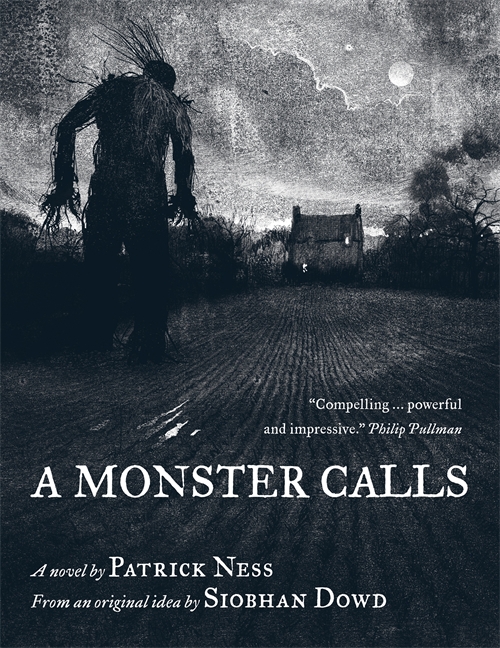
Of the Science Fiction and Fantasy I read I adored Jo Walton’s Among Others, not just because it’s a great novel but because it’s so pin-point accurate about its period, and a lot of Geoff Ryman’s collection of short fiction, Paradise Tales (if you’ve never read Ryman read ‘The Filmmakers of Mars’, and you’ll see why). I was also an early adopter of Lauren Beukes’ fabulous Zoo City, a book that’s brought Beukes much-deserved fame and (one hopes) fortune, as well as winning her a swag of awards. And while I’m not sure whether it really counts as Fantasy, I loved Patrick Ness’ A Monster Calls, a book that’s not only incredibly moving in its own right, but due to Jim Kay’s gorgeous illustrations and some lovely production by Walker Books is also one of the most beautiful objects I’ve seen this year.
I’ve also read several terrific things in the past fortnight, three of which deserve a mention here. The first is Maureen McHugh’s fantastic collection of short stories, After the Apocalypse. Despite recommendations on this site and Twitter I’d never quite gotten around to reading McHugh, but having now read After the Apocalypse and her 1992 novel, China Mountain Zhang off the back of it I’m mostly sorry I waited so long. If you haven’t read her you can download her 2005 collection, Mothers & Other Monsters for free from Small Beer Press, or check out one of the title story from After the Apocalypse in Jonathan Strahan’s Best Science Fiction and Fantasy Volume 6 early next year. Or just buy the book: it’s brilliant.
Two other recent reads I loved were Colson Whitehead’s Zombie novel, Zone One (although since I’m reviewing it for The Sydney Morning Herald I won’t say much other than while it takes a while to get going once it does it’s incredibly moving), and Ian McDonald’s immensely entertaining YA SF novel, Planesrunner (you can also read a long piece by me about McDonald’s last novel, The Dervish House, on The Spectator’s Book Blog).
But in the end there were probably four books I loved more than any others this year. The first was my partner Mardi McConnochie’s new novel, The Voyagers, a book I’ve recommended before but am happy to recommend again. The second was Lev Grossman’s brilliant sequel to The Magicians, The Magician King, a book that exceeds the promise of its predecessor in every way and contains one of the most wickedly intelligent and magnificently entertaining 100 pages you’ll read this year (you can read my review here). And the last two were Karen Joy Fowler’s amazing (and World Fantasy Award-winning) short story collection, What I Didn’t See (you can read an excerpt here) and Dana Spiotta’s stunning meditation on celebrity, family and loss, Stone Arabia (which is being published in Australia by Text in a few weeks and I’m reviewing for The Weekend Australian early in the New Year). All of them were wonderful, and rather than explain why I’ll just say buy them: you won’t be sorry.
Dec 5
I’d never quite got the Beirut thing until I heard their new album, The Rip Tide, but I’m now officially converted. Of the many lovely tracks on the album ‘Santa Fe’ is one of the best, but it also boasts the fantastic video below, which is both very funny and a very clever exercise in storytelling. The payoff comes late, but I promise it’s worth it …
I’ve not seen Oceans, the most recent documentary from Jacques Perrin and Jacques Cluzaud, the creators of Travelling Birds, but after seeing the two videos below I think I need to. The first is of sleeping whales, and is just luminously beautiful, while the second is of one of the strangest creatures I’ve ever seen, the Blanket Octopus (while we’re on the subject of octopi, you might also want to check out Sy Montgomery’s fabulous piece about octopi in Orion).
And in case it’s driving you crazy, that very sexy voice you can hear is Pierce Brosnan’s.
Thanks to io9 for the heads-up.
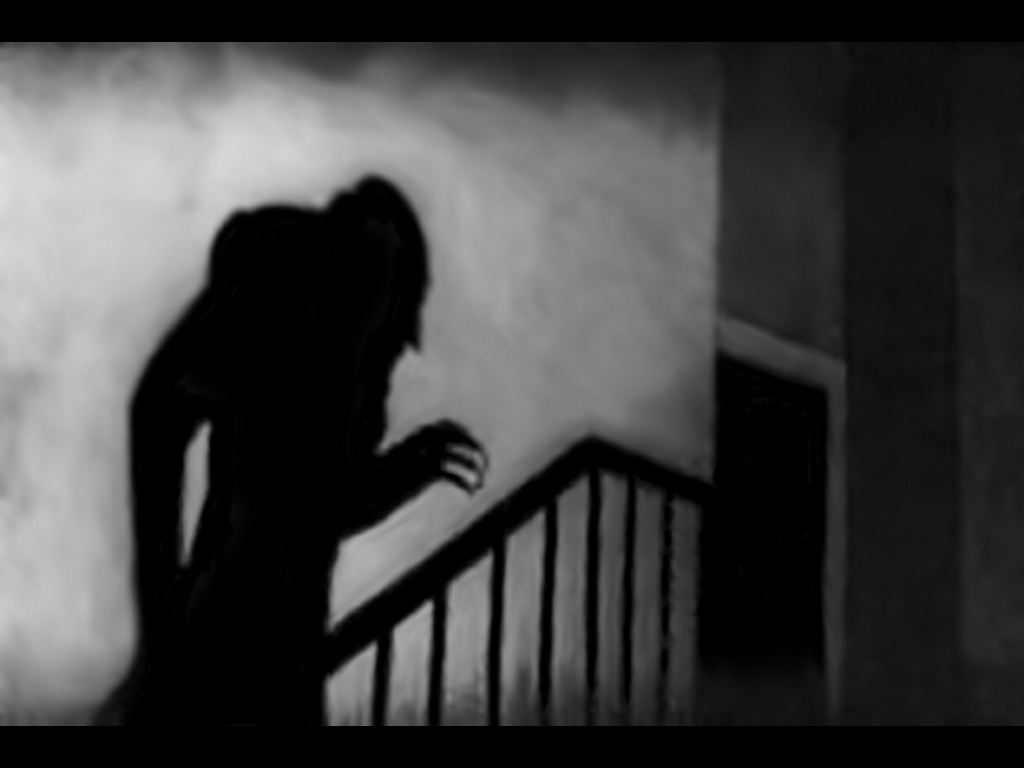
Some of you may be aware of the whole vegetable vampirism thing via Terry Pratchett, others may have come across it in reviews of Matthew Beresford’s rather delightful cultural history of the vampire, From Demons to Dracula: The Creation of the Modern Vampire Myth, but if not, it’s one of those backwaters of folklore studies that demonstrate the many shapes beliefs about vampires and the undead can assume.
The story was first recorded by the Serbian ethnographer, Tatomir Vukanović, in an article published in The Journal of the Gypsy Lore Society in 1957. The relevant section of the article reads:
“The belief in vampires of plant origin occurs among Gs. [Gypsies] who belong to the Mosl[em]. faith in KM [Kosovo-Metohija]. According to them there are only two plants which are regarded as likely to turn into vampires: pumpkins of every kind and watermelons. And the change takes place when they are ‘fighting one another.’ In Podrima and Prizrenski Podgor they consider this transformation occurs if these ground fruit have been kept for more than ten days: then the gathered pumpkins stir all by themselves and make a sound like ‘brrrl, brrrl, brrrl!’ and begin to shake themselves. It is also believed that sometimes a trace of blood can be seen on the pumpkin, and the Gs. then say it has become a vampire. These pumpkins and melons go round the houses, stables, and rooms at night, all by themselves, and do harm to people. But it is thought that they cannot do great damage to folk, so people are not very afraid of this kind of vampire.
“Among the Mosl. Gs. in the village of Pirani (also in Podrima) it is believed that if pumpkins are kept after Christmas they turn into vampires, while the Lešani Gs. think that this phenomenon occurs if a pumpkin used as a syphon, when ripe and dry, stays unopened for three years.
“Vampires of ground fruit origin are believed to have the same shape and appearance as the original plant.
“…The Gs. in KM. destroy pumpkins and melons which have become vampires … by plunging them into a pot of boiling water, which is then poured away, the ground fruit being afterwards scrubbed by a broom and then thrown away, and the broom burned.”
If you’d like to read the article in full (together with some more delightful stories about vampiric farming implements) there are scans of the relevant pages here, here, here, and here. Or you can read a piece I wrote about vampires a while back.

Somewhere in my second novel, The Deep Field, there’s a description of an alien fossil found on Mars, and the instinctual revulsion it provokes from humans. When I wrote it I was interested in evoking something of the feeling of visceral wrongness we tend to feel confronted by images of insect life enlarged.
The winners of this year’s Olympus Bioscapes Award, which celebrates the best of microscopic photography, are things of beauty, not horror, but that sense of alienness is still there, shot through this time with both wonder and something like the unnatural vividity and fleshiness of orchids. The image above, which took sixth place, is by Haris Antonopoulos, and shows stink bug eggs, but you can check out a gallery of the winners and honourable mentions, together with videos and more information on the competition website.
Nov 8
A few people have been offended by the lyrics, but seriously, has mass murder ever sounded so catchy? The album’s pretty fab as well …
I’m just back from a whistlestop tour of the West Coast of the US, one of the highlights of which was a long and fascinating weekend at the World Fantasy Convention in San Diego. In the way of these things it wasn’t an experience that’s really amenable to description, but I met a lot of great people, caught a couple of terrific panels (the conversation between Connie Willis and Neil Gaiman was a real highlight) and learned a lot.
As usual it was the conversations that mattered, not least the chance to catch up with old friends like Garth Nix, Sean Williams and (although we don’t go back as far) Jonathan Strahan and Liza Trombi (of Locus), but also the opportunity to meet new people such as Sean E. Williams (or Evil Sean as we came to know him) and Damien Walter.
But in an odd way the real highlight was meeting the Australian contingent, which included people like Alison Goodman, Alisa Krasnostein and Deborah Biancotti.
The Convention was also the occasion for the announcement of the 2011 World Fantasy Awards, which saw the prize for Best Novel go to Nnedi Okorafor for Who Fears Death, the prize for Best Short Story Collection go to Karen Joy Fowler’s fabulous What I Didn’t See and Other Stories (which is still easily one of the best things I’ve read this year), and the prize for Best Novella go to Elizabeth Bear’s Hand’s strange, sad and entirely lovely The Maiden Flight of McCauley’s Bellerophon.
I’ve not read the Okorafor, but I’m interested to, not least because it edged out both Lauren Beukes’ Zoo City (a book I’ve raved about before) and Guy Gavriel Kay’s lapidary Under Heaven.
But in a way the award I was most pleased by was the Special Award Non-Professional, which went to Australia’s own Alisa Krasnostein for her work with Twelfth Planet Press. If you’d like to know more about Alisa and her work you might want to check out the profile that ran recently in Locus.
The Awards Banquet was also distinguished by a very, very funny speech by Toastmaster Connie Willis, the video of which is below. The quality’s not great, but the good stuff begins around 19:10 (or if you’d like to hear Neil Gaiman and Peter S. Beagle you can play it from the beginning).
Oct 18
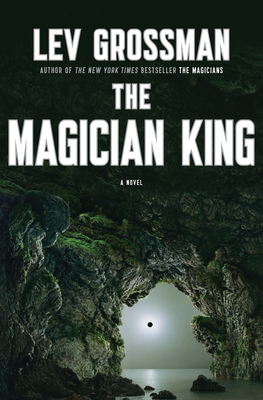 I’ve just uploaded my review of Lev Grossman’s The Magician King, which appeared in Saturday’s Sydney Morning Herald to my Writing page, but if you can’t be bothered clicking through I’ve attached the text below. To sum up in a sentence, it’s brilliant: funny, addictive and ferociously intelligent, and if you haven’t read it or its prequel, The Magicians, you should do so immediately.
You might also want to check my partner, Mardi McConnochie’s piece about it over at her blog, Big Red. You’ll be glad you did. And if you’d like to read more about Grossman and his books, you can visit his website.
The Magician King
Lev Grossman
A few years ago A.S. Byatt wrote a famous critique of J.K. Rowling’s Harry Potter series, dismissing them as “jokey latency fantasies”. In it Byatt argued that unlike works such as Susan Cooper’s The Dark is Rising or Alan Garner’s troubling and often unsettling children’s books which demand children grapple with a world larger and stranger than they had previously imagined, Rowling’s books allow children to fulfil their infantile fantasies of unrecognized importance and power.
Whatever one makes of Byatt’s argument, it’s difficult not to wonder whether her essay played a part in the formation of Lev Grossman’s exuberantly entertaining 2009 novel, The Magicians. At once loving homage and deadly accurate deconstruction, it imagined a world where magic is real, and asked, with considerable sophistication, what it might mean if that particular fantasy came true. And in the process it created something at once strikingly original and deliberately subversive, not just a story about the loss of illusions and the beginnings of adulthood that was simultaneously an exercise in re-enchantment but a exploration of the manner in which power and trauma distort our inner selves.
The Magicians centres on Quentin Coldwater. “Sarcastic and spookily smart”, Quentin is also, as his friend Julia admits to herself at one point, “basically a kind person who just needed a ton of therapy and maybe some mood-altering drugs”. Lonely and isolated at high school, Quentin’s one solace (other than his hopeless passion for Julia) is his absorption in the Narnia-like Fillory novels. Yet when an alumni interview for Princeton turns into an exam for an ultra-secret, ultra-exclusive school for magicians called Brakebills, Quentin finds himself initiated into a world where his oddness is no longer a liability, and where, amazingly, Fillory is more than just a story.
Grossman’s follow-up, The Magician King, begins two years after the events at the end of The Magicians. Quentin is now one of the kings of Fillory. It’s a good life: populated by magical creatures and impossibly beautiful, Fillory is as close to perfection as any place could be. But as Quentin is beginning to realise it’s also a little bit boring. And so, when a carelessly arranged day in pursuit of an enchanted hare ends in tragedy, Quentin decides to embark on a quest. As quests go it’s no big thing, just a trip on a refitted sailing boat to an island in the Eastern Ocean to find out why the inhabitants haven’t been paying their taxes. But for the now-restless Quentin it seems enough just to have a purpose again.
These early chapters unspool with a brisk efficiency, but the novel only really kicks into gear when Quentin stumbles on a golden key, which when used does not transport him somewhere magical, but dumps him and his childhood friend and fellow tetrarch, Julia, back on Earth. Desperate to return, the two of them must navigate a hitherto unglimpsed magical underworld populated by self-trained wizards and witches, and utterly unlike the cosy prep school world of Brakebills, a process that gives Quentin his first glimpse of the price Julia, who was rejected by Brakebills, paid to acquire her powers. But as they discover on their return to Fillory, their experiences on Earth were only the prelude to a much larger and more perilous quest to save not just Fillory, but magic itself.
If much of the pleasure of The Magicians lay in its unfeigned delight in the books from which it drew its inspiration, much of its power lay in the tension between the magical elements drawn from C.S. Lewis and Harry Potter and elsewhere and the restless, dissatisfied and painfully human dramas of its protagonists. For all its playful energy it was ultimately a surprisingly dark book about loss, and failure.
Something similar is true of The Magician King. Once again the book riffs wickedly on the tradition it inhabits, managing to seem as comfortable invoking the secret lore of 1970s role-playing games and Neal Stephenson novels as it is gesturing to Le Guin and Tolkien. And once again it manages the not-inconsiderable feat of managing to be both extremely funny and utterly believable.
Yet it is also a more ambitious book than The Magicians. Moving beneath its surface are a series of deeply disquieting questions about the corrupting nature of power and the theological underpinnings of fantasy worlds such as Narnia. The gods Quentin and his friends glimpse are not benevolent, but cold and distant, while their expressions on Earth are not just capricious but actively malevolent. Certainly it’s safe to say that you’ll never look at Aslan the same way again.
Despite the achievements of writers such as Guy Gavriel Kay and Neil Gaiman Fantasy is a genre that has long struggled to be taken seriously, often treated as faintly ridiculous or an embarrassing overhang from childhood. In The Magician King Lev Grossman demonstrates it is neither, producing a book that does not simply crackle with energy and ideas, but which manages to be at once an inquiry into the underpinnings of the tradition it occupies and a brilliantly eloquent demonstration of its possibilities. The Magician King is not a book for children, or even a book about the stories of childhood for grown-ups. It is quite simply one of the smartest, funniest, most exciting novels you’re likely to read this year.
Originally published in The Sydney Morning Herald, 15 October 2011.
 The following piece appears in today’s Weekend Australian and is reproduced with their permission.
Over the past 40 years the Man Booker Prize has established itself as the premier literary award in the English-speaking world. The reasons for its ascendancy are complex, especially in an Australian context, yet there’s little doubt that much of its success lies in the skill with which it has been managed over the past 40 years. Former administrator Martyn Goff’s 35 year tenure was in many ways a masterclass in media management, which saw judges selected with an eye to controversy, rumours of scandal and disagreement carefully leaked and tensions between judges and nominees inflated, all with an eye to turning the award into the annual event it has become.
Current Booker administrator Ion Trewin may lack Goff’s hauteur, but he’s every bit as deft a showman. Last year saw a nailbiting finish between Peter Carey’s Parrot and Olivier in America and Howard Jacobson’s The Finkler Question, both favourites after some judicious comments about the vigour of the comic novel, while 2009 formalised the transformation from writer’s writer to international superstar of one of contemporary literature’s most intelligent and gifted writers, Hilary Mantel.
This year’s award has been distinguished by two things. The first was the appointment of former MI5 Director-General Dame Stella Rimington as Chair of the Judging Panel. Rimington, whose novels are reputed to have been written with considerable input from at least two ghostwriters was always going to be a controversial choice, both because of her lack of literary credentials and because she seemed an awkward choice given the avowedly literary tastes of fellow judges such as Telegraph Books Editor Gaby Wood and novelist Susan Hill.
Friction between judges is part of the game of course. But it was Rimington’s comment that the judges wanted people to “buy these books and read them, not buy them and admire them” that provoked the real controversy.
Rimington’s comments could probably be dismissed as yet another piece of the theatre that always accompanies the Booker season, except for the fact that this year’s shortlist, comprised of Julian Barnes’ splendidly controlled and subtle The Sense of an Ending, Carol Birch’s Goldingesque Victorian shipwreck novel, Jamrach’s Menagerie, Patrick DeWitt’s wonderfully weird noir Western The Sisters Brothers, Esi Edugyan’s account of black jazz musicians in Nazi-occupied Europe Half Blood Blues, Stephen Kelman’s vernacular novel of childhood wonders and loss, Pigeon English and A.D. Miller’s Russian thriller, Snowdrops is perhaps most charitably described in the terms chosen by the novelist Paul Bailey, as “the most eccentric of recent years”.
Eccentricity needn’t be a negative, of course. Indeed it’s not difficult to imagine a shortlist distinguished by brave, unconventional choices that celebrated the best of genre writing on the one hand or the most exacting literary standards on the other. Yet this year’s shortlist is neither of those things. Instead it is an incoherent collection of mostly middling novels with few claims to either popular appeal or literary brilliance.
Of the six the one that has attracted the most attention is undoubtedly Julian Barnes’ The Sense of an Ending. Barnes’ eleventh full-length work of fiction and the fourth to be shortlisted for the Booker Prize, The Sense of an Ending comes hot on the heels of last year’s thematically-linked collection of short stories, Pulse, and 2008’s extended essay about mortality, Nothing to be Frightened of.
Like all of Barnes’ work, The Sense of an Ending is distinguished by its deceptively effortless formal perfection, its apparent simplicity disguising not just a plot of considerable elegance but a delicate and pleasingly subtle interplay with many of Barnes’ earlier novels (interestingly Pulse exhibited many of the same features). It is also, perhaps curiously given Barnes’ lifelong fascination with French culture and French literature in particular, an almost quintessentially English novel, grounded not just in the rhythms of English middle-class life, but a very English fascination with the tenets of empiricist philosophy and logic.
Its title deliberately invites us to read it as a sort of summation, a final chapter in Barnes’ illustrious career. And in one sense it is precisely that, reworking many of the interests and motifs that have sustained his fiction and non-fiction across the past 30-odd years. Yet it is also very obviously the work of a writer in full flower, exhibiting not just total control of the craft of the novel, but an intellectual and emotional rawness that has sometimes been lacking in Barnes’ earlier writing, neither of which suggest either a diminishing of Barnes’ talent or any imminent farewell to fiction.
Although a very different book in many ways, A.D. Miller’s Snowdrops is, like Barnes’ novel, essentially a book about failure, and more particularly a certain kind of male obtuseness. Set in Russia during the mid-2000s, it tells the story of Nicholas, a no longer quite young British banker whose involvement with a Russian woman leads him to compromise himself personally and professionally.
Miller is a former Moscow correspondent for The Economist and it shows in both good ways and bad. On the plus side Snowdrops has the immediacy of the best journalism, capturing not just the decadence and violence of the Russian boom but the moral ambiguity of the ex-pat whose pay cheque depends upon helping facilitate the pillaging of the country’s resources.
Yet at the same time it too often seems to be all surface, a skilfully structured, well-written exercise with none of the heft of real fiction. And, more deeply, it suffers from the not inconsiderable problem that the psychological device upon which it turns, namely Nicholas’ total obliviousness to the machinations that surround him, is fundamentally implausible.
If Snowdrops is a novel exploring one sort of moral wasteland, the third book on the shortlist, Stephen Kelman’s Pigeon English explores a rather different one. Set on a housing estate in south London, it tells the story of 11 year-old Harri Opoku, a recent Ghanian immigrant who becomes embroiled in the search for the killer of another boy.
Like Emma Donoghue’s Room (or indeed Roddy Doyle’s Booker-winning Paddy Clarke Ha Ha Ha) Pigeon English seeks to contrast the innocence of its narrator’s reactions with the complexities of the world they inhabit. And, like Room, it depends in no small measure upon its author’s capacity to capture the rhythms of its young narrator’s voice.
Whether the voice works or not is at least partly a matter of taste: certainly to my mind it seems too writerly to ring true. Yet despite the novel’s unsentimental engagement with the realities of life on the estate, the drugs, the violence, the social breakdown, there is a deeper authenticity missing as well, the absence of which makes the book feel oddly worthy, perhaps closer in tone to a certain sort of Young Adult Fiction than a fully-formed adult novel.
That being the case it would be tempting to see Pigeon English’s inclusion as a function of its undoubted topicality. Yet I suspect its inclusion has less to do with its relevance to recent events and more to do with its stunning final pages, in which an event as devastating as it is unexpected transforms an otherwise unremarkable book into something considerably more interesting and powerful.
Of the three remaining books on the shortlist the one which most resembles what one might regard as a Booker book is undoubtedly Carol Birch’s Jamrach’s Menagerie. Based on an account of a boy’s encounter with a tiger on a London street in the early nineteenth century and Owen Chase’s extraordinary account of the aftermath of the sinking of the Whaleship Essex and the crew’s descent into cannibalism and murder (which also served as one of the sources for Moby Dick), it might at first blush seem to be a reasonably conventional historical novel, albeit one drawing on surprisingly confronting material.
Yet Birch’s novel is considerably less conventional than it might at first appear. For as the book leaves London behind and heads for the tropics the writing takes on a febrile, unsettling intensity, shot through with intimations of revelation and madness, even as the book circles in towards the act of violence at its heart.
But impressive as these latter sections are, the novel still struggles to mark its subject out as its own. The problem is not a lack of control, instead it is that the source material, and in particular Chase’s account is so powerful its truth cannot help but overshadow even the most effective fictional treatment.
The last two books on the shortlist, Esi Edugyan’s Half Blood Blues and Patrick deWitt’s The Sisters Brothers are both by young Canadians, and are both, by virtue of their largely American casts, fairly unusual contenders for an award reserved for Commonwealth writers.
Edugyan’s novel tells the story of a group of black jazz musicians caught up in the aftermath of the fall of Paris in 1940. It’s an interesting and original subject, not least because the differential treatment of the German-born and American members of the group suggests something of the complexity of life under German rule, and Edugyan’s rendering of the voice of the narrator, the bass player Sid, in all his bitterness and regret, is never less than impressive. And while there are a few too many sequences which feel under-dramatised, there is an integrity and intelligence to the whole it’s difficult not to respond to.
Yet to my mind it’s the deWitt novel, The Sisters Brothers, that’s the real find on the shortlist. A very contemporary reinvention of the Western novel, it tells the story of the notorious assassins, the Sisters Brothers as they set out on what will turn out to be their final mission.
Narrated by Eli, the more thoughtful of the pair, the novel is at once deadpan and oddly hallucinogenic, capturing both the randomness and violence of the brothers’ lives, and Eli’s yearning for release, not just from his brother and their life together, but from the failings of his own nature. It’s also utterly contemporary in a way none of the other books on the shortlist are, its dark humour and contained surrealism of a piece not just with the best of contemporary film and television, but with less exalted forms like the graphic novel and the comic.
More deeply though, The Sisters Brothers shows up both the conservatism and the incoherence of this year’s shortlist. Whether it deserves to win seems to me to be an open question: I enjoyed it enormously and admire many things about it. Yet it is difficult to see how a panel of judges that shortlisted it could fail to even longlist China Mieville’s similarly generically playful and protean Embassytown.
It’s a question that becomes even more vexed when one considers some of the more conventional choices that didn’t make the cut. Of course shortlists are always as much about exclusion as inclusion, but even allowing for Rimington’s inane insistence on readability as a guiding principle it is extremely difficult to understand how any intelligent reader could omit Alan Hollinghurst’s sprawling The Stranger’s Child or the conclusion to Edward St Aubyn’s dazzling Melrose cycle, At Last in favour of Snowdrops, or Michael Ondaatje’s wonderfully weightless and subtly sideways fictional memoir The Cat’s Table in favour of Pigeon English.
But in the end the shortlist is what it is, and the question is not what should win, but what will win. If I were a betting man I’d say the safe money was on Barnes, not just because the book itself is so impressive but because it feels like Barnes’ year. But if I had a few dollars to back an outsider I might put them on the deWitt or even the Birch. And while I was there I’d start winding up my righteous indignation in case Pigeon English wins. Because in the end the Booker isn’t really about the winner, it’s about the guessing game and the debate it generates, both of which it manages to deliver in spades, year after year.
Oct 14
Watch this. Then donate.
Oct 11
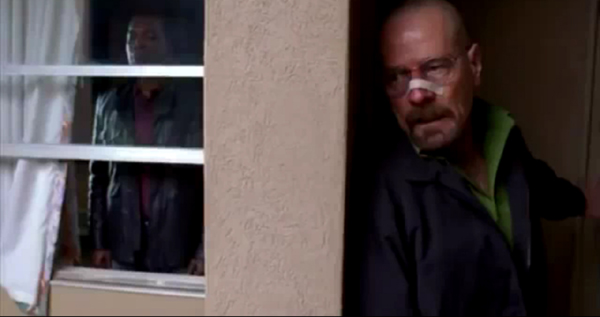 As I’m sure many of you did, I spent yesterday evening watching the season finale of Breaking Bad. As season finales go it was one of the great ones, not least because it managed the often difficult trick of concluding a long and suspenseful narrative arc without either seeming too neat and convenient or fumbling the ball at the last moment. But it also contains one of the most gruesome – and the most exhilarating – scenes I’ve seen on television in a long while.
What follows is going to be at least technically spoiler-free, since I’m not going to describe the scene, but if you’d like to go into the episode completely free of information you should look away. But basically it’s a moment of sudden and surprising violence involving one of the central characters.
The scene was interesting to me for a couple of reasons. One was how brilliantly orchestrated it was. Despite all the scheming and mind games part of the strength of this season of Breaking Bad has been the growing sense of chaos surrounding Walt, and the manner in which his actions have disrupted the operations not just of his family but Gus and the cartels in increasingly dangerous and unpredictable ways. Certainly it’s been difficult not to be aware of the steady escalation of the risk to Gus and his operations as the DEA (or at least Hank) gradually became aware of the possibility that Gus might not be quite what he seems to be. Yet as the final episode revealed, the season has also been incredibly tightly plotted, not just in the narrow sense of Walt having a plan, but in the larger, narrative sense of tracing out arcs and story lines that converge in a manner that’s both inevitable and surprising (to borrow Cocteau’s formulation).
But what also struck me was the sheer delight of the moment I’m talking about. When it came I quite literally jumped in the air and cried out, not once but twice. And despite the absolute horror of what had happened my reaction wasn’t disgust, it was exultation.
It’s a reaction you only normally get in dramatic forms like film, television and theatre (although there’s a scene in Deborah Moggach’s novel, Tulip Fever, which tends to generate the same response). There are several such moments in The Sopranos (Tony picking the tooth out of the cuff of his pants while talking to AJ’s psychiatrist, Paulie’s mother’s friend catching Paulie in her house, Ralphie’s head falling out of his toupee), but there’s also the lawnmower scene in Mad Men and any number of such scenes on film (oddly the one that come to mind immediately is the moment the shark grabs Samuel L. Jackson in Renny Harlin’s Deep Blue Sea, but there’s also the much-imitated scene in Raiders of the Lost Ark in which Indy shoots the swordsman by the plane).
What’s fascinating about all of them is that they’re moments in which the violence or grostesquerie comes as a surprise, and is often designed to elicit something like humour. Yet the sort of surprise they depend upon is often one that goes beyond the surprise that comes with the revelation of something unexpected: instead it’s the sort of surprise that subverts our expectations about the conventions of the genre. We don’t expect that shark to grab Samuel L. Jackson in Deep Blue Sea because he’s in the middle of giving the big “we’ll fight them on the beaches” speech every action movie needs (and the fact Jackson is a big star and a major character). Likewise the lawnmower scene in Mad Men doesn’t just involve the eruption of violence in a show that’s largely about the workplace, it involves the maiming of a character we’ve been led to believe will be significant. And while the scenes in The Sopranos are less overtly subversive, they exist within the framework of a show which often used violence to remind us of the randomness and chaos of the world as a whole.
But they’re also fascinating because they’re not just about doing unexpected or unpredictable things. Just maiming people at random simply doesn’t work as storytelling, however subversive it might seem. Whether it’s the scene from last night’s Breaking Bad or the shark chomping on Samuel L. Jackson, such scenes tend to jolt our expectations and assumptions within the narrative as well, by revealing the plot is not quite (or not at all) what we’d been assuming.
It’s this part of the process that’s particularly tricky. The director of In Bruges, Martin McDonagh, is also a playwright, and the author of a series of remarkable (and remarkably violent) plays which depend at least in part upon eruptions of violence that are at once shocking and hilarious. Of these the second in his Leenane Trilogy, A Skull in Connemara, is particularly interesting. The plot centres on a gravedigger charged with clearing out an overcrowded graveyard, and involves a subplot about his murdered wife, although as becomes clear later on, none of this is really the point. Instead the point is the bones – and more particularly the skulls – the gravedigger keeps accumulating, and the question of what is to be done with them, a question that’s answered very graphically towards the end of the play when, in an explosion of violence, the gravedigger begins to smash the skulls to pieces with a mallet.
It’s an extraordinary scene, and an incredibly liberating and exhilarating one. The sheer anarchy and release of it is hard to describe. But part of what makes it so exhilarating is precisely that sense of release, of knowing, at some intuitive level, that whatever you may have assumed this moment was the point all along.
The scene in last night’s Breaking Bad shares this quality, because it’s also the moment you realise things have not been what you’d assumed. Yet by releasing the tension that’s built up over so many episodes in such an unexpected way, it transforms something that should be horrible into something that’s exciting and even grotesquely funny. Anthropologists talk about liminal moments, points in time when the assumptions that govern our interactions are suspended, and we enter a state of possibility, and change, and I suspect that beneath the gruesomeness there’s an element of that at play in these moments too, a sense in which the ordinary rules are suspended, and we glimpse something of the possibility of change and transformation that is embedded in the heart of all narrative. And, paradoxically, where our extremely sophisticated awareness of the cultural conventions of genre and narrative (because without that awareness the subversion couldn’t work) also makes it possible for us to encounter the most uncritical feelings of wonder and release that narrative depends upon.
(Diehard Breaking Bad fans might like to check out the first part of AV Club’s four part interview with the show’s show runner, Vince Gilligan)



 city of tongues


