Skip to content

The truth about Area 51?

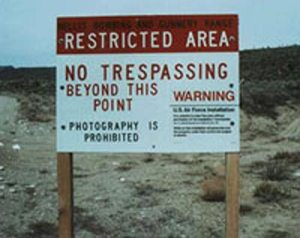
area51Today’s LA Times has a story which purports to explain the truth (or should that be “Truth”?) behind that Holy Grail of conspiracy theories, Area 51, and it’s almost as improbable as the crazy talk of flying saucers and alien technology. That crashed UFO? A disk shaped, Lockheed-designed stealth aircraft called OXCART. Those reports of secret engineering? True, but they were reverse-engineering Soviet technology. And there’s even sodium pentathol-fuelled interrogations and men in black dumping drug-addled test pilots on their wives’ doorsteps. And why are we hearing this now? Because the US Government wants to set the record straight. Hmm.

Read more.

Text break

addthis

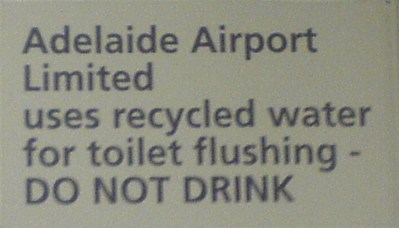
Ah, Adelaide . . .

I have nothing to say.

Break text

dsc00025Break text


Ngã Uruora (or The Groves of Life)

Geoff Park

Geoff Park

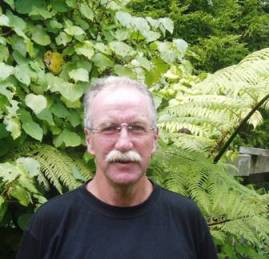
I was deeply saddened last week to learn of the death of the New Zealand ecologist and writer, Geoff Park.

I didn’t know Park, who died on 17 March as a result of a brain tumour, but I did know his work, most particularly his marvellous 1995 book, Ngã Uruora (The Groves of Life): Ecology and History in a New Zealand Landscape, a book I first read after it was pressed on me by Ross Gibson, whose own quietly urgent words about the necessity of coming to understand the landscape we inhabit Park quotes in the book’s introduction.

It’s often difficult to escape the moment, to take the sort of long view which allows one to tell which books and ideas will shape the way we think in years to come, but I think there’s little doubt that Ngã Uruora is one of those books. For while its exploration of the environmental history of New Zealand is ostensibly a small, even parochial subject, it is a book which, in its capaciousness and breadth of vision opens up a new way of understanding the environment, and the deeply complex nature of our relationship to it.

Sadly there doesn’t seem to be any sort of formal obituary to Geoff Park online, but I thought it might be fitting to reproduce a few words which seem to me to capture exactly the quality of attention and generosity which make Ngã Uruora such an important book:

“When you become involved with the landscape . . . it becomes much more than a view. Even to draw a carp, Chinese masters warn, it is not enough to know what the animal looks like, and to understand its anatomy and physiology. It is also necessary to consider the reed which the carp brushes up against each morning, the oblong stone behind which it conceals itself, and the rippling of the water when it comes to the surface. These elements should in no way be constituted as the carp’s environment. They belong to the carp itself. In other words the brush should sketch a life, since a life – like the landscape – is constituted by the traces left behind and imprints silently borne.”

Vale, Geoff Park, go well: you’ll be missed.

Break text

addthis

Contemporary Writers Festival

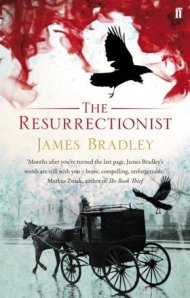
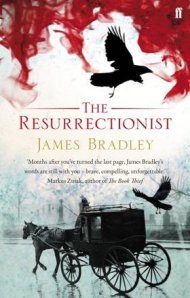
resurrectionist-cover-ukJust a quick note to let you know that if you’re at a loose end on Sunday, I’ll be speaking alongside Malcolm Knox, Mireille Juchau and Ivor Indyk on a panel called ‘Desperate Characters: Character writing in extremis‘ at the Contemporary Writers Festival in Sydney.

The panel is at 11:30, and full details of the program are available on the NSW Writers Centre website if you’d like to make a day of it.

The Contemporary Writers Festival is a joint initiative of the NSW Writers Centre and the UTS Centre for New Writing.

Break text

addthis

Bodysurfing

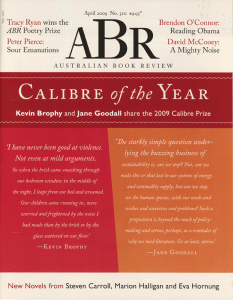
abr_april-09-coverI’ve got a poem, ‘Bodysurfing’, in the April issue of Australian Book Review, which is out this week. It’s only eight lines but I promise they’re all gold, every one of them.

Of course, in the unlikely event the promise of eight hand-tooled lines by yours truly doesn’t seem enough to justify your $9.95 (which makes it a mere $1.25 a line, or 40c a word), the issue also contains the winning entries in this year’s Calibre Award, which has been awarded jointly to Kevin Brophy and Jane Goodall. Both pieces are worth reading, but I definitely wouldn’t miss Kevin Brophy’s truly horrifying account of life with the neighbours from hell, and the secret violence of suburbia.

Australian Book Review is available in bookstores, online, or you can lash out and subscribe.

Break text

addthis

Obama depressed, distant since Battlestar Galactica series finale

obama1This is priceless . . .

Obama depressed, distant since Battlestar Galactica series finale

Break text

Break text

Break text

addthis

Australian Literary Review out today

06555829001Just a reminder that The Australian Literary Review is available free in today’s issue of The Australian. Selected reviews, excerpts etc are available over at the ALR website, but since you can have the hard copy for nix by buying the paper, why not buy the real thing? Highlights include a review of David Malouf’s stunning new novel, Ransom by Alberto Manguel, a review of Duncan Wu’s study of Hazlitt, William Hazlitt: The First Modern Man, by James Ley (not online) and a piece on the graphic novel by Cefn Ridout (also not online). For more information check out the ALR website, or ALR editor Stephen Romei’s blog, A Pair of Ragged Claws.

Break text

addthis

Ron Charles on book reviewing

The Washington Post’s Short Stack blog alerted me to this footage of Ron Charles accepting the Nona Balakian Citation for Excellence in Book Reviewing at the National Book Critics’ Circle Awards earlier this month. Aside from serving as a textbook example of how to accept an award, Charles has some salutary things to say about the changing role of the critic in an age of ubiquitous opinion.

More information on Charles and the Nona Balakian Citation is available on Critical Mass, and the Washington Post’s Book World helpfully provides a digest of his reviews and articles for those interested in exploring his writing. And if you want a reason beyond his speech to warm to him, there’s always this wonderful piece about why Pottermania isn’t necessarily a sign of the health of our literary culture.

And then there’s the video:

Break text


Break text

addthis

Photography in Australian Fiction

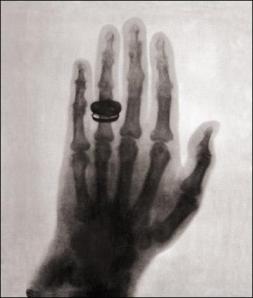
X-Ray image of hand, Wilhelm Konrad Roentgen

Wilhelm Konrad Roentgen, X-Ray image of hand

Last year I met an Italian student called Giorgia Tolfo from Bologna University, who was in Australia to research her thesis, The Photographic Act in Contemporary Australian Fiction. As part of her research she interviewed me and a number of other Australian writers (Delia Falconer and Gail Jones amongst others) who have used photographic motifs in their work.

She’s not the first person to write on this subject. Paul Genoni published a paper in Antipodes in 2002 exploring the use of photography in novels such as my second novel, The Deep Field, Gerald Murnane’s The Plains, Liam Davison’s Soundings, and Thea Astley’s Reaching Tin River (you can access the paper via the Curtin University Library site, though you’ll need to click the pdf symbol in the top right corner to actually read it). But it was interesting to find an Italian student struck by the same resonances between the various works she was writing about (she’s also incredibly bright and very charming, which never hurts either).

Anyway – I just received an email from Giorgia, telling me not only has she passed, but she’s received the highest mark, which is fantastic news. And, since I suspect her thesis isn’t likely to find its way into print in English in a hurry, I thought I might reproduce some extracts from the written interview I did for her after we spoke.

1. What is it that interests you about photography and what was it about photography you set out to investigate in your novel? Was there a particular influence or reference that urged you to write about photography?

I initially became interested in using photography as an element in the novel after looking at a book of photos of museum exhibits by Rosamund Purcell. The images were largely of objects from 18th century cabinets of curiosity, but there were images of fossilized ammonites amongst them, something about those images of ancient stone shells struck a chord with me..

Over time this idea of photographing fossils merged with the ideas I was also interested in exploring, about endings, and continuance, and deep time, and the idea that our own presence in the world might be part of a larger cycle, and a larger order. I remember reading Sontag, and Barthes, and being struck by their insistence that photography must be a representation of death. That seemed right to me, but also wrong – photos are also, necessarily, a form of connection to the past, a kind of persistence through time, in the same way a fossil is, and they connect us to the past, even as they remind us it is gone, and in so doing suggest something about the way loss is always with us, but part of us, and the capacity of things to go on, and endure.

2. In your novel, The Deep Field, Anna begins taking pictures of ammonites and fossils, but only after a scene in which the shells are explored by the blind character with his hands. Was this an attempt to link the idea of tactile memory to the idea of fossils as tactile memories of now vanished organic organisms? What do you see as the best form of memory – visual, tactile, emotional?

I was interested in different ways of being in the world, and particularly by the idea that the blind inhabit a non-spatial world made up of tactile and auditory experience connected in time, rather than spatially. Like virtual reality and cyberspace, that seemed ot me to suggest a very different way of being in the world, and one it might be useful to understand better as technology continues to alter the contours of our identity and the world we inhabit. But I also wanted to connect this idea of the new, and the futuristic to the very ancient, hence the shell on Mars, and the high tech photos of fossils. By doing that, and by playing on the way the blind inhabit their temporal and experiential world I thought it might be possible to suggest something of the way we exist within memory, and experience, rather than the other way around.

3. What do you think about the relationship between fiction and photography? Do you think that the former can help people to better understand the social, emotional and private value of the latter? Do you agree on the fact that fiction is more powerful than theory in exploring the possibilities of photography, being able to create new and not necessarily real situation?

Fiction and photography are necessarily very different. Fiction is narrative-based, and is therefore connected to change. Photography is something sliced free of time we must project a narrative, or meaning into. One explains us to ourselves, the other denies explanation (a process you can see at work in Sebald). But at the same time, both work by opening up imaginative possibility.

That said, I’m always a little wary of the use of photography in fiction. Photography is necessarily documentary and ambiguous, and there seems something dishonest, or sentimental about the impulse to invent stories which displace that ambiguity and fill it in with invented meaning.

As for the question of whether theory or fiction is more useful for exploring the possibilities of photography, I’m not sure either is particularly useful in that context – it’s photography that will explore its own possibilities most usefully. Theory may help us understand it better, criticism may help us understand particular works and practitioners, but I’m really not sure fiction has much of a role to play at all – its interest in photography is almost always for its own, imaginary ends.

4. Do you think there is a peculiarly Australian way of thinking about photography evident in Australian fiction, or do you think the use of photography in fiction is more universal?

I do wonder whether there is a a peculiarly Australian way of thinking about photography you see coming through in writers as diverse as Gail Jones, Delia Falconer, Liam Davison and myself. All of us are interested in exploring a photography as a way of making sense of loss, and transience, rather than as a simplistic memento mori. If this differs from its use in fiction from overseas (and I’m a bit short on ideas for examples to be sure it does) I wonder whether it has something to do with the fact that if you’re in Europe, particularly, or connected by the Jewish diaspora to that European experience, photography might well offer rather starker reminders of the past. Australians are, at some level, interested in finding a way to make sense of their past, and to find reconciliation with it in the present; it’s possible that for Europeans and others the past is something that needs to be put behind them.

Break text

addthis

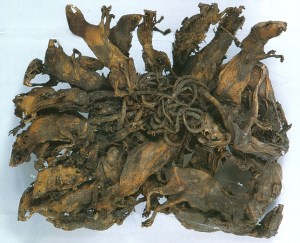
All hail the Rat-King!

The Rat-King on display in the Mauritianum Museum, Altenburg, Germany

The Rat-King on display in the Mauritianum Museum, Altenburg, Germany

I was reminded last night of one of the more repulsive bits of cryptozoological folklore, the Rat-King. And since the two people I was with had never heard of them, I thought I might share the concept with the world. A Rat-King is created when a rat nest (a horrible concept all on its own) becomes so crowded that the tails of the rats become physically entangled, and slowly but surely, the separate rats begin to fuse into a single organism.

Perhaps not surprisingly the concept of the Rat-King is regarded with some scepticism by contemporary science, but belief in their existence has persisted in European countries, and particularly Germany, since the Middle Ages, and over the years various specimens have been displayed in museums and private collections.

Of these the most famous is probably the one owned by the Mauritianum Museum in Altenburg, which is comprised of the mummified remains of 32 rats, and was reportedly found in a miller’s fireplace in Buchheim in 1828, although specimens from as far afield as Java and New Zealand have also been collected through the years (Wikipedia has a brief survey of the various extant specimens, and you can see images, including x-ray images of one of the Dutch specimens on the Museum Kennis website).

As someone who’s not keen on rats at all, the Rat-King is a thing of nightmares. But I’m not sure you’d need to be as phobic about rats as I am to feel there’s something deeply unsettling about the whole idea, and not just because the thought of all those rats, scrabbling and hissing and seething together is inherently repulsive. Rather I suspect that just as the idea of zombies, and vampires, and the living dead  break down the ontological categories which order our world, the idea of several creatures merging into one super-organism, something smarter and more malign than any of its individual constituents, so offends our most primal suppositions about individual identity that we have few reactions open to us beyond fear, and disgust.

Break text

addthis

Things I’m in love with this week, part 2

I don’t know what they’re saying around the traps about Vetiver’s new album, Tight Knit, but I think it’s happiness in a box. Who ever knew a karaoke song could be so cool?

Break Text

Break text

addthis

Unlocking déjà vu

This week’s New Scientist has a fascinating article about recent research into the cognitive origins of that most unsettling of phenomena, déjà vu:

Déjà vu can happen to anyone, and anyone who has had it will recognise the description immediately. It is more than just a sense that you have seen or done something before; it is a startling, inappropriate and often disturbing sense that history is repeating, and impossibly so. You can’t place where the earlier encounter happened, and it can feel like a premonition or a dream. Subjective, strange and fleeting, not to mention tainted by paranormal explanations, the phenomenon has been a difficult and unpopular one to study.

“Speculations about past lives or telepathy aside, the first biological explanations of déjà vu were based on ideas that two sensory signals in the brain – perhaps one from each eye or each hemisphere of the brain – for some reason move out of sync, so that people have the experience of reliving the same event. “Mental diplopia”, as it was called, is intuitively appealing but the evidence is stacked against it … Now another theory is gaining credibility. Perhaps déjà vu feels like reliving a past experience because we actually are – at least to some extent …”

Read more at New Scientist

Text break

addthis

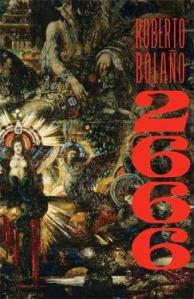
Even more 2666?

26661The Telegraph is reporting that two new novels have been found amongst the late Roberto Bolano’s papers. Reportedly entitled Diorama and The Troubles of the Real Police Officer, the two come hard on the heels of another unpublished novel, The Third Reich, which was made available at last year’s Frankfurt Book Fair.

Bolano would have to be one of the most improbable literary success stories of all time. Barely published at the time of his death in 2003, posthumous translations of Nazi Literature in the Americas, The Savage Detectives and most recently 2666 have seen him acclaimed as one of the leading lights of world literature, with 2666 winning this year’s National Book Critics’ Circle Award in the US, and becoming an international bestseller.

But what we’re to make of the suggestion that one of these new novels is a sixth part of the cycle of five novels that make up 2666 I’m not sure. Having read all five, and seen them as part of one whole, it’s difficult to imagine where or how another novel might fit in the sequence. Despite famously being unfinished at the time of his death, the work as it stands seems to have a sort of unity, particularly in the relationship of the fifth novel, The Part About Archimboldo (a work of genius in its own right) to the preceding four.

But is it possible my reading of it was conditioned by the belief the five parts were all there is? How different would another part make it? And what have I missed? And given the damn thing was 900 pages long to start with, does it really seem fair to suggest there might be more of it?

Break text

addthis

I couldn’t have said it better myself . . .

Tigh (Michael Hogan) and Adama (Edward Lee Olmos), SCI FI Channel Photo: Carole Segal

Tigh (Michael Hogan) and Adama (Edward Lee Olmos), SCI FI Channel Photo: Carole Segal

There’s a terrific piece by Laura Miller about the Battlestar Galactica finale over at Salon, which pretty much nails a lot of what went wrong in the final ten episodes, and most particularly the mess of the finale. Most tellingly, I think, she points to the contrast between the (admittedly controversial) non-ending of The Sopranos and the desperate and misguided desire to tie up all of Battlestar Galactica’s loose ends which so muddied ‘Daybreak’.

That said, she also argues that:

“Adama was always the series’ most conventional figure, the old-fashioned, admirable leader-hero that American popular culture typically insists upon. This also made him the least interesting character psychologically, but he was essential all the same; the rest of the survivors needed him as a fixed point, a star to steer by.”

At one level she’s right; Adama is one of Battlestar Galactica’s more conventional figures. Certainly without the strength of Edward James Olmos’ performance he would be little more than a cardboard cut-out. But the strength of Olmos’ performance also grounds one of the less conventional aspects of Adama, namely his violence and anger. The role he is playing, that of the leader-hero, is generally constructed in such a way as to allow the character to be an essentially decent, honest man, who only turns to violence when provoked. It is, in many ways, a peculiarly American fantasy of the soldier-farmer, the man of the earth who takes up arms to defend his rights and those of others.

Adama, by contrast, is a much darker creation. More Clint Eastwood in Unforgiven than Gary Cooper, his outward semblance of control is largely a facade, designed to keep a check on the anger and violence that seethe at his core. As we are reminded on a number of occasions, his impulses are authoritarian, even despotic, his first loyalty to his uniform. He is a soldier, and a good one, but soldiering is not, as we are often reminded, a profession which tends to make nice people out of those who excel at it.

This is of course of a piece with Battlestar Galactica’s deeper interest in the brutalizing nature of war, and its ambiguous attitude to the nature and exercise of power in general. Indeed Adama is in large part interesting precisely because his nature belies his conventional facade, so much so that the term of respect the crew bestow upon him, “the Old Man”, can often seem oddly ambivalent, conjuring associations of control, and violence as much as paternal affection.

(For those anxious to fill the hole left by Battlestar Galactica’s passing, SciFi have released seven clips from the upcoming prequel/spinoff, Caprica, all of which are available over at io9).

Break text

addthis

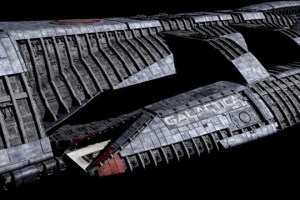
Battlestar Galactica: some predictions for the final hours

04

I watched ‘Daybreak, Part 1’, the first part of Battlestar Galactica’s three hour finale after I got back from China on Thursday night. I’ve seen a lot of carping on the intertubes about how bad it was, but I actually thought it was terrific, particularly after the mess of the episodes immediately preceding it (though I probably could have done without Laura Roslin in the fountain). The pacing was beautiful, there were a lot of lovely details, and there was a wonderful, elegiac sense of ending about it. I’ve always admired ‘All Good Things’, the final episode of Star Trek: The Next Generation, which Ronald D. Moore also wrote, and ‘Daybreak, Part 1′, echoed many of the things that made that episode so moving, in particular the movement back in time to the series’ beginning, and the sense of a circle being closed that movement back to the beginning creates.

Perhaps oddly though, it was only while watching the episode that I realized how much I’m going to miss the show. For all the patchiness of this final series, Moore and Eick have created a show which has completely rewritten the rules about what science fiction television can be, both by creating a world which speaks in such complex and unpredictable ways to our own, and by giving breath to a cast of characters which live in a way television characters rarely do. Even in the first part I found myself tearing up more than once, which is testament of a sort to just how much I’ve come to care about these characters and their plight.

So, at the risk of making a fool of myself, I thought I’d make a few predictions about what will happen in tonight’s conclusion. These aren’t spoilers. I know nothing more than anyone, and I’ve actually tried really hard to avoid reading anything about these last two episodes in advance of watching them. But if you want to avoid going into tonight with preconceptions of any kind, you might want to stop reading now, and check back afterwards to see how right (or wrong) I am.

Here are my guesses for tonight:

The singularity will be important, both as a plot device, and in a deeper, narrative sense. If nothing else it will be a glimpse of the Eye of God, and of the desire for perfection and unity Anders described in ‘Daybreak, Part 1’, and which so many of the characters have been seeking since the show began. But I also think it will have a role in collapsing time and space, in making all times one, and thus bearing out the show’s oft-repeated promise, that “all of this has happened before and will happen again”.

Although I’d always assumed they’d kill poor old Starbuck in the final episode, I no longer think they will. Not only has she already died once (thus bearing out her Dionysian aspect by becoming twice-born) but having carefully removed the obstacles posed to her and Lee’s relationship by Dee and Anders, it wouldn’t make sense to go and kill her. More deeply though, she needs to live, and to end up with Lee, because by uniting the Apollonian and Dionysian in a union of opposites, we see a very literal embodiment of the show’s broader concern with the destabilizing of the boundaries between us and them, Human and Other.

That said, a number of other characters will die. Poor old Gaeta is already gone, as is Zarek and the rather dreary Dee, but I think a number more will die tonight. The most obvious is of course the President, though since she’s already dying that won’t be a surprise, but once she’s gone, Adama will die as well, both because he will no longer want to live, and because his death will symbolize the old giving way to the new, in the form of Lee and Starbuck (and indeed the broader Human/Cylon union).

Baltar will die as well, presumably in the final, selfless act we saw so laboriously set up in his conversation with Lee in the first part, thus completing the rather misjudged journey from narcissist to Messiah they’ve had him on since he was acquitted of crimes against humanity and collaboration at the end of Season Three (I’ve always thought the intrusion of the Paradise Lost/Jesus thread was a mistake, but I suppose having begun it they’ll have to play it out).

Beyond that I’m not really sure who will die. Probably Anders/Galactica, but in a way that lets Anders touch the face of God (perhaps in the singularity?). Definitely Boomer, though only after she changes sides one last time, and rescues Hera from Cavil. And Cavil, obviously. Maybe Tigh and Ellen, and perhaps the Chief. But Helo and Athena and Hera will all live, as indeed will all the characters who symbolize union.

And finally, but most importantly, I think we will hear the words which opened the first episode of the original series, “There are those who believe that life here began out there, far across the universe,” invoked in the final moments of tonight’s episode. Somehow (possibly via the singularity) Lee and Starbuck and the surviving Cylons and Humans will turn out to be our own ancestors. I’m not sure how literal this process will be, but it makes sense for a number of reasons. The first is it allows the larger circle between the original series and the revisioned series to be closed. The second is that it means quite literally that all of this has happened before. And the third is because the show is and always has been fundamentally concerned with destabilizing the boundaries between us and them, Human and Other, and while that boundary between Human and Cylon is now completely blurred, making the characters on the show us, and us them, takes it one step further and makes us the descendants of that union, no longer Human, but a mixture of Human and Cylon.

One of the reasons I’m not sure how literal the process will be is because I’m convinced it has something to do with the singularity, and that we will discover not just that the show is our prehistory, but also our future. That will allow the Earth they discovered in the middle of Season Four to be our Earth as well, and will mean that somehow the distant future gives birth to the distant past, so not only has all of this happened before, and will happen again, but in some deep sense, we are all – Human and Cylon, past, present and future – one, and bound together for all eternity.

Break text


Break text

addthis