Skip to content

Grant Morrison’s Supergods

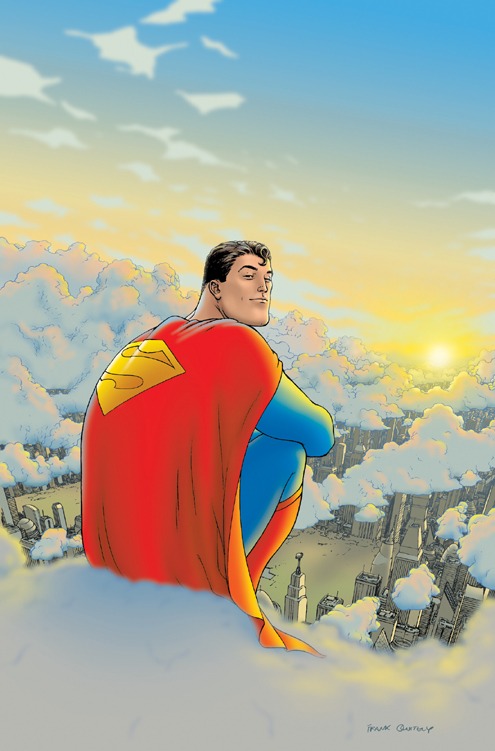
Frank Quitely, All-Star Superman

I’ve just posted a review of Grant Morrison’s Supergods: Our World in the Age of the Superhero on my Writing page, the original of which ran in The Sydney Morning Herald last week.

I suspect Morrison’s name may not be familiar to a number of you, but to anybody who reads comics it’s likely to be immediately familiar, and, if only because he’s been so immensely influential, the prospect of a book by him is likely to be of considerable interest.

I have reasonably complex views about Morrison’s work. There’s an intellectual brilliance and a joyousness to his affection for the pulpier aspects of the superhero in his work I find it impossible not to respond to, qualities that in combination have made him responsible for many of the truly electric moments I’ve had reading comics over the years. I’m very happy to say his runs on Doom Patrol and Animal Man remain amongst my favourite comics ever. And there’s a slightly daffy warmth and wildness to books like All-Star Superman which is, at its best, very touching. But I also feel he’s a writer whose best work (with the honourable exception of The Invisibles) tends to be within existing mythoi.

This isn’t necessarily a criticism. Indeed in many ways it’s a function of what makes him so good when he’s at his best. Because at the heart of his work is a fascination with the things that make comics tick, the pulpy energy and urgency and sheer imaginative wildness, all of which he clearly understands at a deep, intuitive level, and all of which are very much on display in Supergods.

Anyway, I’ll let you read the review for yourself. But I’ll also say that if you’re a comics reader, or even just somebody with an interest in the form, it’s a book that’s very, very worth your time.

Walking Dead Webisodes

I’m not usually a fan of webisodes, but this series made to promote Season 2 of AMC’s stunning zombie show The Walking Dead are a very honourable exception. Certainly the two minutes-something of Part 6 had enough brutal energy as many full length episodes. Sadly nobody seems to have strung them together into a single loop yet, but if you’ve got time to watch the one by one they’ll more than repay the investment.

A couple of thoughts about Breaking Bad

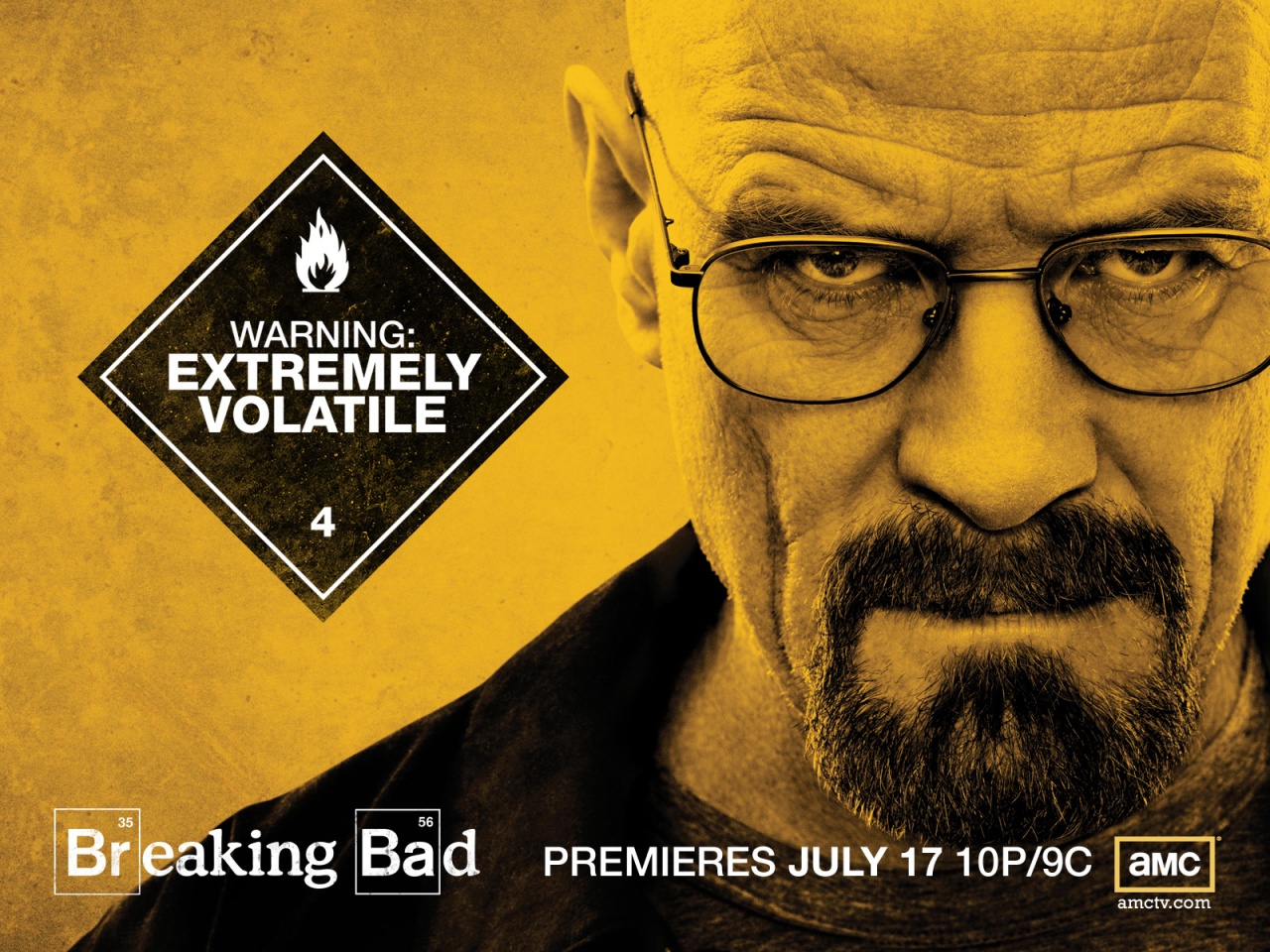
I’m currently one episode from the end of the fourth season of Breaking Bad, which has morphed from being one of the smartest shows on television into a thing of almost Dostoefskyan bleakness. Because many viewers here in Australia are only beginning to watch Seasons 3 and 4 I’m going to avoid any specifics about either season (there’s one vague, non-specific spoiler ahead for people who haven’t seen Season 3 yet), but I wanted to make a couple of observations about the show.

The first is how incredibly impressive the show is on a whole range of levels. Quite aside from amazing performances from its two leads (Aaron Paul’s depiction of Jesse’s disintegration is brilliantly observed) I’m consistently fascinated by its use of light, and by the way it employs the physical location in New Mexico. Season 4 makes increasing use of time-lapse montages, some of which are incredibly beautiful, but the show uses time, and scenery to give texture to the moral disintegration at its core in a whole series of fascinating ways.

This use of space and time is also very effective at underlining both the euphoria and the yuckiness of the drug culture at the show’s core. There’s a constant slight sense of displacement and irreality, which brilliantly mimics the distortions of time that come with speed and other mind-altering subjects.

More interesting to me though is the way the show is prepared to push against the conventions of television shows by presenting a character who is essentially beyond redemption. As anybody who’s seen the final episode of Season 3 will know, there is a moment there when Walt – and to a lesser extent Jessie – cross a line they cannot return from, and which makes Walt, in his own way, no different from Gus or the cartels.

This isn’t the sort of action that’s often explored on television, partly because it makes of extremely troubling viewing, partly because the ongoing nature of television largely precludes damaging or compromising central characters beyond repair. Yet the writers and producers have elected to go there, and the result is, if not easy viewing then certainly compelling and often challenging viewing.

But it also points to what I think is one of the really interesting things about the show in general and Walt in particular. As becomes more and more clear as the show goes on, the problem for Walt and Walt’s life isn’t cancer, or Jessie or Gus, but Walt himself. Walt’s anger, his resentment that the world has not given him what he believes is his due infects everything he does. But more potently, as becomes very clear in Season 4, he is not a man who consistently makes bad decision despite his intelligence, but because of his intelligence. Time and again he makes decisions convinced he has calculated the odds, that he has out-thought and outsmarted everybody around him, and time and again he is wrong.

This aspect of Walt’s personality is captured brilliantly in Bryan Cranston’s performance, which constantly refuses the sort of grandiosity that would normally be associated with the fall of a character like Walt: certainly we’re never allowed to believe there’s anything Shakespearean about Walt, instead we’re constantly reminded of what a crabbed, angry, unpleasant man he has become once his inner self is released. And while once again it doesn’t make for easy viewing, it’s disarmingly complex precisely because it refuses to romanticise Walt’s failings.

What’s also interesting is how rarely characters like Walt appear on screen. Or, to put it more precisely, how often characters like Walt are depicted so realistically on screen. Because in fact television is full of characters like Walt. Any David Simon show has half a dozen of them: angry, difficult, toxic A-type male characters, many of whom seem to be versions of Simon himself. Yet in Simon’s hands (and indeed most places) they present as loveable rogues, hopeless pussyhounds whose drinking and  contrariness and general impossibility only make them more admirable (and more irresistible to women).

So why don’t we see more characters like Walt on screen? Part of the answer is obviously that they’re not a lot of fun to be around. But I do wonder whether there isn’t another answer, something to do with the sort of A-type personality that fills television story rooms, and its general resistance to critiquing itself. Because let’s face it, The Wire’s Bunk and McNulty or Treme’s Creighton Bernette might be fun to watch, but would you actually want to know them in real life?


Ragnarok

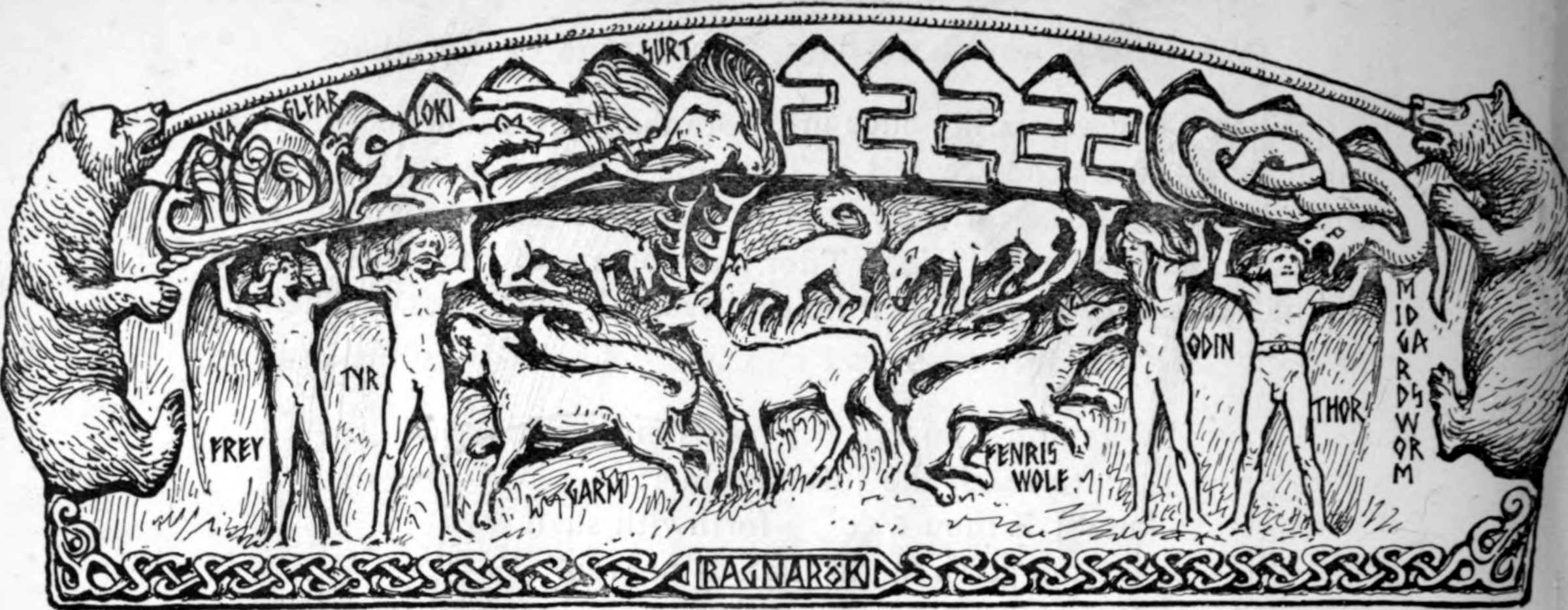
W.G. Collingwood, Ragnarök (motive from the Heysham hogback), 1908

“The black thing in her brain and the dark water on the page were the same thing, a form of knowledge. This is how myths work. They are things, creatures, stories, inhabiting the mind. They cannot be explained and they do not explain; they are not creeds or allegories. The black was now in the child’s head and was part of the way she took in every new thing she encountered.”

A.S. Byatt, Ragnarok

Walking Dead! Walking Dead!

Can’t. Wait.

I wish I was the Moon

Neko Case. Blacklisted. What’s more’s there to say?

Moby Duck

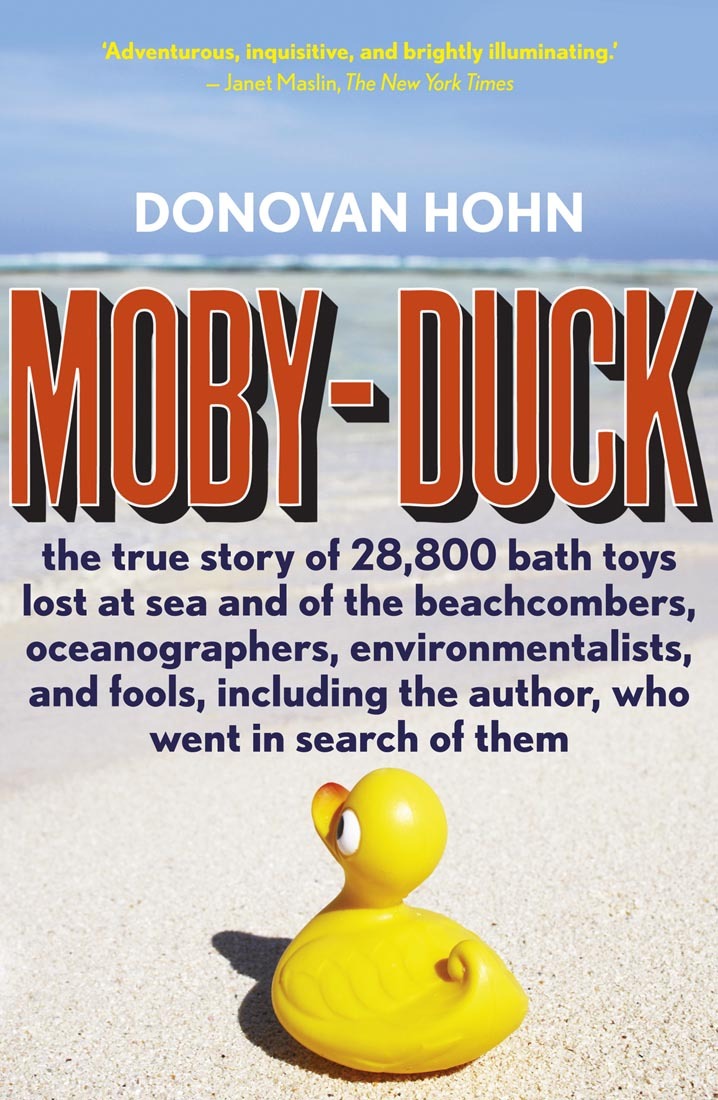
I’ve got a review of Donovan Hohn’s Moby Duck: the true story of 28,800 bath toys lost at sea and of the beachcombers, oceanographers, environmentalists, and fools, including the author, who went in search of them in this weekend’s Weekend Australian. As the review hopefully makes clear I liked it quite a bit, not least because despite the silly title (and the sometimes irritatingly digressive style) it’s a book that’s grappling in genuinely interesting ways with a series of questions about what Nature actually is, and perhaps just as importantly, how we should think about ideas such as wilderness and preservation in a globalised world.

These aren’t new questions, of course. There’s a growing body of theoretical work exploring them, and even in a more popular context recent years have seen the publication of books such as Bill McKibben’s Eaarth and Mark Lynas’ The God Species, but what makes Hohn’s book so refreshing is his interest in using the reality of the contemporary natural world to ask quite difficult questions about many of the assumptions underpinning environmental thinking. Some of these relate to what we actually mean by natural in 2011: there’s a great moment where he hikes through a rainforest only to realise when he hears a popping underfoot that it’s rooted in a great mound of old plastic bottles. But others are political, such as his argument the corporate-funded Keep America Beautiful campaign was less about cleaning up the environment than about transforming the public perception of litter and waste from a responsibility of polluting companies into something connected to personal conduct.

The book’s also interesting because it deliberately avoids the pieties of so much nature writing. Hohn isn’t interested in the chiselled prose and watchful reverence of Barry Lopez or Peter Matthiessen or Robert MacFarlane, instead he adopts a more contemporary (and more garrolous) style, one that allows him to write as lucidly about Chinese factories as vast, submarine gyres.

All of which is a roundabout way of saying there’s a lot to like about the book, and if you get a chance it’s well worth checking out. As I say, the review’s in The Weekend Australian, and you can find links to buy the book on Booko.

The Alabama Shakes

This four-track from new act The Alabama Shakes might just be the best US$4.00 you spend today. Listen to them in order or jump to the third if you want to head straight to the heart. Completely. Awesome.

The view from above

Sorry for the dearth of posts but I’ve been madly writing (well on the way to four new short stories, which is nice). Hopefully I’ll be back on air next week but in the meantime you might want to check out this amazing time-lapse footage of the Earth in darkness taken from the International Space Station. If you’re trying to work out what’s passing underneath the Youtube page says the movie:

“begins over the Pacific Ocean and continues over North and South America before entering daylight near Antarctica. Visible cities, countries and landmarks include (in order) Vancouver Island, Victoria, Vancouver, Seattle, Portland, San Francisco, Los Angeles. Phoenix. Multiple cities in Texas, New Mexico and Mexico. Mexico City, the Gulf of Mexico, the Yucatan Peninsula, El Salvador, Lightning in the Pacific Ocean, Guatemala, Panama, Columbia, Ecuador, Peru, Chile, Lake Titicaca, and the Amazon. Also visible is the earths ionosphere (thin yellow line), a satellite (55sec) and the stars of our galaxy.”

But basically it’s amazing.

Fitz and Dizzyspells

I love this guy.

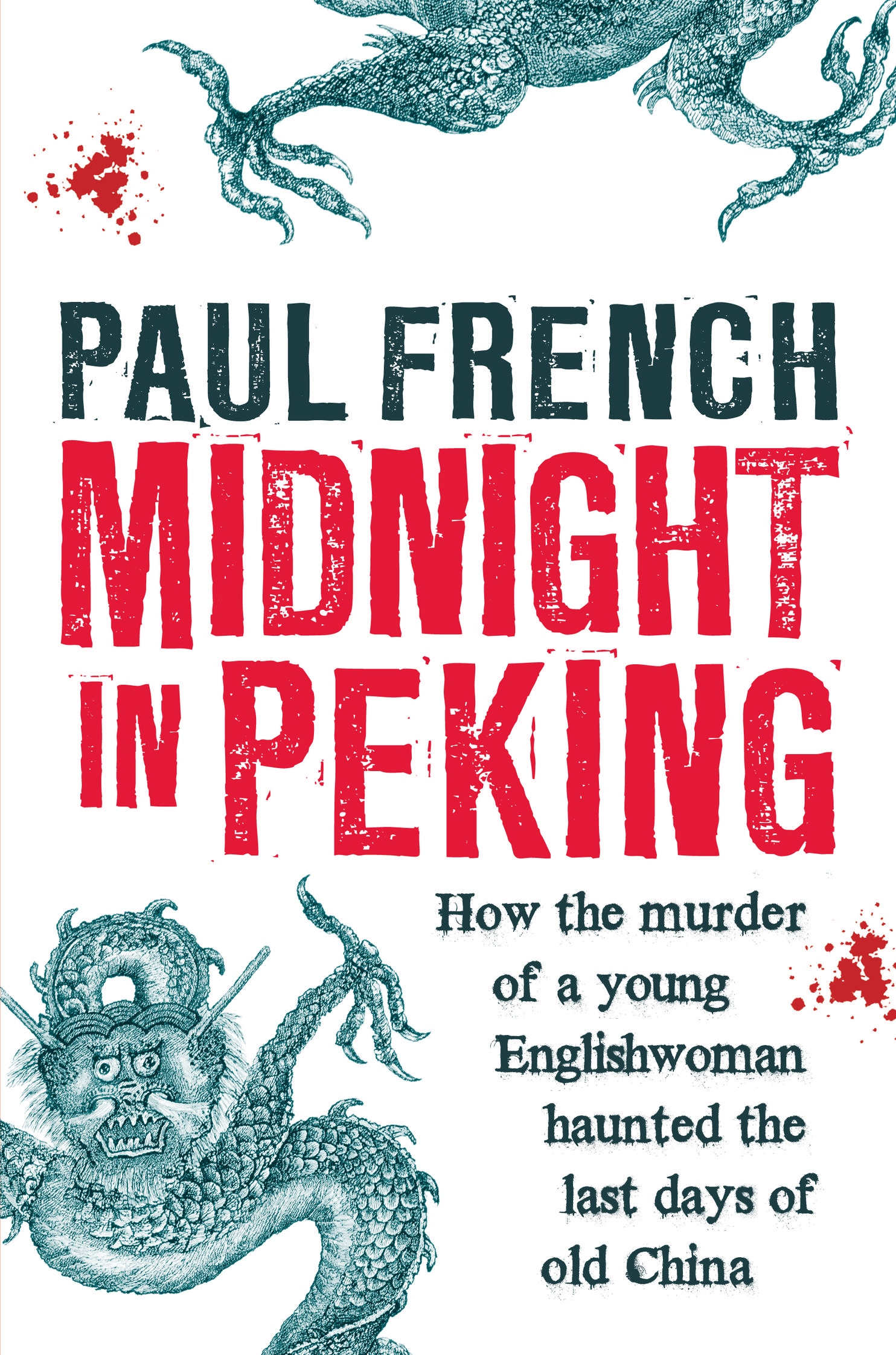
Midnight in Peking

I’ve been meaning to write something about Paul French’s fabulous new book Midnight in Peking for a while, but because I’ve been too busy to finish it I haven’t quite got round to it. What I have read of it is fantastic, not just because the story of the brutal and perplexing murder of a young British woman in Peking in 1937 the book investigates is so fascinating, but because Paul brings the world he is exploring so vividly and grippingly to life. I often suspect the sheer complexity of early 20th century Chinese history is rather lost on Anglophone audiences, but I’m not sure I’ve read a better illustration of those complexities, or the tenseness of the moment preceding the Japanese occupation than Paul’s book.

All of which is a roundabout way of saying that if you’re in Melbourne this weekend you should definitely make time to catch one of Paul’s sessions at Melbourne Writers’ Festival. I’ve seen Paul (who I got to know during my time in Shanghai in 2005) on panels before, and he’s just compulsively interesting, not just about the China of the 1920s and 1930s, but about contemporary China as well.

Details of Paul’s sessions are available on the MWF website, but I reckon the one to catch would be the conversation with Paul at 4:00pm on Sunday. I really do recommend you make time to catch it because if his past performances are anything to go by it’ll be great. And if you’d like to read the book you can check prices on Booko.

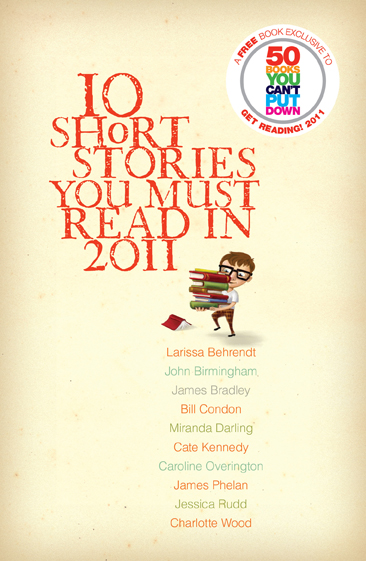
Ten Short Stories You Must Read In 2011

Today marks the launch of Get Reading 2011, an Australia-wide program designed to promote books and writing. As part of the campaign anybody who buys a book in a participating bookshop will receive a free book, Ten Short Stories You Must Read in 2011, featuring contributions from John Birmingham, Charlotte Wood, Caroline Overington, Cate Kennedy, Larissa Behrendt and myself (amongst others).

I haven’t seen an actual copy of the book yet, so I can’t wax lyrical about the contributions of my fellow authors, but I can say I’m pretty pleased with my story, ‘The Flats’, which is set near where I grew up in Adelaide, and is about three boys who accidentally see something terrible.

As I say, the collection is being given away for free with any purchase at all participating bookshops. My understanding is bookshops will also have copies of this year’s 50 Books You Can’t Put Down guide, but if you’re in a hurry you can also download it from the Get Reading website, which also has information on the various events taking place as part of the program and links to download the Get Reading 2011 app. You can also find Get Reading on Twitter and Facebook.

Get Reading 2011 runs until 30 September.

The Curse

Much as I love some of the tracks on it I’m not sure Josh Ritter’s most recent album, So Runs The World Away, is my favourite (that honour probably goes to his 2007 album, The Historical Conquests of Josh Ritter) but this video for ‘The Curse’ featuring the work of Royal City Band puppeteer Liam Hurley is a thing of beauty. There’s some info about the making of the video at NPR, otherwise just watch it.

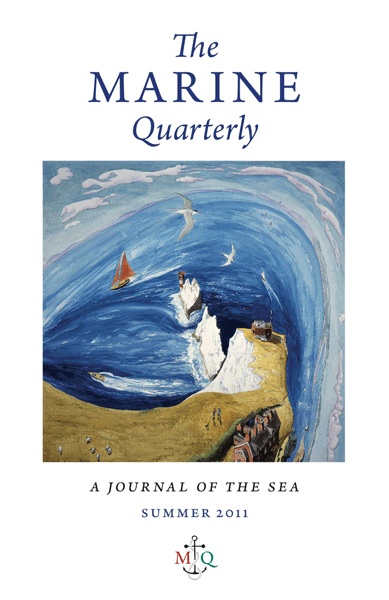
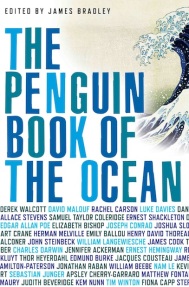
The Marine Quarterly reviews The Penguin Book of the Ocean

In amongst accounts of sailing the Falklands and advice on how to swim the English Channel, the Summer issue of the (rather fabulous) Marine Quarterly has a short review of The Penguin Book of the Ocean:

“It may be hard to get hold of the Penguin Book of the Ocean, edited by James Bradley, because it is published by Penguin Australia, and there are no plans to publish it in Britain. Goodness knows why. Many seagoing miscellanies are litanies of shipwreck and disaster. While I appreciate that a seagoing miscellany without shipwreck is like bread without salt, there are other aspects that should be considered. Bradley has done just that. He has reintroduced Rachel Carson’s marvellous The Sea Around Us, and unearthed passages of Thoreau, Hakluyt, Darwin, Steinbeck and Jonathan Raban, to name but a few, mingling them with plenty of very good poetry and a spot of surfing. As well as being a good read in its own right, this is a sampler for anyone looking for the foundations of a library of sea reading.”

Obviously you all own multiple copies of the book already, but with Father’s Day coming up on Sunday week, surely now’s the moment to buy another

Are books dead?

Many of you will have already read the condensed version of Ewan Morrison’s talk at the Edinburgh Book Festival, which was published in The Guardian on Monday. If you haven’t, you should: it provides a bracingly unsentimental account of the difficulties facing publishing in general and authors in particular as the print economy transitions to digital. Central to Morrison’s argument is an assumption the transition to ebooks will be rapid, that the same pressures from piracy and consumer behaviour that have reshaped the economics of other industries will drive book prices down to levels which are incapable of supporting authors, and that this in turn will lead to the fairly rapid collapse of the economy of advances and royalties that has sustained professional writers.

It’s unlikely to come as a surprise to regular readers of this blog that I largely agree with Morrison’s arguments. One of the odder aspects of the discussion of the challenges facing the publishing industry over the past few years is the collective delusion that somehow publishing will be shielded from the disruption experienced by industries such as the music industry. I’ve lost count of how many times I’ve heard people say things like “people will always want books”, “there’s something special about browsing in a bookshop” or “my seven year-old loves reading, therefore there’s no crisis”. All those things might well be true, but it’s not going to hold back a tide of change driven by a fundamental shift in the economics of the industry.

All that said, I think Morrison’s article should be read as much as provocation as thesis. There’s little doubt it’s framed within a well-founded unease about the increasing cultural power of behemoths such as Amazon, Google and Apple, or that it wants individuals and governments to at least question our assumption that we have no capacity to manage this transition (Robert Darnton has been making  similar argument in his campaign against the Google Book Settlement).

I’m with Morrison on this. Governments need to understand the interests of citizens and corporations are not the same thing, especially when it comes to the control of culture. But I also think Morrison’s provocations cause him to if not overreach, then certainly to assume the future will be neater than I think it probably will be.

The first thing that’s worth saying is that while I think Morrison is right in arguing that the attachment of older readers to the codex book is unlikely to be replicated in younger readers, I think he’s wrong in assuming this will mean an end of the book altogether. Certainly it’s worth noting that parallel to the rise in digital formats has been a rise in print-on-demand and bespoke publishing. How big the market for these will be is unclear, but I suspect what we’re really looking at is a generational change in the material economy of the book, which will see it move from being a low-cost (or relatively low-cost) consumer good to being a more exclusive, prestige object.

Of course even if I’m right about this, that’s unlikely to make a big difference to either the large-scale economics of publishing or the bottom lines of authors. That difference has to be found in the digital economy, which will, as Morrison suggests, probably supplant the current print economy within a decade.

Morrison’s argument is that piracy will dramatically undercut the economics of publishing in the same way it did in the music industry, and that in the process it will drive a change in consumer attitudes. I suspect he’s part-right on both scores: piracy is an issue, and will become a bigger one in years to come. And the demand for lower and lower prices is real and increasing, as the spats around authors and publishers stressing the fixed costs of book production show.

But Morrison neglects what seems to me the other big lesson of the music industry, which is that as the success of the iTunes Store demonstrates consumers are prepared to pay for content if it’s easily available and priced competitively.

The next question is, of course, whether consumers are prepared to pay enough to support something that looks like the publishing industry as it currently exists. I’m not going to pretend I have an answer to this, but my feeling is the answer is yes and no. The past couple of years have been pretty ugly for a lot of publishers, with a bad Christmas last year and rapidly declining sales in the first half of this year. The figures are complicated by the rise in digital sales, but in Australia while the volume of physical book sales has held up because of the sell-offs of stock by Redgroup, value has fallen, fiction is down 10% and sales of the top 10 books are down by as much as 50% (some publishers speak privately of declines in sales of 25 and 30% across the board). Although at least some of this decline can be attributed to the exceptional circumstances such as the recession and the collapse of Redgroup in Australia and Borders in the US, they’re not the whole story, and if profits keep falling it won’t be long before publishers start having to restructure their operations.

That bland term, “restructuring” is really code for layoffs, reduced commissioning and cancellation of projects. And as such it can’t help but hurt both the people who work in the industry and writers. Morrison correctly asserts the “advance economy” is under siege (“10k is the new 50k”), arguing this economy has enabled a generation of writers to develop their craft. I think he’s attributing too much importance to advances, and that it’s actually the system of royalties underpinned by copyright that enable writers to work, but he’s not entirely wrong, and as advances disappear it will be increasingly difficult for many authors, especially literary authors, to make a living wage.

Obviously this is bad news for many writers and publishers. But again I’d argue the real lesson of the music industry is that as the initial disruption passed other business models began to appear, from Spotify to Bandcamp, as creators and publishers found new ways of reaching audiences. Some involve disintermediating the music labels and selling direct, others use quite different business models. But what they do demonstrate is that in the right circumstances consumers will pay for content, and that there are alternative distribution mechanisms to the Amazon/Apple/Google monopolies.

I’m not going to pretend I know what these mechanisms will be. I have some ideas, but I think one thing we can safely assume is that there will be many more of them than we’re currently used to, and each will serve different markets in different ways. Whether these new models will be capable of sustaining writers in the way the old system did seems to me to be an open question. I suspect the truth will be, as it’s always been, that not many writers will make a lot from their work, but I also suspect it’s going to get a lot harder quite quickly, especially for writers such as myself. But writers and publishers who are prepared to adapt and experiment will succeed.

Which brings me to the last two things I want to say. The first is that I think one counterweight to the general bleakness of Morrison’s argument is that the experience of the music industry has been that the decline of the traditional models has allowed much greater diversity to emerge, alongside a boom in things like music festivals, and my guess is the breakdown in traditional models is already engendering something similar in publishing. The hegemony of the poem/short story/novel division is already under siege, with publishers launching projects such as Pan Macmillan’s digital-only Momentum imprint, which will publish novellas and works not suited to print, and it’s quite clear there’s a hugely energetic community of writers and artists creating works which don’t fit into traditional categories all around us.

The other is that I think Morrison is right, and it is vital we stop assuming we are unable to use these processes to benefit the public as well as corporations. It is possible to find ways of supporting creators, whether that’s through traditional mechanisms such as direct grants or less traditional systems of licensing such as that administered in Australia by the Copyright Agency. And that governments need to be very wary of the agglomerating strategies of Google and others. Once again there’s unlikely to be a one-size-fits-all solution, but I’m not sure there ever has been, either in business or for writers.