Skip to content

Posts from the ‘Books’ Category

The unlucky life of Captain George Pollard Jnr

Captain Valentine Barnard, Drawing of a Bowhead or Right Whale and a Sperm Whale, c 1810

This weekend’s New York Times has a fascinating article about the discovery of the wreck of the Whaleship Two Brothers on the French Frigate Shoals, an atoll about 1000km northwest of Honolulu.

The discovery is fascinating for two reasons. The first, and more prosaic, is that there our understanding of life on board Whaleships is largely second-hand. As Ben Simons, of the Nantucket Historical Association points out in the article, “Very little material has been recovered from whale ships that foundered because they generally went down far from shore and in the deepest oceans … we have a lot of logbooks and journals that record disasters at sea, but to be taken to the actual scene of the sunken vessel — that’s really what is so amazing about this.”

But it’s also fascinating because the Two Brothers’ Captain, George Pollard Jnr, was also the captain of the Whaleship Essex, the ship whose sinking by a whale in 1820, and recorded in Owen Chase’s remarkable Narrative of the Most Extraordinary and Distressing Shipwreck of the Whaleship Essex, was one of the inspirations for Moby Dick.

For those of you who haven’t read Chase’s narrative I urge you to do so: its 60-odd pages are remarkable reading. As Jeremy Harding points out in a piece on Melville in the London Review of Books, contemporary interest in the Essex is, like Melville’s, largely confined to the story of the wreck itself, but as Chase’s narrative reminds us, the wreck is really only the prelude to a far more chilling story, involving the survivors’ journey several thousand kilometres westward, to the Pitcairn Islands, and gradual descent into starvation, cannibalism and madness.

Chase published his account of the wreck and its aftermath in 1821, and some years later it came to the attention of a young Herman Melville (interestingly it was not Melville’s first encounter with the story, which he first heard from Chase’s son, who was also a whaleman, while a crewman on a whaler himself). Later other versions of the disaster would appear, including a detailed account by Charles Wilkes of his conversation with Captain Pollard, and (interestingly) a manuscript held in the Mitchell Library in Sydney which details the experiences of the survivors who chose to remain on Henderson Island in the Pitcairns. These and many more are reproduced in Nathaniel and Thomas Philbrick’s excellent The Loss of the Ship Essex, Sunk by a Whale.

Prior to the wreck, Pollard was described as gentler and more contemplative than the average Nantucket whaleman, and was only 28 when given the command of the Essex. Yet the circumstances of the wreck, and more particularly the descent into cannibalism in the weeks before he and his companions were rescued, changed him.

As the piece in The New York Times points out, in a way the most surprising thing about Pollard’s presence on the Two Brothers is that he actually chose to take on another command. There’s something gut-wrenching about the description of him freezing and having to be physically dragged to a longboat when this second ship foundered, and deeply sad about his subsequent retirement to a position as a night watchman in Nantucket (he actually made one more voyage, upon a merchant vessel).

These days Pollard is mostly remembered as the prototype for Ahab and for his part in the murder and consumption of his cousin Owen Coffin while he and his companions drifted hopelessly in a whaleboat, but in details like the image of him moving through the darkened streets of Nantucket, it’s possible to glimpse a rather different man. Certainly Melville, who visited him after the publication of Moby Dick, was impressed by him, declaring “[t]o the islanders he was a nobody – to me, the most impressive man, tho’ wholly unassuming even humble – that I ever encountered”.

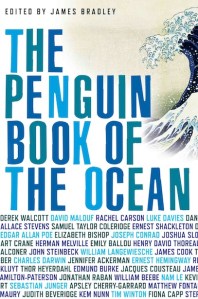
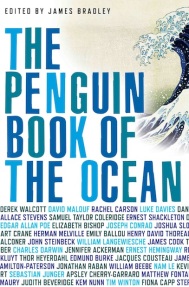
As I say above, the documents relating to the wreck of the Essex are well worth reading, in particular Chase’s Narrative, the opening section of which appears in The Penguin Book of the Ocean. And while I used the Spirit Spout chapter in the collection, if you’re unfamiliar with it I recommend reading the hellish description of the Pequod’s try works, which make the reality of life aboard a Whaleship viscerally real. And finally, if you can track down a copy of Nathaniel Philbrick’s In the Heart of the Sea: The Tragedy of the Whaleship Essex, do: it’s a splendid and harrowing account of a quite remarkable episode in maritime history, and of the fates of Pollard and the other men at its centre.

The journey home . . .

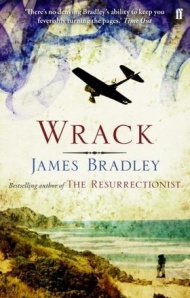
It’s taken almost fifteen years, but my first novel, Wrack, about Portuguese navigators has finally been published in Portugal. Which seems sort of lovely, given how many other places it’s already been published. Now I just need Random House Australia to include it in their super-sexy, super-cheap Vintage Classics imprint . . .

You can buy a copy of Destroços from fnac, read an excerpt in Portuguese on the Presenca site, or chase up a copy of the Australian edition, the UK edition or the award-winning audio edition read by Humphrey Bower. And there’s more information, including links to reviews etc on my Books page.

The best sort of review?

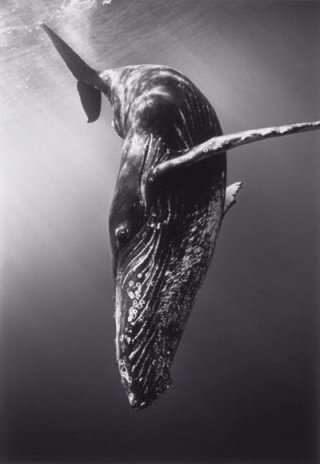
Wayne Levin, 'Diving Humpback Whale', from The Penguin Book of the Ocean

One of the real joys of the response to The Penguin Book of the Ocean has been the quality of the reviews. I don’t mean by that simply that reviewers have been positive about the book (though mostly they have) but the thought and care that’s gone into the reviews themselves. Late last year I linked to Felicity Plunkett’s wonderful review in The Weekend Australian, but there have also been long, thoughtful and very generous reviews by Michael McGirr in The Age, Jennifer Moran in The Australian Literary Review and more recently, a terrific piece by Stephen Wilks in The Canberra Times (mostly not online, sadly).

The terrific thing about all these pieces is the sense their writers have been genuinely engaged and excited by the collection, even where they have quibbles with it, which is to my mind exactly what you want from reviewers and readers.

The most recent review, by Gregory Kratzmann in Australian Book Review, is similarly exciting, not just because Kratzmann describes the book as a “remarkable anthology”, but because it’s such an intelligent, carefully crafted piece of writing. I’ll leave it to you to read it in full, but basically it’s the sort of review you dream of: thoughtful, lucid, informed, and which serves not just to contextualise the collection but to offer new insights and perspectives.

Elsewhere you might want to check out the Kill Your Darlings blog, which features an interview with me about the book. And in a completely different forum, the March issue of Madison, which should be in stores today, has me picking my favourite books, films, music and websites about the ocean.

2011 and all that

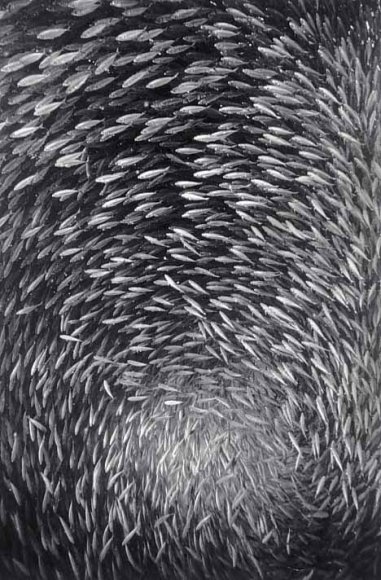
Wayne Levin, 'Circling Akule', © Wayne Levin (click to embiggen)

Despite having given myself an open-ended holiday from the site I think there’s no denying that even in the Antipodes the summer is over once Australia Day has passed. To which end I’m getting back on the blogging horse. I suspect things will stay a little bit slow around here for the next week or so (my daughter doesn’t go back to school for another week and a half) but I’m still aiming to get a few things up in the not too distant future.

That said, 2011 is looking like a big year for me in general. Unfortunately it looks like my new novel, Black Friday, may now not be on shelves until early 2012, but I’m about to launch into editing it, and once that’s done I’ve got two more books I’m hoping to knock over reasonably rapidly, which will make for a busy year.

Elsewhere, The Penguin Book of the Ocean has been going gangbusters, with one reprint already under its belt, and a brace of very, very positive reviews. I’ll pull together some links for those soon, and if I can find it links to the interviews I’ve been doing about it over the break, but in the meantime if you’d like to buy a copy you can check prices on Booko.

Some other bits and pieces that might be of interest. First of all, I’m planning to post something about it soon, but in the meantime you might want to check out Wayne Levin’s stunning new book, Akule. Anyone who’s seen a copy of The Penguin Book of the Ocean, or read some of my previous posts about Wayne and his work will have a sense of how extraordinary his work is, but if not check out the sample pages and if you get a chance, order a copy: it’s wonderful, and like all of Wayne’s books comes with a terrific essay by another of the writers featured in The Penguin Book of the Ocean, Tom Farber.

To continue with The Penguin Book of the Ocean theme, Kevin Hart, whose pulsing, luminous poem, ‘Facing the Pacific at Night’ also appears in the collection has a new book, Morning Knowledge on the way as well. It’s not out for another week or so but it’s already possible to pre-order copies.

And finally, since I’m about to go and tidy up a long piece I’ve written about ghosts and ghost stories, you might want to check out my review of Peter Ackroyd’s The English Ghost: Spectres Through Time, which appeared in The Australian a couple of weeks ago.

I hope you’re all well, and have survived the summer, particularly if, like many Australians, you or your family have been caught up in the flooding and fires of recent weeks. And however it began, I hope 2011 is a great year for all of you.

A blast from the past: me talking about The Resurrectionist

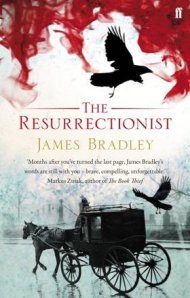
I was chatting about book trailers this morning and it reminded me of the video below, which was produced and directed by Steve Macdonald to coincide with The Resurrectionist’s inclusion as one of Richard and Judy’s Summer Reads in 2008. If you can get past the fact I look even more crumpled and feral than usual, my hair’s about a foot high and my stammer is particularly noticeable, it’s actually not too bad. And of course if you’re so excited after you’ve watched it you want to buy a copy, you can check out Booko for prices on the Australian and UK editions.


So you want to write a novel?

I’m still laughing.


Waves, the ocean and the sublime

Today’s Australian contains the last Australian Literary Review for 2010. A chunk of the issue is given over to a long piece by Michael Costa suggesting some solutions to the problems facing the ALP and a forum of prominent academics such as Glyn Davis, Peter Doherty and Stephen Lincoln exploring the challenges and opportunities facing Australia and the world as we look forward to 2020.

But the issue also features a long piece by me about Susan Casey’s new book, The Wave: In Pursuit of the Ocean’s Greatest Furies. Some of you may know Casey as the author of The Devil’s Teeth, which explored the world of Great White Sharks and the researchers who study them, and while it’s largely shark-free, The Wave often reads like a sequel or counterpart to its predecessor, using the career of big wave surfer Laird Hamilton as the springboard for a much larger study of the science of waves and the gathering storm of climate change.

I won’t rehearse the arguments of the book here, except to say that it’s an intelligent, if sometimes slightly slick piece of work. I’ve subsequently learned there’s been something of a scandal about the fact Casey shared the proceeds from the book with Hamilton, a fact that lends her already over-eroticised and hagiographical descriptions of him a distinctly queasy edge. But as I say in the review, Casey writes brilliantly about the breaks themselves, and the larger picture the book paints of the effects of climate change on ocean turbulence and wave height is likely to be deeply disturbing to anybody who’s not familiar with the facts surrounding the changes taking place beneath the ocean’s surface (if this material is new to you you might want to take a moment to read this story from the ABC, and perhaps this piece by Elizabeth Kolbert as a primer).

Much of what I want to say is in the review itself, but there is one story in Casey’s book I desperately wanted to include but just couldn’t shoehorn in, and that concerns the wave that hit Alaska’s Lituya Bay in 1958. Situated midway between Vancouver and Anchorage, Lituya Bay is one of those rare places where the various factors that generate tsunamis converge, combining a narrow fjord and near vertical cliffs on three sides with a steeply rising bottom, large glaciers and seismic instability. First charted by La Perouse in 1786, it has a long history of sudden and violent wave activity.

But the wave that struck on 9 July 1958 dwarfs all other recorded waves. Triggered by an earthquake, the ocean sent a tsunami which reached 524m in height rolling through the bay and out to sea.

The notion of a wave more than half a kilometre high beggars belief. Yet it is not the most remarkable part of this story. That honour belongs to the fact that at the time of the tsunami several fishing boats were moored in the bay, and one of the captains, Howard Ulrich, survived by steering his boat up the face of the approaching wave.

You can read the review in full here.

Update: I thought these two videos, one of Laird Hamilton in action, the other of an unidentified surfer riding a very big wave might be of interest (thanks to Tim Dunlop for the reminder).


What is it about men and bad sex?

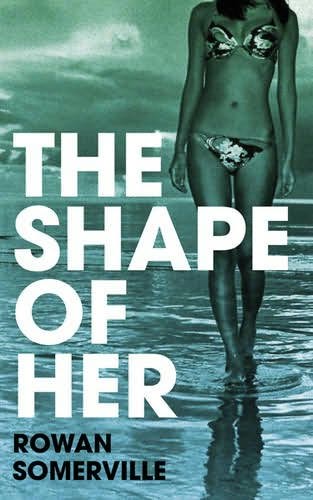
News this morning that relatively unknown Irish author Rowan Somerville is the winner of this year’s Bad Sex in Fiction Award for his novel, The Shape of Her, beating off stiff opposition (ooh-er) from a shortlist dominated by heavy-hitters like Jonathan Franzen and Christos Tsiolkas.

I’ll let others discuss the merits or otherwise of the various nominees; what interests me is the fact that the winner is a bloke. At one level that’s not a surprise, especially given the shortlist of eight included only one book by a woman, but it starts to look more striking when you glance down the list of writers who have won the award since it was inaugurated in 1993, and absorb the fact that of nineteen winners to date, only two have been women.

So what is it about men and bad sex? I’ve got a few ideas of my own but I’m guessing many of you have thoughts on the subject as well. Is it just the inherent sexism of the literary and cultural world on show in an amusing and ironic way? Or are men predisposed to write awful sex (or to put it more accurately, since most winners of the Bad Sex Award win for descriptions of what they think of as good sex, are men predisposed to write good sex badly?). And if they are, do women write it better? Or do they just avoid writing about it at all?

Thoughts, please . . .

Best Books 2010

It’s the time of year when people start publishing their best of lists, so I thought it might be fun to kick off a bit of discussion here about what people have (and haven’t!) liked in 2010. Because I review so much this is usually a pretty easy process for me, but in many ways the last twelve months have been a bit of disaster for me reading-wise: as well as all the chaos of a new baby I’ve been trying to get an anthology tied down and finish a novel, both of which have stopped me reading quite as much as I normally would.

It’s also been a bit of an odd year book-wise. If 2009 was dominated by huge, unclassifiable books like 2666 (here, here and here)and The Kindly Ones, and unconventional and brilliant historical works such as The Children’s Book and Wolf Hall, 2010 has been marked by a series of interesting crossover titles like Justin Cronin’s The Passage.

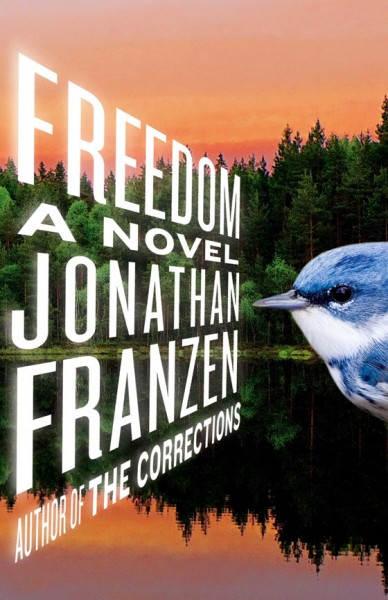
It is however one of those years where I have no trouble picking a favourite, a privilege which goes to Lorrie Moore’s wonderful A Gate at the Stairs, a book which seems to me to cover much of the same territory as Jonathan Franzen’s Freedom but with considerably more elegance, wit and brevity (interestingly it’s also playing with some of the same tropes of the nineteenth century social novel Franzen deploys, and perhaps not coincidentally these moments are also the weakest in the book (except for the wonderful final line)). If you haven’t read it all I can say is do, immediately: it’s one of those rare books that left such an impression I found it difficult to read anyting else for weeks afterwards.

Besides A Gate at the Stairs, I loved Willy Vlautin’s Lean on Pete, a book of deceptive simplicity and considerable emotional impact and Sam Lipsyte’s gloriously scabrous The Ask. I also enjoyed Alice Munro’s Too Much Happiness (though I do wonder whether it’s as strong as a collection as Runaway), and was very impressed by Andrew Porter’s The Theory of Light and Matter, Karl Marlantes’ Vietnam epic, Matterhorn, Jennifer Egan’s A Visit from the Goon Squad and Graham Robb’s wonderfully chatty and intimate Parisians.

There’s also the elephant in the room of Freedom. I’ve wanted to write something for a while about the slightly hysterical desire to anoint Franzen some sort of literary demigod, a desire which seems to me misplaced: he’s a very good novelist but he’s no better than a number of others (Lorrie Moore, for instance, or Hilary Mantel). I now suspect that piece probably won’t get written, but I also think it’s difficult to talk about the novel without coming up against the sense this desire sets up an implicit demand one’s responses to the novel be strongly positive or strongly negative.

Mine are actually neither. I think parts of it are very good: unlike many people I particularly liked the excerpts from Patty’s memoir, and thought the sequence relating her parents’ response to her rape was a thing of genius: horrible and funny and appalling all at once. But I also felt the novel lost energy badly in the second half, a loss of energy that was reflected in an increasing slackness in the writing.

Part of the problem is that the sort of large social novel Franzen wants to write is very difficult to pull off these days without a pretty high degree of contrivance. But I was also struck by the fact that in many ways the bits of Freedom that don’t work are largely those where Franzen steps away from the sort of domestic comedy he excels at (interestingly I would have said almost the same thing about The Corrections).

Of course none of this is to say I didn’t like it, or that I didn’t think it was good: I did. It’s just that I don’t think it’s the work of luminous genius many others do (if you’d like to see what seems to me to be a very fair take on it I’d point you to Ron Charles’ hilarious video review for The Washington Post).

Closer to home my reading was distinguished more by what I didn’t read than what I did, but I was hugely impressed by both Brenda Walker’s Reading by Moonlight and Delia Falconer’s Sydney (just for the record Delia and Brenda are both friends, but I’d be praising the books whether that were the case or not) and I thought Kalinda Ashton’s The Danger Game was an impressive debut by a very interesting and highly engaged writer.

I also read a lot of SF, not all of which was new, out of which the real standouts were Paul McAuley’s Gardens of the Sun, his strangely beautiful hymn to the worlds orbiting Jupiter, Saturn and Neptune, Alastair Reynolds’ Revelation Space and Redemption Ark, a pair of books suffused by a sense of the inhuman immensity and hostility of space, and Margo Lanagan’s shimmeringly subversive fairy tale, Tender Morsels. On the graphic novel and comic front I finally got around to reading Warren Ellis’ entirely brilliant Planetary, a series that manages to reimagine the superhero comic from the ground up in much the way Watchmen did two and a half decades ago (though which, interestingly, is still rooted in the comics of yesteryear, suggesting the enervation Moore was responding to in Watchmen is no less real today.

There were also, of course, a number of books I violently didn’t like, or thought were wildly overrated, but rather than carp, I thought I’d throw it over to all of you and ask what your picks were, and why.

The Uncanny X-book: ebooks, design and digital possibility

Think for a moment about the silly page-turning animations ereaders insist on inserting: aren’t they really the textual equivalent of curtains on a television? Indeed why do we need to retain the notion of the “page” at all? Why can’t text just continue down as we read, like a scroll? And if it did, what would this do to the metaphors and devices we use to shape and organise information, the chapters and sections of the analog world?

Read more

Slipping down into dark water

Last week’s Opinionator in The New York Times featured a fascinating piece by Robert Sapolsky suggesting that at least some of our metaphorical toolbox is biological in origin. I’ll let you read the article in full, but Sapolsky uses several recent studies, including the 2006 Zhong/Liljenquist study demonstrating moral disgust is assuaged by washing, to argue that in these cases the brain is engaged in a sort of neural confusion, and very primitive responses, such as that of physical disgust, are being triggered by social stimuli.

I’m always a little wary of this sort of argument, but in this case Sapolsky (who’s the author of one of the classics of animal writing, the wonderful A Primate’s Memoir) is on pretty solid ground, since there are imaging studies which demonstrate unpleasant moral and unpleasant non-moral stimuli activate the same regions of the brain. But the piece got me wondering about something I’ve been thinking about for a while, which is the question of why our thinking about sleep, dreams and the unconscious is so suffused with images of liquidity.

It’s a question I came up against while editing The Penguin Book of the Ocean, and (if you’ll pardon me quoting myself) it’s one I raise in the introduction:

“It is not accidental that when the historian Fernand Braudel sought to describe those cycles of history that exceed the human and stretch downwards, into the environmental, the geological, he reached for the marine metaphor of ‘deep time’, nor that Romain Rolland chose the term ‘oceanic’ feeling to describe the sensations of boundlessness and oneness with nature he believed were the birthplace of religious sentiment. Indeed, so pronounced is our tendency to reach for images of fluidity and submersion to describe our inner lives and the mysterious processes of creativity and creation that it is difficult not to wonder whether the association is somehow natural, less a habit of mind than something innate. But even if it is not, the association between water and dreams, time and the oceanic runs so deep it has become almost impossible to think of one without invoking the other.”

I’m aware, of course that there’s a sizeable body of psychoanalytic thinking touching on this subject, perhaps most notably that of Bachelard (I’d also note in passing the deeply evocative expression “body of water”). I’m also painfully aware of how difficult it is to distinguish the cultural from the “natural” in this context. But after reading Sapolsky I did find myself wondering whether these associations might be at least partly founded in a similar retooling of very primitive parts of the brain.

All of which is an extended way of asking whether anybody knows of any studies suggesting such associations. Or, perhaps just as pertinently, whether anybody has any sense of whether the association exists in other cultures. Do the Chinese, for instance, or Native American cultures make similar associations? Obviously the notion of the unconscious mind is a relatively recent and essentially Western notion but I’d be very interested to know whether other cultures imagine sleep and dreams in terms of drift and immersion, or think of imagination in terms of flow. And, assuming the association is at least partly neurological in nature, are there any studies or theories as to what it’s about?

National Book Award 2010

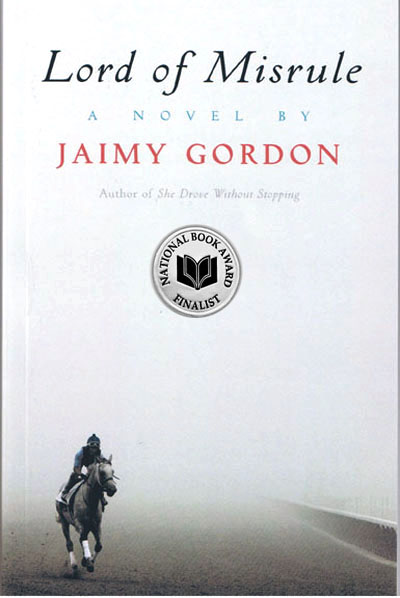
I’m never sure whether it says more about lingering Australian Anglocentrism or the brilliance of the marketing team behind the Booker, but I’ve always found it odd we get so excited about the Booker Prize yet barely register the major American awards. Either way, yesterday saw the announcement of the National Book Awards in New York, with the Fiction Award going to Jaimy Gordon for Lord of Misrule, the Non-Fiction Award to Patti Smith for her memoir, Just Kids, and the Poetry and Young Adult Fiction Awards going to Terence Hayes for Lighthead and Kathryn Erskine for Mockingbird. Unfortunately I haven’t read any of the winners (though it’s probably worth noting Lord of Misrule pipped Peter Carey’s Parrot and Olivier in America to the Fiction Award) but there was a nice overview piece about the Fiction shortlist by Tom LeClair in Salon earlier this week if you’d like to know more.

A little bit of linkage

I tend to do most of my linking on Twitter these days (and I’m a heartbeat away from setting up a Tumblr page for things that seem too long for Twitter but not really worthy of full-scale blogposts) but I’d be remiss if I didn’t direct people to this amazing series of photographs of London in the early 1880s. All photography is, as Sontag and Barthes remind us, necessarily a record of loss, but in these images of London that sense of loss is (as the author recognises) given added power by the strange absence of people from the streets and buildings depicted, an absence which recasts the city itself as a sort of memento mori.

On a rather different note, you might want to check out Sci-Fi-O-Rama, a site dedicated to SF and Fantasy-themed art. There’s usually something good going, but recent features on French SF illustrations, British SF artist Jim Burns (whose work graced the covers of any number of the SF books I read as a teenager in the 1980s) and Australian artist Dan McPharlin are particularly worth checking out.

Elsewhere I can heartily recommend both the excerpt from n+1’s What was the Hipster? in the New York Magazine, a piece which has some very intelligent things to say about the hollowing out of the counter-culture. And if you’ve not seen it before, it’s worth revisiting n+1’s terrific 2005 editorial about the novel and its place in contemporary culture.

And finally, please read the summary of an extraordinary year in climate science that appeared this week on Climate Progress. A lot of what’s there will be familiar to anybody with an interest in the subject, but it’s a piece that should be required reading not just for anybody who doesn’t think climate change is the single biggest issue facing the human race, but for every politician and policy-maker around the world.

And if you haven’t seen it, perhaps you could cap off the Climate Progress piece with Elizabeth Kolbert’s trenchant analysis of the Republican Party’s war against climate science and climate scientists in this week’s New Yorker. As Kolbert remarked in her chilling 2006 study of climate change, Field Notes from a Catastrophe, “[i]t may seem impossible to imagine that a technologically advanced society could choose, in essence, to destroy itself, but that is what we are now in the process of doing.” (I’d also recommend Kolbert’s excellent piece on the links between declines in zooplankton populations triggered by rising levels of carbon dioxide in the oceans and large-scale change in the ocean’s chemistry, ‘The Darkening Sea’, a piece I came within a hair’s breadth of including in The Penguin Book of the Ocean).

Another great review for The Penguin Book of the Ocean

In case any of you missed it, last Saturday’s Weekend Australian had a long and extremely positive review of The Penguin Book of the Ocean by Felicity Plunkett.

I recommend you read the piece in full, because it’s a terrific piece of writing in its own right, which tries (and succeeds) to find a language capable of responding to the pieces in the book. I’m still delighted by her description of Hakluyt’s ‘The Last Voyage of Thomas Cavendish’ as “a vertical wave of a piece”, or her recognition of the manner in which the ocean’s (and by extension the moon’s) imagined femininity underpins both our sense of its imaginative infinity and its capriciousness, or of the way the language in Wallace Stevens’ extraordinary ‘The Idea of Order at Key West’ suggests not just “Yeats’s sea-compounds, his ‘dolphin-torn’ and ‘gong-tormented’ sea”, but the way that desire to push language to its limits “attests to the ocean’s mystery as well its ineffability”, its capacity to wreck and reimagine language.

And I’ve mentioned it before but I’ll mention it again: if you’d like to buy a copy without leaving your desk Booktopia are currently doing a special 26% discount on all online orders.

Sherman Alexie’s War Dances

I’m off to speak at the Emerging Writers Festival in an hour or so, but in the meantime I thought I’d pop up my review of Sherman Alexie’s War Dances, which ran in yesterday’s Sydney Morning Herald. I think it’s fair to say Alexie is a rather bigger name in the US than he is here in Australia, but hopefully Scribe’s publication of War Dances will change that a bit. Certainly War Dances is one of those books I read with increasing excitement, a feeling that culminated with the incredibly assured title story, which is one of the best pieces of short fiction I’ve read in some time (indeed if you read only two things out of the collection, make sure they’re ‘War Dances’ and the opening poem, ‘The Limited’). With a couple of weeks distance I suspect the collection as a whole is a little less consistent than I felt it to be when I was reading it, but it’s still a very striking, intelligent and blackly funny book, and well worth a look.

You can read the full review here.