If you’d like to catch me at the Festival I’m doing four events. On Thursday I’ll be discussing anthologising and The Penguin Book of the Ocean with Tim Herbert and Best Australian Stories editor and novelist Cate Kennedy in ‘On Our Selection’; on Friday I’ll be joining Malcolm Knox (whose new book, The Life, I’m halfway through and loving (info and ebook here, hard copy prices here)) and Lisa Pryor for a session about writers and fatherhood entitled ‘Daddy, Daddy, I …’, and on Saturday my partner Mardi McConnochie and I will join Mandy Sayer and Louis Nowra for ‘Au Pairs’, a session about life as one half of a literary couple. I’ll also be speaking to Georgia Blain about her fascinating new book, Too Close To Home on Thursday morning.
Just a reminder that if you’re in Sydney over the weekend you might want to head over to Shearer’s Bookshop in Leichhardt for When Genres Attack, a pre-Sydney Writers’ Festival event exploring a series of hot-button issues to do with genre, literary status, women’s writing and the state of literary culture generally. It’s an event I’m really excited to be part of, not just because they’re a series of questions dear to my heart, but because I’ll be sharing the stage with the irrepressible Sophie Hamley and two of the smartest writers I know, P.M. Newton (author of one of my favourite books of last year, The Old School) and Kirsten Tranter (whose debut novel, The Legacy, I’m in the middle of as we speak and am enjoying very much). If you’d like a taster of the evening Kirsten’s written a fascinating piece about the way setting up oppositions between genre fiction and “literature” impoverishes our understanding of both for the Shearer’s Bookshop Blog.
The event kicks off at 7:30 tomorrow night. Tickets are $7.00 and are available from Shearer’s Bookshop on (02) 9572 7766. It’d be great to see you there.
Over the last couple of days I’ve been reading (and loving) Joe Hill’s debut collection, 20th Century Ghosts.
I suspect Hill – who also happens to be the son of Stephen and Tabitha King – isn’t likely be familiar to a lot of literary readers, which is a pity, because he’s a seriously good writer. While I’ve only read about half of 20th Century Ghosts, it’s one of those books which fairly hums with energy and intelligence.
If I’m being honest about it part of what I like about 20th Century Ghosts is its subject matter. While I’m not suggesting for a moment there aren’t brilliant literary short stories being written, the literary short story (like the literary novel) feels increasingly mannered to me, a form distinguished by its careful, competent evocation of things we already know rather than the sort of excitement and danger I want writing to be about.
That’s obviously a conversation for another day, not least because at least part of the pleasure of 20th Century Ghosts does actually lie in the sort of subject matter literary stories tend to explore, in particular the awkwardness and loneliness of adolescence. But while that’s sometimes that’s an end in itself – ‘Better Than Home’, for instance focusses on a young boy whose sensitivity to sound underlines the mingled tenderness and neglect that characterise his relationship with his baseball player father – more often that alienation is evoked through the incorporation of elements of the surreal, such as Art, the inflatable boy in the ominously-titled ‘Pop Art’.
But the real joy of 20th Century Ghosts is its playful appropriation and subversion of the tropes of the Horror genre it inhabits, and more particular the pulpy, pop cultural version of it that arose in the 1950s and 1960s.
This is most overtly the case in the collection’s thrillingly clever opening story, ‘Best New Horror’, which manages to work not just as a genuinely chilling horror story, but as a elegant and uncomfortably acute satire of the both the niceties of literary culture (“people … who dreamed heartbreaking dreams about one day selling a poem to The New Yorker“) and the sub-culture that surrounds Horror fiction (“sweaty little grubs who get hard over corpses”).
As genres go, Horror is, of course, one of the more disreputable. Lurid, cannibalistic (in both senses of the word), often just gross, the very nature of its subject matter makes it uncomfortable and unpleasant reading. Yet its capacity to embody not just the deepest, most atavistic elements of the subconscious but also the most deep-seated anxieties of the culture it inhabits also lend it an immediacy and power more elevated forms often lack. Like SF it estranges by making metaphor literal, but unlike SF it also plays overtly upon the elision of the boundaries between life and death, human and inhuman, real and imaginary.
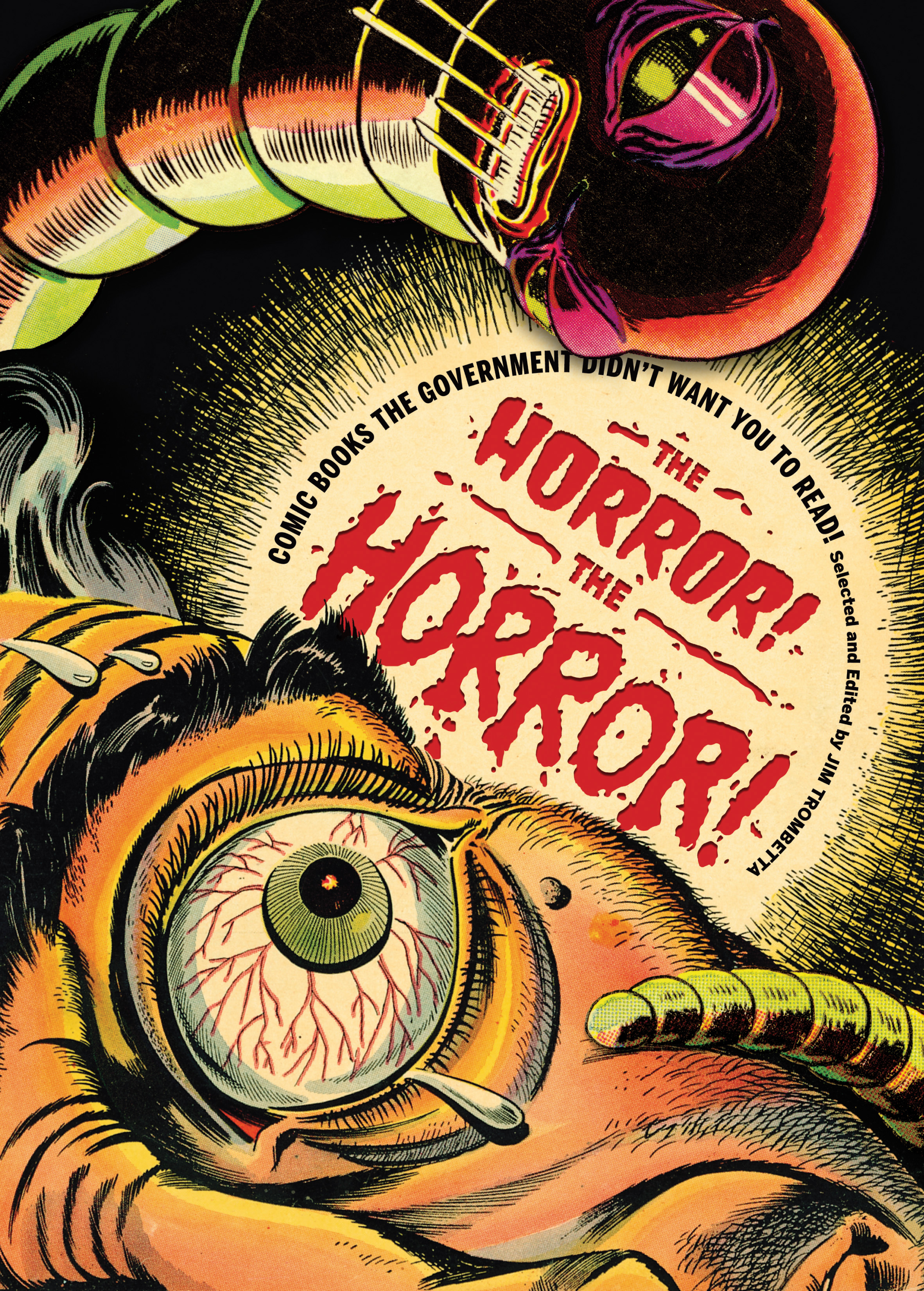
All of which brings me to another book I’ve been reading recently, Jim Trombetta’s lavish study of the pre-Comics Code horror comics of the 1950s, The Horror! The Horror!
Given the last publishers abandoned the Code earlier this year, The Horror! The Horror! is a historical artefact in more ways than one: not just the anxieties and the culture they were embedded within have long since vanished, but even the moral panic that suppressed them has subsided, if only to be replaced by different fears. Yet it’s also a wonderfully vivid and often marvellously immediate portrait of a cultural form that flowered only briefly before being pushed underground.
For me it’s also an exercise in nostalgia. Although I’m obviously too young to have read any of these comics in their original form, my childhood reading was augmented not just by the black and white reprints of old E.C. comics that could be found in Australian newsagents in the 1970s, but by several fabulous books about the history of comics my parents gave me as a child (the best of which, Les Daniels and John Peck’s Comix: A History of Comics in America is readily available in cheap second-hand editions via Amazon and AbeBooks).
But either way The Horror! The Horror! is a delight. While Trombetta has some acute (if sometimes rather over-theorised) things to say about the social and cultural conditions that gave birth to the horror comics of the 1950s (the idea of the passion for zombies as a response to the Korean War was new to me, for instance) and the campaign to suppress them (Trombetta rightly points out that the same culture which wanted to ban the weird horror of kid’s comics was also explicitly retailing its own officially-sanctioned nightmares about nuclear war and Communist infiltration) he largely lets the comics themselves do the talking, reproducing not just a host of covers but dozens of stories in full.
Viewed collectively it’s difficult not to be struck by the sheer energy and delight of the work on display. Partly that’s about the fact many of the artists and writers are ones who would go on to make their name as the architects of the Silver Age comics on the 1960s (the book’s magnificent cover is by the young Steve Ditko, who would go on to create Spiderman and Doctor Strange (who’s apparently getting a movie soon) with Stan Lee). But it’s also about the form itself, its fertility and openness to the charge of the forbidden and unsettling, and – something its detractors were right about – its explicit sexual overtones. Like the pulp fiction of the pre-war era the very nature of the industry, its speed, its dependence upon formula, allow the best of the work produced to mainline the deepest anxieties and fantasies of the culture it inhabited.
All of which is a roundabout way of saying it’s a book that’s very worth tracking down (the edition I have comes with a DVD of Paul Coates’ famous 1955 report on the industry, though that report is also available online and is embedded below). If you’d like to know more about it you might also want to read Graphic Novel Reporter’sinterview with Trombetta, or you can feast your eyes on the images in the promotional video below.
One side-effect of my sporadic posting over the last few months is the fact I haven’t had a chance to talk about my partner Mardi McConnochie’s new book, The Voyagers, which was released this week.
As Mardi’s partner I’m obviously biased, but I think she’s a wonderful writer and this is a particularly wonderful book. Like all her novels it’s not just beautifully constructed and written, but warm and funny and finally very moving. But it’s also very exciting to me because I think there’s little doubt it’s her richest and most emotionally rewarding novel to date.
As some of you may be aware, the novel focusses on an American sailor, Stead, who returns to Sydney in 1943 hoping to see Marina, a girl he met on shore leave during his last visit to Sydney five years earlier. Travelling to her mother’s house he is shocked to discover she is missing, and has been for several years, having disappeared not long after she arrived in London to study music. Knowing he needs to see her, to know she is alright, Stead sets off to find her, beginning a journey that will take him around the world.
As the description above makes clear the book is quite explicitly a romance, albeit a reasonably unconventional one. But it’s also much more than that. Like all Mardi’s novels it’s deeply concerned with the ways women’s lives are shaped by the societies they inhabit, and the choices and compromises they are required to make.
These are questions that are explored with great verve and wit in Mardi’s first novel, Coldwater, which transplants the Bronte sisters to a penal island off the Australian coast (and which was one of the Washington Post’s Books of the Year back in 2001) but in The Voyagers they’re given added heft by the effects of the war, and the way it allowed women freedoms that had never been available to them before.
Given the recent debate about the ways writing by women is still marginalised by the literary establishment I think it’s worth asking why exactly a novel about such questions is marketed as a romance, when a novel about men fighting would almost immediately be classed as capital “L” Literature, but I don’t want to push that point too hard here. What I do want to say is that despite its incredibly elegant plotting and structure the real strength of the book lies in the intelligent and unsentimental depiction of the relationships at its centre, and in particular the complexity of feeling it brings to bear on the relationships between the women whose lives occupy its final third, much of which takes place in a Japanese prison camp, and the children in their care.
Anyway, I won’t bang on too hard. Suffice it to say I think it’s a wonderful, funny and deeply moving book, and one everybody should read. If you’d like to know more about it there’s an interview with Mardi at Booktopia, and you can read an excerpt on Penguin’s website. And while the reviews haven’t really started to come in yet, there’s a very good (and very smart) one on the Readings site, and another in the May issue of Australian Book Review (sadly not online). And if you’d like to buy a copy it’s available from Readings and Booktopia, or you can check prices at Booko (where you can also check out prices for Mardi’s other novels, Coldwater, The Snow Queen and Fivestar). And finally, if all that’s not enough, Mardi’s also a guest at the Sydney Writers’ Festival.
A couple of posts ago I was talking big about returning to regular posting, something I managed for all of about a week before everything fell in a hole again. I’m not going to make any more rash promises for the moment, simply because I’m still caught in the perfect storm of work and external commitments that has made blogging difficult since the end of last year. But I will try and make sure I do a bit better than I have in recent weeks.
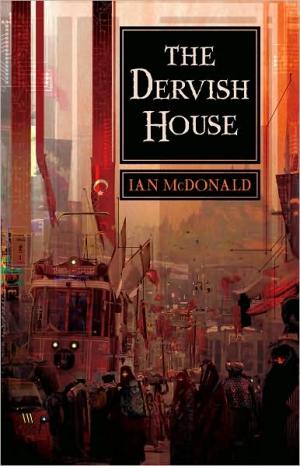
In the meantime, I’ve got a few things happening around the traps. Over at The Spectator’s Book Blog I’ve got a long piece on Ian McDonald’s The Dervish House, which despite being passed over for the Arthur C. Clarke Award in favour of Lauren Beukes’ rather fab Zoo City won the BSFA Award for Best Novel last week and is shortlisted for the Hugo Award for Best Novel. As I say in the piece it’s a travesty a writer of McDonald’s talents isn’t better known outside SF circles, especially given how little separates his work from that of writers such as Richard Powers and David Mitchell, so if you don’t know him I really do recommend checking the book (and indeed the review) out.
Elsewhere I’ve posted my review of Téa Obreht’s The Tiger’s Wife to the Writing page, something I promised to do weeks ago. Obreht is in Sydney for Sydney Writers’ Festival in a few weeks, and the book is both good and interesting, so take a moment to check it out if you get a chance.
And finally if you’re in Sydney you’ve got two chances to hear me gasbagging on in the next couple of weeks (and then about a thousand once the Festival begins, but I’ll do a separate post about that soon).
The first is on this week’s episode of TVS Channel 44’s Shelf Life, which features an interview with me about reviewing and writing online. I’ve not seen it, and the first screening was actually last night, but the show is on air three more times this week: today (Wednesday) at 1:30pm, Friday at 8:00am and Saturday at 12:30pm. If you don’t get Channel 44 or you’re outside Sydney you can stream the show from the TVS website.
And if that’s not enough I’ll be appearing alongside P.M. Newton, Kirsten Tranter and Sophie Hamley as part of When Genres Attack at Shearer’s Bookshop in Leichhardt at 7:30pm on Friday 13 May, a session devoted to exploring what it is that fascinates each of us about genre television and fiction, and to asking some questions about how we think and talk about genre, and how that’s changing as the cultural landscape changes.
And yes, I’ll be back later this week. At least I hope I will.
Just a quick note to say I’ve got a number of reviews in publications that are just hitting the newstands.
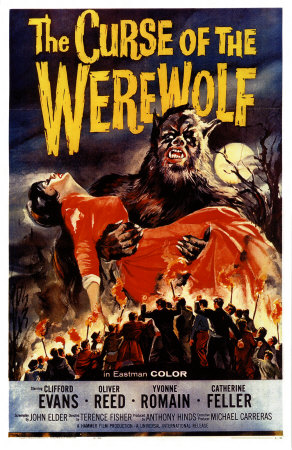
The first is of Glen Duncan’s slick, sexy reworking of late-capitalist lycanthropy, The Last Werewolf, which you’ll find in today’s Weekend Australian. I’ve long thought Duncan was a writer who deserved a wider audience, and I suspect The Last Werewolf may be the book to do that for him: certainly he brings a panache and intelligence to the material which lends it real distinction.
Meanwhile in the land of Fairfax I’ve got a review of wunderkind-of-the-week Téa Orbreht’s debut, The Tiger’s Wife in this morning’s Sydney Morning Herald (it’s not online yet, but if it doesn’t turn up by Monday I’ll post it on my Writing page). If you haven’t heard of Obreht yet I’m sure you will soon (if you’re in Australia she’s actually a guest at Sydney Writers’ Festival, the program for which was released on Thursday). Whether The Tiger’s Wife lives up to the hype seems to me to be an open question. It’s good, and Orbreht is enormously poised and polished for her age, but it’s also less innovative than the buzz makes it out to be, owing quite a lot to both the magical realists of the 1980s and more contemporary fantasy and horror writers such as Kelly Link, Margo Lanagan and Neil Gaiman (it’s actually rather interesting to speculate which of the two traditions she’s drawing upon).
As well as the Duncan and Obreht reviews I’ve got a long piece about Annie Proulx’s Bird Cloud in the April Australian Book Review. It’s not online either, which would be a pity except that it gives me an opportunity to mention that ABR have just launched their new online edition, which not only allows subscribers to choose between digital and print subscriptions, but also grants access to ABR’s extensive backlist and other, online-only features. It’s a pretty amazing resource and very worth checking out.
And finally I’d be remiss if I didn’t direct you to Rjurik Davidson’s excellent essay about New Wave SF in the most recent Overland, which I read about ten minutes after publishing my last post. Davidson is of course the author of the justly-praised short story collectionThe Library of Forgotten Booksbut he’s also an astute and talented critic, and even if you’re not familiar with the writers lumped together under the somewhat misleading term who make up SF’s “New Wave”, it’s well worth a read (not least because the new China Mieville, Embassytown, is in many ways an extended homage to Silverberg and Aldiss).
As some of you probably know, I’ve spent a lot of the last year or two reading and thinking about SF. I’m still grappling with a number of questions about the relationship between SF and more conventional literary fiction (for what it’s worth I do think it makes sense to speak of the two as discrete, if overlapping entities), but I’ve been very taken by three things I’ve read in recent months.
The first is from Ken MacLeod, a writer I admire very much (and anybody who’s trying to think through the longer terms implications of Wikileaks could do worse than read his excellent 2007 novel, The Execution Channel), who concludes a discussion of Andrew Crumey’s Sputnik Caledoniaby making a point that’s been made before but deserves to be made again:
“SF literalises metaphor. Literary fiction uses science as metaphor. In Sputnik Caledonia, the parallel world is a metaphor of what is lost in every choice. That’s why the book is literary fiction and not SF, and is all the better for it. ‘What might have been’ functions in SF as a speculation. In Sputnik Caledonia, as in life, it’s a reflection that we seldom have occasion to make without a sense of loss.”
The second is from Paul McAuley’s blog, Unlikely Worlds (McAuley has been one of my favourite SF writers since the mid-1990s, and as I mentioned in my Best Books of 2010 post a while back, his most recent novel,Gardens of the Sun, is both beautiful and very moving). Responding (with what seems to me considerable forbearance) to Edward Docx’s idiotic piece about the crapness of genre fiction Paul suggests Docx’s argument proceeds from a false assumption about the relationship between genre writing and its audience:
“Bad genre writers pander to the expectations of their readers; good genre writers subvert those expectations; great genre writers, like Philip K Dick, J.G. Ballard, or John Crowley, transcend them, completely rewriting conventions or using them for their own ends. And while there may not be any genre writers who can match, sentence for sentence, literary writers at the top of their game – Saul Bellow, say, or Gabriel Garcia Marquez – there are certainly a good number who can match the middle ranks of their literary counterparts. Who aren’t content with utilitarian prose and (quoting Wood again) “selection of detail [that] is merely the quorum necessary to convince the reader that this is ‘real’, that ‘it really happened’”, but want to bring life to their pages by selecting the best possible words in the best possible order.”
And finally there is this, from Frederic Jameson’s Archaeologies of the Future, also quoted recently on Paul’s website:
“The conventional high-culture repudiation of SF – its stigmatization of the purely formulaic (which reflects the original sin of the form in its origin in the pulps), complaints about the absence of complex and psychologically “interesting” characters (a position which does not seem to have kept pace with the postcontemporary crisis of the “centred subject”), a yearning for original literary styles which ignores the stylistic variations of modern SF (as Philip K. Dick’s defamiliarization of spoken American) – is probably not a matter of personal taste, nor is it to be addressed by way of purely aesthetic arguments, such as the attempt to assimilate selected SF works to the canon as such. We must here identify a kind of generic revulsion, in which this form and narrative discourse is the object of psychic resistance as a whole and the target of a kind of literary “reality principle”. For such readers, in other words, the Bourdieu-style rationalizations which rescue high literary forms from the guilty associations on unproductiveness and sheer diversion and which endow them with socially acknowledged justification, are here absent.”
“attempts to appeal to the gatekeepers of the high literary citadel by pointing out that SF is firmly rooted in the present, that it extrapolates and amplifies current nightmares and obsessions, or that it explores alternate social structure through utopian or dystopian constructions, are, even though valid, pointless. . . Better to turn away from that and address the great luminous question that SF should make its own: what do you mean by reality, anyway?”
Apologies for the extended break in transmission, which is attributable to too much travel, too much work and a week in bed with some kind of virus. Since I’m still trying to get the edits on Black Friday done and finish a story for a collection that will be out later this year, as well as trying to catch up on all the work that didn’t get done while I was away and sick, things might stay a little quiet around here for a few weeks. But I’ll definitely be getting a few things up, in particular a piece on Wayne Levin’s gorgeous new book, Akule, which I reread over the weekend, and is simply amazing.
In the meantime, you might want to check out my review of Carol Birch’s Jamrach’s Menagerie, which appeared in The Weekend Australian on Saturday. I have to confess to not having read Birch before, but there’s a lot to like in this one (not surprisingly it’s recently turned up on the longlist for this year’s Orange Prize), not least the way it manages to eschew the fairly prosaic mode of much historical fiction in favour of something much more vivid and particular. Spookily it’s also a riff on the wreck of the Whaleship Essex, a story I was complaining was following me around just the other day.
Further afield Faber have uploaded a terrific recording of Willy Vlautin reading a new story based on the characters from Lean on Pete, which comes complete with music by Richmond Fontaine. And if you’re looking for reading matter I can thoroughly recommend both Lauren Beukes’ Arthur C. Clarke Award shortlisted Zoo City (urban fantasy, set in South Africa, with gangsters, guns and muti), which is both very stylish and a lot of fun (you can read the first chapter online) and China Mieville’s new one, Embassytown, which is out soon (I’m reviewing it, so I can’t say much beyond it’s one of the best things I’ve read in quite a while). Again the first chapter is available online.
And finally, I know it’s been out for a while, but this track from The Duke and the King’s new one, Long Live the Duke and the King, still rocks my world.
Having just spent several days having a rather fabulous time in Perth for the Perth Writers’ Festival, I’m about to head off again, this time to Queensland, to be part of the Outspoken Festival in Maleny.
As Festivals go, Outspoken is a relatively unusual one, taking the form of a season of monthly one-on-one interviews with writers, but I’m really thrilled to be a part of it, both because I’ve never been to Maleny (which is famously beautiful) and because the person doing the interviewing is the novelist Steven Lang, whose work I’ve known and admired for some time.
The event is in the Maleny Community Centre at 6:00pm next Wednesday, 16 March. Tickets are available from the Maleny Bookstore, 2/41 Maple Street, Maleny, or by phone on 07 5494 3666. If you live in the area it’d be great to see you.
As I mentioned on the weekend, on Friday I’m heading west for Perth Writers’ Festival. You can read the full program on the Perth Festival site, but the organisers have pulled together a great lineup of both Australian and international guests, with appearances by Andrew O’Hagan, Annie Proulx, Margo Lanagan and Armistead Maupin.
I think it’s going to be a great weekend, so with a bit of luck I’ll see some of you there. And please don’t be shy about saying hello: I don’t get west often so if you’re a reader or a commenter it’d be great to put a face to your name.
Finally, on a slightly sadder note, I was very sorry to read on Monday that Hazel Rowley, who was due to appear at the Festival, has had to cancel because she’s extremely ill following a serious stroke. I don’t know any more than what’s been reported in the media, but my best wishes to both her and her family in what must be a very difficult time.
Apologies if things have been a bit quiet around here this week: I’m deep in the horror of editing, and haven’t been particularly well. Things are likely to stay quiet for at least the next couple of weeks, partly because I really do have to get these edits locked away, partly because I’m interstate for Perth Writers’ Festival and an event in Maleny, Queensland (more on both soon).
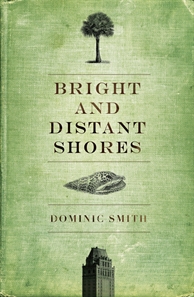
In the meantime, I wanted to point your attention to my review of Dominic Smith’s rather terrific new novel, Bright and Distant Shores in this morning’s Weekend Australian. Smith’s name may not be familiar to many Australian readers – I certainly wasn’t aware of him – but he’s actually an Australian who’s been resident in the United States for some years, and the author of two earlier novels, both of which have garnered considerable praise.
My sense of it is that Allen and Unwin see Bright and Distant Shores as his breakout book, and I don’t think their confidence is misplaced. Set on the cusp of the 19th and 20th centuries in Chicago, San Francisco and the islands of the Western Pacific, it’s a big, often beautiful book, buoyed by both its ambition and the depth of feeling that moves within its pages. For what it’s worth I also think it’s got literary award written all over it, so while I suspect it won’t qualify for the Miles Franklin, I’d expect to see a fair bit of it on the shortlists for the various Premier’s, Festival and Commonwealth Awards.
On the review and award front, I’ve also uploaded my review of Frederick Reiken’s rather lovely Day for Night, which along with Jonathan Franzen’s Freedom, Jennifer Egan’s A Visit from the Goon Squad and Richard Bausch’s Something Is Out There (which I’m planning to read soon) made the shortlist for the Fiction Category in this year’s LA Times Book Awards. I’d be very surprised to see it knock over either Franzen or Egan, not least because it’s one of those odd, slightly idiosyncratic books that some people will love and others won’t, but I liked it a lot, and I’m pleased to see it getting some attention. I’ve also uploaded a long review of Thomas Keneally’s The Widow and her Hero I wrote for the TLS back in 2007.
Just a quick note to apologise to anybody who’s been caught out by the antics of yesterday’s post about the collapse of Borders. After I posted it I discovered the system had somehow posted an unedited version of the text. Because I was out of the house I was reduced to trying to fix it on my phone, which made the formatting go berserk.
Deciding it wasn’t a problem I could fix sitting on a train, I trashed the post, intending to repair the problem later in the day, but in the end I didn’t get back to it until today, and at this point the prospect of manually repairing the formatting feels like more than I can face.
So, apologies to anybody who’s had the damn thing pop up in their RSS and then disappear. If I get really excited I might fix it tomorrow, but I suspect my energy for the question may have already dissipated.
I’ve been listening to a lot of choral music lately, and in particular to Eric Whitacre’s most recent collection, Light & Gold, which features the Eric Whitacre Singers and the King’s Singers, with soprano Grace Davidson on solos.
It’s a lovely disc, with gorgeous arrangements of poems by Cummings, Paz, Yeats and Silvestri, and five Hebrew love songs which also feature the Pavao Quartet. There’s a generosity and glow to Whitacre’s music which it’s difficult not to respond to, and this is captured beautifully in the recording, which is immensely warm and uncluttered (it’s probably not coincidental Whitacre himself conducted the pieces).
The highlight of the disc is probably the Hebrew Love Songs, but I’ve formed a great affection for the arrangement of Kipling’s ‘Seal Lullaby’. Almost too sweet, and deliberately sentimental, it’s similarly almost impossible not to respond to.
Some of you may know ‘Seal Lullaby’ from The Jungle Book, where it forms the epigraph to ‘The White Seal’, if not, it’s a poem that captures the intimacy and tenderness between parent and child very powerfully:
Rudyard Kipling, Seal Lullaby
Oh! hush thee, my baby, the night is behind us
And black are the waters that sparkled so green.
The moon, O’er the combers, looks downward to find us
At rest in the hollows that rustle between.
Where billow meets billow, there soft by the pillow.
Oh, weary wee flipperling, curl at thy ease!
The storm shall not wake thee, no shark shall overtake thee
Asleep in the storm of slow-swinging seas.
The arrangement reflects this, rising and falling like the sea, or breath, and in a way it’s unsurprising to learn Whitacre had his own child in mind when he write it.
Delightfully Whitacre wrote the piece at the request of Disney executives who were planning a movie of ‘The White Seal’. It was, as Whitacre explains, one of those commissions which strike a chord almost immediately, and he wrote the song quickly, delighted by the lyrics and the idea of the seal and her child, and sent it off in very short order.
But then silence fell:
“I began to despair. Did they hate it? Was it too melodically complex? Did they even listen to it? Finally, I called them, begging to know the reason that they had rejected my tender little song.
“Oh,” said the exec, “we decided to make Kung Fu Panda instead.”
I’ve uploaded a video of Whitacre conducting an impromptu performance of the piece in Canada a couple of years ago at the bottom of the post: there’s a rather more polished version featuring the California Lutheran University Choir on YouTube as well, but I like this one, both because Whitacre himself is conducting and because one of the singers (rather gorgeously) is holding a sleeping baby.
But Whitacre is fascinating in other ways as well. Not only is he that most improbable of things, a rock star classical composer (complete with flowing golden hair and rock star looks) he’s also one fo a relatively small group of classical musicians and composers leveraging the possibilities of social media and the web not just to connect with fans, but to build communities around their music.
Part of this process is simply about using Twitter to open up the process of composition to public view. While I know novelists increasingly exteriorize their process via social media, there’s still something very striking about hearing a composer like Whitacre say things such as, “YEEESSSSS! Solved the transition. As always, I was over-thinking it; it’s always the simplest solution that is the most elegant”.
But it also involves Whitacre’s remarkable Virtual Choir Project, a project that brought together 185 singers in 12 countries in a special recording of Whitacre’s ‘Lux Arumque’. Each member of the choir recorded their part separately, then submitted them to Whitacre and Producer Scott Haines, who mixed the recordings together, then created an accompanying video.
Whitacre (who blogs, naturally) has written about the process, but you can also listen to him explain it on the video below, and listen to the recording itself beneath that. And if you like what you hear you can buy Light & Gold from Amazon, iTunes or JB Hifi.
And finally, just a little reminder of the way that once you’re looking, everything connects. After spending a chunk of Sunday afternoon writing my post about George Pollard and Moby Dick, I sat down in front of the television and turned on a recorded episode of the BBC’s South Pacific. And what’s the episode using as its framing narrative? The story of the wreck of the Essex. Then after a week of listening to ‘Seal Lullaby’ I go upstairs to read the next book I have to review, Téa Obreht’s rather brilliant debut, The Tiger’s Wife, and what’s it all about? The frickin’ Jungle Book.
’The Changeling'
Appears in Jonathan Strahan's Fearsome Magics. Compare prices for the UK print edition and US print edition; also available for Kindle (US and UK) and most other ebook formats.

 This week is the second of Festival Director Chip Rolley’s Sydney Writers’ Festivals, and unlikely as it seems, it looks even bigger than his first.
 and
and 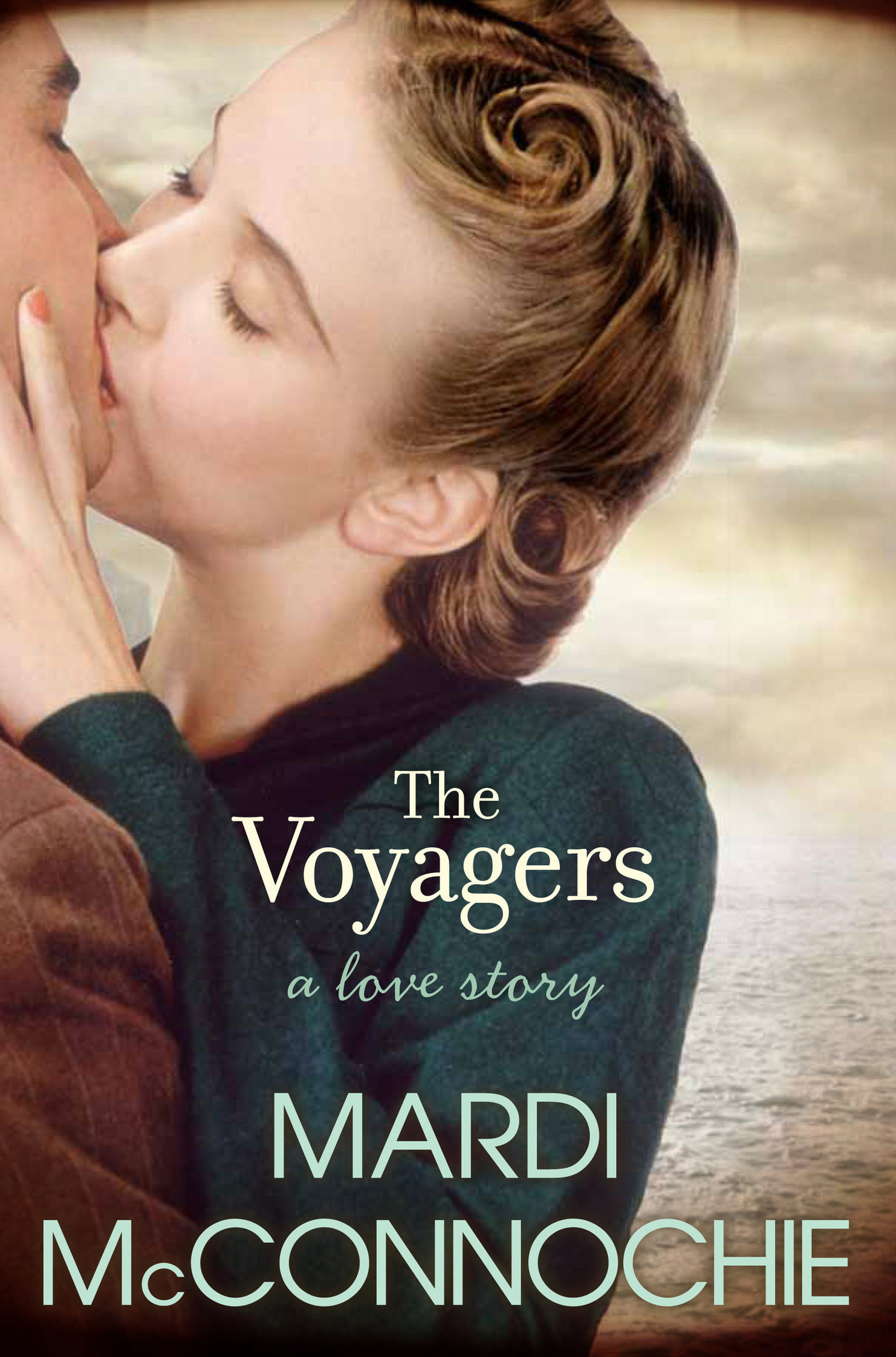





 ,
, 



 city of tongues