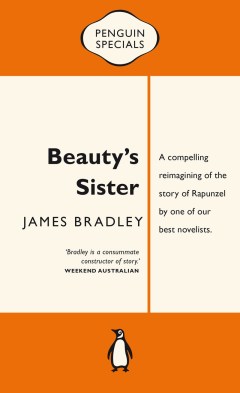
I’m delighted to say my novelette, Beauty’s Sister, which was published as a digital-only Penguin Special last year is now available as a nifty orange Penguin paperback. You can see the rather lovely cover on the right (I know it’s been said before, but the orange Penguin livery is one of the truly great pieces of design), and if you’re in Australia you should also be able to buy it at your local bricks and mortar bookshop (elsewhere you’ll have to check out online retailers or buy it in digital form for Kindle, iBooks,Google Play, or Kobo (or for Kindle in the UK)).
As the blurb below explains, ‘Beauty’s Sister’ is a reworking of ‘Rapunzel’, but along with ‘Catspaw, or The Rakshasa’s Servant’, it’s also one of a series of “tales” I’ve been working on over the past year or two. At some point they’ll hopefully form a cycle of some kind, but for now I’m just enjoying exploring the things they let me do with magic and fables.
Anyway, the blurb is below. If you’d like to buy a copy check out your local bookshop or take a look on Booko. And as I said above, if paper is no longer your thing you can also buy it for for Kindle, iBooks,Google Play, or Kobo (and for Kindle in the UK)).
“A story of jealousy, passion and power, Beauty’s Sister is a dark and gripping reimagining of one of our oldest tales, Rapunzel, from acclaimed novelist James Bradley.”“Juniper, living deep in the forest with her parents, is stunned to discover that the beautiful girl living isolated in a nearby tower is her sister. When the two girls meet, what begins as a fascination and a friendship ultimately develops into something truly sinister.
I hope you like it. I’m thrilled it’s now in paperback.
At Perth Writers’ Festival a few weeks back I had the pleasure of hosting a conversation with the depressingly brilliant, charming and multi-talented China Miéville. If you’re in Australia and you’re free at 11:00am tomorrow, it’ll be screening on Big Ideas on ABC 1, otherwise you can check out a preview below and watch the full interview or download video and audio versions of it from the Big Ideas website. It should also be available to Australian viewers on ABC iView later this week as well.
This is a little late in the day (although it’s been that kind of month), but if you’re in Perth and heading to the Writers’ Festival over the weekend I’m doing a few sessions you might want to check out.
And while we’re on the subject of the Stellas it was great to see the release of the inaugural longlist for the award. It’s a really interesting and diverse collection of books that span fiction, non-fiction and memoir. Big congratulations both to everybody on the list and to all the people who have worked so hard to make the award happen.
I mentioned the other day I was leaving this year’s roundup of my best books until the last minute because The Weekend Australian wasn’t running its selections until today, and I didn’t want to preempt what I’d written for them.
My lists are possibly a bit truncated because six weeks of my year was devoted to reading all 5000 pages of George R.R. Martin’s A Song of Ice and Fire, a task that not only never felt onerous (except perhaps during the endless sequences in the East in A Feast for Crows) but left me howling with rage that the next part, Winds of Winter, isn’t due until 2014 at the very earliest (and let me just say that if ol’ George dies before he finishes the final book I will personally dig him up and kill him again).
I want to write something more substantial about the series at some point; for the moment I’d just say that I think they’re a pretty remarkable achievement. Martin gets praised for the skill with which he controls his incredibly complex narrative, and for the richness of his characters, but in a way I think the real achievement of the books is their capacity to make you admire characters you may not particularly like (the obvious example is Stannis, but the transformation of Jaime into a sympathetic and even admirable character is one of the real achievements of the series, as is the manner in which the reader comes to sympathise with Cersei by the end of A Feast for Crows). It’s a quality that’s made even more effective by the skill with which Martin frustrates the reader’s narrative expectations, changing the rules by killing characters you assume can’t die and demonstrating the way the actions of minor characters can throw even the best-made plans into chaos (in a way the series is really about the sheer unpredictability of political and military outcomes).
I’m not sure how much crossover there is between Martin’s readership and Hilary Mantel’s, but there are more than a few similarities between A Song of Ice and Fire and Mantel’s Wolf Hall and Bring Up The Bodies. Both share a fascination with the exercise of power, and with the complex and often subtle ways in which characters overreach. And while Mantel’s vision is darker than Martin’s (as books like Beyond Black demonstrate, she’s long had a fascination with cruelty and evil, in particular female cruelty and cupidity) there are enough resonances to make me wish that even half the people who’d read Martin would read Wolf Hall and Bring Up The Bodies and vice versa.
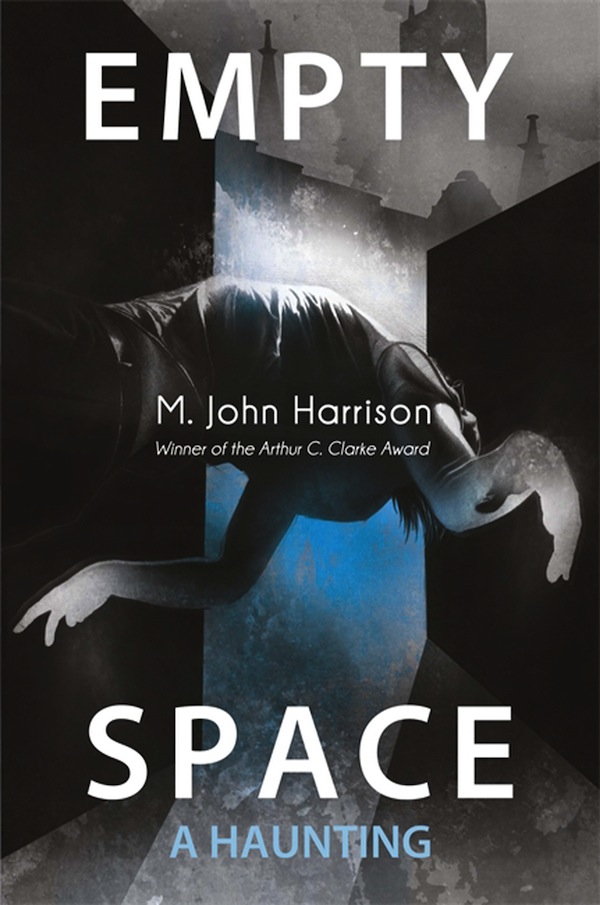
I don’t think there’s any question Bring Up The Bodiesdeserved to win the Booker: electrically written, superbly assured, coolly subversive in a whole series of ways, it is, quite simply, a brilliant book. And I think the Booker judges this year did a good job of producing a shortlist that suggested they actually had some kind of project in mind and knew what they were looking for. But I also think it’s a pity the award’s definition of quality remains so incredibly narrow, not least because if it didn’t there would already be one standout contender for next year’s award, and that’s M. John Harrison’s terrifying Empty Space, a book that walks you to the edge of the void and forces you to look out into it until it begins to look back at you.
On the other side of the Atlantic I was hugely impressed by A.M. Homes’ May We Be Forgiven. It’s uneven and occasionally sentimental (although I suspect the sentimentality is part of the point) but it’s also ferocious and funny and quite brilliant (I’m also reviewing it so I don’t want to say too much before the review runs).
Aside from a few notable misfires, in particular the new ones from Michael Chabon, Ian McEwan and Richard Ford (a novel whose overwritten prose and deadening narrative structure seems to embody all the anxieties of the contemporary literary novel in one (very long) volume), it was a fantastic year for fiction of all kinds. I loved Lauren Groff’s vision of a failing utopia, Arcadia, Colson Whitehead’s Zone One (a book filled with images such as the tide of zombies moving like a river through the streets that continue to haunt me, even a year after I finished it) and John Green’s slightly slick but incredibly moving story of two teenagers with terminal cancer, The Fault In Our Stars.
I also very much enjoyed Patrick Flanery’s imaginary exploration of the lingering effects of trauma, Absolution, Adam Johnson’s North Korean political satire, The Orphan Master’s Son and James Meek’s The Heart Broke In.
On the Australian front I’ve read a lot less than I should, but I loved Margo Lanagan’s selkie novel, Sea Hearts (or The Brides of RollRock Island as it’s known in the UK) and Chris Flynn’s effortless and energetic debut, A Tiger in Eden.
I also read a lot (and I mean a lot) of short fiction, a lot of which was extraordinarily good. The four real highlights were Kij Johnson’s stunning At the mouth of the river of the bees (if you haven’t read its World Fantasy Award-winning opener, ‘26 Monkeys, Also The Abyss’, I suggest you do so immediately), Elizabeth Hand’s Errantry (the opening story of which, ‘The Maiden Flight of McCauley’s Bellerophon‘ is available on Hand’s website), Karin Tidbeck’s strange and quite brilliant Jagannath and Alice Munro’s new collection, Dear Life (the remarkable ‘Gravel’, a story that seems to be one kind of story until, quite suddenly, you realise it’s a quite different kind is a textbook example of Munro’s talent for misdirection). I also loved Junot Diaz’s This Is How You Lose Her, a book of stories sustained by an internal architecture that only reveals itself in the final pages.
Two other books I loved but which seem to me to elide the usual definitions of novel or short story collection are Keith Ridgway’sHawthorn and Child and Alan Garner’s Boneland. Hawthorn and Child isn’t quite a novel in stories, and lacks the unifying architecture of a collection like Diaz’s, but nor is it simply a series of interconnected stories. Either way it’s terrific: tautly written, funny and whip smart both politically and personally. Likewise, Boneland, the final part of the trilogy Garner began 40 years ago with The Weirdstone of Brisingamen and The Moon of Gomrath, is only a novel in a nominal sense, often seeming more like a journey into the disturbed psyche of its author and the landscape that has inspired so much of his work, but it’s no less powerful for it.
If there was one book of non-fiction I wish was on the Christmas reading lists of politicians around the world it would be Callum Roberts’ account of the crisis confronting our oceans, Ocean of Life: although a lot of the material in it will be familiar to anybody with an interest in the subject seeing it laid out in detail in on place is deeply, deeply confronting. Elsewhere on the non-fiction front I very much enjoyed D.T. Max’s biography of David Foster Wallace, Every Love Story Is A Ghost Story, which provided an interestingly unconventional and mercifully unhagiographic account of a troubled life (and the title of which, interestingly, seems to have been inspired by a line of Christina Stead’s), Robert MacFarlane’s stunningly written The Old Ways and Sean Howe’s smart and superbly entertaining Marvel Comics: The Untold Story.
Locally I loved Jane Gleeson-White’sDouble Entry (despite the title it’s about accounting, and despite that it’s fascinating and provocative about the significance of accounting) and Geordie Williamson’s passionate tour through the backblocks of Australian literature, The Burning Library.
On which note I might stop. I had been planning to pull together a list of my favourite music over the past twelve months, something I now suspect won’t happen, so in lieu of a post I’ve pasted in three songs I’ve been playing to death in recent weeks: Nada Surf’s impossibly joyous ‘Jules and Jim’, Band of Horses’ ‘Slow Cruel Hands of Time’ and The Lumineers’ ‘Ho Hey’. And I’d love to hear from all of you about the books you enjoyed this year.
It’s taken a while, but the Penguin Specials editions of my Rapunzel novelette, ‘Beauty’s Sister’, and my essay about Adelaide, adolescence and serial murder, ‘The Element of Need’, are now available in the UK. At the moment they’re only available for Kindle, but iBook and Google Play editions should be available soon, and as soon as they are I’ll post links. I understand they should be available in the US reasonably soon as well.
Both cost £1.99. You can buy the UK edition of ‘The Element of Need’ here and the UK edition of ‘Beauty’s Sister’ here.
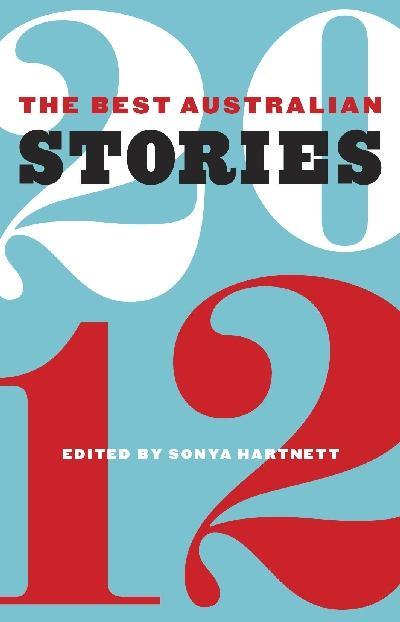
Since it’s been out for a couple of weeks this is a little after the fact, but I wanted to say how delighted I am my story ‘The Inconvenient Dead’ has been selected for this year’s Best Australian Stories (which comes complete with a spiffy redesign). The volume, which was put together by Sonya Hartnett, also includes stories by a bunch of good people such as David Astle, David Sornig, Romy Ash and newcomers like Rebecca Harrison, and while I haven’t read all of it yet, I’m happy to report that what I have read is fantastic.
I’ve also added three reviews to the site: my pieces on Patrick Flanery’s striking and often unsettling exploration of trauma, memory and complicity, Absolution and Dana Spiotta’s stunning third novel Stone Arabia (if you haven’t read it run, don’t walk to your nearest shop and buy it now), both of which appeared in The Weekend Australian earlier this year, and my review of Peter Heller’s haunting excursion into apocalyptic fiction, The Dog Stars, which ran in The Sydney Morning Herald and The Age a few months back. And while we’re on the subject of reviews you might also want to check out my piece on James Meek’s The Heart Broke In, which appeared in The Weekend Australian a few weeks ago.
And the novel? Nice of you to ask. It’s grand: not there yet but close-ish to a (very rough) first draft, which is nice.
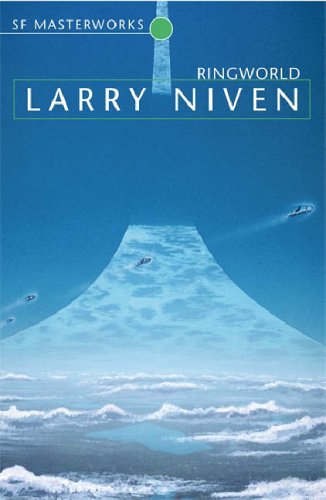
The air was warm and clean; it cleared some of the fumes from his head. He walked the brightly lighted slidewalks, adding his own pace to their own ten-miles-per-hour speed. It occurred to him that every city in the world had slidewalks, and that they all moved at ten miles per hour.
The thought was intolerable. Not new; just intolerable. Louis Wu saw how thoroughly Beirut resembled Munich and Resht … and San Francisco and Topeka and London and Amsterdam. The stores along the sidewalks sold the same products in all the cities of the world. These citizens who passed him tonight looked all alike, dressed all alike. Not Americans or Germans or Egyptians, but mere flatlanders.
In three and a half centuries the transfer booths had done this to the infinite variety of Earth. They covered the world in a net of instantaneous travel. The difference between Moskva and Sydney was a moment of time and a tenth-star coin. Inevitably the cities had blended over the centuries, until place-names were only relics of the past.
San Francisco and San Diego were the northern and southern ends of one sprawling coastal city. But how many people knew which end was which? Tanj few, these days.
Pessmistic thinking, for a man’s two hundredth birthday.
But the blending of cities was real. Louis had watched it happen. All the irrationalities of place and time and custom, blending into one big rationality of City, worldwide, like a dull grey paste. Did anyone today speak deutsch, English, francais, espanol? Everyone spoke Interworld. Style in body paints changed all at once, all over the world in one monstrous surge.”
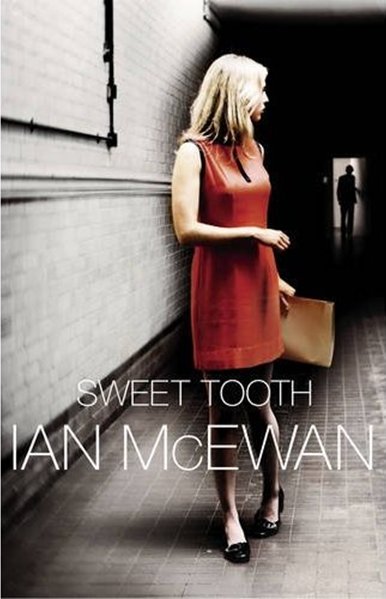
Some of you may have noticed I had a review of Ian McEwan’s new novel, Sweet Tooth in Saturday’s Weekend Australian.
I’ve reproduced the review over the fold in case you’d like to read it, but before you do I thought I might point you toward my reviews of Karen Walker’s vastly overhyped The Age of Miracles and Lauren Groff’s wonderful Arcadia, both of which appeard a few weeks ago, and both of which are books I want to fold into a longer piece I’m working on about the current fashion for dystopia, and what it tells us about the state of science fiction and our imagining of the future more generally.
And while you’re there you might want to check out my reviews of G. Willow Wilson’s Alif the Unseen, and Kim Stanley Robinson’s 2312, both of which I’ve now posted on the site.
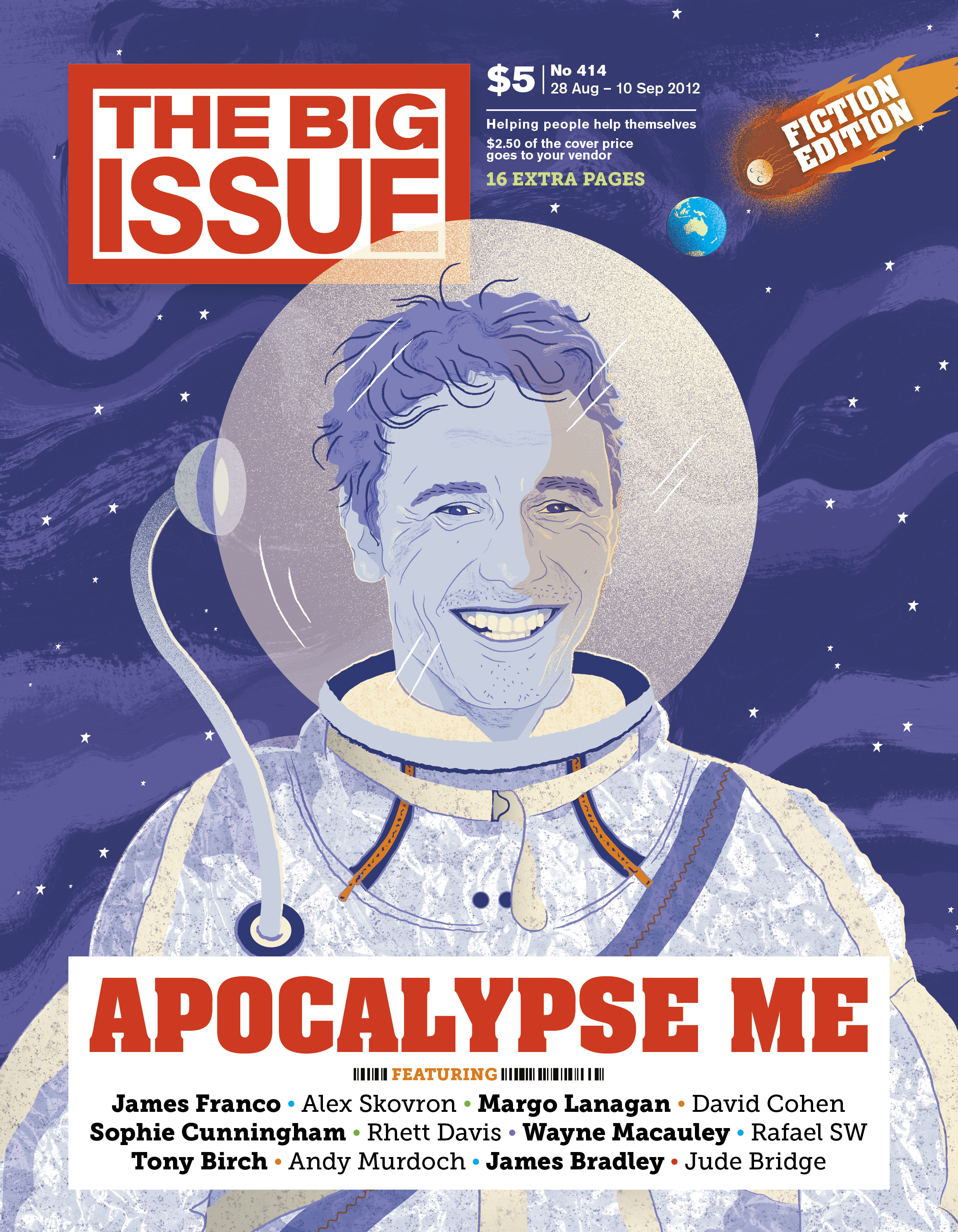
I’ve got a story in the new Big Issue, which hits the streets today. Entitled ‘Solstice’, it’s part of the magazine’s annual Fiction Issue, which this year is focussed on fiction about the end of the world.
I’ve not had a chance to read the whole magazine yet but since it features stories from writers of the calibre of Margo Lanagan, Miles Franklin shortlistee Tony Birch and Sophie Cunningham, as well as an essay by the depressingly multi-talented James Franco I’m sure it’s brilliant.
Of course it’s always a buzz when a new story goes out into the world, but I’m particularly pleased about the publication of this one (which is set ten minutes from now amidst the melting glaciers of Antarctica) because it’s also the first part of the novel I’ve been working on for the past few months, and which I’m very, very excited about.
So what else can I say but do yourself a favour and grab a copy of the magazine today? After all, how often do you get to grab a pile of great stories and help people who really need it at the same time?
I don’t often come across books I think everybody should read, but Callum Roberts’ Ocean of Life, which I reviewed for Saturday’s Weekend Australian, is definitely one of them.
My desire for people to read it isn’t because it’s beautiful, or liberating or even particularly wonderfully written. It’s because it manages, better than almost any other book I’ve read, to communicate the sheer scale of the catastrophe that’s taking place beneath the waves.
As I say in my review, I think its contents are likely to prove deeply confronting for many people. Although much of the material Roberts gathers together will be familiar to anybody with an interest in marine ecosystems I suspect the urgency and complexity of the crisis will come as a shock to people who aren’t. I challenge anybody to read the sections on ocean acidification or anoxic dead zones and not feel disturbed, or to feel comfortable reading Roberts’ lucid analysis of the speed with which fish stocks are collapsing through overfishing.
But in a way the most shocking bits of the book aren’t the facts and figures but the allusions early on to the sheer fecundity of the oceans before humans began to harvest them. Early in the book there’s a remarkable pair of excerpts from a work by the Roman writer, Oppian of Corycus (somebody, I have to confess, I wasn’t familiar with prior to reading the book), describing the methods used to catch the huge schools of tuna that once existed in the Mediterranean.
Most of these involve nets, into which the tuna pour, “without end”, but one is more basic, and relies on the use of a heavy log with spikes in it which is then dropped into the water.
I found the idea that fish might have been so plentiful it was possible to catch them with a spiked log mind-boggling, as I’m sure many others will. But once one goes looking there are many such examples available.
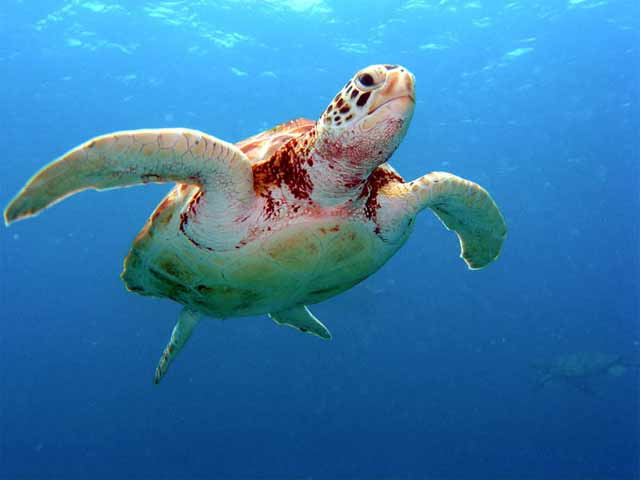
One of my favourite concerns turtles. I have a longstanding fascination with turtles, which have always seemed to me to be creatures of great grace and beauty (I’ve wanted to write about them for years), and some of the most distressing material in Roberts’ book concerns them and the rapid declines taking place in many populations. Pacific populations of leatherback turtles, for instance, have declined more than 95% in the past 50 years.
But the example I’m thinking of doesn’t appear in Ocean of Life and doesn’t concern leatherbacks. Instead it relates to green sea turtles. These days there are estimated to be less than 90,000 nesting female green sea turtles left worldwide, yet when Europeans first arrived in the Americas 500 years ago it is believed there were 100 million in the Caribbean alone.
Exactly how reliable these sorts of estimates are is obviously an open question, and not one I’m in a position to assess. Ocean of Life includes an interesting discussion of attempts to derive historical fishing yields from extant data, while other studies have used at prices at market to estimate the same. But whether the figure was accurate or not, the fact is that turtles were once so common in the Caribbean that when Columbus arrived feeding groups often filled the ocean to the horizon, and as late as the eighteenth century ships that had lost their way to the Cayman Islands could steer there entirely by the noise of green sea turtles returning to nest.
If you’re staggered by that idea I suggest you read Ocean of Life, a book that doesn’t just make clear how much trouble the oceans are in, but goes one step further and offers an outline for a plan of action. And once you’ve read it, buy a second copy and send it to your local member of parliament, or hand it on to somebody else. Because as I say in my review, this is one of those rare books about the ocean that should be read not just by everybody with an interest in marine ecosystems, but by business leaders, politicians and policy-makers around the world.
Update: I’ve just discovered there’s an excerpt from Ocean of Life over at Newsweek. Please read it.
So, I’ve been away for a while. It wasn’t really intentional, but I’ve been completely overwhelmed by work and family commitments since about March, and this site is one of the many, many things that have fallen by the wayside. Things have eased off a little lately, but since I’m now working hard on a new book I’m not going to make any rash promises about how much I can manage on top of that.
I’m hoping I’ll get a few things up in the next week or two, but in the meantime I thought I’d link to my reviews Kim Stanley Robinson’s 2312, a book that seems to be getting fairly polarised reactions from readers and critics (for what it’s worth I thought it had extraordinary bits but was less good than I wanted it to be overall) and of G. Willow Wilson’s Arabian Nights/Arab Spring/tech thriller Alif the Unseen, a book that’s generating a huge amount of buzz overseas.
And I’ve plugged the Alabama Shakes before, but if you haven’t heard them, you might want to take a moment to check out this live recording of the title track from their new album, Boys and Girls. It’s a great song, and Britanny Howard’s voice is even more jaw-dropping live than in the studio.
I’m incredibly excited to be able to say that on Saturday night I was awarded the Pascall Prize for Criticism. It’s a huge honour, and needless to say I’m delighted, although in a way the really wonderful (and weirdly humbling part) has been how many people have written, tweeted or sent messages to say congratulations.
If you’d like to read my acceptance speech, it’s available on the Pascall website, as is the Judge’s Report, but since I suspect most of you won’t make it over there I’d like to say again how grateful I am to the judges, Geordie Williamson and Alison Croggon (both of whose work I admire immensely) and to the Pascall Foundation itself, for its commitment to the idea of criticism as something important and worthy of celebration. You can also read an extended interview with me over at Stephen Romei’s blog, A Pair of Ragged Claws.
I should also thank all of you, since at least part of the reason I was chosen was the work that appears on this site, work that has been shaped considerably by the generosity and intelligence of the many, many people who have taken the time to comment and engage with each other here. I’m aware things are a bit slow around here at the moment but hopefully that will change once I’ve got a couple of the things I’m working on locked away.
I’m delighted to announce my story ‘Beauty’s Sister’ has been selected as one of the first four pieces for Penguin’s Shorts program, which launches today.
Designed to offer quality fiction and non-fiction able to be read in a single sitting in digital-only formats, Penguin Shorts are also an attempt to create a space in which new and established writers can experiment with work that’s too short for a book and too long for a magazine. The number of works available will grow over time, but for now there are four titles available: two exclusive short works from Women of Letters curators Marieke Hardy and Michaela McGuire, Nam Le’s story, ‘Love and Honour and Pity and Pride and Compassion and Sacrifice’ and ‘Beauty’s Sister’. Full details of all the titles are available on the Penguin Shorts website.
‘Beauty’s Sister’ is a bit of a departure for me. A reworking of Rapunzel, it’s the first of a collection of tales I’ve been working on (and which I’ll hopefully find a way to publish in the next year or so). It’s also a bit more substantial than the other pieces I’ve published recently – in SF/Fantasy terms it’s a novelette – but I think it whips by all the same.
You can read the blurb below, but if you’d like to grab a copy it’s available for Kindle, iBooks, Google Play and Kobo.
“Juniper, living deep in the forest with her parents, is stunned to discover that the beautiful girl living isolated in a nearby tower is her sister. When the two girls meet, what begins as a fascination and a friendship ultimately develops into something truly sinister.
“A story of jealousy, passion and power, Beauty’s Sister is a dark and gripping reimagining of one of our oldest tales, Rapunzel, from acclaimed novelist James Bradley.”
Just a heads-up to say I had a review of William Gibson’s new collection of non-fiction, Distrust That Particular Flavor, in yesterday’s Sydney Morning Herald and The Age. I think collections of non-fiction made up of occasional pieces by novelists are generally to be approached with caution, but this one most definitely isn’t: it’s smart, provocative and offers a genuinely fascinating glimpse of the way Gibson’s thinking has evolved over the past decades.
’The Changeling'
Appears in Jonathan Strahan's Fearsome Magics. Compare prices for the UK print edition and US print edition; also available for Kindle (US and UK) and most other ebook formats.





 city of tongues