Skip to content

Posts from the ‘Books’ Category

Arctic Dreams

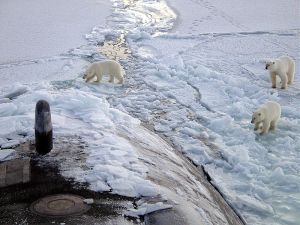
800px-Polar_bears_near_north_poleA while back I did one of those pieces for a newspaper about the books that changed me. Articles of that sort are always slightly weird exercises, as much about selling a version of yourself via your choices as really addressing the question, and I have to confess I don’t remember exactly what books I chose on the day in question (though it’s a fair bet Michael Ondaatje’s In the Skin of a Lion would have been on my list, since the experience of reading it was the thing that set me on the path to becoming a novelist). But I do know that if there’s one book that genuinely has a claim on having changed me, it’s Barry Lopez’s Arctic Dreams, a book which completely altered the way I thought about a whole series of questions about the environment and the way we understand it and our place in it.

Anyway – I wrote the following piece in 2001 for The Australian’s Review of Books, the forerunner to today’s Australian Literary Review, and I recently stumbled on a copy of it on my hard drive while I was working on a review I’ve got in the next issue of Australian Book Review. But what’s frightening about it is that the concerns it expresses were urgent then, eight years ago, yet we don’t seem to have moved any further towards addressing them.

Barry Lopez’s Arctic Dreams begins and ends with the same curious act of respect. A kind of bow, performed before the world he has encountered in the travels through the Arctic. “I took to bowing on these evening walks,” he writes. “I would bow slightly with my hands in my pockets, towards the birds and the evidence of life in their nests – because of their fecundity, unexpected in this remote region, and because of the serene arctic light that came down over the land like breath, like breathing.”

Much later this gesture is repeated, this time on the tip of St Lawrence Island, but in its later incarnation the gesture has moved closer to a kind of stillness, a loss of the self into the land and its rhythms:

“Glaucous gulls fly over. In the shore lead are phalaropes, with their twiglike legs. In the distance I see flocks of oldsquaw against the sky, and a few cormorants. A patch of shadow that could be several thousand crested auklets – too far away to know. Out there are whales – I have seen six or eight grey whales as I have walked this evening. And the ice, pale as the dove-coloured sky.”

The lyric beauty of Lopez’s writing helps transform this simple gesture into a literary artefact of great power and resonance. In his words we glimpse a world that trembles with life, and apprehend, within its detail an otherness we might not otherwise see, a kind of presence which the land embodies, ancient, complete unto itself.

Lopez is first and foremost a visual writer, possessed of a poet’s eye, and his account of the Arctic is anchored in his observation of its terrain, its light, and the animals that inhabit it. Yet it is observation rendered so as to make each moment transcend its detail. Whether it is golden plovers abandoning “their nests in hysterical ploys, artfully feigning a broken wing to distract . . . from the woven grass cups that couched their pale, darkly speckled eggs,” eggs which “glowed with a soft, pure light, like the window light in a Vermeer”, or “herds of belukha whale glid[ing] in silent shoals beneath transparent sheets of young ice”, his writing seeks out the moments when the land reveals itself, where the whole can be glimpsed in the part.

To see in such a way is to contain politics within aesthetics, to transform epiphany into manifesto. It is to suggest a way of seeing that is simultaneously a way of being, as if by seeing clearly we might find connection, and for a moment at least, glimpse the land as something which exists independently of us, possessed of its own meaning. It is, as Lopez puts it, “to be alert for its openings, for that moment when something sacred reveals itself within the mundane, and you know the land knows you are there.”

“You know the land knows you are there.” A notion both simple and strange. Yet this sense of knowing and being known, of seeing and being seen is a way of allowing the imagination to begin conceiving of our relationship with nature as a dialogue, and of nature itself, whether embodied in an owl or the movement of light across the tundra, alive in its own right, “an animal that contains all other animals”, and not something given to us to do with as we desire. This is not science, but in its desire to understand nature, complementary to science, a poetics perhaps, able to contain both the scientific and the moral. Witness Lopez’s description of the intricacy of the polar bear’s physiology and behaviour:

“The interplay here among rest, exertion and nutrition that carries them comfortably through life is something that cannot be broken down into pieces. Like the skater’s long, graceful arc, it is a statement about life, the full exercise of which is beautiful.”

This transformation of aesthetics into politics is central to the tradition of nature writing Lopez is a part of. Ever since Thoreau walked his mile and a half to Walden Pond, writing about nature has been a political act, the expression and the embodiment of a homespun radicalism of peculiarly mystical bent. To see differently, to extend the reach of our imagination through contemplation into other ways of being is to be able to transcend our self, and by moving outside ourselves be granted a new perspective upon our place in the scheme of things. It is to sense the smallness of human history against the story of the planet, and to be made aware of our own impermanence.

There might seem something almost trivial in this appeal to imaginative contemplation given the scale of the environmental catastrophe that surrounds us. The biologist Edward O. Wilson argues that the “maximally optimistic conclusion” is that some 27,000 species become extinct each year, or 74 each day, 3 each hour. Similar estimates put the loss of biodiversity in the next century at somewhere between 25 and 50 per cent, that is to say, one quarter to one half of all species gone forever through human agency within the next 100 years. Given that we have catalogued only the tiniest proportion of this diversity, the vast bulk of these species will vanish unrecorded and unlamented, lost forever.

But it is precisely through the exercise of the imagination that we become able to see the world in such a way as to make sense of this loss, and to understand the cost to ourselves of the failure of imagination that has allowed it to happen. By attending to detail, by learning to see things as they are, we learn to dissolve our selves into the landscape, to become inhabitants of a shared world which exists in its own right, apart from our use of it, one to which we owe a silent respect, and an allegiance.

First published in The Australian’s Review of Books, © James Bradley

Break text

addthisTweet this

Where the Wild Things Are

Hot on the heels of the extended interview feature comes a new, full-length trailer for Spike Jonze’s movie of Where the Wild Things Are. And, despite my longstanding scepticism about the notion of a movie of Sendak’s book, I have to say it looks amazing.

(And that wild, exultant music in the background? It might sound like Jonze’s old pals in The Polyphonic Spree, but it’s actually ‘Wake Up’, from Arcade Fire’s debut album, Funeral).

Break text

Break text

addthisTweet this

The shame of snip and share

Offscreen Film Festival 2008 @ Brussels. Photo: Jeffrey De Keyser.

Offscreen Film Festival 2008 @ Brussels. Photo: Jeffrey De Keyser.

When I started this blog I was worried it would distract me from what I rather stuffily thought of as my “real” writing. I don’t feel that way anymore. Indeed this odd little online creation isn’t just very definitely part of my real writing, it’s also often the bit I enjoy the most.

The thing I didn’t understand back then was that the real problem with blogging isn’t that it’s time-consuming, it’s that it’s completely tyrannical. Don’t post for a day and you feel bad about it, don’t post for a week and you start to feel like you’re letting everybody (including yourself) down. Half the time I feel like I’ve woken up to find myself playing the part of Seymour in an online version of Little Shop of Horrors.

Which is, of course, a roundabout way of apologizing for the fact the site’s been a bit neglected lately. It’s not intentional, just that between work and the fairly appalling schedule I’m on with my novel I’ve been struggling to find the time to post. I think – I hope – things have turned the corner a bit, and I’ll be getting some stuff up this week, but I’m not going to go making any big promises.

To which end I’m going to do something I generally avoid, which is offer a few links in place of content. I’ve got nothing against linking per se, but it always seems a bit like cheating, the sort of thing you do when you’re too busy to write something original. Which I am, of course, but if I keep typing fast enough perhaps I can distract you from that*.

So, without further ado. The most recent issue of The New Yorker has a fascinating interview with Ursula Le Guin, focussed in large part on her 1969 classic, The Left Hand of Darkness, and her feelings about its then-radical take on gender politics, and the manner in which they simultaneously reflect the more conventional attitudes of its times. They’re interesting questions, not least because they recur in the context of Le Guin’s revisionist re-entry into the world of Earthsea in Tehanu (and to a lesser extent, The Other Wind), a book which attempted to unpick the patriarchal underpinnings of one of fantasy’s most remarkable – and enduring – creations.

Meanwhile, over at Sight and Sound, you can read the single best piece of writing about television I’ve read this year, as Kent Jones probes the allure of The Wire. As I’ve said here before, despite my admiration for its many very real achievements, The Wire is a show I often find frustrating. Given the critical consensus that it is one of, if not “the greatest television show ever made”, that often leaves me feeling like a naysayer, but Jones very elegantly teases out many of what I’d see as the show’s weaknesses, while simultaneously illuminating the things which make it so remarkable.

In a completely different vein, at The Chronicle of Higher Education, Michael Ruse uses an exploration of the scientific and philosophical antecedents to James Lovelock’s Gaia hypothesis to examine what has always seemed to me to be one of the more oddly neglected aspects of the climate change debate, which is the manner in which it encapsulates a more fundamental argument about the nature of science itself. And, at The Guardian, Lovelock himself gives one of his trademark doomsayer interviews to celebrate his 90th birthday.

And finally, ever wondered about the link between heroic drinking and great writing? Well at Intelligent Life Tom Shone has some answers (and they may not be the ones you want to hear).

* The eagle-eyed amongst you may have noticed I’ve been using Delicious to post links in the right-hand column for a while now. Sadly they’re not that obvious (and I’m less diligent than I might be in keeping them up to date) but when I finally get my redesign off the ground I’ll be expanding that functionality.

Break text

addthisTweet this

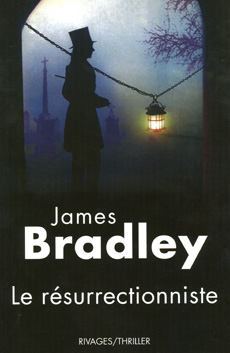
Le Résurrectionniste

Le Resurrectionniste

I’ve always taken a pretty hands-off attitude to translation and translation rights. That’s probably partly because I’m so embarrassingly monolingual, but it’s also about an awareness that you have so little control over the process that it’s better not to let yourself worry too much about it.

That’s not to say I don’t know any of my translators. I’ve recently been in correspondence with the Brazilian translator of The Resurrectionist and I had quite a bit to do with the German translator of my first two novels. In both cases the things they needed clarifying were small, culturally-specific details (most recently about the bonding of convicts in early New South Wales) or points of fact they were unsure about (or I’d not been as clear about as I might have been).

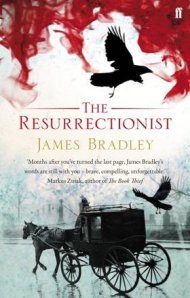
But the one foreign publisher I do have a relationship with is Payot & Rivages, who have just published The Resurrectionist in France.

It’s a relationship that came about largely by chance. Despite my execrable French, I was fortunate enough to spend the second half of 2007 at the Australia Council’s Keesing Studio in Paris, and since I’d sold the French rights shortly before I arrived I thought it couldn’t hurt to give my publishers a call.

Being as exquisitely courteous as most French people, they not only arranged to meet me, but made a great fuss of me, taking me to lunch and inviting me to their home for dinner.

That in itself was a wonderful gesture, and one made the more special by the somewhat hilarious moment when my translators (unusually they’re brothers who work together) asked me what music I listened to while I was writing the book. It seemed a bit of an odd question, but as I’ve mentioned before that I listened to a lot of Philip Glass while I was writing the book, partly because I found its almost hypnotic qualities helped me get into the right headspace, partly because there was something in the structure and texture of the music I wanted to emulate in the way the book’s parts moved against each other, and so I told them that, at which they laughed in triumph, and said ‘We knew it! We’ve been doing the translation listening to Philip Glass and we knew you’d been doing the same’.

Anyway – the other outtake from the night’s festivities came just before I ate, when I was spirited away to a back room and interviewed on camera. They didn’t tell me I was doing the interview until I’d drunk several glasses of wine, which may or may not be apparent in the excerpts that are now available on their website, but what is apparent is how much more clever and concise I am once somebody has translated me into French. Who knew my rambling, half-drunken words could be turned into such chiselled French prose? Or that I could be so suavely epigrammatic? I suppose the lesson is that I should speak in subtitles more often . . .


2009 Man Booker longlist announced

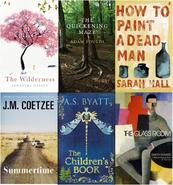
6jacketsforsiteFor those of you who haven’t seen it, the longlist for the 2009 Man Booker Prize has been announced. The judges are calling it “one of the strongest lists in recent memory” (which I’m sure isn’t meant to sound as much like faint praise as it does), and at one level they’re right, since it’s headed up by previous winners such as J.M. Coetzee, William Trevor and A.S. Byatt, but to my mind it’s an oddly subdued list.

I’m sure I’ve aired my views about the Australian fixation on the Booker before, but there’s something oddly colonial about the way we fetishize it, particularly given our relative lack of interest in American awards such as the Pulitzer and the National Book Award. No doubt that’s got a bit to do with the fact that the Booker admits Australian writers, while the major American awards don’t, but I suspect it’s got rather more to do with our lingering attachment to old prejudices.

That said, there’s no doubt that as literary horse races go, the Booker is one of the best. Artfully stage-managed until recently by administrator Martyn Goff, it has made an art form of the contrived controversy (for a more in-depth analysis of the reasons for the Booker’s pre-eminence you might want to read John Sutherland’s 2008 analysis of the prize’s evolution and Goff’s role in that process, ‘The Booker’s Big Bang’).

As for this year’s list, it’s nice to see my Faber stablemate, Sarah Hall get a guernsey for How to Paint a Dead Man. I was an admirer of her dystopian fable, The Carhullan Army, a book which took the allegorical power of Atwood’s The Handmaid’s Tale and married it to an incredibly fine-grained sense of the textures of the landscapes it inhabited. Likewise Colm Toibin’s quietly brilliant Brooklyn has to be a serious contender for the shortlist, if not the prize itself, as does the new Coetzee, Summertime. If these things really came down to quality, I’d say the Byatt was in with a chance as well, but remarkable as it is it’s such a deliberately unfashionable and idiosyncratic creation that it’s difficult to see it edging out more audience-friendly books like the Toibin.

But if I were a betting man, my money would be on the Mantel, Wolf Hall. It is, quite simply, a magnificent book: effortlessly intelligent, beautifully written, pulsing with life, and proof positive (if anyone had any doubt) that Hilary Mantel is one of the best writers working anywhere at the moment.

Anyway, the full longlist is:

A.S. Byatt, The Children’s Book (Chatto and Windus)
J.M. Coetzee, Summertime (Harvill Secker)
Adam Foulds, The Quickening Maze (Jonathan Cape)
Sarah Hall, How to paint a dead man (Faber and Faber)
Samantha Harvey, The Wilderness (Jonathan Cape)
James Lever, Me Cheeta (Fourth Estate)
Hilary Mantel, Wolf Hall (Fourth Estate)
Simon Mawer, The Glass Room (Little, Brown)
Ed O’Loughlin, Not Untrue & Not Unkind (Penguin)
James Scudamore, Heliopolis (Harvill Secker)
Colm Toibin, Brooklyn Penguin (Viking)
William Trevor, Love and Summer (Viking)
Sarah Waters, The Little Stranger (Virago)

Break text

addthisTweet this

Everything Ravaged, Everything Burned

Wells Tower

Wells Tower

I’ve been meaning to read the improbably named Wells Towers’ debut collection, Everything Ravaged, Everything Burned, for a while now, but having knocked over the first two stories last night I’m now sorry I waited so long. The thing’s a joy: smart, muscular without being showy and brilliantly observed. It’s also very, very funny, as these three quotes from the first few pages of the first story, ‘The Brown Coast’, demonstrate:

Break text

“Not long after the affair had run its course, Bob and his wife were driving into town when Vicky looked up and saw the phantom outline of a woman’s footprint on the windshield over the glovebox. She slipped her sandal off, saw that the print did not match her own, and told Bob that he was no longer welcome in their home.”

Break text

“Above the kitchen sink was a painting of a beer can with Randall’s signature in the bottom right hand corner. Randall has done a good job with the Budweiser script, but he’d had to stretch out the can’s midsection to accommodate all the letters, so it bulged in the middle, like a snake swallowing a rat.”

Break text

“By the window, a woman was sitting in a recliner and sucking on a cigarette. She was pretty, but she’d spent too much time in the sun. She was pruned over and nearly maroon, like a turkey beard.”

Break text

Like I said, the thing’s a joy. You can buy it from Readings, The Book Depository, or Amazon.

Break text

addthisTweet this

Rethinking Parallel Importation

booksAs many of you would be aware, on Tuesday Australia’s Productivity Commission recommended lifting the existing restrictions upon the parallel importation of books into Australia. Those interested in reading the full text of the Report can find it on the Commission’s website, but essentially it makes three recommendations. Firstly that the existing restrictions on parallel importation be lifted after a three year period to allow the industry to prepare for the change. Secondly that the Government review the current subsidies aimed at encouraging Australian writing and publishing, with a view to better targeting of what are rather opaquely described as “cultural externalities”. And finally that the new regime be monitored and assessed five years after implementation.

There’s already been a lot of commentary on the recommendations, most of which falls into two fairly predictable camps. On one side Bob Carr and his mates at Dymocks and the Murdoch Press are characterizing it as a win for consumers and literacy. On the other, publishers, authors and most of Australia’s booksellers are appalled by the decision, describing it variously as cultural vandalism, economic rationalism gone mad and free-market lunacy.

I won’t point you to the articles in the papers, though if you’d like to get a sense of the anger and despair amongst writers it’s worth checking out Spike. Likewise Henry Rosenbloom at Scribe always makes perfect sense on this issue and is worth a look, as does Jeff Sparrow at Overland. Or for a rather different take, check out Michael Duffy or Crikey’s Bernard Keane.

For my part I’m in furious agreement with the ASA, the APA, the ABA and everybody else lined up against the Productivity Commission on this issue. If implemented the recommendations would be catastrophic for the Australian book industry and for our literary culture. But at the same time I do worry whether we – the writing and publishing community – aren’t getting this one wrong at some level.

For obvious reasons writers and publishers are trying to frame this as an issue about our capacity to sustain a literary and publishing culture in this country. If one wanted to be crude about it, what we’re really arguing for is a form of cultural nationalism. Certainly it’s no accident the writers who are being rallied to speak are all ones who are identifiably and iconically Australian.

This is the same argument we run every time changes to public policy threaten to make life harder for the already pretty marginal lives of Australian creators. And while I think it’s correct, I’m not sure it necessarily plays the way we think it does anymore, if only because appeals to Australian nationalism seem outdated in the global world of 2009. And – to be perfectly frank – demanding protection in a globalized economy is a bad, bad look.

Part of the problem is we’re being shoehorned into an argument about book prices. As people keep pointing out, it’s extremely difficult to compare book prices, and there’s some pretty selective data doing the rounds.

But this isn’t about book prices and it never was. It’s about Australia’s capacity to compete in a global knowledge economy, and, more importantly, the right of Australian creators to commercialize their work. Nor is it about open or protected markets. It’s about ensuring we have a policy framework in place which will foster creativity and maximize the benefit of that creativity to the Australian economy.

Let me explain. At present, when I finish a book I set about trying to sell it. Since the copyright belongs to me, I sell licenses to publishers to print the English-language version of the book. These licenses are geographically defined. In the best of all possible worlds I will sell the Australian and New Zealand rights to an Australian publisher, the UK and Eire rights to a UK publisher (these usually allow the UK publisher to distribute the English-language version of the book through Europe and a number of small countries like Bermuda and the Falkland Islands as well) and and the rights to sell the book in the US and various small countries like Guam to an American publisher. Canada will usually end up parcelled off with the US or the UK rights.

The license I grant my various publishers is exclusive. That means the American publisher can’t try and sell the book into Australia or the UK, and the British and Australian publishers are similarly precluded from trying to sell their editions into the other English language markets. This exclusivity is defined contractually, but is made possible by the copyright provisions of the relevant countries, which create frameworks within which the right of creators to dispose of their work as they see fit is enshrined.

The reason for this is obvious. Imagine I take my book to an Australian publisher and ask them if they’d like to publish it. They say they would, but then I tell them I’ve already sold the rights to an American and a British publisher, and because the restrictions on parallel importation have been lifted, those publishers are likely to be importing books into Australia as well. Odds are the Australian publisher would laugh in my face, but even if they didn’t, my capacity to commercialize my work has obviously been severely diminished.

As the example above demonstrates, the exclusivity created by territorial copyright (or, to describe it as the Productivity Commission does, the restriction on parallel importation) is not trivial, it’s the basis of the market. Without exclusivity the rights are, if not quite worthless, then certainly much less valuable. And, commensurately, the capacity of Australian creators to commercialize their work is severely constrained.

For a writer such as myself, who publishes overseas, the abolition of territorial copyright will mean I lose not only that portion of my income I derive from selling Australian rights, but that the economic benefit of my work will end up offshore, in the hands of a foreign publisher, as will the economic benefit of every single Australian writer with even the smallest amount of international success.

More importantly though, the example above demonstrates why this isn’t an argument about protectionism, despite all the talk about “opening markets”. Territorial copyright would only be protectionist if it didn’t exist elsewhere. But at present the only English language market which allows parallel importation is New Zealand, a country which is of such minimal importance that Australian writers routinely dispose of New Zealand rights in a job lot with our Australian rights. Abolishing it here won’t open our markets in any meaningful sense, all it will do is create a situation where American and British publishers have access to our markets without Australian publishers having access to theirs, which would be a bizarre outcome.

It would also decimate the local industry, which, like the British and American industries, derives much of its income from managing rights to books written elsewhere. Independent publishers would either go under, or shift their focus to publishing work with absolutely no international potential, while the larger multinationals would become little more than clearing houses for books written elsewhere.

One obvious response to the arguments above is to point to the coming revolution in publishing (something I’ve done myself from time to time). As national barriers fall, one might think, so too will seemingly outdated provisions such as territorial copyright. But as anyone who’s gazed longingly at a movie or TV episode for sale on the US iTunes Store knows to their cost, territoriality is alive and well in the digital world, and while that may change, it’s not going to happen soon.

I don’t want to waste my time engaging with the Commission’s risible suggestion that greater public assistance would produce better outcomes for Australian creators. I don’t want a handout and I don’t know any writer who does. But I do think it would be useful if we stopped talking about this issue as a contest between economic rationalism and cultural nationalism. Because for as long as we do we’re missing the real point, which is about the capacity of Australia and Australian creators to succeed in a global knowledge economy, and about ensuring we harmonize our policy settings with those of our major competitors overseas.


Literary Bloodsport Part 3: The Writers Strike Back

Star-Wars-The-Empire-Strikes-BackI’ve been meaning to do a follow-up on my post about literary hatchet jobs for a while now, but the story in yesterday’s Gawker about Alice Hoffmann’s colossal dummy-spit (or is that dummy-twit?) is so hilarious I can’t hold back any longer. As the story explains, Hoffman took great exception to what sounds like a classic “mixed” review, and proceeded to slag off the reviewer on Twitter, even going so far as to twit the reviewer’s phone number and suggest people ring her up and set her straight. Hoffman is now backtracking, but it’s a little difficult to come back from “Now any idiot can be a critic”.
What’s particularly striking is that it’s only one of several cases of writers losing their cool about reviews in recent weeks. Last week MediaBistro reported that Alain de Botton (who I once heard a middle-aged lesbian describe as the thinking woman’s crumpet) took violent exception to Caleb Crain’s review of his new book, The Pleasures and Sorrows of Work, taking time out from his clearly hectic schedule to blast Crain in the comments section of Crain’s blog, Steamboats are Ruining Everything (Botton’s killer barb? “I will hate you till the day I die and wish you nothing but ill will in every career move you make”). And in a rather more succinct comment upon a review of her new book, author Ayelet Waldman twitted, “May Jill Lepore rot in hell. That is all”.

Of course there’s a long and (ig)noble tradition of authors slagging off critics. But I suspect there’s a good chance these rather undignified displays say as much about people’s unfamiliarity with the technology as anything. With any new form of communication it takes a while to learn what’s smart and what’s not (ask yourself how long it too you to learn not to email when angry, or to reply all carelessly). And if there was ever a technology for which the old adage, flame in haste, repent at leisure was appropriate, it’s Twitter (at least with Facebook status updates you have some control over who’s listening, and you can quietly delete them if you think you’ve gone too far). Certainly the rapidity with which the story of Hoffman and de Botton’s dummy-spits has spread is a reminder of the capacity of the online world to regulate itself, and of the democratizing nature of the net more generally. Indeed I suspect Hoffman and de Botton’s real crime isn’t being intemperate, but assuming their status as authors gave them the right to be uncivil (that and the fact they look ridiculous).

Of course I would say that. I’ve always cleaved to Disraeli’s famous dictum, “Never explain, never complain”, and while I’ve had plenty of reviews I could have done without, my general view is that it’s not just undignified to get into a stoush with a reviewer, it’s a fight you’re almost guaranteed to lose. At best you’ll give a bad review oxygen, at worst you’ll look petulant and egomaniacal.

Of course de Botton and others might argue that in the new media environment the relationship between writers and critics is altering, and there’s now a place for more direct discussion and engagement. And they’d probably be right, at least with respect to non-fiction, though as I’ve observed above, authors who assume their status as authors grants them any particular cultural authority are likely to be pretty quickly disabused of that notion. Indeed at a very crude level the shift from physical books and newspapers to electronic books and websites is eroding the distinction between the cultural authority of different media, and promoting a situation where what matters is the quality of your commentary, not the publishing house behind you, or your visibility on bookshop shelves.

But I think the situation is very different with fiction. I’ve spent years avoiding explaining my books in interviews (contextualize, expand upon, talk about process, but never, if you can help it, explain them) partly out of a deep, and essentially uncritical unease with doing so, and partly out of a view that to do so reduces them somehow. However often my views about other aspects of writing change, I’ve always believed novels and stories are living things: mysterious, ineffable, prismatic, and that while writers may be required to promote them, ultimately the book will take on its own life separate from them. It’s possible our culture is increasingly inimical to that sort of indeterminacy, but take it away and a work of fiction is inevitably, and fatally, reduced.

For those wanting to read more about the Hoffman/de Botton imbroglio, Salon’s Mary Elizabeth Williams has a few choice words to say on the subject, and later, on Ayelet Waldman’s intemperate remarks. The Literary Saloon also has views on the matter, as do The Afterword and Edward Champion (thanks to GalleyCat for the links). Likewise Motoko Rich has some interesting reactions in The New York Times. And if you want to see Alain de Botton repenting at leisure, you can read the excerpts from his twitterfeed at The New York Observer.

Break text

addthisTweet this

Not so happily ever after . . .

645759_13649_72c2b1c3f0_p

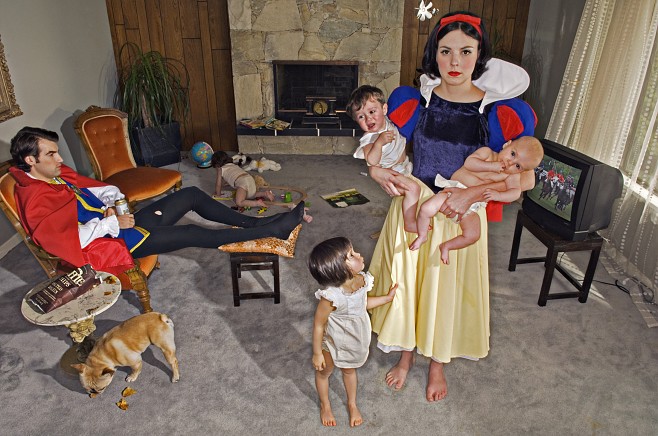
Dina Goldstein, 'Snowy'. Click to enlarge

I wonder if I was the only one who found the first half of The Incredibles incredibly distressing. It may just be that I found myself identifying a little too much with Mr Incredble’s expanding waistline, but the sequences in which he and his wife struggle to come to terms with their life in suburbia seemed pretty close to the bone for something that is supposed to be a kid’s movie.

Anyway – what happens after happily ever after is a rich theme, and one explored to great effect in this wonderful series of images by artist Dina Goldstein. The images:

“place Fairy Tale characters in modern day scenarios. In all of the images the Princess is placed in an environment that articulates her conflict. The ‘. . . happily ever after’ is replaced with a realistic outcome and addresses current issues”.

Goldstein might have been thinking about one of my favourite Ondaatje poems, ‘Late Movies with Skyler’, which ends:

“In the movies of my childhood the heroes
after skilled swordplay and moral victories
leave with absolutely nothing
to do for the rest of their lives”.

Break text

addthisTweet this

Vampires, killing and a new online magazine

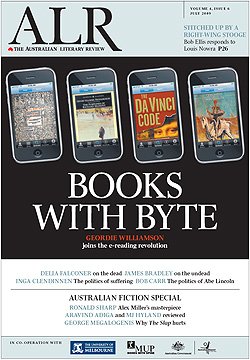
0,,6696106,00I didn’t get a chance to post at the time because I was away (which is also the explanation for my extended silence) but for those who are interested the new issue of The Australian Literary Review was published last Wednesday. As usual some of the highlights are available online, but given the discussion on this site a few weeks back about good and bad reviewing I’d particularly recommend Delia Falconer’s searching review of Jeff Sparrow’s new book, Killing: Misadventures in Violence, a piece which provides an extremely lucid example of the capacity of really good criticism to be both highly critical and highly engaged. I’m not sure it’s exactly the review Jeff would have wanted, but as a reader it makes me even more curious to read the book (anyone interested in another perspective might want to check out this interview with Jeff, or buy a copy from Readings).
Other highlights include Ronald A. Sharp’s essay about Alex Miller, the always-interesting George Megalogenis on The Slap, and Geordie Williamson’s thoughts about the ereader and its implications for literary culture.

The issue also contains my piece about vampires and vampire literature, a piece which grew out of a post I made months back about the discovery of a “vampire” in a mass grave in Venice earlier this year. I’ll let you read the piece for yourselves, but I will say it was one of those pieces where I went in with one view about the subject under discussion and came out with another entirely.

And, for anyone looking for yet more reading, I’d very much recommending checking out The Group. The brainchild of Larry Buttrose, The Group is a new online magazine which brings together the best writing from around the world. Curated by Larry, John Birmingham, Mark Mordue, Billy Marshall Stoneking and myself, each of  its monthly issues will feature a different guest editor, and will reflect their interests and ideas. Issue 1 is out now; you can subscribe via RSS or you can join on Facebook, which will allow you to receive information about upcoming issues etc.

Break text

addthisTweet this

A couple of updates

Just a quick note to say I’ve added links to two pieces of mine published last year in The Australian Literary Review to the site. The first, ‘Stealing Memory’s Thunder’, is a review of James Frey’s novel, Bright Shiny Morning and a discussion of the growing phenomenon of fake memoir, the second, ‘Perfect Worlds in Miniature’, is a review of recent short story collections by Annie Proulx, Michael Chabon, Robert Drewe and the frighteningly talented Anne Enright.

Break text

addthisTweet this

The Gone-Away World

NIck Harkaway

Nick Harkaway

First a quick apology for the slightly sporadic posting over the past week. I’ve been a bit overwhelmed with work, and though I think I can see the light at the end of the tunnel (which excitingly means I might manage to snatch a few days to work on my novel before I go on holiday the week after next) I’m still about 5,000 words from freedom, so the patchy posting may continue for a while yet. Once I’m back online and have a bit of time to spare I’ve got some things coming I think people will like – a review of Caprica and a long piece on The Day of the Triffids (you know you want to know why), as well as some thoughts about (not) teaching the canon – but for the time being it’s all work, work, work in my world.

Anyway – having pieces spiked is an occupational hazard for reviewers. You slug your way through a book, write a review, and then for some reason – space, time, budget pressures – it doesn’t run. It doesn’t happen often, but when it does you can guarantee it’s a piece you either spent quite a lot of time on or you thought was pretty good (which may say something about my judgement, but we won’t go there).

The piece below is one of those pieces. It was written to coincide with the hardback release of Nick Harkaway’s The Gone-Away World last year, but in the end it didn’t run. At the time that seemed a pity, not least because the book is, in its own mad way, both ambitious and interesting (certainly as picaresque romps go, it beats Steve Toltz’s A Fraction of the Whole hands down for sheer energy and inventiveness). So, since the paperback has just been released, I thought it might be worth giving the piece a run here.

For anyone who’s interested, Harkaway has a pretty classy website, and runs a blog. The site also has some videos of him reading from the book. He’s also written about the complicating fact of his (extremely famous) father’s identity here.

Break text

The Gone-Away World
Nick Harkaway

I once had a conversation with the adult son of a famous writer. He was a nice guy – bright, funny, thoughtful – but when I asked him what I wanted to do with his life he froze. ‘Write,’ he said in a small voice after a moment, ‘though it’s sort of weird when I try to’.

It was a conversation that came back to me while reading Nick Harkaway’s debut, The Gone-Away World. Because as anxiety of influence goes, Harkaway – the son of David Cornwell, or John Le Carré – must have had it in spades.

Perhaps unsurprisingly, in interviews Harkaway seems to strike a slightly uneasy balance between filial affection and a desire to distance himself from his famous forebear, no doubt seeking to have his book assessed in its own right: a famous father is, as Harkaway discovered after the novel sold for a staggering £300,000, inevitably something of a double-edged sword. Yet faced with the book itself, in all its joyous, exuberant improbability, there can be little doubt Harkaway’s success is of his own making and no-one else’s.

Something like a cross between The Road and Kung Fu Panda, The Gone Away World is a crazed, shaggy-dog post-apocalyptic picaresque, with more than enough brio and cheek to leap its improbabilities in a single bound. Insofar as it lends itself to précis, it begins in a near-future in which Cuba has entered into a political union with Great Britain, thereby creating the United Island Kingdoms of Britain, Northern Ireland and Cuba Libré, or, as the wits would have it, Cubritannia (a move which delights the Cubans for its economic and political possibilities and the British because it guarantees “an influx of well-trained, educated people of pleasing physical appearance who have rhythm”).

In this future the narrator – who for reasons which become clear later in the book remains nameless – and his best friend Gonzo Lubitsh grow up in sleepy Cricklewood Cove, a place mostly notable for being home to Assumption Soames’ Soames School for the Children of Townsfolk, and the academy of Master Wu, of the Way of the Voiceless Dragon.

When a flirtation with university politics and Zaher Bey, the leader in exile of the tiny Central Asian country of Addeh Katir leads to the narrator’s arrest by a privatised extra-legal but government-sanctioned anti-terrorist squad and leaves him virtually unemployable, the narrator finds himself working in a high-tech special forces and weapon research unit. Under the command of Professor Derek, this team has invented the Go Away Bomb, a device which strips the information out of the matter comprising its target, converting it into what they think is undifferentiated nothing, but is really – as the narrator and the rest of the world discover when the Go Away Bomb is simultaneously (and surprisingly) deployed by most countries in the world at once in a good old-fashioned bout of what used to be known as MAD, or Mutually Assured Destruction – actually converts it into Stuff, a denatured form of matter which has the unfortunate tendency to take on whatever form flits through the mind of the creatures closest to it. In the ruined and depopulated world left behind, the only refuge from the nightmares that spring from Stuff is found along the edges of the Pipe, a conduit laid by the mysterious Jorgmund Corporation.

In the hands of a lesser – or at least a less confident – writer, such a plot might seem ridiculous, but Harkaway approaches his subject matter with such joyous abandon and good humour it’s impossible not to respond in kind. And while the novel’s influences – which run the gamut from Don Quixote to Fight Club, and The Karate Kid to William Gibson and take in almost everything in between – are clear, it never feels freighted down by them, or derivative.

None of which is to say it all works. Certainly the book’s weakest section is its final 50 pages, though that is as much a function of the picaresque form’s natural lack of interest in narrative closure as any weakness in the novel itself – but for the most part it does, bouncing with the sort of careless ease that necessarily belies the authorial control underlying it from digressions about the nature of politics to self-mocking kung fu parables, from bawdy Harry Potteresque university high-jinks to a chilling vision of a world gone mad.

Yet underpinning it – and if one was looking for an echo of Harkaway père this might be it – is an unswerving moral clarity. For all the geekish delight Harkaway takes in his inventions, The Gone-Away World’s comedy is rooted in a powerful sense of the corrupted and corrupting nature of power, and of its indifference to individual freedom, or even existence. And it is in this respect that The Gone-Away World’s picaresque pleasures most truly, and most brilliantly repays its debt to the steely satire of Fielding and Swift and even Rabelais.

Break text

addthisTweet this

A.S. Byatt’s The Children’s Book

9780307398079Just the other day I was whingeing about the recent proliferation of unreasonably fat books. After slugging my way through 2666, The Kindly Ones and Wolf Hall in the last few months I’ve been feeling a little put upon by doorstop-sized volumes (not least because I was hoping to knock over the Pevear and Volokhonsky translation of War and Peace some time before the middle of the year, a goal whch has now slipped well and truly from my grasp).
But since my review of one of those books, A.S. Byatt’s The Children’s Book, has just turned up online (it was actually published back in mid-May, and has taken until now to appear on The Australian’s website), I thought it might be worth linking to it, not least because it’s one of the most remarkable and compelling things I’ve read in quite some time.

A decade and a half ago, A.S. Byatt could do no wrong. Possession had just won the Booker, her backlist was selling by the truckload, and her brand of unashamedly intellectual intertextuality was the height of fashion.

I think it’s safe to say that’s no longer the case. Despite the increasing hybridity of form occurring on the margins, contemporary literary fashion vacillates between essentially decadent reinterpretations of genre, from Twilight to Harry Potter and historical pastiches such as The Meaning of Night, and a sort of stripped social realism (though it must be said books such as Helen Garner’s The Spare Room manage to be both examples of a hybridization of fictional and non-fictional forms and stripped back social realism simultaneously).

In such a context The Children’s Book is both striking and somewhat incongruous. A sprawling historical novel, spanning the quarter of a century between 1895 and the aftermath of World War I, it’s also unashamedly a novel of ideas, drawing upon our contemporary fascination with genre and fantasy, and children’s fantasy in particular, and using it as an emotional and intellectual framework to explore a series of deeply troubling questions about writing, sexuality, and, most importantly, the myths of childhood that lie at the heart of so much of children’s fantasy. And if that weren’t enough, it’s also a cultural history of a very particular variety and a fascinating fictional exploration of the hypocrisies of the social reformers of the late-Victorian and Edwardian period.

Laid out in such a fashion I suspect it doesn’t sound particularly attractive. But in fact it’s completely mesmerizing. Yet it’s also a strangely difficult book to get to grips with. Partly this is because it is, as Sam Leith observes in his interview with Byatt, a disconcertingly centreless book. It’s not just that it’s populated by a vast array of vividly realized characters, nor that the characters whose threads one initially assumes the narrative will be built around, Olive Wellwood, Prosper Cain and the two boys, Tom Wellwood and Phillip Warren, quickly become just part of a much larger fabric. Rather it’s the sense that all of the characters are in motion at all times, moving, wanting, debating, and that while there are characters who are in the foreground at any given moment, their presence in the foreground is only a matter of perspective, and a change in perspective might just as easily bring quite different characters into focus.

But it’s also a function of the novel’s density and richness of allusion and implication. Any good novel, just by virtue of its scale, contains within itself a complex web of meanings. And while the relationship is not linear, as a general rule it’s safe to assume that the longer the novel, the more complex these meanings become. Yet with The Children’s Book their complexity takes on an almost Borgesian quality, a sense of multiplying, and endlessly branching possibilities. In my review I almost described it as prismatic, but refrained, because that’s not quite the right word, not least because the book is so deeply, and darkly organic. Rather the proper metaphor is the one Byatt herself uses in describing the fairy stories written by Olive (herself a version of E. Nesbit) that of the underground labyrinth, and of the seemingly magical and infinite power of story:

“The stories in the books were, in their nature, endless. They were like segmented worms, with hooks and eyes to fit onot the next moving and coling section. Every closure of plot had to contain a new beginning. There were tributary plots, that joined the mainstream again, further on, further in. Olive plundered the children’s stories sometimes, for publishable situations, or people, or settings, but everyone understood that the magic persisted because it was hidden, because it was a shared secret.

“All of them, from Florian to Olive herself, walked about the house and garden, the shrubbery and the orchard, the stables and the woods, with an awareness that things had invisible as well as visible forms, including the solid kitchen and the nursery walls, which concealed stone towers and silken bowers. They knew that rabbit warrens opened into underground lanes to the land of the dead, and that spider webs could become fetters as strong as steel, and that myriads of transparent creatures danced at the edge of the meadows, and hung and chattered like bats in the branches, only just invisible, only just inaudible. Any juice of any fruit or flower might be the lotion that, squeezed on eyelids, touched to tongue or ears, would give the watcher or listener a way in, a power of inhuman sensing. Any bent twig might be a message or a sign. The seen and the unseen world were interlocked and superimposed. You could trip out of one and into the other at any moment.”

My original review of The Children’s Book is in The Australian. If you’d like to read more, I’d recommend Elizabeth Lowry’s excellent and insightful review in the TLS, or Alex Clark’s in The Guardian. Or for a rather more sceptical view, Adam Mars-Jones’ review in The Observer.

Break text

addthisTweet this

Literary Bloodsport Part 2: The Lure of the Hatchet Job

hatchetEarlier today I linked to Louis Nowra’s devastating and very funny review of Bob Ellis’ And So It Went: Night Thoughts In A Year Of Change. As my post probably made clear, I’m no fan of Ellis myself, so Nowra was really preaching to the converted, but it got me wondering what other people think about this sort of literary bloodsport. As spectator sports go literary hatchet jobs are up there with cage-fighting, but are they actually a good thing?

For what it’s worth, I think the brutal review is usually a young person’s vice. In my early days as a reviewer I wrote more than one review I still wake in the night feeling sick about (Victor Kelleher and Justin D’Ath, wherever you are, I’m sorry). And I’m not alone in this view. Martin Amis, who in his early years as a writer carved out a career as one of the most terrifying literary hitmen of all time, has observed, “[e]njoying being insulting is a youthful corruption of power. You lose your taste for it when you realize how hard people try, how much they mind, and how long they remember”.

I’m aware, as I write this, that this question blurs into a related one, about what constitutes good reviewing, and what exactly constitutes the right balance between emphasizing the positive and pointing out the faults in a given book, but I don’t think that’s quite what I’m talking about here. There’s a difference between stringent criticism and even a really bad review, and the deliberate attempt to destroy a book or a reputation people such as Dale Peck have made into an art form. And I think there’s also a difference between the deliberately mean-spirited criticism of someone like Lionel Shriver and the energy and excitement that makes a really good hatchet job sing.

My own feelings on the matter are complicated. If nothing else the world is a livelier and more exciting place for a bit of biff. And like any writer I’ve got a few contemporaries I think are frauds or shits (not many, I hasten to say, but definitely a few) and seeing them get a dose always gives me a nasty little thrill. And a really considered hatchet job, like Nowra’s of Ellis, Brian Dillon’s of Michael Ondaatje’s Divisadero, or John Banville’s of Ian McEwan’s Saturday (or indeed almost anything by Dale Peck) is a thing of beauty in its own right. But as a writer I’m also aware of just how awful it is to be on the receiving end of bad reviews (or indeed really nasty blog comments), and not just because I know how hard it is to write any book, good or bad, but because I know how incredibly exposed and vulnerable you make yourself by putting yourself and your work out in the world, and how hard it is for those who don’t do it to relate to that vulnerability.

Perhaps in this context it’s worth returning to Amis. His line about how hard people try and how long they remember is justly famous, but what’s less well-known is what comes after it. “Admittedly there are some critics who enjoy being insulting well into middle age,” he says, before going on to ask why this spectacle seems so undignified, and answering his own question with the observation that it’s because it’s mutton dressed as lamb. But it’s what he says next that’s really important, when he says that looking back, “I am also struck by how hard I sometimes was on writers who (I erroneously felt) were trying to influence me: Mailer, Roth, Ballard”.

What Amis is really talking about is the essentially Oedipal anxiety of influence every writer feels. But he is also drawing our attention to the need for the new to make space for itself. And as he rightly discerns, much of his brilliant, incendiary early criticism (and indeed that of Julian Barnes) was about killing the old lions so they could take over the pride.

I think it’s fair to say that slightly uneasy need to make space for oneself is what drives a lot of really brutal reviewing, especially by younger critics. Certainly one detects more than a touch of the disillusioned disciple in James Wood’s attacks upon the late John Updike. But unlike really brutal reviews of younger writers, which can destroy careers (or even, I suspect, lives) these sorts of reviews serve an important function. There’s a real tendency for established writers to become unassailable, their books lauded no matter what their flaws. One example might be the rise and rise of Peter Carey’s international reputation since the publication of True History of the Kelly Gang, a rise which seems to have been in inverse proportion to the rapidly declining quality of the books themselves. But it’s even more pronounced in the case of writers such as Delillo, who occupy the literary stratosphere. In their case it can be difficult to find ways of saying their new work is not up to scratch, and not just because of the weight of their reputation. Instead a sort of feedback loop begins to exist, a circular argument which declares that the new Delillo (for instance) must be good because Delillo has become one of our models of great writing, and his writing is, therefore, necessarily, great writing.

In this context the hatchet job is important because it helps break that loop, and demand we step back, look again, and ask ourselves what we’re really seeing. And that process isn’t always destructive, not just because the body of work behind such writers is usually robust enough to withstand that sort of assessment, but because a more nuanced eye is likely to reveal things our earlier assumptions were obscuring.

But enough about me. What do others out there think?

Break text

addthisTweet this

Literary bloodsport

Louis Nowra

Louis Nowra

If you haven’t seen it, make sure you check out Louis Nowra’s review of Bob Ellis’ latest, And So It Went: Night Thoughts In A Year Of Change, in yesterday’s ALR. Nowra’s criticism can be a bit up and down (though whose isn’t?) but this piece is pure gold, systematically, stylishly and very wittily dismantling not just the book, but Ellis himself, his immense self-importance, the disconnect between his supposed values and his personal behaviour, and perhaps most tellingly, the disproportionate relationship between his reputation and his actual achievements as a writer and public figure.

What will be most interesting though, is what Ellis decides to do about the piece. Ellis is, of course, the man who cost Random House more than a quarter of a million dollars by making untrue and extremely unsavoury claims about Tanya Costello, wife of the former Treasurer, Peter Costello. Whether that was an appropriate outcome or not is a matter for another time (you’d probably be unsurprised to learn that despite the recent changes I think Australia’s defamation laws still need further reform, and that large payouts are a totally inappropriate remedy) but what’s most notable about the case is that Ellis himself is not only utterly unrepentant about his actions, but has actually repeated the smear in at least one public forum I’ve attended (thereby exposing the organization involved to potential legal action, an act of gross irresponsibility in and of itself).

I’m not sure the Nowra piece is actually defamatory, and I’ve no doubt News Ltd’s lawyers have picked over it pretty carefully (which raises the amusing question of what, if anything, was taken out) but it comes pretty close, which means Ellis could, at least in principle, sue Nowra and News Ltd. Would he do it? Obviously I don’t know, and I wouldn’t want to assume anything, but I’d have to say that ironic as such an outcome might be, it wouldn’t seem entirely out of character, not least because Ellis so often seems to exist in a parallel universe in which all roads lead, inevitably, to Bob.