Skip to content

Posts from the ‘Books’ Category

Little Lolita’s adventures in the irony-free zone

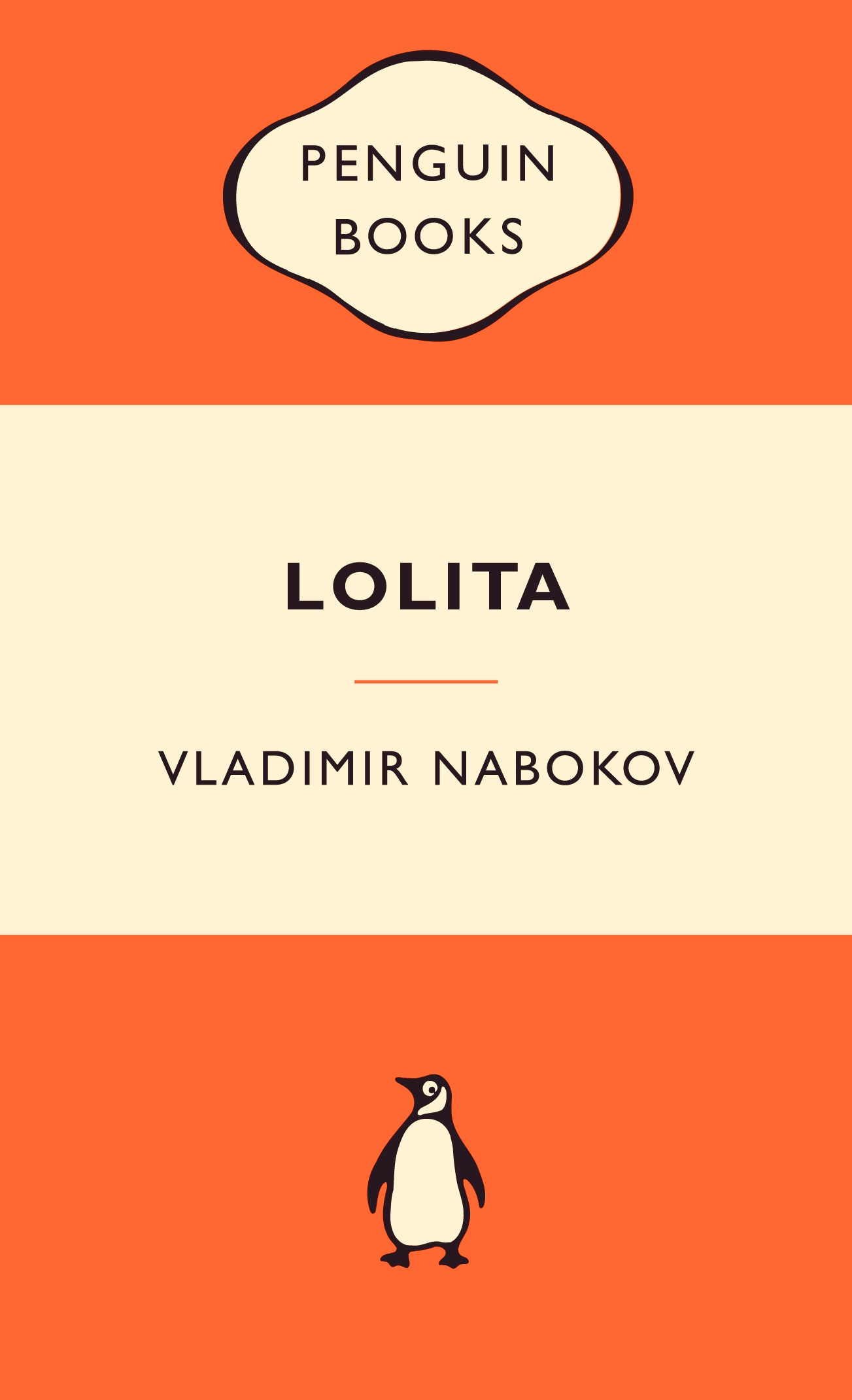
LolitaI’m sure many of you will have seen this story about Asinine Australia Post’s decision to remove the Popular Penguin editions of Lolita, The Delta of Venus and The History of Sexuality from display. If it wasn’t so pathetic and stupid it’d be funny (not least because, as Godard’s Letterboxes has pointed out on her Twitterfeed, there’s an irony in the notion of repressing a book about sexual repression which seems to have gone straight over the heads of Australia Post’s public affairs people).

Anyone who’s heard me on the subject will know I can bang on endlessly about the lunacy of the contemporary nanny state, so rather than bore you all with more blog-rage, I thought I’d revisit another piece of marketing hilarity concerning Nabokov’s masterpiece. This was last year’s revelation that Woolworths in the UK were selling a range of bedroom furniture aimed at young girls called “Lolita”, and featuring a bed called the “Lolita Midsleeper Combi”.

A special bed? And a Combi at that? Oh Lolita, light of my life, fire of my loins. What exalted heaven is this?

Apparently Woolworths “had no idea” about the connotations of the name.

If you didn’t laugh, you’d cry.

Break text

addthisTweet this

On novels and place

beaumont_kids,0

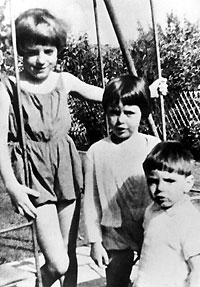
The Beaumont Children, who disappeared in Glenelg on Australia Day, 1966.

If this blog’s been looking a bit neglected lately, it’s because I’ve been frantically trying to knock over a first draft of my new novel. I had been hoping to have a draft done by the time our second child is born in November, and while I suspect that goal has now slipped away from me, I’m at least halfway there, so I think there’s a good chance I’ll have something by Christmas.

Writing first drafts is always a weird process. A lot of writers are planners, but I’m not, or not particularly. I’ve usually got a rough idea of the shape of the book, and at least a few key scenes, but I usually don’t have a terribly clear sense of how those pieces stick together, or what order they happen in. So mostly what I’m doing when I write first drafts is looking for the rhythm, and the energy. Sometimes that can be exhilarating, but mostly it’s a matter of feeling my way forward, looking for the moments when the thing chimes into life.

I’m still not quite sure what I think of this one (which is currently called Black Friday, though that may change). If you’d asked me a few weeks ago I would have said I wasn’t sure if it would work, but in the last fortnight or so I’ve become a lot more confident it will. Partly that’s because I’ve slid past the halfway mark, but mostly it’s because I can feel the characters beginning to live, and breathe, and the narrative beginning to develop the forward energy it needs.

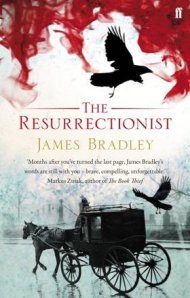
That’s not to say all’s right with it. I’ve got a point of view problem that won’t go away, and the plotting of the section I’ve just finished is a shambles. And it’s precisely the sort of dark, disordered book I promised myself I wouldn’t write after the experience of writing The Resurrectionist. And my central character is pretty spectacularly unpleasant (as is the subject matter), but she also feels scarily real to me, which has to be a good thing.

What’s been strangest though, has been the manner in which the setting of the book has come bubbling out of me. Although it begins in the present day, the bulk of the action tales place in the early 1980s, and focuses on the actions of a small group of political radicals who decide to kill the Prime Minister. These characters come from a variety of backgrounds, but one of them – the central character – grew up in Adelaide, and there’s an extended sequence near the beginning depicting her absorption into the alternative demi-monde of the time in the backlots of Glenelg.

Although the scenes in question take place in 1980, and I didn’t finish school until 1984, the world this section takes place in is absolutely one I remember. The characters go to school at the school I went to (though it’s not named) and though they live a couple of suburbs further north along the coast, most of the action takes place in Glenelg, where I grew up (I’ve actually based the share-house she becomes entangled in on the house an old friend’s mother bought not long after we finished school).

In a way it’s unsurprising that the book has such a definite location. All three of the novels I’ve published so far are powerfully anchored in the places they’re set. Given that two of them – The Resurrectionist and The Deep Field – are set in places which don’t actually exist (the London of the 1820s and the Sydney of the future, respectively) that might seem an odd thing to say, but it’s true. Whenever I write about a place I need to feel I have a connection with it in an emotional sense, and to feel it’s an integral part of the larger symbolic and textural landscape of the novel. And so while the places they describe may not be real, in a literal sense, they need to be real to me, and to resonate with the book as a whole.

The curious thing is that I never had any desire to write about Adelaide. I left the best part of 20 years ago, and though when I visit it still seems almost overwhelmingly familiar, it’s been a long, long time since it felt like home. And although the South Australian landscape I grew up in has found its way into my work from time to time (the sandhills on the southern coast of New South Wales in which much of the action of Wrack takes place are imaginary versions of the Coorong, and the sandhills at West Beach, rather than anywhere you’d find on a map) I’ve not just not written about the place I grew up in, but actively not wanted to write about it.

In a way, of course, all I’m saying here is something I think any writer, and most readers understand, at least intuitively, which is that place, or location in fiction is never physical, or at least not in any simple sense. Place is always really a psychological space, a thing evoked through the layering of detail, and emotion. And like the strange, almost mystical capacity of characters to be conjured into life by a few words of dialogue or description (not for nothing, I think, do Christians understand God’s Word as a living thing; language has a primal and often quite unsettling power to take on life of its own) places are brought to life by the suggestion of great strata of meaning layered beneath the details we use to evoke them.

I’m not sure precisely what led me back to Adelaide, and the world I knew as an adolescent. What I do know is that it’s a process that began when I was struggling to finish The Resurrectionist. One of the inspirations for that book was the Snowtown murders, and having heard me talk about them, and about Adelaide and its history of serial murder more generally, my agent, David Miller, convinced me I should write about them, and about what seemed to me the very particular experience of growing up in Adelaide in the 1980s.

I still think the piece that came out of that conversation, ‘The Element of Need’, is one of the better things I’ve written in recent years. For contractual reasons there was a lag between me writing it and it being published, but a version was published in Heat last year (you can read a brief extract on the Giramondo website) and it’s recently been picked up for inclusion in Best Australian Essays 2009.

But good or not, writing the piece seemed to unlock something inside me. For a time I toyed with expanding it into a full length book, but for various reasons to do with my reluctance to spend too long in the headspace it inhabits that didn’t happen (though it still might). But alongside the book I didn’t write I found myself playing around with stories and novels which used the landscapes of my childhood and adolescence in quite direct ways. And although few, if any, of these are ever likely to find their way into print, the thing I kept running up against was the manner in which the landscapes they inhabit are so vivid and so particular.

I always think it’s dangerous to assume you know why you find yourself writing about particular things (and I’m painfully aware that even when you think you do know you’re often wrong, and the real reasons are hidden from you). But I do wonder whether this process of moving back, into the past, isn’t at least partly to do with growing older. My father is 76, and he routinely says his childhood, which he once barely remembered, is now almost frighteningly vivid. And while he’s got three and a half decades on me, the last few years have been pretty tumultuous. I’ve turned 40, become a father, felt the always unstable cycle of my moods spin frighteningly out of control, felt the only thing I ever wanted to do – writing – leave me, and then, tentatively at first, but then with greater certainty, return, all experiences which have left me painfully aware of the fragility of life, and of our vulnerability to its vicissitudes.

Yet at the same time the spaces I’m exploring are not simply memory. Despite various disruptions I had a pretty happy childhood. But the landscapes of the writing that draws on it are alienated and often downright creepy, populated by people with important parts of themselves missing. This is partly to do with my sense that there is something haunted and even sinister about Adelaide, some sense in which the outward peacefulness and order disguises something cruel and brutal. But I’m also aware that this view is itself coloured by my own fairly uncomfortable relationship with the place, and the person I was when I lived there.

I’m not sure this is terribly surprising. Like a lot of people who have left places I’ve allowed Adelaide to stand in for my past, and going back is always a pretty uncomfortable experience. But it’s also a reminder of the way fiction takes elements of our inner lives and gives them shape. For the Adelaide (and more particularly the Glenelg) I’m writing about in my new book isn’t a real one, in any literal sense, but an expression of whatever it is in me that has drawn me back there. I’m not going to try and unpack that part of me here – that’s what the novel’s for – but it is a reminder of the dangers of assuming fiction is, in ever, in any narrow sense, autobiographical, and simultaneously an illustration of Faulkner’s dictum: “The past is not dead. It is not even past”.

Break text

addthisTweet this

Gertrude, Alice and the Flight of the Mind

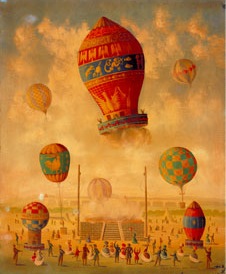
balloonsIn case you’re at a loose end over the next couple of weeks, I’m doing two events. The first is a literary breakfast this Friday (16 October) at Gertrude and Alice Bookstore here in Bondi Beach. Tickets are $12, and bookings can be made by emailing info@gertrudeandalice.com.au or by phone on 02 9130 5155. I’m going to be talking about my most recent novel, The Resurrectionist (all that darkness and death seem so appropriate for breakfast in Bondi, after all).

And the weekend after next (24-25 October) I’m one of a very impressive line-up of writers appearing at the National Library of Australia’s Flight of the Mind Conference in Canberra. Held over two days, the Conference is designed to explore a range of questions about creativity and the writing imagination, and speakers include Alex Miller, Peter Goldsworthy and Sophie Cunningham. I’m speaking on Sunday morning at 10:00am, and given what a big part of my life this site’s become over the last year, I’m planning to speak about the way technology is altering both what and how we write. The full Conference program is available here, and bookings can be made by emailing events@nla.gov.au or calling 02 6262 1122.

Break text

addthisTweet this

Peter Carey’s Gumtree

Jesters

There’s a nice little moment in this week’s episode of Movie Extra’s rather excellent new comedy, The Jesters, in which the Mick Molloy character, Dave Davies (a thinly disguised Doug Mulray) is informed by his agent, Di Sunnington (the marvelously deadpan Deborah Kennedy), that Jane Campion wants him to play the part of the villain in her new movie, Gumtree. Worried it’s an arthouse flick, Dave presses her for a bit more information, only to be told it’s based on a Peter Carey novel. “Have you read it?’ he asks, to which Di replies with haughty disdain, ‘Don’t be stupid, it’s a Peter Carey novel, nobody’s read it”.

It’s a cheap line, but it’s a funny one (it doesn’t hurt that every time I hear Deborah Kennedy say “Don’t be stupid,” I’m reminded of her fabulous performance opposite Sam Neill in Death in Brunswick), the only problem is that (a) the book they’re talking about doesn’t sound anything like a Peter Carey novel, and (b) from the plot description and the title it’s clearly meant to be Murray Bail’s Eucalyptus, which was famously about twelve hours away from being made into a movie starring Russell Crowe and Our Lady of the Immovable Face, Nicole Kidman, when it came suddenly and spectacularly unravelled a couple of years ago.

All of which does, in a way, make the joke even funnier. Because the laugh depends on the assumption no-one reads Peter Carey, and the general risibility of Australian writers and writing, but in fact they’ve had to change the name of the writer the joke is really about because while enough people will have heard of Peter Carey to make the joke work, absolutely nobody’s heard of Murray Bail.

Oh dear.

(Just btw, here’s a clip from this week’s episode, an “out-take” of Molloy’s Dave Davies doing his nut on set).

Break text

Break text

addthisTweet this

Bread and Sirkuses

peter_carey

Peter Carey

I’m currently reading Peter Carey’s rather fabulous new novel, Parrot and Olivier in America. Since I’m reviewing it I can’t say much more than that, but I thought I might use it as an excuse to upload an essay I wrote for Meanjin about Carey way back in 1997. Entitled ‘Bread and Sirkuses: Empire and Culture in Peter Carey’s The Unusual Life of Tristan Smith and Jack Maggs, it uses those two books as the starting point for a broader survey of Carey’s work. In places it’s a bit dated, but it’s not a bad piece, so it seemed worth giving it another run.

If you’d like more Careyana, Carey maintains a classy-looking website, with excerpts from his novels, selected reviews and links to a range of interviews and appearances, as well as reproducing this one, which originally appeared in The Paris Review. And if you’d like to read some other pieces I’ve written about Carey’s fiction you might want to check out my reviews of My Life as a Fake and Theft.

Break text

addthisTweet this

James Wood on literary awards

the_man_booker_prizeTo mark the 40th year of the Booker Prize (now the Man Booker Prize) The Guardian has tracked down one judge from each of the 40 judging committees and asked them about their recollections about the process. It’s worth reading the whole article, but James Wood’s comments about the absurdity of the process and the increasingly invasive and distorting role prizes play in the literary economy deserve to be quoted in full:

“After serving on the 1994 Booker prize committee, I made a pledge never to judge a big fiction prize again, and I have so far honoured it. We were a congenial group, and our chairman was not a former politician or bureaucrat but a distinguished literary critic (John Bayley); our meetings were friendly, and surely no less or more argumentative than those of other years. But the absurdity of the process was soon apparent: it is almost impossible to persuade someone else of the quality or poverty of a selected novel (a useful lesson in the limits of literary criticism). In practice, judge A blathers on about his favourite novel for five minutes, and then judge B blathers on about her favourite novel for five minutes, and nothing changes: no one switches sides. That is when the horse-trading begins. I remember that one of the judges phoned me and said, in effect: ‘I know that you especially like novel X, and you know that I especially like novel Y. It would be good if both those books got on to the shortlist, yes? So if you vote for my novel, I’ll vote for yours, OK?’

“That is how our shortlist was patched together, and it is how our winner was chosen. It is how every shortlist is chosen, whether the premises are as explicit or not. I liked the winning book a great deal (James Kelman’s How Late It Was, How Late) – it was one of my choices – and would have been happy with either that book or Alan Hollinghurst’s The Folding Star. But I intensely disliked the way we reached that verdict, and felt that the arbitrary, utterly political process discredited the whole project.

“Since then, prizes have become a form of reviewing: it is prize-lists that select what people read, prize-lists that make literary careers. Bookshops order novels based on the prizes they have won or been shortlisted for. Nowadays, a whole month before the shortlist is announced, scores of novelists are effectively told that their books have not been the “big books” of the year, because they are not to be found on the longlist. Soon, no doubt, we will have the long-longlist, and the long-long longlist. Some wonderful books win the Booker, of course, just as the flypaper occasionally catches some really large flies. But it means – or should mean – nothing in literary terms.”

Read more at The Guardian.

Break text

addthisTweet this

Nobody reviews paperbacks . . .

It’s like they stole my life and put it in a video . . .

Break text

Break text

addthisTweet this

Australian Literary Review out today

ALRJust a reminder that The Australian Literary Review is free in today’s Australian. As usual some of the highlights are online, not least Delia Falconer’s review of J.M. Coetzee’s Summertime and Michael Wood’s look at Thomas Pynchon’s Inherent Vice, but as usual the bulk of it is only available in the print edition (though over at Australian Literature Diary Kerryn Goldsworthy attempts to straddle that divide with some thoughts about her print-only review of Cate Kennedy’s new novel, The World Beneath).

So what are you waiting for? Go out and grab The Oz and do yourself a favour.

Break text

Break text

addthisTweet this

Birds and Sharks and Peter Craven

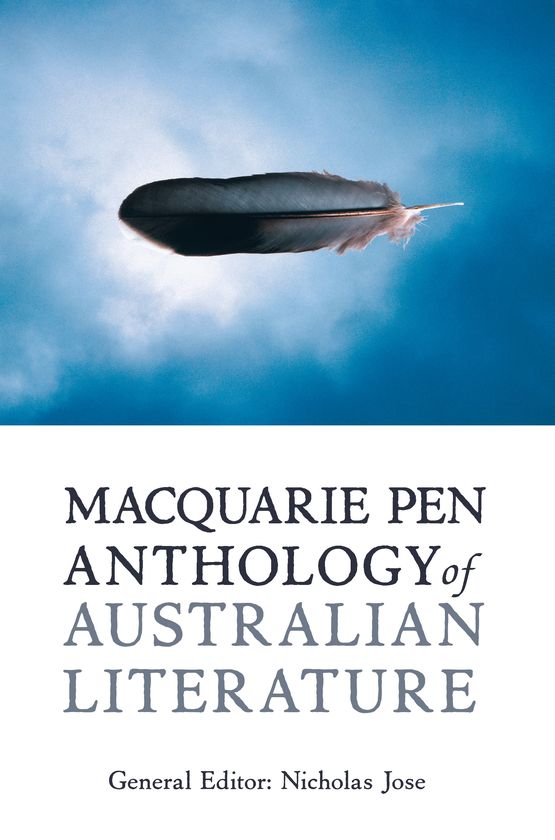
PEN AnthologyI’ve got pieces in the September issues of The Monthly and Australian Book Review, both of which are out today (and neither of which, sadly, are online). At first glance there’s not a lot to connect them – the Monthly piece is about the trip I took in late June to go diving with whale sharks at Ningaloo, while the Australian Book Review piece is a review of Jeremy Mynott’s delightfully omnivorous book about birds and birdwatching, Birdscapes – but in a way they’re not as disparate as they sound, since both are interested in the question of what we see when we look at animals, and the social context of that observation.
The September issue of Australian Book Review also boasts Peter Craven’s review of the Macquarie PEN Anthology of Australian Literature. To call it a bracing critique is an understatement; it reads more like the critical equivalent of a hand grenade, pointing out omissions, rubbishing the selection and questioning the logic of the anthology’s interaction with what Craven regards as the Australian canon.

I think it’s probably worth pointing out that Craven has long been a champion of the Australian modernist canon, and at least part of his irritation with the collection seems to be a function of his view that this significant part of Australian literary history is not dealt with in a manner which reflects its richness or its diversity. But it’s his criticisms of the anthology’s treatment of Aboriginal writers and writing which are likely to attract the most attention:

“This leaves the final glaring failure of the PEN anthology. It overflows with Aboriginal writing, much of which has no literary value whatever. This is inexplicable, given the availability of the Macquarie PEN Anthology of Aboriginal Writing, of which this collection is a ‘different configuration”. It is hard to see what can have possessed the editors . . . to publish reams and reams of everything from Bennelong’s letter to speeches by Marcia Langton – and every kind of doggerel and naive bit of memoir besides . . . The sheer quantity of Aboriginal writing included in the volume – much of it devoid of literary quality or even literary ambition – is an egregious mistake. It diminishes the importance of Aboriginal culture and obscures the work of serious black writers, such as Alexis Wright, who now constitute a tiny fraction of the whole.”

Not having read the collection in any great detail myself, I don’t feel in a position to comment, but I would say two things. The first is that I feel for the editors, who have, beyond a doubt, taken on a thankless task. As someone who’s edited anthologies before, and is in the early stages of another one at the moment, I know how incredibly difficult it is to satisfy everyone, and there’s no doubt that problem is all the more acute when the collection in question is supposed to be representative of something as vexed as a national literature. The second is to register the fact that Craven’s criticisms, while made from a quite different ideological perspective, echo those made by Ivor Indyk in the Australian Literary Review, who also questioned the collection’s decision to include political speeches and similar works at the expense of writers such as Ruth Park and Dal Stivens, before going on to argue:

“I am happy to embrace the possibility that any kind of writing could have literary qualities but there is a danger here: if, out of a sense of crisis, you include in an anthology of Australian literature all that you think is necessary for its appreciation, then the entity itself might easily go from a state of threatened non-existence to a state in which it included so much that it ceased to be an entity at all.”

Kerryn Goldsworthy, who edited the post-1950 fiction for the collection, has responded to the criticisms Indyk made in the same piece about the under-representation of migrant writers over at Still Life with Cat, but it seems to me that both Indyk and Craven are, in slightly different ways, touching upon a real question about how we define literature in this context. Is Robert Menzies’ ‘Forgotten People’ speech (which is in the collection) literature? No? The what about Ned Kelly and Dan Byrne’s Jerilderie Letter? That seems less problematic at first blush, though Indyk at least finds it a “murderous and . . . maniacal rant”, and compares it to Mein Kampf. And including a petitioner letter of this sort also seems to immediately open the door to the body of similar works by Aboriginal writers, which Craven at least regards as possessing dubious literary merit.

Part of the problem is adopting a position where the notion of “literature” is something that needs defending from the non-literary, since doing so immediately creates a sense of crisis and embattlement.  Yet once that distinction is given away, the emphasis in the title of such a collection quickly falls upon the “Australian”, and the question Indyk poses above becomes particularly acute. My sense (on a pretty cursory read, it must be said) is that the editors have attempted to straddle this divide, presenting a range of writing which seeks to offer a glimpse of the textures and variousness of the Australian experience, and its processing into collective and individual consciousness.

Whether they’ve been successful at this or not is an open question. Indyk and Craven think not, others are more positive. But it seems to me they’ve made the right decision in principle by giving away strict definitions of the “literary”. Because while managing the diversity and competing demands for attention such a decision throws up creates a whole range of new problems, it also opens our minds to just how many ways there are of being Australian, and of the complexities of experience that simple term too often obscures or denies. Does that create an implicit demand that Australian literature be concerned with Australia, or Australians or Australian experience? Probably. Is that appropriate? Perhaps, perhaps not, though as The Man Who Loved Children demonstrates that’s hardly a new problem. But what does matter is that the collection offer something complex and multi-dimensional enough to accommodate the often competing voices with which we speak, and – perhaps just as importantly – to offer a sense of the context out of which these voices speak.

Break text

addthisTweet this

The Day of the Triffids, 28 Days Later and the end of the world

In his novel, The Day of the Triffids and its vision of a world struck blind and menaced by carnivorous plants, John Wyndham created one of the most enduring nightmares of the Atomic Age. Nearly 60 years later, his vision might equally serve not just as a warning of the perils of genetic engineering, but as a powerful reminder of the very different ways British and American writers imagine the end of the world.

Read more

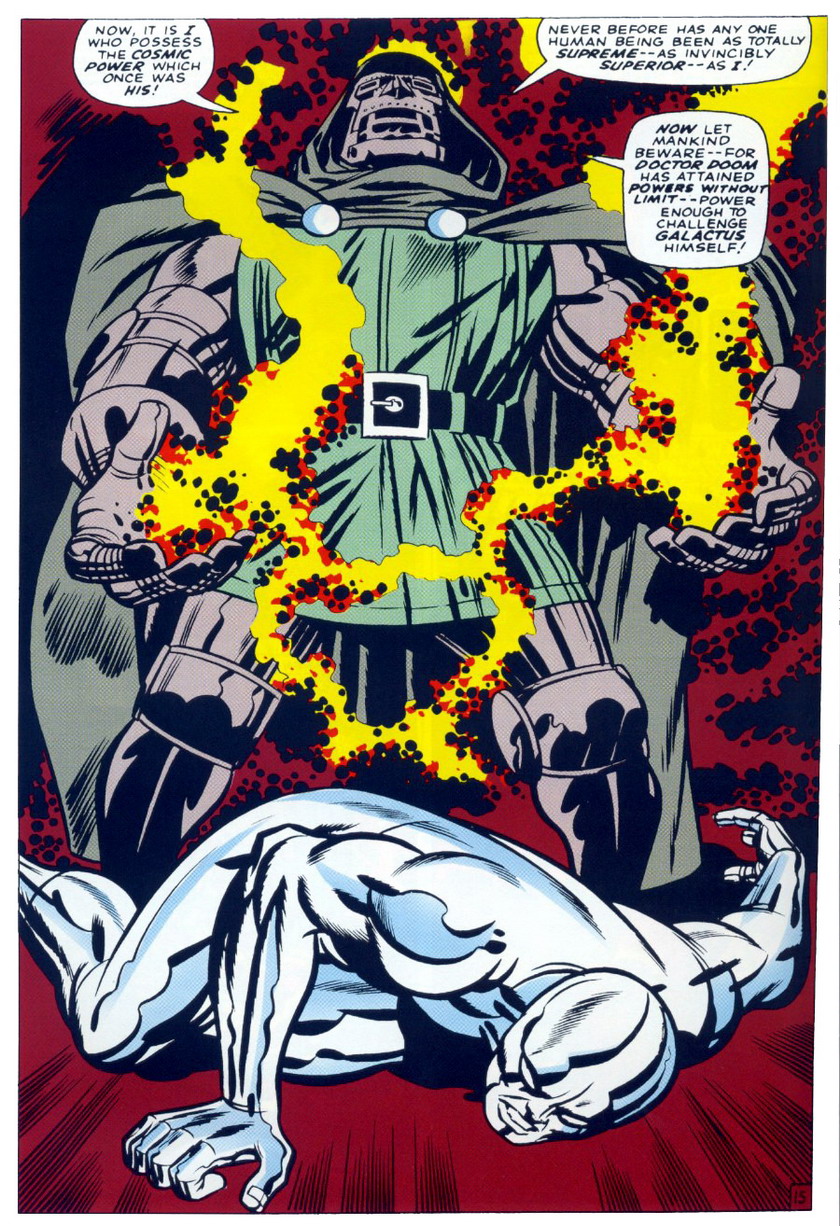
Jack Kirby, Jonathan Lethem and Philip K. Dick

Dr Doom and Silver Surfer

Click to embiggen.

Via io9, a reminder that yesterday (28 August) would have been the 92nd birthday of the legendary Jack Kirby. To celebrate, they’ve assembled a gallery celebrating just some of the characters Kirby helped create over the years, from Captain America to the Fantastic Four, Spiderman and the Uncanny X-Men. It’s worth a look, if only to be reminded of just how significant a role Kirby has played in the creation of late-20th and early-21st century pop culture.

Pleasingly, Kirby’s birthday also gives me an excuse to link to Jonathan Lethem’s fabulous piece about Jack Kirby and the illusions of adolescence, and the mention of Lethem in turn gives me an excuse to link to Forward’s recent interview with him about Philip K. Dick and Lethem’s upcoming novel, Chronic City.

Break text

addthisTweet this

Dave Eggers vs the Wild Things

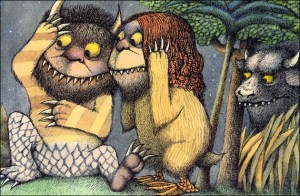
where-the-wild-things-are1If you’re not already feeling exhausted by the promotional campaign for Where the Wild Things Are, this week’s New Yorker has an interview with the freewheeling Dave Eggers, who has a lot of very interesting things to say about The Wild Things, his novelization of the script of Spike Jonze’s film adaptation of Maurice Sendak’s picture book. You can also read a chapter of Eggers’ novel here, or pre-order a special fur-covered edition from Amazon here (go on, you know you want to).

Meanwhile the extended trailer featuring interviews with Sendak and Jonze which was released a few weeks ago seems to have reappeared on Youtube (at the time of my last post it seemed to have been removed for copyright reasons). Hopefully it won’t vanish again, because it’s really rather wonderful to hear Sendak speak about his creation.

And if you’re a bit bemused by the notion of a novel based on a film adapted from a children’s book, perhaps I could point you to Bram Stoker’s Dracula, a book which was not, in fact, Bram Stoker’s Dracula, but Fred Saberhagen’s novelization of Francis Ford Coppola’s movie. Hollywood meet Irony. Irony, this is Hollywood.

Break text

Break text

addthisTweet this

I don’t think we’re in Kansas anymore

wizardOver at Hackpacker the irrepressible George Dunford has posted the text of a piece about the Australian litblogging scene. Originally published in The Big Issue a couple of weeks ago, it’s filled with sage and worldly pronouncements from such luminaries as Jessa Crispin and Yours Truly, but if that’s not enough to convince you to exercise your mousefinger, George’s description of Perry Middlemiss as the white-bearded Wizard of Oz litblogs definitely should.

Break text

addthisTweet this

Dr Strangelove eat your heart out

Some of may have noticed this story in The New York Times, detailing the CIA’s outsourcing of a secret program to locate and assassinate Al-Quaeda leaders to that most gloriously sinister of private security contractors, Blackwater (never heard of them? Then read Jeremy Scahill’s book, or for the crib sheet, James Meek’s review). Now I don’t want to get into a debate about the rights and wrongs of the War on Terrorism, or the implications of devolving military and intelligence work to private companies, but it’s always oddly comforting to be reminded that no matter how paranoid the Left’s fantasies about the military-industrial complex, they only ever seem to scratch the surface. Secret torture and rendition programs? Check. Psychic assassination? Check. Black magic and remote sensing? Check.

Of course all this talk of mercenaries and private armies puts me in mind of Elvis Costello (and yes, that is The Kenny Everett Video Show in the background) . . .

Break text

Break text

addthisTweet this

Go Sleepers go!

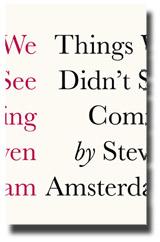
Things we didn't see comingNice to see Steven Amsterdam’s Things We Didn’t See Coming, the first full length piece of fiction from indie publisher, Sleepers Publishing, take out The Age Book of the Year Award on Friday night (Guy Rundle’s account of the US Presidential election, Down to the Crossroads took out the Non-Fiction Award, while Peter Porter’s Better Than God won the Poetry Award). It’s a fantastic result for Sleepers, and more particularly for Sleepers’ founders, Louise Swinn and Zoe Dattner, who seem to me to be an object lesson in just how much you can achieve if you set your mind to it. Six years ago they were organizing readings in a Melbourne pub, a year later they used the readings as the springboard for the first Sleepers Almanac, now they’re publishing full-length fiction and winning major awards. Bloody legends, both of them.
On a more personal note, I’d like to extend my congratulations to the organizers and judges of The Age Book of the Year Award for being prepared to accommodate books which – like Amsterdam’s post-apocalyptic narrative – venture beyond the usually fairly confined territory of literary fiction. As a past winner of the award, and a past winner who won for what was essentially a science fiction novel (The Deep Field), it’s really refreshing to see some of the old preconceptions about what constitutes capital “L” literature being set aside.

Break text

addthisTweet this