Skip to content

Posts from the ‘Books’ Category

More Penguin Book of the Ocean goodness

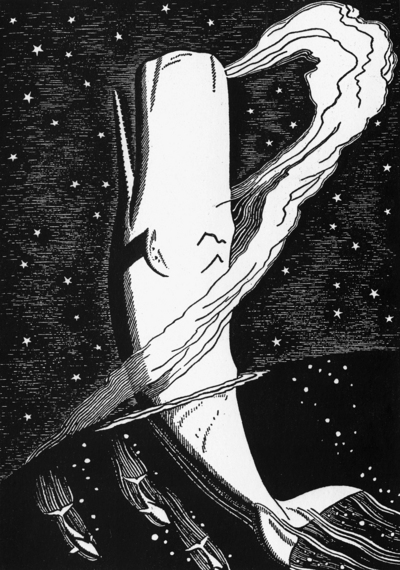
Rockwell Kent, Moby Dick

I mentioned earlier in the week that I was going to be on ABC Radio National’s Bookshow this morning for an interview about The Penguin Book of the Ocean. That interview’s now been and gone, but if you’d like to catch up with it the ABC have now posted the audio on the Bookshow’s website. And I’m not sure how long it’s been there, but I’ve also realised you can read the introduction to the collection in full on Penguin’s website. And finally the good people at Booktopia are doing a special price of 25% off, so if you want to pick up a copy cheap online, they’re very definitely the place to go.

First reviews of The Penguin Book of the Ocean

This month’s Australian Literary Review features a fantastic review of The Penguin Book of the Ocean by Jennifer Moran. Unfortunately it’s not online, and I didn’t get a chance to pop something up yesterday when it was in the print edition, but suffice it to say it’s pretty much the sort of review authors (and editors!) dream about:

“Bradley has collected admirably: allusions and echoes tie the pieces to each other, building a layered and complex whole that is as varied as its subject. Like energy rolling through a wave, the shifts of pace and mood keep the reader constantly engaged.”

The book’s also just had a rave from Geordie Williamson on ABC 702, which is fantastic. Again it’s not online, but if it turns up I’ll link to it.

In the meantime, at the risk of sounding like a cracked record, you can pick up a copy at your local bookstore or check out online pricing on Booko.

Emerging Writers’ Festival

Just a quick note to say I’m speaking this Sunday at the Emerging Writers’ Festival in Sydney. I’m sure the EWF, which brings together new writers and more established literary professionals (their term, not mine!) will be familiar to many of you already, whether by virtue of their program of online events, their various Melbourne-based events at the Wheeler Centre or their Reader, but Sunday’s event, which is presented in conjunction with the NSW Writers’ Centre, this will be the first time the EWF, which brings together new writers and literary professionals (their term, not mine!), has had a Sydney presence. I’m speaking about writing for Australian and international markets at 12:00pm with Leah Greengarten and Tim Sinclair, but you can check out the full program, which also features P.M. Newton, Emily Maguire, Kathryn Heyman, Sam Twyford-Moore and Mark Mordue on the NSW Writers Centre website. You can also follow EWF on Twitter for updates about future events, online and off.

A message from the other side

My apologies if it’s have been a bit quiet around here of late: I’ve spent the past few weeks desperately trying to get the new draft of my novel done and in the week since I actually did stagger over the finish line I’ve been under the weather with some kind of bug.

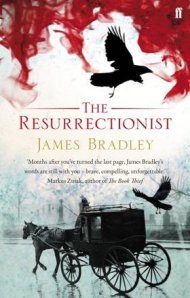
The upside of all this is that the new draft of my next novel, Black Friday, is finally, actually done. It’s still not perfect, and there are definitely some gaps and problems, but I think a lot of the heavy lifting is now done, which is really exciting. I want to try and talk a bit more about it and the process of writing it over the next few months, but for now let me just say that I think it’s got some great stuff in it, and while it’s more in the mode of The Resurrectionist than my earlier novels, it’s also sharper and more contemporary, which is exciting (though I also have to say I think I’ve written my last dark, disordered novel about morally unanchored characters for a while).

The downside (and let’s face it, there’s always something) is that I managed to miss posting about the publication of The Penguin Book of the Ocean, which hit shelves last Monday. I’m going to get a few things up about it over the next week or two, but in the meantime you can check prices at Booko, or read a bit more about the collection on the Books page. I’ve also uploaded a full list of the works included in case you’d like to take a look. It’s a book that’s been a big part of my life for the last twelve months and I’m very proud of it, so I really hope others find the same pleasure and excitement reading it I had putting it together.

I’m doing various bits of media over the next few weeks, which I’ll link to as they happen, but if you’re dying to hear me talk about the collection I’ll be on The Book Show on Radio National next Friday, November 5, at 10:00am. In the meantime, as Molly Meldrum used to say, do yourself a favour.

Break text

Magic squids and mid-life crises

Just a quick note to say I’ve got reviews in both The Australian and The Sydney Morning Herald this weekend. The first, in The Australian, is of Michael Cunningham’s rather underwhelming new novel, By Nightfall. As someone who admires a lot of Cunningham’s work (especially his last book, the gloriously weird Specimen Days) I wanted to like By Nightfall more than I did, but in the end it’s just too finely wrought and exquisitely felt to ever quite come to life.

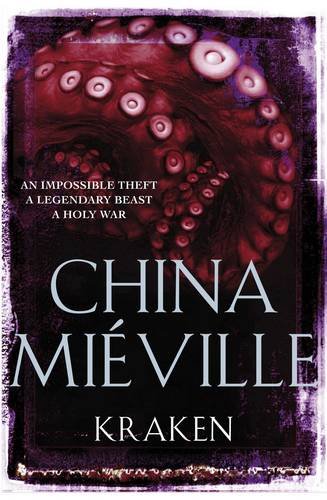
The second, in The Sydney Morning Herald, is of China Miéville’s Kraken. Some of you may have seen my review of the nominations for the 2010 Hugo Award for Best Novel a few weeks back, which talked a bit about Miéville’s last book, The City And The City, which went on to share the Hugo with Paolo Bacigalupi’s The Windup Girl. As I said in that review one of the things that’s fascinating about The City And The City is how thoroughly it expunges the glitter of Miéville’s earlier work, and in that sense Kraken reads like a return to more familiar territory for Miéville (if a writer as restlessly imaginative as Miéville could ever be said to have a “territory” in any meaningful sense). But it’s also a much more light-hearted and playful book than many of Miéville’s earlier books, a quality which is oddly disarming at first but which (at least to my mind) means the book never seems prepared to fully commit to its own existence in some deep sense.

Break text

You know how there are bad days and really bad days?

Well I reckon news HarperCollins in the UK is in the process of pulping many thousands of copies of Jonathan Franzen’s Freedom because they inadvertently printed an old version of the manuscript pretty definitely falls into the latter category. Ouch.

Break text

Excitement Plus!

Break text

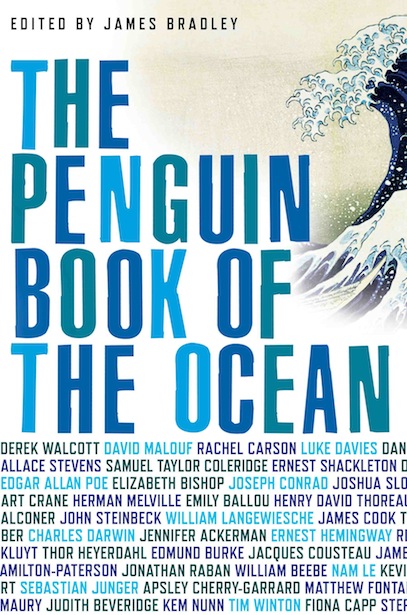
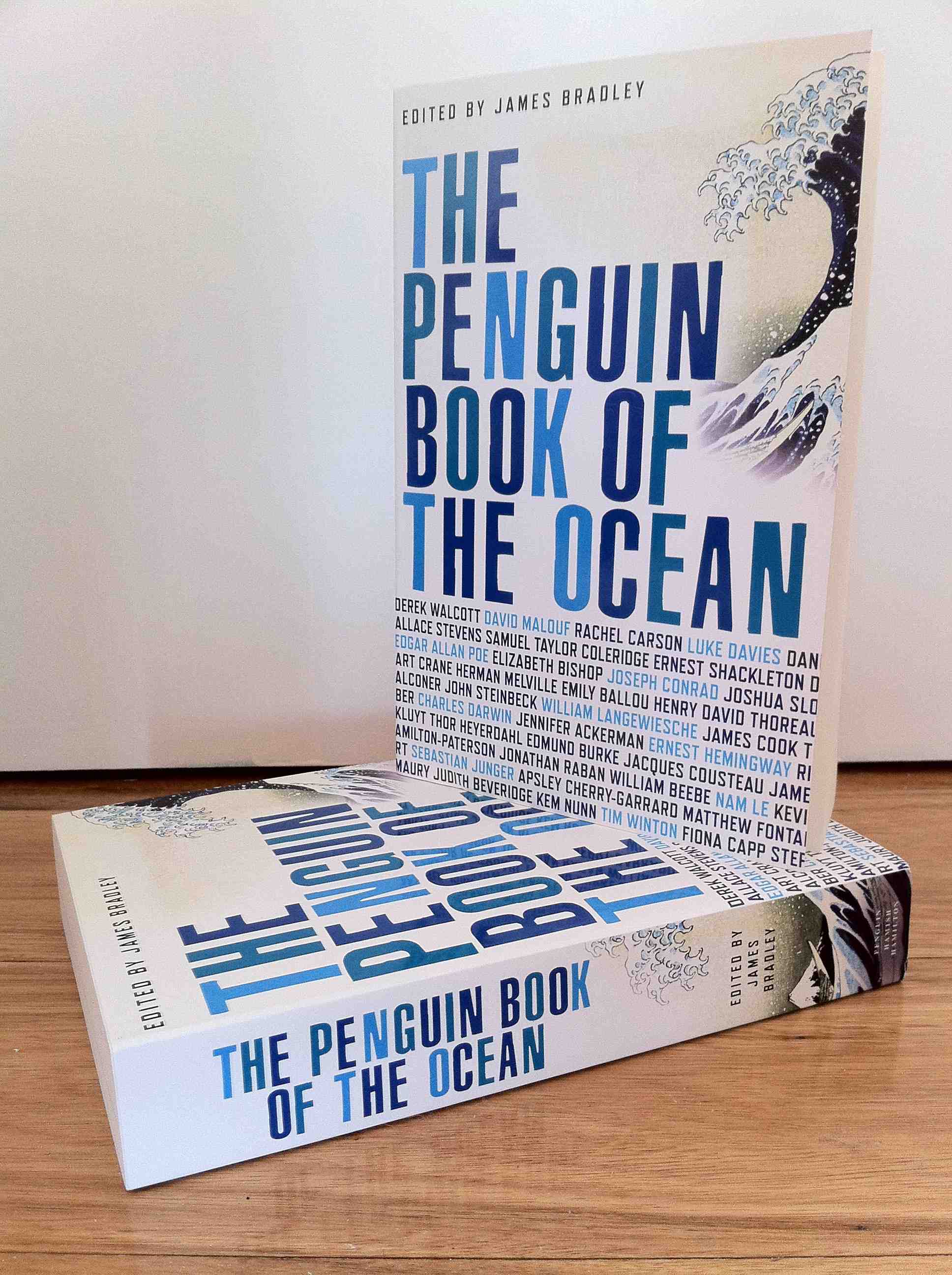
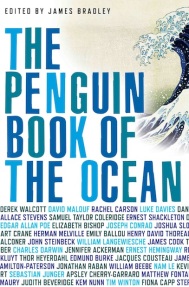
I’ve just received my first copies of The Penguin Book of the Ocean. Holding a book you’ve worked on for the first time is one of those feelings that never gets old, but it’s also one of those moments when you’re painfully aware just how many people it takes to bring a book into the world. So rather than just gloat, or stand stroking the incredibly gorgeous cover, I’d like to say a few thank yous.

First up, I’d like to thank everyone at Penguin, especially my publisher, Ben Ball, for trusting me enough to commission the thing in the first place, and my editor, Cate Blake, who had the unenviable task of transforming a small mountain of photocopies and typed notes into an actual book. I’d also like to thank everyone whose work is included for their generosity. Thank you also to the friends, colleagues and commenters on this site who contributed ideas and suggestions; your input was hugely helpful. And finally thank you to the designer, Tony Palmer, for creating what is flat-out one of the most beautiful covers I’ve ever seen. My crappy photo really doesn’t do it justice, so let me just say that if Tony doesn’t win a Design Award for it next year there’s no justice in this world.

The official release date is 25 October. I’m excited.

Break text

William Gibson goes culture jamming

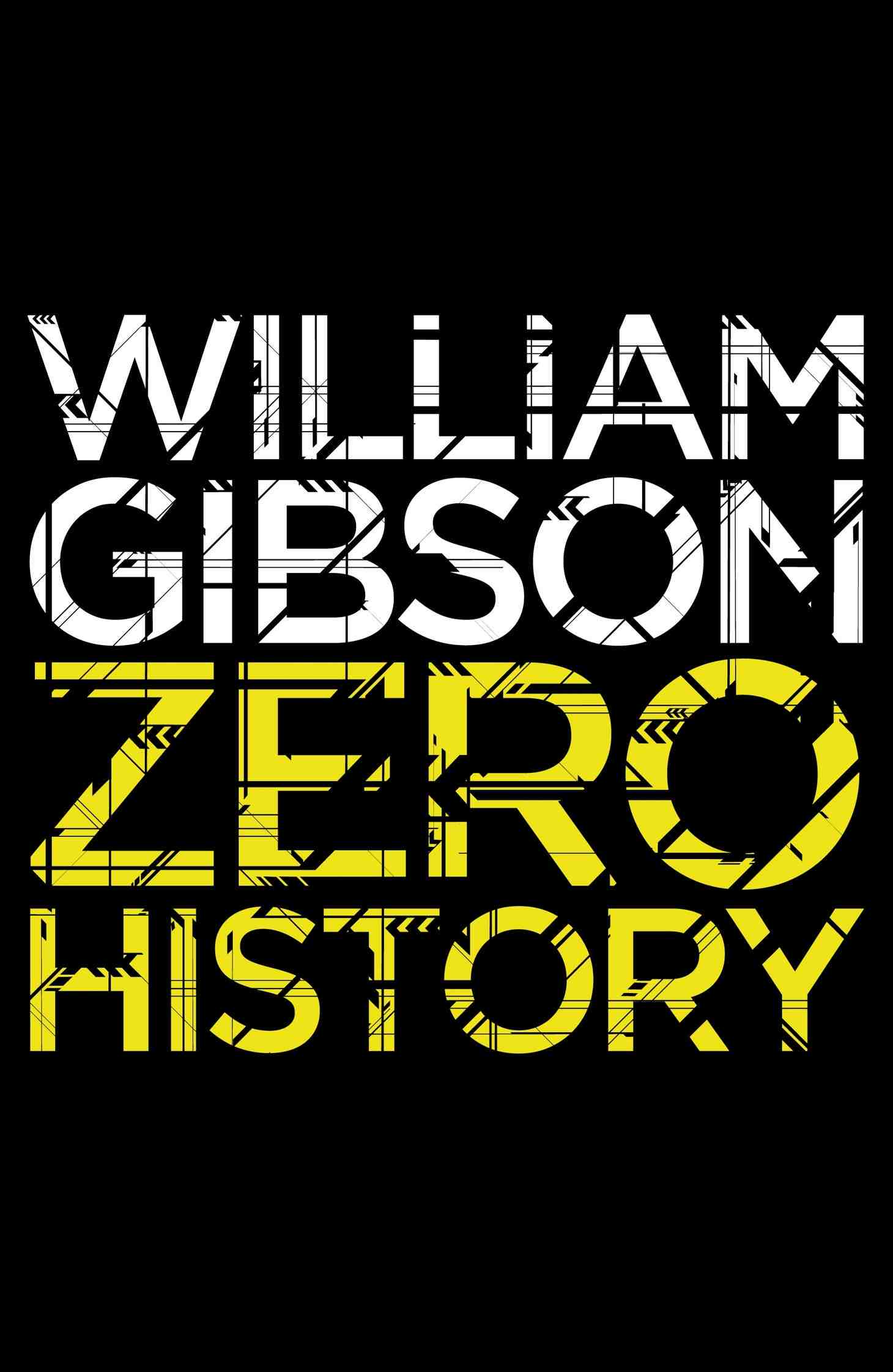
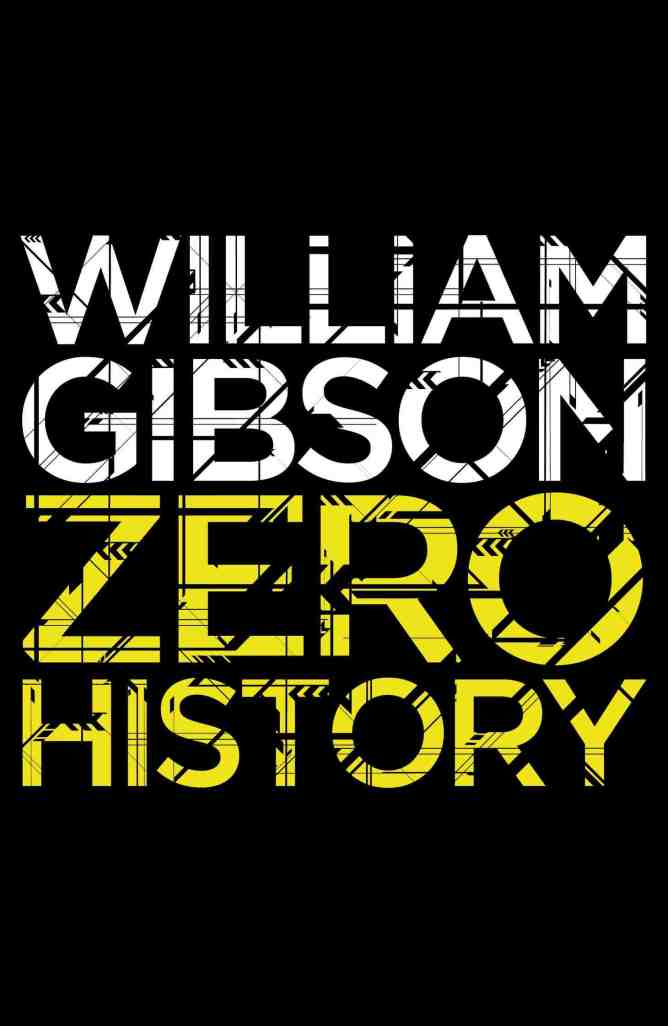
A couple of weeks back I posted a promotional video featuring William Gibson reading from his new novel, Zero History. At the time I mentioned I was reviewing it, so I couldn’t really say much about the book, but I’m now free of that restriction because the review is in this morning’s Weekend Australian.

Obviously you can read the review in full over at The Weekend Australian on my Writing page but in case it’s not clear on the face of it, I liked the book a lot. As I say in the review, I think both Zero History and its predecessor, Spook Country, can be at least partly understood as a sort of literary culture jamming, clever, essentially parodic attempts to expose the inner workings of what McKenzie Wark once called the Military-Entertainment Complex (if you haven’t seen it I urge you to check out Ken’s experiment in crowd-sourced cultural analysis, GAM3R 7H30Ry, published in conjunction with The Institute for the Future of the Book).

I think there’s probably a level at which this playfulness is now beginning to subvert the capacity of Gibson’s novels to do the things he wants them to do. Interestingly, the problem isn’t that the playfulness necessarily detracts from the more serious questions the novels explore, it’s that the business of the novels, and more particularly the relatively conventional narrative structures Gibson employs to play out their plots, hold the books back from really cracking open reality in the way I think they want to. I’ve said before that I think Gibson bears comparison to Delillo, but reading Zero History I did find myself wishing it would show some of Delillo’s preparedness to allow the textures and conceptual armature of the novels to become an end in themselves, or recover some of the more formally innovative qualities that make the final instalment in Gibson’s Bridge Trilogy, All Tomorrow’s Parties, so exciting.

But by the same token, it’s this quality that makes the book so satisfying at an emotional level. For all his fascination with textures and technology, Gibson is a surprisingly gentle and human writer in many ways, and that quality is on full display in Zero History. It’s not just that there’s real tenderness in his depiction of the recovering addict Milgrim’s rediscovery of a larger world, or that Gibson writes with considerable empathy and acuity about addiction, it’s that he grants the reader the not inconsiderable satisfaction of seeing the heroines of Pattern Recognition and Spook Country, Cayce and Hollis, find a measure of happiness.

As I say, you can read my review in full at The Weekend Australian. But because I realise I’m now one of the few people who have reviewed the entire trilogy, I’ve also uploaded my pieces on Pattern Recognition and Spook Country (originally published in The Sydney Morning Herald and The Australian Literary Review) to the site. And if that’s not enough Gibson for one morning, you might want to check out the promotional videos for Zero History and Spook Country. Or visit the man himself at William Gibson Books or on Twitter. Or, if you’d like to take a step sideways, check out Gibson’s introduction to photographer Greg Girard’s wonderful book, Phantom Shanghai.

Break text

Man Booker Prize shortlist announced

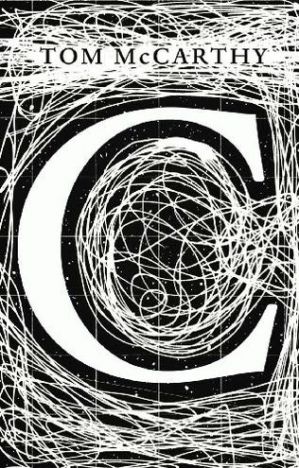
The shortlist for this years Man Booker Prize was announced this morning in London. Since the judges seem to have got the notable omissions out of the way when they assembled the longlist (Ian McEwan, Martin Amis) they’re not the big news this time round, though the two books many will note the absence of are Christos Tsiolkas’ The Slap and David Mitchell’s The Thousand Autumns of Jacob de Zoet. Not having read the whole list I’m not really in a position to guess at the likely winner, but I would say that Emma Donoghue’s fictional reworking of the Natasha Kampusch story, Room, has been attracting a lot of attention, and while Tom McCarthy’s C has probably slipped under many people’s radar, if it’s made it to the shortlist I think it’d have to be the dark horse candidate. It’s also pleasing (not least because I’m an admirer of the book) to see Peter Carey shortlisted for Parrot and Olivier in America.

The six books on the shortlist are:

Peter Carey, Parrot and Olivier in America
Emma Donoghue, Room
Damon Galgut, In a Strange Room
Howard Jacobson, The Finkler Question
Andrea Levy, The Long Song
Tom McCarthy, C

In other award-related news, Sunday saw the announcement of this year’s Hugo Award for Best Novel, which was split between China Mieville’s The City and the City and Paolo Bacigalupi’s The Windup Girl, a result which seems about right to me.

Break text

The Occupational Hazards of Book Reviewing

Oh, brother, I hear you . . .

Break text

Break text

Mmmmm, coverlicious . . .

Somewhere in all the chaos of the past few weeks, I completely forgot to mention that I’d finally finished The Penguin Book of the Ocean.

I was going to post some long mournful piece about how sad finishing books makes me, but instead I think I’ll just let you feast your eyes on the cover . . .

Break text

Break text

AussieCon 4

Just a quick note to say I’ll be at AussieCon 4 in Melbourne next weekend, where I’ll be speaking on a panel on Friday at 1:00pm about the role of the critic in the 21st century. Given the panel also features John Clute (who co-edited The Encyclopaedia of Science Fiction with Australia’s own Peter Nicholls), Bill Congreve of MirrorDanse Books and Cheryl Morgan it should be a fascinating session. The full program is available on the AussieCon 4 website.

AussieCon 4 will also see the announcement of the 2010 Hugo Awards. I had a piece in The Sydney Morning Herald and The Age this weekend about the six books on the Best Novel shortlist. It’s a bit cursory in places, simply because of the difficulties inherent in reviewing six books in 1200 words, and it doesn’t seem to be online yet, but I’ve made a copy available on this site for anyone who’s interested.


Resuming Transmission . . .

Apologies for the resounding silence around these parts in recent weeks: I’ve been completely overwhelmed by work and family and the desperate attempt to get the new draft of my novel locked off by the end of August (a deadline I’m about to miss, but we won’t go there). I’m planning to get some stuff up over the next couple of weeks, but in the meantime, I thought I might link to a couple of things I’ve had published or broadcast recently.

The first is my review of Kenzaburo Oe’s novel The Changeling, which was published in Saturday’s Weekend Australian. Oe, as some of you would be aware, won the Nobel Prize for Literature in 1994, and despite something of a reputation as a public intellectual in his native Japan, is best-known in the English-speaking world for his fiction. I can’t say The Changeling really set my world on fire, but it’s a fascinating work in some respects, not least in the manner in which it explores many of the same issues relating to the relationship between the writer, their writing and the external world that Coetzee explores in Summertime.

The second is an interview with me and Sophie Cunningham about eReaders and eBooks whcih was broadcast on Radio National last week, and grew out of a session at this year’s Sydney Writers’ Festival which featured Sophie, Jeff Sparrow, Sarah L’Estrange and myself. I’m always a bit appalled by the sound of myself on the radio, but this one isn’t a bad piece IMHO. You can listen to it via the Bookshow’s website.

As I say, I’ll be back around these parts later in the week. In the meantime you might want to check out the greatest pop song about a writer ever. (A word of warning – it’s pretty definitely NSFW).

Break text


Zero History

I’m reviewing William Gibson’s new one, Zero History, for The Australian, so I can’t really talk about it here, but just to whet your appetite, here’s a trailer for it. It’s a little brief, compared to the trailer for Spook Country, and I’m not sure Gibson’s voice is really strong enough to drown out the soundtrack, but as the excerpt in the trailer suggests, it’s the book where the seemingly unconnected post-Iraq paranoia of Spook Country meets Pattern Recognition’s fascination with branding and the corporatisation of culture. I’d just say enjoy, but it’d be remiss of me not to suggest that if you haven’t read Pattern Recognition (or indeed Neuromancer and Virtual Light) you should do so immediately: it’s one of the best books of the last decade, and along with Richard Powers’ The Echo Maker, by far the best piece of writing to come out of the convulsions that began with September 11, 2001.

Break text


Australian Literary Review and Walkley Conference

I’ve somewhat belatedly realised today is Australian Literary Review day. As usual selected highlights are available online, including the Pascal Award-winning Mark Mordue on Bret Easton Ellis’ Imperial Bedroom (which I’ve been meaning to try and compose some thoughts on myself) and a number of pieces linked to the election, of which the most significant is probably Christine Jackman’s piece on Annabel Crabb, David Marr and Nicholas Stuart’s books about Kevin RuddALR Editor Stephen Romei’s Editorial is also online.

Reading Stephen’s Editorial has also reminded me that next week is the Walkley Foundation’s Annual Conference, which this year is focussed on narrative. Given it’s smack in the middle of the penultimate week of the election campaign it’s possible it’s not the most perfectly timed media conference in history, but it’s still got a pretty fantastic line-up. Featured international speakers include author and academic, Jay Rosen (the man behind PressThink), political blogger, John Nichols, South African activist and academic Harry Dugmore and NBC News Correspondent Bob Dotson. There’s also a host of Australian speakers, including Charlotte Wood, Malcolm Knox, Kerry O’Brien, Laurie Oakes, Annabel Crabb and Lawrie Zion.

I’m appearing on two panels on Wednesday 11 August, ‘Writing in the Internet Age’ at 11:40am with Jay Rosen, Crikey! Editor Sophie Black and Meanjin Editor and author, Sophie Cunningham, and ‘The Critics Speak’ at 3:30pm with Jenny Tabakoff, Stephen Romei and Sydney Morning Herald Literary Editor, Susan Wyndham. It looks like a fantastic program, so with luck I’ll see at least some of you there.

More information is available on the Walkley Conference website.