Skip to content

Archive for

Best Books 2014

The Golden AgeI’d hoped to get this up last Friday, but I ended up holding off because The Weekend Australian’s Best Books feature didn’t run until Saturday and I didn’t want to preempt my contribution to it. If you’ve got a few minutes I strongly suggest you take the time to check that list out, since it’s crammed with great stuff. You might also want to check out the lists in The Sydney Morning Herald and The Age, as well as the excellent Books of the Year feature in Australian Book Review (which I also contributed to but isn’t online and is available for the price of a couple of cups of coffee).

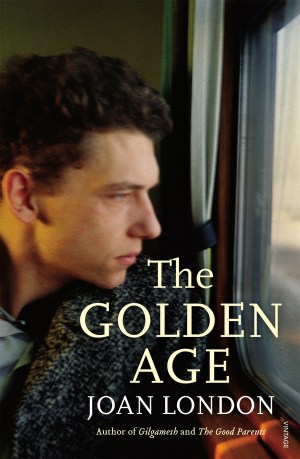
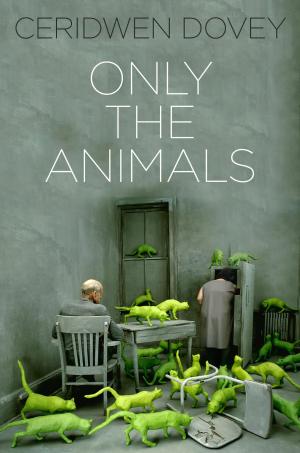
As I said in the Oz and ABR, two of the books that stood out for me this year were Ceridwen Dovey’s wonderful suite of short stories, Only The Animals and Joan London’s luminous new novel, The Golden Age. I suspect both sound like slightly odd propositions at first blush – the Dovey is a series of stories about animals whose lives cross over with literary figures such as Tolstoy and Kerouac and Lawson, and the London is about two teenagers in a polio hospital in the 1950s – but they’re both fantastic books, and I’d be very surprised if the London wasn’t all over award shortlists here and overseas in 2015.

Staying with Australian books for a moment, there were three others I enjoyed enormously. The first is Chris Flynn’s The Glass Kingdom. I loved Flynn’s debut, Tiger in Eden, but the often very funny The Glass Kingdom shows Flynn stretching himself imaginatively and technically as he interrogates the various ways men perform masculinity. I was also very impressed by Fiona McFarlane’s tautly written debut, The Night Guest, and the fabulous P.M. Newton’s gritty and brutally unsentimental take on Sydney and crime, Beams Falling.

I also loved two books I’ve already written about but hope to write something longer about soon, David Mitchell’s The Bone Clocks and Michel Faber’s The Book of Strange New Things. I know I’m not alone in being deeply impressed by the Faber, which is both very strange and deeply affecting, but I was also very moved by the Mitchell, which seemed to be deeply and productively engaged with a series of questions about time and loss.
Only the AnimalsMoving further afield I also completely adored Ali Smith’s smart, sexy and very moving How to be both, Jenny Offil’s wonderfully fragmented and very witty Dept. of Speculation, and Will Eaves’ marvellous The Absent Therapist, and while half the stories in Lorrie Moore’s Bark had already been published in Faber’s Collected Stories a few years ago, even four new stories by Moore are something to celebrate. Something similar is true of Hilary Mantel’s The Assassination of Margaret Thatcher, almost all of which I’d read elsewhere (and sometimes as non-fiction, which gives the book an even more unsettling frisson) but gathered together the pieces form a powerful and troubling whole. And Margaret Atwood’s Stone Mattress is exactly as smart, funny and wicked as you’d expect, and I can’t recommend it enough.

Whether Richard Ford’s new Frank Bascombe book, Let Me Be Frank With You, is a novel or four short stories is an interesting question, but either way it sees Ford back on top form as he depicts the now retired Bascombe not quite adrift in the aftermath of Hurricane Sandy. Next to Ford Colm Toíbín’s writing can seem deliberately unshowy, but his new one, Nora Webster’s portrait of a woman rebuilding her life after the death of her husband offers a reminder of just how good he is. And while it didn’t make the Booker shortlist Richard Powers’ new novel, Orfeo sees Powers interweaving classical music and biology and terrorism in typically brilliant fashion (just quietly, if I could write a novel like Orfeo I’d die happy).

As I mentioned the other day you can catch me, Jonathan Strahan and Gary K. Wolfe chatting about our favourite science fiction and fantasy books on the Coode Street Podcast’s Year in Review special, but as I say there, I was enormously impressed by William Gibson’s new novel, The Peripheral, which is both brilliantly written and grounded in a fully lived social reality in a way his last couple of books haven’t been, and Adam Roberts’ darkly witty, deeply literate and very unsettling riff on talking animals, Bête. I also adored the second part of Sean Williams’ Twinmaker trilogy, Crashland (which has one of the most jaw-dropping endings I’ve read in ages), Simon Ings’ creepily visceral exploration of virtuality, Wolves, and although I think it’s an almost wilfully unlikable book, I was deeply impressed by Peter Watts’ chilly follow-up to the terrifying Blindsight, Echopraxia. And while I didn’t think Ann Leckie’s sequel to last year’s Ancillary Justice, Ancillary Sword was as successful at a narrative level as its predecessor it was no less thoughtful and uncompromising in its depiction of the nature of power.

Of the debut science fiction novels I read this year the one I loved the most was Monica Byrne’s jagged and sensual The Girl in the Road. And while I’m not sure whether it’s really a genre novel at all, I hugely admired Mountain Goats’ frontman John Darnielle’s awkward and deeply distressing study of trauma and the possibilities of the imagination, Wolf in White Van.

And finally, turning to fantasy, two novels stood head and shoulders above everything else I read. The first was Garth Nix’s wonderful new Old Kingdom novel, Clariel, a book that comes at the world of the Old Kingdom from a new angle, and which doesn’t just provide a reminder of just how wonderful that world is, but of how rich and magical and funny Nix is when he’s working at full throttle. And the second was the emotionally expansive and deeply satisfying conclusion Lev Grossman’s fabulous Magicians trilogy, The Magician’s Land.
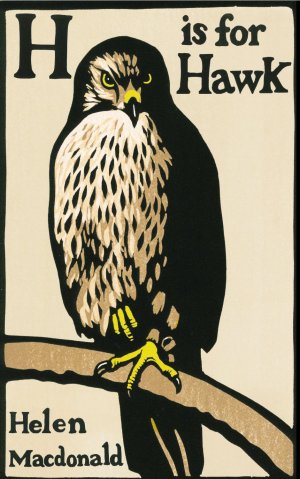
H is for HawkOn the non-fiction front I loved Iain McCalman’s passionate and thrilling history of the Great Barrier Reef, Reef, and slightly closer to home, Ian Hoskins’ wonderful history of the New South Wales coastline, Coast. I also very much enjoyed James Nestor’s descent into the world of freediving and fringe science, Deep (a book I want to write something more about soon) and . But the two non-fiction books I loved the most this year were Helen MacDonald’s sometimes strained, sometimes eerily beautiful H is for Hawk (and interestingly the third book engaged by T.H. White’s legacy I’ve read in the last couple of years) and Sophie Cunningham’s tense, terrifying and frighteningly prescient study of Cyclone Tracy and its aftermath, Warning.

Of the graphic things I read I loved a number of the quirkier titles Marvel has been producing, in particular Warren Ellis, Declan Shalvey and Jordie Bellaire’s brutal and brooding Moon Knight, Mark Waid and Chris Samnee’s Daredevil, Matt Fraction and David Aja’s Hawkeye, G. Willow Wilson’s joyous Ms Marvel and Charles Soule’s now-sadly cancelled She-Hulk, but I think the thing I enjoyed most was Emily Carroll’s fabulously creepy collection of shorts, Through the Woods, a book that brilliantly marries a finely tuned affection for the pulp comics of the 1950s, an awareness of the cruelty of fairy tales and a wonderfully acute grasp of the darker corners of the human psyche. It’s great stuff.

Of course as always there are a number of things I haven’t got to yet but am looking forward to very much, in particular Marilynne Robinson’s Lila, the third part of Karl Ove Knausgaard’s My Struggle, Boyhood Island, Roz Chast’s Can’t We Talk About Something More Pleasant?, Dave Hutchinson’s Europe in Autumn, Rjurik Davidson’s Unwrapped Sky, Jane Bryony Rawson’s A Wrong Turn at the Office of Unmade Lists, Cixin Liu’s The Three-Body Problem, Hassan Blasim’s The Corpse Exhibition, Rebecca Solnit’s The Faraway Nearby, Angela Slatter’s The Bitterwood Bible and Ben Lerner’s 10:04, a number of which I hope to get read over the break.

On the subject of which I hope the holiday season brings good things to all of you, and the year ahead is full of good things. Peace and goodwill to you all.
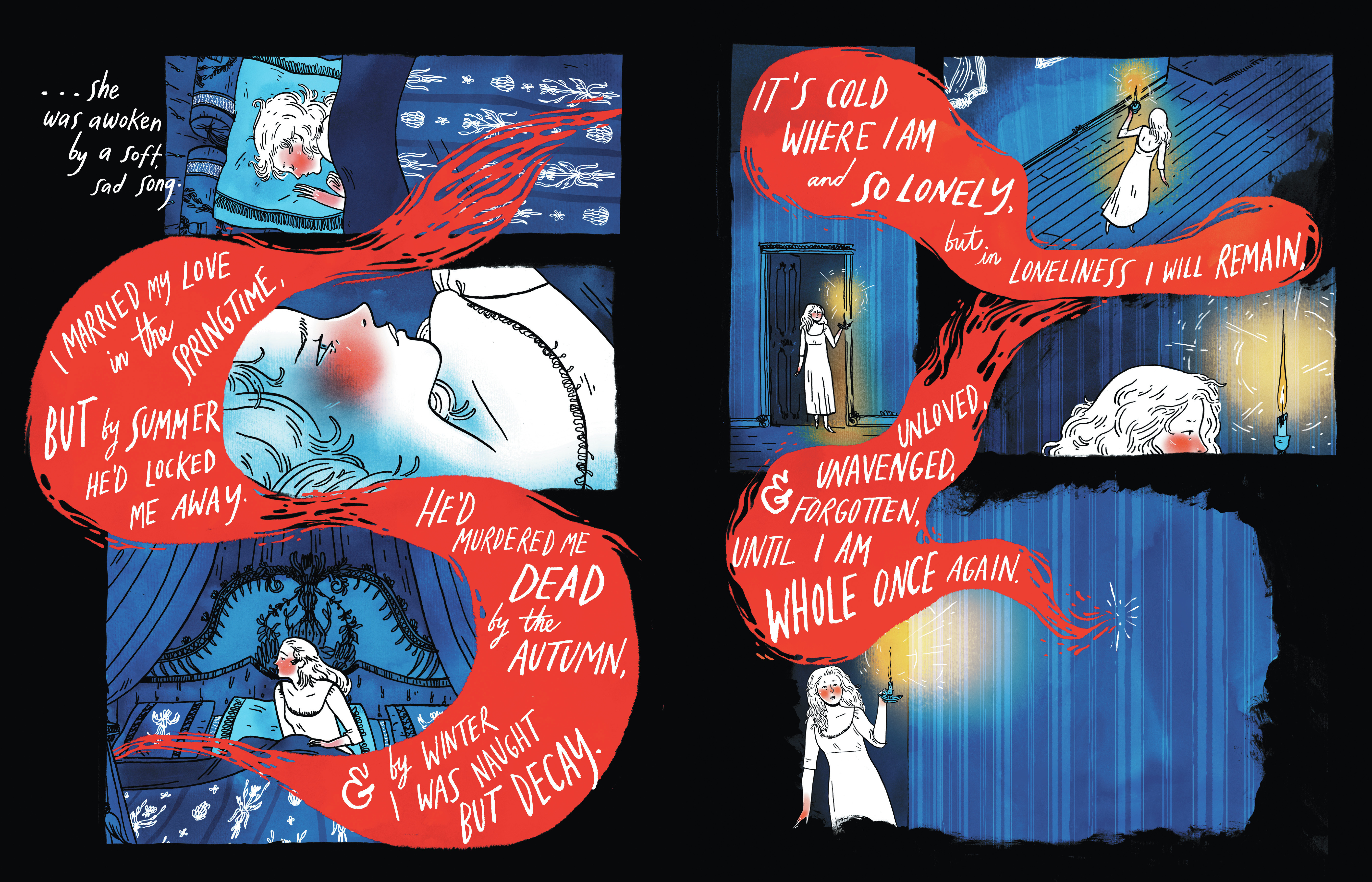
Emily Carroll, Through the Woods
Emily Carroll, Through the Woods

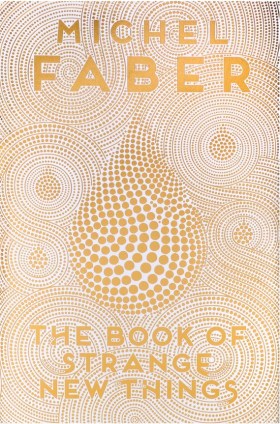
The Book of Strange New Things

Book of Strange New ThingsAt first blush, science fiction and religion might seem curious bedfellows, the one priding itself on its hard-headedness and rationality, the other giving primacy to faith and the acceptance of mystery.

But dig a little deeper and the differences are less obvious, and not just because of the tradition of books such as James Blish’s A Case of Conscience and Mary Doria Russell’s The Sparrow that explore questions about religion, but because Christianity’s eschatological underpinning is given literal form in many of science fiction’s most famous images of transcendence. After all, what are the final moments of Kubrick’s 2001, or the uploaded consciousnesses and singularities of the cyberpunks and their inheritors but updated versions of the Rapture?

Yet there’s little doubt there have been few science fiction novels as explicitly concerned with the meaning of faith as Michel Faber’s The Book of Strange New Things, a book that features a missionary despatched to an alien world to preach the Gospel to the natives while what looks suspiciously like the end of days consumes our own.

For the missionary, the aptly named Peter Leigh, the position is an extraordinary opportunity, even if it means being separated from his wife, Bea. Although surprisingly little is understood about the planet – Oasis – or its inhabitants, the aliens have specifically requested a missionary be sent, in order that they might learn more about the teachings of the Bible – or as they know it, The Book of Strange New Things – and more particularly its promises of eternal life.

Yet the task quickly proves more difficult than Peter anticipated. For although many of the Oasans are receptive to what he has to say, he finds himself overwhelmed not just by the strangeness of the planet, its oppressive humidity, altered colours and 72 hour days and nights, but by the problems of communicating his message in a way that treats the Oasans as equals.

The situation is not helped by the fact every other human on the planet is an employee of the company in charge of the colonisation, a faceless transnational called USIC (at one point Peter admits he doesn’t know what the letters stand for and is told it doesn’t really matter, “all the meaningful names have been taken”), and seem to have been selected precisely because they have no desire for meaningful contact with the people around them.

But the real problem is back on Earth, where a string of disasters and economic crises lead a newly pregnant Bea to begin to question first Peter, then their relationship, and finally her faith.

These sections – and indeed Faber’s incredibly tender depiction of Peter and Bea’s relationship more generally – are deeply affecting in their own right. But they’re made even more affecting by the fact the novel was written in the shadow of Faber’s wife Eva Youren’s struggle with cancer (Youren died earlier this year, and Faber has said in interviews The Book of Strange New Things will be his last novel). Indeed in one sense The Book of Strange New Things is perhaps best understood as a study of that most undramatic of things, a happy marriage.

At another level though the novel is engaged with a series of questions about religion and its fantasies of salvation and ending. These fantasies are embodied in the book itself, which in a sort of eschatological grace note takes the title of each of its chapters from the last line of that chapter, reinforcing the suggestion that all actions are, in the end, driving toward a particular conclusion. But this structural device is subverted by the resolutely homely nature of Peter and Bea’s faith, and their determination to do good in this life, not merely as a path to rewards in the next, but because by helping others we make both ourselves and the world a better place.

Simultaneously though there’s more than a whiff of Conrad about Peter’s journey and the colonial ambitions of USIC (despite a lovely bit of misdirection in the afterword it’s difficult to believe Peter’s predecessor, who disappeared after going native, is called Kurtzenberg by accident). Yet despite the allusions to Heart of Darkness (and indeed Robert Silverberg’s Downward to the Earth) the novel’s method is never to derange or unsettle in any direct way. Indeed even the Oasans themselves, whose faces resemble “two foetuses curled up” never seem particularly alien or Other in any meaningful way.

It’s tempting to regard this as a failing, of a piece with the book’s oddly cursory attention to the mechanics of its science fictional bells and whistles. How one wants to ask, was Oasis discovered? Why does there only seem to be one group of Oasans? Aren’t there other communities, other cultures elsewhere on the planet? Why does Earth’s economy and environment collapse so suddenly and completely?

Yet I suspect asking these sorts of questions is to miss the point. Because despite its title The Book of Strange New Things isn’t interested in communicating or capturing strangeness at all, quite the reverse. Instead it seeks to demonstrate how inimical the modern world is to the miraculous, how inured it is against true beauty.

This interest in the deadening effects of contemporary culture is not new in Faber’s writing – indeed it’s front and centre in both his first novel, Under The Skin (to which The Book of Strange New Things seems to nod in its opening chapter’s depiction of Peter and Bea’s journey toward the airport along a series of anonymous motorways and layovers), and his third, The Fire Gospel, which was published as part of Canongate’s Myth Series in 2008. But in The Book of Strange New Things it is woven into the fabric of the book, captured not just in the careful affectlessness of the prose but in the USIC employees’ lack of desire to engage not just with questions of faith, but with questions of any kind. Against this backdrop Peter’s faith, like the simple happiness he shares with Bea, seems quixotic at best, an act of folly. Yet it is the triumph of this deeply strange yet strangely affecting novel that it also seems a kind of grace.

This is an extended version of a review that appeared in The Sydney Morning Herald and The Age on 13 December 2014.


A Hard Day’s Night

A Hard Day's Night 2I’ve just watched A Hard Day’s Night, which I haven’t seen in more than 30 years. It’s a film I have always had a soft spot for, mostly because I totally adored it when I saw it as a teenager (an experience that’s mirrored in the opening chapter of Dana Spiotta’s wonderful novel, Stone Arabia), so I was really interested to see how it held up.
The answer is surprisingly well: although the section on the train at the beginning is a bit long and slow (and the pacing in general is a bit slow by contemporary standard) it’s still funny and sneakily surreal and full of life. And though they’re all surprisingly good on camera, both John and Ringo are particularly good.

But what’s really interesting is that it’s not quite the film I remember. If nothing else they’re all much rougher and much more northern than I remember (and their accents are really thick) and despite the mugging and hijinks the film doesn’t attempt to disguise that. But it’s also very clearly a film about emancipation and possibility, with a surprisingly subversive satirical undercurrent (presumably because they chose the Liverpudlian playwright and screenwriter, Alun Owen, to write it, and there’s a lot of gleeful mockery of establishment figures, decorum and the pretensions of the middle classes (the sequence in the ad agency is particularly sharp). But at the same time there’s a lot of that slightly surreal mode of British comedy that delights in wordplay and absurdity that was perfected by Peter Cook and Dudley Moore and others, in particular in scenes like the long “you look just like him” routine with John in the stairwell. I suppose this shouldn’t be a surprise: John and Paul were huge fans of the Goons, and that pleasure in punning and absurdity is visible in both The Beatles’ lyrics and their public personas.

Some other stray observations. Part of what makes the film so delightful is the lightness of director Richard Lester’s touch, and the playful way it shifts modes, jumping from slapstick comedy to playful parodies of the French New Wave and sequences that play with the conventions of James Bond films. It’s also startling to see how completely magnetic John is, although it’s a magnetism that’s made distinctly edgy by the sense he’s always on the verge of doing something unpredictable and dangerous (something the script plays up but is quite clearly there anyway). It’s also clear that part of what made John such a successful songwriter is the contrast between his tough guy image and the songs of male vulnerability he specialised in, in particular songs like ‘If I Fell’. Similarly, while I never really understood why George was such a sex symbol it’s surprisingly obvious when you see him on screen. And although the film doesn’t attempt to disguise the poverty and wreckage of post-war Britain everybody in it, and in particular all the girls, are incredibly beautiful, which whether deliberate or not, helps suggest a sense of renewal and possibility. But basically it’s a delight.

The Coode Street Year in Review

the-coode-street-podcastI’m planning on getting a Best Books post up in the next week or so, but if you’ve got an hour to kill in the meantime you can catch the Coode Street Podcast’s Year in Review special, which features Jonathan Strahan, Gary K. Wolfe and me chatting about some of our favourite science fiction and fantasy books of the year. Books discussed include Lev Grossman’s The Magician’s Land, Ann Leckie’s Ancillary Sword, Adam Roberts’ Bête, David Mitchell’s The Bone Clocks, Nnedi Okorafor’s Lagoon, Garth Nix’s Clariel, William Gibson’s The Peripheral and Monica Byrne’s The Girl in the Road.

You can listen to the show via Podbean or iTunes. And congratulations to Jonathan and Gary on the new partnership between Coode Street and Tor.com: it’s very exciting news for all concerned.


Favourite Music 2014: Part Three

Here’s the third and final part of my list of my favourite albums of 2014. You can also check out Part One and Part Two.

Angel Olsen, Burn Your Fire For No Witness
I haven’t heard Olsen’s debut album, Half Way Home, but if it’s half as good as Burn Your Fire For No Witness it must be pretty fantastic. Olsen has one of those very sixties voices that quaver with vulnerability, and there’s more than a little of the 1960s and 1970s in the songs on Burn Your Fire For No Witness, but there’s nothing derivative about their intensity and intelligence, the deft way she marries elements from the music of the 1940s to garage rock and even glam, or even the wit of her lyrics, which gesture, with delicious irony, toward the self-aware gloom of Leonard Cohen. The net effect is pretty damn special.

Spoon, They Want My Soul
They Want My Soul is classic Spoon: lean and muscular, spaciously produced and totally addictive. If you like Spoon you’ve probably already got it, if you don’t, do yourself a favour and grab a copy. I love all of it but the electric harp (at least I think it’s an electric harp) on ‘Inside Out’ gives me chills every time I hear it.

St Paul & the Broken Bones, Half the City
As the KEXP mini-concert below suggests, St Paul and the Broken Bones are probably one of those bands you really need to see live for the full experience, but all the same, their debut, Half the City is pretty bloody electrifying. Produced by Ben Tanner, of the Alabama Shakes (and just by the way, what is the story with the Shakes’ apparently-recorded-but-still-not-released follow-up album?), it shows off the band’s ferocious brass section and lead singer Paul Janeway’s blistering vocals to brilliant effect. It’s so good.

St Vincent, St Vincent
There’s a reason Annie Clark’s fourth album as St Vincent is at the top of most lists of the best music of 2014, and that’s because it’s seriously good. Smart, rhythmic, intellectual pop that’s both steely and tender, it’s filled with songs like ‘Digital Witness’ and the beautiful final track, ‘Severed Crossed Fingers’ that snake your way into your brain and then sinuously unravel themselves. And she’s dead cool, which never hurts.

The War on Drugs, Lost in the Dream
I already owe The War on Drugs a favour  for propelling Kurt Vile into the solo career that produced one of my favourite albums of 2013, Wakin’ on a Sunny Daze, but now I love them twice over for creating the shimmering, propulsive Lost in the Dream, an album that manages the unusual trick of being both highly textured and soaringly emotional. It’s a fantastic record.

Lucinda Williams, Where the Spirit Meets the Bone
At 61 Lucinda Williams seems to just gets better and better with each album, and Where the Spirit Meets the Bone continues the trend. Featuring 19 tracks over two discs, and almost twice as long as her last album, 2011’s achingly beautiful Blessed, it’s yet another testament to Williams’ capacity to write wonderfully tender songs about damage and loss and love, and although I occasionally get a little frustrated with her strangled phrasing, it’s a wonderful showcase for her distinctive voice and the talents of her band. There are any number of highlights, but if you have a listen make sure you stick around for the final track, an almost ten minute cover of J.J. Cale’s ‘Magnolia’. You might also want to check out The Believer’s 2012 interview with Williams, in which she speaks candidly about her process and career.

Honourable Mentions
Damon Albarn’s post-Blur career has been interestingly schizophrenic, bouncing from projects like Gorillaz and the under-appreciated The Good, The Bad & The Queen to less commercial projects like his opera about Elizabethan alchemist Dr John Dee, but with Everyday Robots he seems to have decided to make a conventional solo album. Except, of course, being Albarn, it’s not particularly conventional: instead it’s a series of introspective songs about alienation and technology. It’s deliberately downbeat, but surprisingly absorbing and heartfelt, and it’s enlivened by a couple of fabulous tracks, most notably the delightful ‘Mr Tembo’.

With its layered vocals and interwoven rhythms and textures Alt-J’s follow-up to their Mercury Award-winning An Awesome Wave, This Is All Yours, shifts between delicately sinister tracks like ‘Hunger of the Pine’ and ‘Warm Foothills’, and the stomping electro-blues of ‘Left Hand Free’, but that variety is part of what makes this beautiful, various and complex album so rewarding. It’s great stuff.

Jeff Tweedy’s decision to record an album with his son, Spencer, could easily have been an act of ageing rock star indulgence, and while it suffers a bit from their decision to spread the results over two discs, there are enough gems on Sukeriae to justify Tweedy’s faith in the project. It’s not quite Wilco (who have also just released a very interesting looking box-set of nerd-bait rarities, Alpha Mike Foxtrot) but it’s still pretty terrific. And the film clip for ‘Low Key’ will have a horrible familiarity for an awful lot of writers and musicians.

Also a few I only came across very recently, but which I already adore. The first two are artists I discovered on Amanda Rose’s always incredibly interesting list of her favourites of 2014 over on Flop-Eared Mule (if you haven’t been, go immediately, it’s a veritable treasure trove of fabulous stuff). First up is Light in the Attic’s reissue of a 1969 album of gospel recordings of Dylan songs. The group behind it, the Brothers & Sisters, were put together by Lou Adler (the guy behind Sam Cooke (he co-wrote ‘What a Wonderful World’, The Mamas and the Papas and Carole King (inasmuch as anybody other than King was behind her success), and featured singers such as Gloria Jones and Merry Clayton (who turns up in 20 Feet From Stardom).

The second is French folk singer Alma Forrer, whose self-titled EP contains four stunning songs that showcase her liquidly beautiful voice.

I can also recommend Reigning Sound’s Shattered, a gem of an album which may wear its influences on its sleeve, but is direct and warm and filled with brilliant songs.

And finally a brilliant little punk pop record from UK act Martha. I’m a sucker for this particularly British brand of guitar pop, and Courting Strong is one of the best versions of it I’ve heard in ages.

And although it’s pushing it, a couple of things that date from 2013 and 2010 respectively, but which I only discovered this year.

The first is Memphis-based singer-songwriter Valerie June’s fantastic Pushin’ Against A Stone, an album that June has described as “organic moonshine roots music”, but which sounds both rooted in tradition and completely contemporary in its eclecticism and political instincts.

And the second is Zoe Muth and the Lost High Roller’s Starlight Hotel and her follow-up, World of Strangers. I didn’t know Muth before I heard Starlight Hotel and her follow-up, World of Strangers, but I was a paid-up fan by the time the first song had played.

Favourite Music 2014: Part Two

As promised on Monday in Part One, here’s the second instalment in my list of my favourite music of the past twelve months. Part Three will go up Friday.

Justin Townes Earle, Single Mothers
Earle has made it clear on several occasions that this album had a troubled birth, having been cut back from two discs to one (there’s now a companion album, Absent Fathers, due for release early next year). It’s difficult not to feel that troubled genesis is reflected on the album itself though, at least to some extent: certainly it’s the least immediately approachable of Earle’s past four albums, partly because the opening two tracks, ‘Worried About The Weather’ and ‘Single Mothers’ are so downbeat. But give it a few listens and the album unpacks itself, revealing gorgeous tracks such as ‘Time Shows Fools’ and ‘Today and a Lonely Night’. I’m not sure it’s Earle’s best – I think that crown still belongs to the brilliant Harlem River Blues – but Single Mothers is still a terrific album that shows Earle continuing to grow as a songwriter and lyricist.

Sharon Van Etten, Are We There
Sharon Van Etten’s last two albums, Tramp and Epic, demonstrated her capacity to write frighteningly intimate and jagged songs about fractured identity and resilience, but Are We There (the annoyingly absent question mark is her doing, not mine) sees Van Etten’s songwriting grow in both complexity and range. The undercurrent of emotional and physical violence that makes Epic so raw is still very present on Are We There, but there’s a new expansiveness to the production and arrangements, an expansiveness that’s anchored by the intensity and total commitment of the performance. It’s a raw, powerful and exhilarating combination.

Hurray for the Riff-Raff, Small Town Heroes
Small Town Heroes isn’t Hurray for the Riff-Raff’s debut but it’s the first of their albums to find real success. Based in New Orleans and led by singer and bassist Alynda Lee Segarra, the band combine traditional elements with contemporary subjects, as evidenced by songs like ‘The Body Electric’, which reworks the murder ballad to expose the violence against women that lies beneath it, but it’s Segarra’s songwriting, voice and charismatic performance that makes them really exciting. You can check out ‘I Know It’s Wrong (But That’s Alright)’ and ‘The Body Electric’ below, together with a scorching performance of one of my all-time favourite songs, The Velvet Underground’s ‘Rock and Roll’.

The Last Internationale, We Will Reign
I know the thumping blues-rock albums I was supposed to love this year were Royal Blood’s self-titled debut and Jack White’s Lazaretto, but I have to confess I was reasonably unmoved by both of them. Instead I found myself listening to New York act The Last Internationale’s passionate and polemical We Will Reign, an album that nails its political colours to the mast from the first song, the stomping ‘Life, Liberty and Indian Blood’.

Given the subject matter of the songs it’s an album that could be dour or humourless, but it’s not, even on songs like ‘Devil’s Dust’, which is a lament for miners poisoned by their work, something that’s got more than little to do with lead singer Delila Paz’s thrillingly unbridled yet gorgeous voice, something that’s showcased on the live acoustic version of ‘Wanted Man’ below.

Jenny Lewis, The Voyager
I’ve been a huge fan of Jenny Lewis for a long time, so despite being a little underwhelmed by her 2009 collaboration with Johnathan Rice, Jenny and Johnny, I was very excited to finally have a new solo album. And what an album it is: combining the 1970s soft rock of Fleetwood Mac with Lewis’ flair for unpacking her capacity for self-destruction, it manages to be funny, tender and sad all at once, a quality that’s even even more heft in the light of this excellent New Yorker profile of Lewis. It’s a wonderful, wonderful album, and although I can’t find a decent copy of my favourite track, ‘Late Bloomer’, online that doesn’t really matter, because there’s not a bad song on it.

Lydia Loveless, Somewhere Else
One part country, one part punk, Lydia Loveless’ sexually frank and emotionally intelligent songs of romantic disaster are wonderfully raw and funny (let’s face it, a song that begins “Well I was just thinking about you and how you got married last June/I wondered how that worked out for you, so I just thought I would call” is never going to work out well for anybody), and they’re played with fabulously dishevelled energy and directness by Loveless and her band. I love this album.

Favourite Music 2014: Part One

I’m planning to post something about my favourite books of 2014 next week, but in the meantime I thought I might pull together a list of some of my favourite albums of the past year.

I’m not going to pretend what follows is comprehensive or make any claim to objectivity. Instead it’s a very personal list of things I’ve loved over the past twelve months. That being the case I haven’t tried to rank them or pick out absolute favourites; instead I’ve listed them alphabetically, although because the full list is a bit unwieldy I’ve decided to spread it across three posts. This first one covers A to D, the second, which will be published on Wednesday, covers E to L, and the third, which will go up Friday, covers M to Z (together with a few honourable mentions).

Alvvays, Alvvays
Think Best Coast or a dreamy mash-up of Teenage Fanclub and The Pains of Being Pure at Heart. Gorgeous hooks, fuzzy guitars, shimmering production and gorgeous echoes of the 1950s and the glassy cool of Blondie and New Wave. It could be from 1982 or 1990 or last week, but that nostalgic timelessness is part of what makes it so magical. And ‘Archie, Marry Me’ is worth the price of admission all on its own.

Rodrigo Amarante, Cavalo
I bought this one on a whim but I’m so glad I did. Although he’s recorded several albums with Brazilian band Los Hermanos, Amarante is probably best known in the Anglophone world for his work with Strokes drummer Fabrizio Moretti as part of the underrated Little Joy. Cavalo is his first album and it’s wonderful, featuring songs in French, Portuguese and English, and wending its way through delicately retro numbers like the opener, ‘Nada Em Vão’ and ‘Irene’ to sneaky dance tracks like ‘Hourglass’ and gorgeous, almost unclassifiable creations like ‘Mon Nom’.

Benjamin Booker, Benjamin Booker
I love, love, love this album. Right from the nod to Chuck Berry in the opening bars of the first track, ‘Violent Shiver’, it’s just electric, using Booker’s raspy vocals and the deliberately rough and ready production to anchor a series of tightly written yet loosely played songs that combine elements of blues, punk and the garage rock of Pavement and The Strokes. There’s not a bad song on it, but the one I come back to over and over again is the glorious, gospel-influenced ‘Slow Coming’, a song that seems to nod implicitly to Sam Cooke’s classic ‘A Change is Gonna Come’.

Leonard Cohen, Popular Problems
I have to confess I was a bit of a latecomer to Leonard Cohen, but over the past few years I’ve become more and more fascinated by him and his work. All the qualities that make Cohen so singular are on display on Popular Problems, which easily measures up to Cohen’s work in the late-1960s and early-1970s (and leaves his work in the early years of this century for dead), and shifts with startlingly ease from the sardonic wit of ‘Almost Like The Blues’ (“There’s torture and there’s killing/And there’s all my bad reviews/The war, the children missing/Lord, it’s almost like the blues”) to beautiful love songs like ‘Did I Ever Love You’ and the delicate restraint of ‘You Got Me Singing’. And the physical version of the album also includes a wonderfully designed fold-out booklet featuring a series of images of a half-dressed Cohen cleaning his shoes, offering a wonderfully restrained tribute to both Cohen’s fascination with Buddhism and the shadow of mortality that helps lend this slyly vital album its particular beauty.

(While you’re listening to the songs I suggest you take a few minutes to check out the photos of Cohen on Hydra in the 1960s that have surfaced in recent years, many of which also feature George Johnston and Charmian Clift, and this excellent piece about them by Paul Genoni and Tanya Dalziell).

The Delines, Colfax
I’m a huge fan of Willy Vlautin’s work, both as a member of Richmond Fontaine and as the author of novels such as Lean on Pete and The Free, so I was very excited when I heard he’d quietly assembled The Delines, a new group featuring Richmond Fontaine drummer Sean Oldham, Decemberists keyboardist Jenny Conlee and Damnations singer Amy Boone, and that excitement was absolutely borne out by their debut album, Colfax. I’ve written about Vlautin’s songwriting before, but the songs on Colfax show all the emotional intelligence and gift for compressed narrative that make his work with Richmond Fontaine so special, as songs like ‘The Oil Rigs At Night’ make eloquently clear.

Bob Dylan, The Complete Basement Tapes
I’ve never sought out any of the endless bootlegs of Dylan and the Band’s sessions at Big Pink in 1968, which means my exposure to the great white whale of modern music was restricted to the overproduced 1975 collection, but I’m not sure I’ll ever be able to go back to that now I’ve heard the real thing. I ponied up for the absurdly overpriced six CD complete version (which justifies its exorbitant price tag with two beautiful hardback books of photos, but lacks the extensive liner notes that helped make last year’s Another Self-Portrait so fascinating), and although the slightly less-obsessive fan might well do just as well with the two CD selection, it’s still a thrilling experience, filled with a sense of play and delight in the possibility of the music. I’ll leave it to others to unpick the importance and pleasures of this collection, all I have to say is whether you think you’re a Dylan fan or not, try and lay your hands on a copy: it’s wonderful.

Make You Better

Cannot. Wait.