Skip to content

2012: disaster porn at its best

Two_thousand_twelveI’m not quite sure when this site turned into the House of Pulp (note to self – finish long post about The Kindly Ones before literary credentials evaporate completely) but at the risk of alienating those few serious people still hanging in there, I invite you to feast your eyes on the glory that is the new trailer for Roland Emmerich’s 2012.

I’ve long thought Emmerich, who directed Godzilla, Independence Day, The Day After Tomorrow and, most recently, the brain-numbingly dopey 10,000 BC is misunderstood. It’s easy to point to the cornball dialogue (“What happened to the right of people to FIGHT FOR THEIR LIVES!”) and the increasingly ridiculous plots of his films and miss the very real beauty of the images of mass destruction he creates. In many ways his movies seem closer to the work of a painter like Breugel, with their beautifully rendered landscapes and occasional, apocalyptic fervour, than to conventional movie-making. Certainly there’s something almost painterly about much of The Day After Tomorrow, which is filled with images of sudden, and breathtaking beauty (the birds flying away from New York, for instance).

The trailer for 2012 is all this and more. A riff on the broader conflation of the Mayan calendar and theories predicting the end of the world (there’s a nice Wikipedia article on the subject if you’re not familiar with them), it begins with the assumption that the end of the Mayan Long Count on 21 December 2012 really does predict the end of the world, and moves from there into the usual collage of characters fighting for their lives. Now I’ve obviously not seen the film, but it looks pretty gob-smacking to me (not least because the whole Long Count idea has always given me a little shiver of anxiety anyway) with one completely awesome image of destruction after another. And, in the midst of it all, there’s a magnificent little grab where one of the characters says he’s heard the government is building a huge boat, and a moment later a giraffe is seen being winched into it.

Like I said, pure genius . . .

Break text

Break text

It’s also available in HD:

Break text

Break text

addthisTweet this

The greatest covers ever. ‘Nuff said.

1190697308.0533_full

Click to embiggen

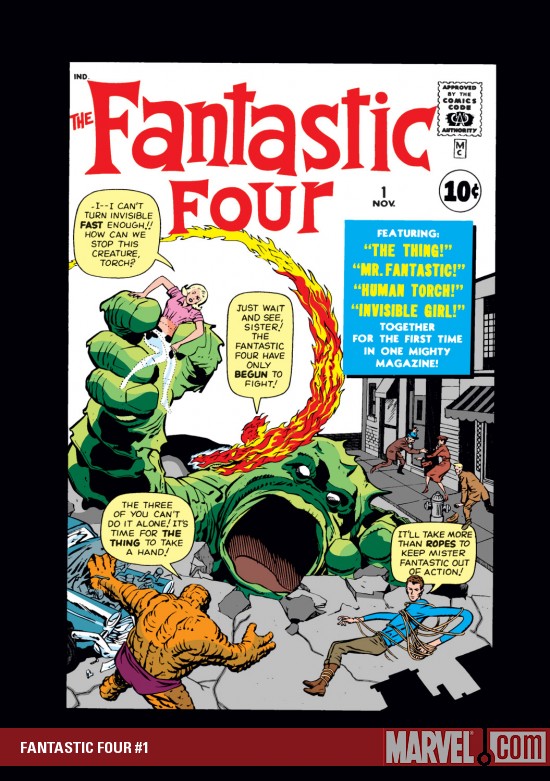
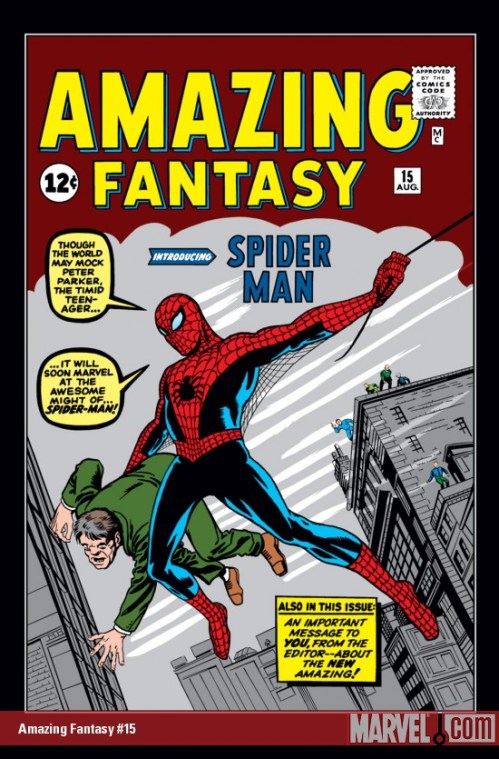
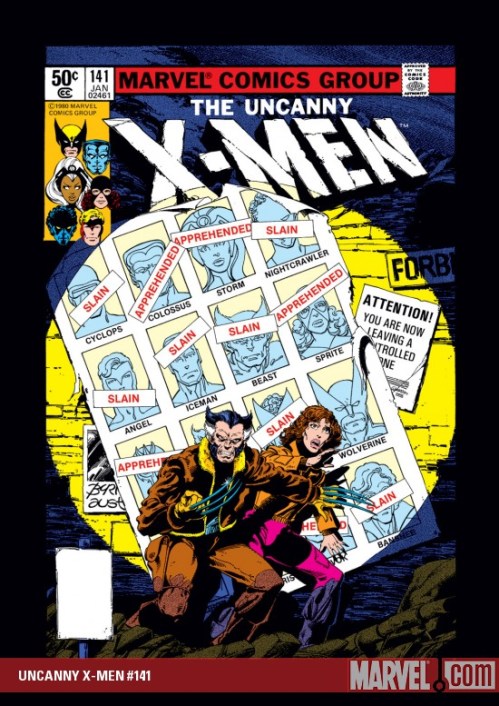
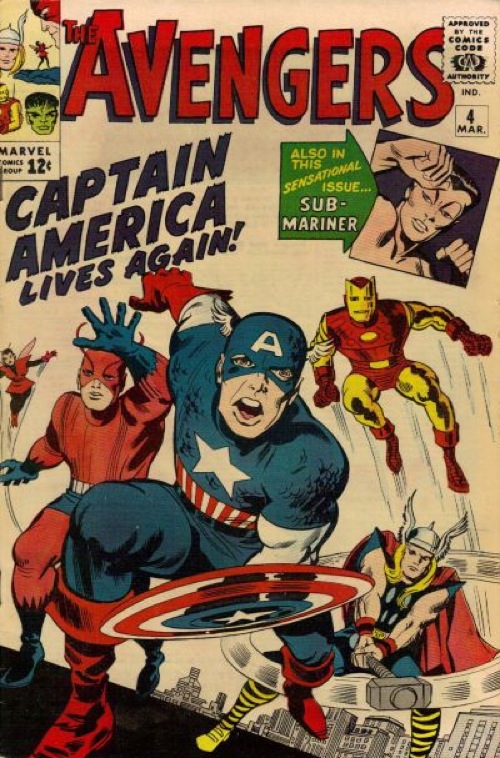
If like yours truly your adolescence (and much of your 20s, come to that) was misspent rereading old issues of The Uncanny X-Men and Fantastic Four, you might be interested to know Marvel have assembled a collection of their 70 greatest covers. The list, which is based upon an online poll of readers, is part of Marvel’s 70th anniversary celebrations, and is accompanied by a list of Marvel’s 70 greatest comics.

I’d have to confess to being a little non-plussed by the winner, Todd McFarlane’s cover for The Incredible Hulk #340 . I can think of half a dozen covers off the top of my head which are more iconic and, quite frankly, more striking. And while the selection seems to be less biased towards recent covers than one might expect, I’m a little surprised Jack Kirby and Steve Ditko’s work from the 1960s isn’t better represented (and, though it’s less iconic, the very striking work John Byrne was doing on Fantastic Four and Frank Miller on Daredevil in the 1980s). And how on earth how did the cover of Avengers #4 miss the cut? How can you get more iconic than the return of the original Super-Soldier himself, Captain America?

But all that said, I’m pleased to see the #2 and #3 spots go to Amazing Fantasy #15 (the first appearance of Spiderman) and a comic that remains one of my all-time favourites, The Uncanny X-Men #141. And as always I’m pleased to be reminded of just how much I love the old Silver Age comics, which still possess a joyousness and archetypal power the much more sophisticated work of recent years struggles to match (find me an image to match that of Bruce Banner caught in the glow of the Gamma Bomb, or the Sub-Mariner hurling Captain America’s body into the Arctic Ocean and I’ll eat my words).

And if you have a few minutes to spare after flicking through the images on Marvel’s website, do yourself a favour and read Jonathan Lethem’s piece on Sam Raimi’s Spiderman, or his wonderful essay about growing up with the Fantastic Four, or, in a slightly different vein, his bleak but to my mind accurate piece about Christopher Nolan’s The Dark Knight. I promise it’ll be time well-spent.

Break text

1190764208.0881_full

Break text

1190691314.0361_fullBreak text

avengerscovers1

Break text

addthisTweet this

I have nothing to say . . .

4cd94_socialmediavenndiagram

Click to embiggen.

Break text

addthisTweet this

You know who’d love this? My Grandma.

This is brilliant. Painful, cruel, almost unwatchable, but brilliant.

Break textVodpod videos no longer available.

Break text

addthisTweet this

Some more Sam Beam

I mentioned the pride of place taken by Sam Beam’s ‘Flightless Bird, American Mouth’ in the movie of Twilight the other day. But after hearing it I went out and bought Around the Well, the new two disc set of Iron & Wine rarities. Besides coming complete with more old school tape hiss than any record deserves to have, Around the Well is what it says it is, a selection of bibs and bobs, but there are more than a few gems amidst its 23 tracks, not the least of which is this cover of New Order’s ‘Love Vigilantes’. Not what you’d call an obvious collision of aesthetics, but it works beautifully.

Break text

Break text

addthisTweet this

The Gone-Away World

NIck Harkaway

Nick Harkaway

First a quick apology for the slightly sporadic posting over the past week. I’ve been a bit overwhelmed with work, and though I think I can see the light at the end of the tunnel (which excitingly means I might manage to snatch a few days to work on my novel before I go on holiday the week after next) I’m still about 5,000 words from freedom, so the patchy posting may continue for a while yet. Once I’m back online and have a bit of time to spare I’ve got some things coming I think people will like – a review of Caprica and a long piece on The Day of the Triffids (you know you want to know why), as well as some thoughts about (not) teaching the canon – but for the time being it’s all work, work, work in my world.

Anyway – having pieces spiked is an occupational hazard for reviewers. You slug your way through a book, write a review, and then for some reason – space, time, budget pressures – it doesn’t run. It doesn’t happen often, but when it does you can guarantee it’s a piece you either spent quite a lot of time on or you thought was pretty good (which may say something about my judgement, but we won’t go there).

The piece below is one of those pieces. It was written to coincide with the hardback release of Nick Harkaway’s The Gone-Away World last year, but in the end it didn’t run. At the time that seemed a pity, not least because the book is, in its own mad way, both ambitious and interesting (certainly as picaresque romps go, it beats Steve Toltz’s A Fraction of the Whole hands down for sheer energy and inventiveness). So, since the paperback has just been released, I thought it might be worth giving the piece a run here.

For anyone who’s interested, Harkaway has a pretty classy website, and runs a blog. The site also has some videos of him reading from the book. He’s also written about the complicating fact of his (extremely famous) father’s identity here.

Break text

The Gone-Away World
Nick Harkaway

I once had a conversation with the adult son of a famous writer. He was a nice guy – bright, funny, thoughtful – but when I asked him what I wanted to do with his life he froze. ‘Write,’ he said in a small voice after a moment, ‘though it’s sort of weird when I try to’.

It was a conversation that came back to me while reading Nick Harkaway’s debut, The Gone-Away World. Because as anxiety of influence goes, Harkaway – the son of David Cornwell, or John Le Carré – must have had it in spades.

Perhaps unsurprisingly, in interviews Harkaway seems to strike a slightly uneasy balance between filial affection and a desire to distance himself from his famous forebear, no doubt seeking to have his book assessed in its own right: a famous father is, as Harkaway discovered after the novel sold for a staggering £300,000, inevitably something of a double-edged sword. Yet faced with the book itself, in all its joyous, exuberant improbability, there can be little doubt Harkaway’s success is of his own making and no-one else’s.

Something like a cross between The Road and Kung Fu Panda, The Gone Away World is a crazed, shaggy-dog post-apocalyptic picaresque, with more than enough brio and cheek to leap its improbabilities in a single bound. Insofar as it lends itself to précis, it begins in a near-future in which Cuba has entered into a political union with Great Britain, thereby creating the United Island Kingdoms of Britain, Northern Ireland and Cuba Libré, or, as the wits would have it, Cubritannia (a move which delights the Cubans for its economic and political possibilities and the British because it guarantees “an influx of well-trained, educated people of pleasing physical appearance who have rhythm”).

In this future the narrator – who for reasons which become clear later in the book remains nameless – and his best friend Gonzo Lubitsh grow up in sleepy Cricklewood Cove, a place mostly notable for being home to Assumption Soames’ Soames School for the Children of Townsfolk, and the academy of Master Wu, of the Way of the Voiceless Dragon.

When a flirtation with university politics and Zaher Bey, the leader in exile of the tiny Central Asian country of Addeh Katir leads to the narrator’s arrest by a privatised extra-legal but government-sanctioned anti-terrorist squad and leaves him virtually unemployable, the narrator finds himself working in a high-tech special forces and weapon research unit. Under the command of Professor Derek, this team has invented the Go Away Bomb, a device which strips the information out of the matter comprising its target, converting it into what they think is undifferentiated nothing, but is really – as the narrator and the rest of the world discover when the Go Away Bomb is simultaneously (and surprisingly) deployed by most countries in the world at once in a good old-fashioned bout of what used to be known as MAD, or Mutually Assured Destruction – actually converts it into Stuff, a denatured form of matter which has the unfortunate tendency to take on whatever form flits through the mind of the creatures closest to it. In the ruined and depopulated world left behind, the only refuge from the nightmares that spring from Stuff is found along the edges of the Pipe, a conduit laid by the mysterious Jorgmund Corporation.

In the hands of a lesser – or at least a less confident – writer, such a plot might seem ridiculous, but Harkaway approaches his subject matter with such joyous abandon and good humour it’s impossible not to respond in kind. And while the novel’s influences – which run the gamut from Don Quixote to Fight Club, and The Karate Kid to William Gibson and take in almost everything in between – are clear, it never feels freighted down by them, or derivative.

None of which is to say it all works. Certainly the book’s weakest section is its final 50 pages, though that is as much a function of the picaresque form’s natural lack of interest in narrative closure as any weakness in the novel itself – but for the most part it does, bouncing with the sort of careless ease that necessarily belies the authorial control underlying it from digressions about the nature of politics to self-mocking kung fu parables, from bawdy Harry Potteresque university high-jinks to a chilling vision of a world gone mad.

Yet underpinning it – and if one was looking for an echo of Harkaway père this might be it – is an unswerving moral clarity. For all the geekish delight Harkaway takes in his inventions, The Gone-Away World’s comedy is rooted in a powerful sense of the corrupted and corrupting nature of power, and of its indifference to individual freedom, or even existence. And it is in this respect that The Gone-Away World’s picaresque pleasures most truly, and most brilliantly repays its debt to the steely satire of Fielding and Swift and even Rabelais.

Break text

addthisTweet this

A.S. Byatt’s The Children’s Book

9780307398079Just the other day I was whingeing about the recent proliferation of unreasonably fat books. After slugging my way through 2666, The Kindly Ones and Wolf Hall in the last few months I’ve been feeling a little put upon by doorstop-sized volumes (not least because I was hoping to knock over the Pevear and Volokhonsky translation of War and Peace some time before the middle of the year, a goal whch has now slipped well and truly from my grasp).

But since my review of one of those books, A.S. Byatt’s The Children’s Book, has just turned up online (it was actually published back in mid-May, and has taken until now to appear on The Australian’s website), I thought it might be worth linking to it, not least because it’s one of the most remarkable and compelling things I’ve read in quite some time.

A decade and a half ago, A.S. Byatt could do no wrong. Possession had just won the Booker, her backlist was selling by the truckload, and her brand of unashamedly intellectual intertextuality was the height of fashion.

I think it’s safe to say that’s no longer the case. Despite the increasing hybridity of form occurring on the margins, contemporary literary fashion vacillates between essentially decadent reinterpretations of genre, from Twilight to Harry Potter and historical pastiches such as The Meaning of Night, and a sort of stripped social realism (though it must be said books such as Helen Garner’s The Spare Room manage to be both examples of a hybridization of fictional and non-fictional forms and stripped back social realism simultaneously).

In such a context The Children’s Book is both striking and somewhat incongruous. A sprawling historical novel, spanning the quarter of a century between 1895 and the aftermath of World War I, it’s also unashamedly a novel of ideas, drawing upon our contemporary fascination with genre and fantasy, and children’s fantasy in particular, and using it as an emotional and intellectual framework to explore a series of deeply troubling questions about writing, sexuality, and, most importantly, the myths of childhood that lie at the heart of so much of children’s fantasy. And if that weren’t enough, it’s also a cultural history of a very particular variety and a fascinating fictional exploration of the hypocrisies of the social reformers of the late-Victorian and Edwardian period.

Laid out in such a fashion I suspect it doesn’t sound particularly attractive. But in fact it’s completely mesmerizing. Yet it’s also a strangely difficult book to get to grips with. Partly this is because it is, as Sam Leith observes in his interview with Byatt, a disconcertingly centreless book. It’s not just that it’s populated by a vast array of vividly realized characters, nor that the characters whose threads one initially assumes the narrative will be built around, Olive Wellwood, Prosper Cain and the two boys, Tom Wellwood and Phillip Warren, quickly become just part of a much larger fabric. Rather it’s the sense that all of the characters are in motion at all times, moving, wanting, debating, and that while there are characters who are in the foreground at any given moment, their presence in the foreground is only a matter of perspective, and a change in perspective might just as easily bring quite different characters into focus.

But it’s also a function of the novel’s density and richness of allusion and implication. Any good novel, just by virtue of its scale, contains within itself a complex web of meanings. And while the relationship is not linear, as a general rule it’s safe to assume that the longer the novel, the more complex these meanings become. Yet with The Children’s Book their complexity takes on an almost Borgesian quality, a sense of multiplying, and endlessly branching possibilities. In my review I almost described it as prismatic, but refrained, because that’s not quite the right word, not least because the book is so deeply, and darkly organic. Rather the proper metaphor is the one Byatt herself uses in describing the fairy stories written by Olive (herself a version of E. Nesbit) that of the underground labyrinth, and of the seemingly magical and infinite power of story:

“The stories in the books were, in their nature, endless. They were like segmented worms, with hooks and eyes to fit onot the next moving and coling section. Every closure of plot had to contain a new beginning. There were tributary plots, that joined the mainstream again, further on, further in. Olive plundered the children’s stories sometimes, for publishable situations, or people, or settings, but everyone understood that the magic persisted because it was hidden, because it was a shared secret.

“All of them, from Florian to Olive herself, walked about the house and garden, the shrubbery and the orchard, the stables and the woods, with an awareness that things had invisible as well as visible forms, including the solid kitchen and the nursery walls, which concealed stone towers and silken bowers. They knew that rabbit warrens opened into underground lanes to the land of the dead, and that spider webs could become fetters as strong as steel, and that myriads of transparent creatures danced at the edge of the meadows, and hung and chattered like bats in the branches, only just invisible, only just inaudible. Any juice of any fruit or flower might be the lotion that, squeezed on eyelids, touched to tongue or ears, would give the watcher or listener a way in, a power of inhuman sensing. Any bent twig might be a message or a sign. The seen and the unseen world were interlocked and superimposed. You could trip out of one and into the other at any moment.”

My original review of The Children’s Book is in The Australian. If you’d like to read more, I’d recommend Elizabeth Lowry’s excellent and insightful review in the TLS, or Alex Clark’s in The Guardian. Or for a rather more sceptical view, Adam Mars-Jones’ review in The Observer.

Break text

addthisTweet this

Bang Bang Bang went Frankie’s Gun

I’ve come a little late to the whole Felice Brothers thing, and, if the standard line is correct, I’m only getting half the story because I haven’t seen them live, but one thing’s for sure, and that’s that these guys are something special. I picked up their self-titled debut album last Monday, and after playing it almost non-stop ever since, I still can’t stop listening to it. They might wear their influences on their sleeves (and lead singer Ian Felice sounds almost eerily like Bob Dylan) but there’s nothing derivative about their crazy, joyous, rackety energy, or the sense of history lurking in the songs. Their myspace page makes a crack about their music sounding like a barn smells, and they’re right  – it’s fantastic stuff.
Break text

Break text

addthisTweet this

Literary Bloodsport Part 2: The Lure of the Hatchet Job

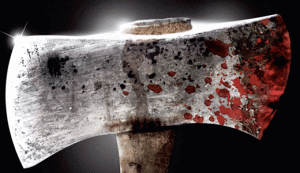
hatchetEarlier today I linked to Louis Nowra’s devastating and very funny review of Bob Ellis’ And So It Went: Night Thoughts In A Year Of Change. As my post probably made clear, I’m no fan of Ellis myself, so Nowra was really preaching to the converted, but it got me wondering what other people think about this sort of literary bloodsport. As spectator sports go literary hatchet jobs are up there with cage-fighting, but are they actually a good thing?

For what it’s worth, I think the brutal review is usually a young person’s vice. In my early days as a reviewer I wrote more than one review I still wake in the night feeling sick about (Victor Kelleher and Justin D’Ath, wherever you are, I’m sorry). And I’m not alone in this view. Martin Amis, who in his early years as a writer carved out a career as one of the most terrifying literary hitmen of all time, has observed, “[e]njoying being insulting is a youthful corruption of power. You lose your taste for it when you realize how hard people try, how much they mind, and how long they remember”.

I’m aware, as I write this, that this question blurs into a related one, about what constitutes good reviewing, and what exactly constitutes the right balance between emphasizing the positive and pointing out the faults in a given book, but I don’t think that’s quite what I’m talking about here. There’s a difference between stringent criticism and even a really bad review, and the deliberate attempt to destroy a book or a reputation people such as Dale Peck have made into an art form. And I think there’s also a difference between the deliberately mean-spirited criticism of someone like Lionel Shriver and the energy and excitement that makes a really good hatchet job sing.

My own feelings on the matter are complicated. If nothing else the world is a livelier and more exciting place for a bit of biff. And like any writer I’ve got a few contemporaries I think are frauds or shits (not many, I hasten to say, but definitely a few) and seeing them get a dose always gives me a nasty little thrill. And a really considered hatchet job, like Nowra’s of Ellis, Brian Dillon’s of Michael Ondaatje’s Divisadero, or John Banville’s of Ian McEwan’s Saturday (or indeed almost anything by Dale Peck) is a thing of beauty in its own right. But as a writer I’m also aware of just how awful it is to be on the receiving end of bad reviews (or indeed really nasty blog comments), and not just because I know how hard it is to write any book, good or bad, but because I know how incredibly exposed and vulnerable you make yourself by putting yourself and your work out in the world, and how hard it is for those who don’t do it to relate to that vulnerability.

Perhaps in this context it’s worth returning to Amis. His line about how hard people try and how long they remember is justly famous, but what’s less well-known is what comes after it. “Admittedly there are some critics who enjoy being insulting well into middle age,” he says, before going on to ask why this spectacle seems so undignified, and answering his own question with the observation that it’s because it’s mutton dressed as lamb. But it’s what he says next that’s really important, when he says that looking back, “I am also struck by how hard I sometimes was on writers who (I erroneously felt) were trying to influence me: Mailer, Roth, Ballard”.

What Amis is really talking about is the essentially Oedipal anxiety of influence every writer feels. But he is also drawing our attention to the need for the new to make space for itself. And as he rightly discerns, much of his brilliant, incendiary early criticism (and indeed that of Julian Barnes) was about killing the old lions so they could take over the pride.

I think it’s fair to say that slightly uneasy need to make space for oneself is what drives a lot of really brutal reviewing, especially by younger critics. Certainly one detects more than a touch of the disillusioned disciple in James Wood’s attacks upon the late John Updike. But unlike really brutal reviews of younger writers, which can destroy careers (or even, I suspect, lives) these sorts of reviews serve an important function. There’s a real tendency for established writers to become unassailable, their books lauded no matter what their flaws. One example might be the rise and rise of Peter Carey’s international reputation since the publication of True History of the Kelly Gang, a rise which seems to have been in inverse proportion to the rapidly declining quality of the books themselves. But it’s even more pronounced in the case of writers such as Delillo, who occupy the literary stratosphere. In their case it can be difficult to find ways of saying their new work is not up to scratch, and not just because of the weight of their reputation. Instead a sort of feedback loop begins to exist, a circular argument which declares that the new Delillo (for instance) must be good because Delillo has become one of our models of great writing, and his writing is, therefore, necessarily, great writing.

In this context the hatchet job is important because it helps break that loop, and demand we step back, look again, and ask ourselves what we’re really seeing. And that process isn’t always destructive, not just because the body of work behind such writers is usually robust enough to withstand that sort of assessment, but because a more nuanced eye is likely to reveal things our earlier assumptions were obscuring.

But enough about me. What do others out there think?

Break text

addthisTweet this

Literary bloodsport

Louis Nowra

Louis Nowra

If you haven’t seen it, make sure you check out Louis Nowra’s review of Bob Ellis’ latest, And So It Went: Night Thoughts In A Year Of Change, in yesterday’s ALR. Nowra’s criticism can be a bit up and down (though whose isn’t?) but this piece is pure gold, systematically, stylishly and very wittily dismantling not just the book, but Ellis himself, his immense self-importance, the disconnect between his supposed values and his personal behaviour, and perhaps most tellingly, the disproportionate relationship between his reputation and his actual achievements as a writer and public figure.

What will be most interesting though, is what Ellis decides to do about the piece. Ellis is, of course, the man who cost Random House more than a quarter of a million dollars by making untrue and extremely unsavoury claims about Tanya Costello, wife of the former Treasurer, Peter Costello. Whether that was an appropriate outcome or not is a matter for another time (you’d probably be unsurprised to learn that despite the recent changes I think Australia’s defamation laws still need further reform, and that large payouts are a totally inappropriate remedy) but what’s most notable about the case is that Ellis himself is not only utterly unrepentant about his actions, but has actually repeated the smear in at least one public forum I’ve attended (thereby exposing the organization involved to potential legal action, an act of gross irresponsibility in and of itself).

I’m not sure the Nowra piece is actually defamatory, and I’ve no doubt News Ltd’s lawyers have picked over it pretty carefully (which raises the amusing question of what, if anything, was taken out) but it comes pretty close, which means Ellis could, at least in principle, sue Nowra and News Ltd. Would he do it? Obviously I don’t know, and I wouldn’t want to assume anything, but I’d have to say that ironic as such an outcome might be, it wouldn’t seem entirely out of character, not least because Ellis so often seems to exist in a parallel universe in which all roads lead, inevitably, to Bob.

Flightless Bird

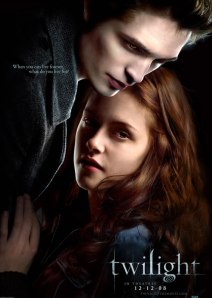
twilight-poster1So. I’m working on a piece about vampire lit for the July issue of The Australian Literary Review (the June issue of which is in tomorrow’s Australian, just btw) and as a result I’ve spent the last few weeks reading more crappy vampire novels than any sane person should have to. But having waded my way through the books I’m now having to get to work on the movies, which is why, last night, I found myself in front of Twilight.

Now even before I saw it I knew it was meant to be at least interesting, if only because it was directed by Catherine Hardwicke, who directed Lords of Dogtown and Thirteen (and who, if memory serves, was rather unceremoniously dumped off the sequel after Twilight was deemed too “arty” by the studio) but I have to say I wasn’t expecting a lot, so the reality came as something of a pleasant surprise. In fact the film itself is a bit of a treat, at least until the grinding of the plot machinery takes over in the second half. Bella and Edward are a little dull, but everyone around them is wonderful, and Hardwicke lends the otherwise fairly routine material a slightly off-kilter sweetness that’s difficult to resist. Even small scenes, such as the one in which Bella’s father introduces her to Billy and Jacob are beautifully staged and composed. Of course it all goes wrong once the plot takes over, but until then there’s a lot to like.

Less obvious is the sheer gorgeousness of the film as a film, not just in terms of its cinematography and use of location, but in terms of editing and sound and, rather more obviously, music. Rather than the bombastic rock one might have expected, Hardwicke has assembled a soundtrack built around guitar music by Carter Burwell and a collection of tracks by Paramore and Linkin Park. But pride of place in the film goes to ‘Flightless Bird, American Mouth’, the stunning closing track from Iron & Wine’s 2007 album, The Shepherd’s Dog.

I’m not sure The Shepherd’s Dog is the place to start for anyone new to Sam Beam’s very particular genius (I’d probably send a newcomer to Our Endless Numbered Days) but anyone wanting a taste of what he’s about might want to spend a moment or two listening to the live recording of ‘Flightless Bird, American Mouth’ below.
And if you’re marvelling at the beard, apparently he doesn’t like to talk about it. (Annoyingly I read something just the other day about the cultural significance of the crazy beard thing, but I can’t remember where it was, so if anyone else saw it, and knows where it was, please let me know).

Break text

Break text

addthisTweet this

Reading in the smallest room

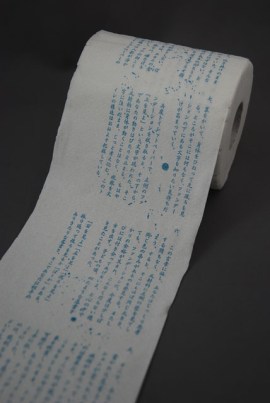
DropThere’s a certain circular conversation a particular friend and I have reasonably frequently. It begins with him asking me whether some new eReader app for the iPhone is any good. I tell him the Kindle one is okay, but reading books on the tiny screen is a pretty ordinary experience. We then talk about eReaders for a while, and about the relative merits of the Kindle and the Iliad and the Sony machine, agreeing as we do that it’s stupid that they’re all non-convergent, and that while the new Kindle pulls in blog content and newspapers, it’s still doesn’t let you browse the internet. Usually we then pause to diss that other non-convergent cul de sac, the Blackberry, and for him to tell me again how much he hates his iPhone. Then I do my speech about how there’s a device waiting to be made which is somewhere between a tablet computer, a Kindle and a netbook, a networkable device capable of managing all types of media including ebooks. Sometimes I digress a bit into the question of how such a device will necessarily drive changes to the interface of ebooks, allowing publishers to embed video and sound and animation. And then, finally, he complains that all he wants is something he can read on the crapper that will let him check his email and take calls if he needs to (I always wish he hadn’t added in that final detail).

Anyway, it seems Japanese author Koji Suzuki (author of the books The Ring movie was based upon) may have come up with a novel solution to my friend’s dilemma. Crunchgear is reporting his new book, Drop, won’t be published between covers, but on a roll of toilet paper. Apparently the “book” is being marketed as “Japan’s creepiest toilet paper”, and is being sold through supermarkets rather than bookshops, and while it won’t check email or take calls, it’s probably easier to read than the Kindle app for the iPhone.

(Thanks to Janiece for the heads-up)

break text

addthisTweet this

Dispatches from the future?

punch1Two signs of the changing mediascape went live today. The first is News Ltd’s new online venture The Punch, which is being headed by ex-Daily Telegraph editor, David Penberthy. Obviously it’s early days, but the site aims rapid-response news and opinion, with an emphasis upon debate and conversation (you can read Penberthy’s launch post here).
Thus far the venture’s mostly been notable for its efforts to secure contributors prepared to work for free, which given the thing’s being backed by News Ltd, who presumably have a business plan which involves monetizing the whole thing as quickly as possible, seems a bit cheeky, to say the least (Guy Rundle has a few things to say on this point in today’s Crikey!).

That said, it’s an interesting venture, not least because of the choice of Penberthy as Editor. Whatever you think of Penberthy’s politics or his whole man-of-the-people schtick, the guy’s smart, he can write and when he’s not trying too hard he’s bloody funny. And while I’m constitutionally suspicious of the sort of issue-by-issue championing of “common sense” papers like the Tele trade in, it’s manifestly clear he’s got a genuine gift for that curious combination of democratic levelling and ratbaggery that distinguishes the best tabloid journalism (this is the guy who sent a muzzle to Germaine Greer, after all).

More interestingly though, his time at the Tele was notable for his determination to open the paper up to its readers. As Editor he exposed himself to readers through regular liveblogging, and during the last Federal election campaign he sought and – more importantly – responded to feedback from readers about the campaign and his paper’s coverage of it. And more broadly, he oversaw the expansion of the Tele’s online presence and its energetic culture of discussion and debate (a culture which strays into uncomfortably racist territory from time to time, but which is notable for its energy nonetheless).

So, how does The Punch look? I’ve not had time to dig too deep, but it’s definitely an intriguing creation. The first thing is to say that I’m not keen on the blog-based layout, since it makes the process of checking out new content pretty labour-intensive. And it seems a pity a site which wants “to encourage a civil and illuminating standard of debate” begins by declaring “[i]t’s not a fancy, la-di-dah site aimed at people with three university degrees” (though even as I type that I can’t believe I’m allowing myself to rise to that particular bait). Oh, and there’s so much content just keeping up with what’s new looks like a full-time job. But all that said, it’s energetic and full of potential, and perhaps most importantly, it represents a genuine attempt on the part of News Ltd to try and rethink what they might be doing in the online environment. Maybe they could put some money into one aimed at us la-di-dah types next.

Meanwhile, Swinburne University’s Institute for Social Research has announced it is establishing The Foundation for Public Interest Journalism, a not-for-profit foundation intended to explore new models for investigative journalism:

“The foundation will support investigative, interactive journalism while exploring ways of making good journalism sustainable in the new media age.

“It will fund worthy journalism projects initiated by either members of the public or practising journalists, and is likely to incorporate approaches from similar projects overseas, such as www.spot.us.

“Projects will be assessed on their capacity to serve the public interest, with priority given to issues that are under-reported by the traditional media (read more).”

Break text

addthisTweet this


A quick mea culpa

In my post yesterday about the new look Meanjin and the Meanjin blog I omitted to mention the excellent work Jeff Sparrow and his team have been doing at Overland. It wasn’t a deliberate omission, but it was pretty remiss of me, not least because Overland began exploring the possibilities of the online environment more than a decade ago with Overland Express. That said, are there other sites I’ve forgotten? If there are please let me know.

Break text

addthisTweet this

Meanjin: signal from noise?

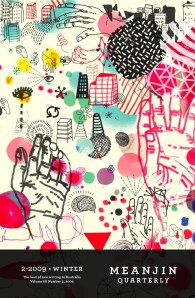
MeanjinAfter the acrimony surrounding the absorption of Meanjin into MUP, and the departure of former editor Ian Britain, one could have been forgiven for thinking Sophie Cunningham had accepted a poisoned chalice when she took over as editor last year. I’m not sure anyone would think that now: despite a mildly controversial redesign the magazine seems to have gone from strength to strength under her editorship, a process which is clearly visible in the Winter issue (2/2008) which was launched at Sydney Writers’ Festival last week and features Ross Gibson’s quietly brilliant piece on William Dawes and Patyegarang, Katherine Wilson on the hoaxing of Keith Windschuttle and an interview with Christos Tsiolkas.

I’m obviously not an unbiased reader – I’ve known Sophie for a long time, and she’s published a couple of pieces by me in the new-look magazine – but what I find exciting about her version of Meanjin is its determination to drag the literary magazine into the 21st century. In doing that she’s obviously drawn inspiration from American magazines like McSweeney’s which have embraced the possibilities of advances in publishing technology to create magazines which reflect the omnivorousness of their interests in their physical form, and which are prepared to explore the possibilities opened up by zines and graphic forms such as comics. But she’s also clearly put a lot of effort into trying to reimagine the sort of writing one might find in a magazine such as Meanjin by including more life writing and memoir and commissioning pieces on television and broader questions about digital copyright and new media.

All of which brings us to the Meanjin blog, Spike, which has been going from strength to strength over recent weeks. Although News Ltd are about to launch some kind of new media venture under the stewardship of former Daily Telegraph Editor, David Penberthy, Australian media has handled the transition to digital strikingly badly. In contrast to newspapers such as The Guardian and The New York Times, which have devoted considerable time and energy to developing digital incarnations that embrace the possibilities of the medium by incorporating high-quality blogging and high levels of interactivity, the online versions of our newspapers are largely content to simply replicate their print versions online, albeit in a stripped back and dumbed down form.

This contrast is particularly acute in the context of the cultural pages of Australian newspapers and magazines, through which you can almost hear the tumbleweed blowing. Rather than using the cost pressures upon the print versions of these sections as an excuse to build more sophisticated online presences, Australian newspapers have been progressively scaling back their cultural content online.

Nor – although it must be said this is largely a matter of economics – have our literary magazines embraced the possibilities of digital publishing. There are some notable exceptions out in the blogosphere, where outfits like Larvatus Prodeo have found niches and occupied them with varying degrees of success. And in a slightly more formal context Inside Story is doing some good work, and The Monthly has set up its subscription-based Slow TV. But in general it’s fair to say that most of what’s out there is being done on the sniff of an oily rag by individual bloggers.

That alone would be reason to make Spike – which is already drawing on a pretty wide pool of contributors and producing the sort of steady stream of good material that makes individual bloggers like myself feel exhausted every time we look at it – stand out from the crowd. But what’s more interesting about it is the fact that rather than devoting their resources to reproducing the content from the print version of the magazine online, Meanjin has decided to create a separate entity which complements and extends the print version of the magazine by providing content specifically created for an online environment.

All of which makes the redesign of the physical magazine, and its preparedness to rethink how the medium might affect the message seem less about simply taking design cues from elsewhere and more about a really serious strategy to find a model which might contain good writing across a variety of media (a project that’s also visible in Sophie and the magazine’s enthusiastic and highly successful embrace of the possibilities of Twitter).

In and of itself the successful implementation of such a strategy would be interesting, but I suspect the current convulsions in the media landscape give it increasing urgency. As the newspapers stumble dinosaur-like towards their inevitable oblivion, the question of where the Australian cultural and literary conversation will occur is sharpening, and I’d have to say that at this point the forums aren’t exactly thick on the ground. I can name a slew of American sites such as The Second Pass, Salon, BookForum or The Millions, all of which offer access to writing about books and ideas of a very high standard, and which, to a greater or lesser degree, embrace the possibilities of the internet as a medium. By contrast, there are almost no Australian sites offering anything of the sort, nor – at least without considerable private or institutional backing – does it seem likely there will be any time soon.

I suspect some people will accuse me of cultural nationalism, but they’d be mistaken. All I’m saying is that it’s vital small countries, and in particular anglophone small countries with a long history as importers of culture, possess forums in which ideas and issues be discussed in context. Because without them we’ll be condemned to listening to other people’s conversations, without ever being able to have our own.

All of which makes the Meanjin experiment as important as it is interesting. Because while Meanjin isn’t going to be The Sydney Morning Herald of the future, I do think in it, and in Spike, it’s possible to see a model which suggests it is possible to mark out space for the Australian cultural conversation online without being either stuffy or parochial. And that’s something that really, really matters.

Break text

addthisTweet this