Skip to content

The Prime Minister’s Literary Awards

Just a quick note to let you know that the Prime Minister’s Literary Awards shortlists were announced in Melbourne this morning. The full shortlists are below, but before I get to them I’d make a few very quick observations.

First of all it’s worth noting that this is the first time awards have been offered for Children’s and Young Adult Fiction, and while I’m in no position to make judgements about the books included on those lists I’m pleased to see my old pal from Uni days (and one of the world’s nicest human beings) Andrew Joyner turn up in the children’s list for he and Ursula Dubosarsky’s The Terrible Plop (a book whose title still makes me smile every time I read it).

Then there are the notable omissions. I’m sure others will know their way round the other shortlists better than me, but on the Fiction shortlist, it’s interesting to note the judges have omitted both Peter Temple’s Truth, which won the Miles Franklin Award only a couple of weeks ago, and Peter Carey’s Parrot and Olivier in America.

On the flipside it’s interesting to see Deborah Forster’s The Book of Emmett has made this shortlist as well as the Miles Franklin shortlist, which is a pretty serious achievement for a first novel (and one which, to my shame, I still haven’t read).

It’s also refreshing to note how outward looking the Fiction shortlist is: whatever else you can say about the Miles there’s little doubt the “phase of Australian life” term drives an insularity that certainly isn’t evident in this list, which includes books set in Troy, South Africa, France and Moscow.

And finally, I’m delighted to see Coetzee’s Summertime has been included on the Fiction shortlist: neither its author nor his writing are easily accommodated within the national or literary conventions that underpin most Australian literary awards, but if there was a funnier, more intelligent or more audacious book published in Australia in recent years I don’t know what it is.

Anyway, the shortlists are:

Fiction
J. M. Coetzee, Summertime
Deborah Forster, The Book of Emmett
Alan Gould, The Lakewoman
Eva Hornung, Dog Boy
David Malouf, Ransom
Alex Miller, Lovesong
Alison Wong, As the Earth turns Silver


Non-fiction
Michael Cathcart, The Water Dreamers: The Remarkable History of Our Dry Continent
Will Elliott, Strange Places: A Memoir of Mental Illness
Grace Karskens, The Colony: A History of Early Sydney
John Keane, The Life and Death of Democracy
Mark Tredinnick, The Blue Plateau: A Landscape Memoir
Shirley Walker, The Ghost at the Wedding


Young adult fiction
Lucy Christopher, Stolen
Judith Clarke, The Winds of Heaven
Bill Condon, Confessions of a Liar, Thief and Failed Sex God
Cassandra Golds, The Museum of Mary Child
Phillip Gwynne, Swerve
David Metzenthen, Jarvis 24
Gabrielle Williams, Beatle meets Destiny


Children’s fiction
Kate Constable, Cicada Summer
Ursula Dubosarsky and Andrew Joyner (illustrator), The Terrible Plop
Andy Griffiths and Terry Denton (illustrator), Just Macbeth
Leigh Hobbs, Mr Chicken goes to Paris
Alison Lester, Running with the Horses
Lorraine Marwood, Star Jumps
Martine Murray and Sally Rippin (illustrator), Mannie and the Long Brave Day
Jen Storer, Tensy Farlow and the Home for Mislaid Children
Margaret Wild and Freya Blackwood (illustrator), Harry and Hopper

More information, including Judges’ comments, is available on the Prime Minister’s Literary Awards website.


SlushPile Hell

Whether you’ve been a slush pile reader or not, you need to read SlushPile Hell, the site that does for publishing what Regretsy did for the craft scene. I laughed so much I choked.

And if you’d like a slightly more serious take on the subject, I can recommend Laura Miller’s excellent piece about the often forgotten question of what the breakdown in traditional mechanisms for identifying and developing literary talent means for readers. After all, in a world where anybody can get published how are we to sort the wheat from the chaff? Are Facebook and Good Reads really going to take up the slack?

Thanks to Spike for the link.

Break text

Goodbye New Matilda

Given the turmoil of the last 36 hours, I’m guessing more than a few of you will have missed the fact that today marks the passing of one of Australia’s pioneering new media ventures, New Matilda.

Six years ago, when it began, I was pretty dismissive of New Matilda. It wasn’t that I didn’t think there was a place for a left-of-centre online magazine, but the early issues always seemed depressingly worthy to me. Whether I’d make the same judgement now I don’t know; what I do know is that over the last couple of years the magazine has really come into its own. Certainly if one wanted a demonstration of the way in which new media now consistently outclasses the old in terms of analysis and commentary, you couldn’t find a better example than Ben Eltham, a writer whose pieces have been distinguished by their clarity, intelligence and grasp of detail for some time. I’d say something similar about Jason Wilson, whose astringent commentary on media and politics has grown steadily sharper over the last couple of years.

That’s not to say I think the magazine was perfect. Charles Firth’s epitaph, ‘Why I Never Liked New Matilda’, overplays its hand, but he’s right to home in on how old-fashioned its model seems in 2010. It’s simply not possible for a website focussed on news and commentary to be as static as New Matilda. The continuing success of Crikey! demonstrates that it’s still possible to make the idea of discrete issues work, but Crikey! comes out daily, not weekly, and in the last couple of years their site has become a highly effective aggregator of other people’s content.

The problem is money. As Margaret Simons pointed out in a sobering piece on Crikey!, when it comes to converting eyes into dollars and cents new media suffers from precisely the same problems as old media. New media’s advocates tend to sneer derisively about the business model of the newspapers being broke, but the fact is we don’t have one to replace it.

That’s not to say there aren’t models out there. In the US several independent news outlets have developed viable businesses, some through mixtures of subscription and advertising, others by employing more innovative schemes (you’ll find a good precis of the situation in the US in Michael Massing’s pieces ‘The News About the Internet’ and ‘A New Horizon for the News’, both of which appeared in The New York Review of Books last year). And locally Crikey! seems to go from strength to strength. But the brutal reality is that we still don’t know how to make online media pay well enough to underwrite either quality or quantity.

It’s a problem that’s exacerbated by Australia’s relatively small population. Independent media outfits in the US have access to a market of close to 300 million people, to say nothing of the many in other countries who take interest in American affairs. Independent media in Australia has access to less than 10% of that number. That means that while costs are likely to be similar, potential revenue from advertising and other sources is only ever going to be a fraction of that available to similar operations overseas.

One solution might be to give away the notion that writers and commentators should be paid. Obviously I have a vested interest in this question, but I think there are good reasons not to give away the notion that writers should be paid for their work. That’s not to say the traditional nexus between word count and fee needs to be maintained. Indeed I’d suggest that by its nature a lot of what goes on in new media is better suited to payment on retainer.

The question then is one of revenue, or more accurately, funding. Like literary magazines, independent media, both online and in print, is usually at least partly underwritten by institutional and private benefactors. But that sort of money only goes so far, and beyond that the same old questions begin to intrude.

New Matilda’s editor, Marni Cordell, is making brave noises about rebuilding the magazine’s financial model from the ground up. I hope she succeeds. In the meantime I’d just like to salute her and her team for their work over the past few years, and say they’ll be missed.


How to make literature interesting again

In the words of Team America, ‘F*ck yeah!’.

Break text


For One Week Only: The Life Of The World To Come

While The Mountain Goats’ amazing 2005 album, The Sunset Tree, would sit in any list I’d make of my favourite records of all time, I have to say I was a little unmoved by last year’s excursion into Biblically-inspired songwriting, The Life Of The World To Come. But having spent the morning watching Rian Johnson’s amazing documentary/concert movie of John Darnielle performing the album song by song I now wonder whether I’ve failed to hear what’s really there. Either way, I don’t think there’s any doubting the beauty and intensity that’s captured in Johnson’s film; certainly all the qualities of fragility and tenderness that make The Mountain Goats’ best songs so powerful are on display, but stripped back to their essence.

If you’d like a taste of the film, I’ve embedded a couple of tracks below, and if you like what you hear you can watch the whole thing over at Pitchfork TV. The only catch is it’s only available for a week, so it won’t be around for long. So I suggest you take a listen while you can: it’s wonderful stuff.

Break text

Vodpod videos no longer available.

Break text

Peter Temple wins Miles Franklin Award

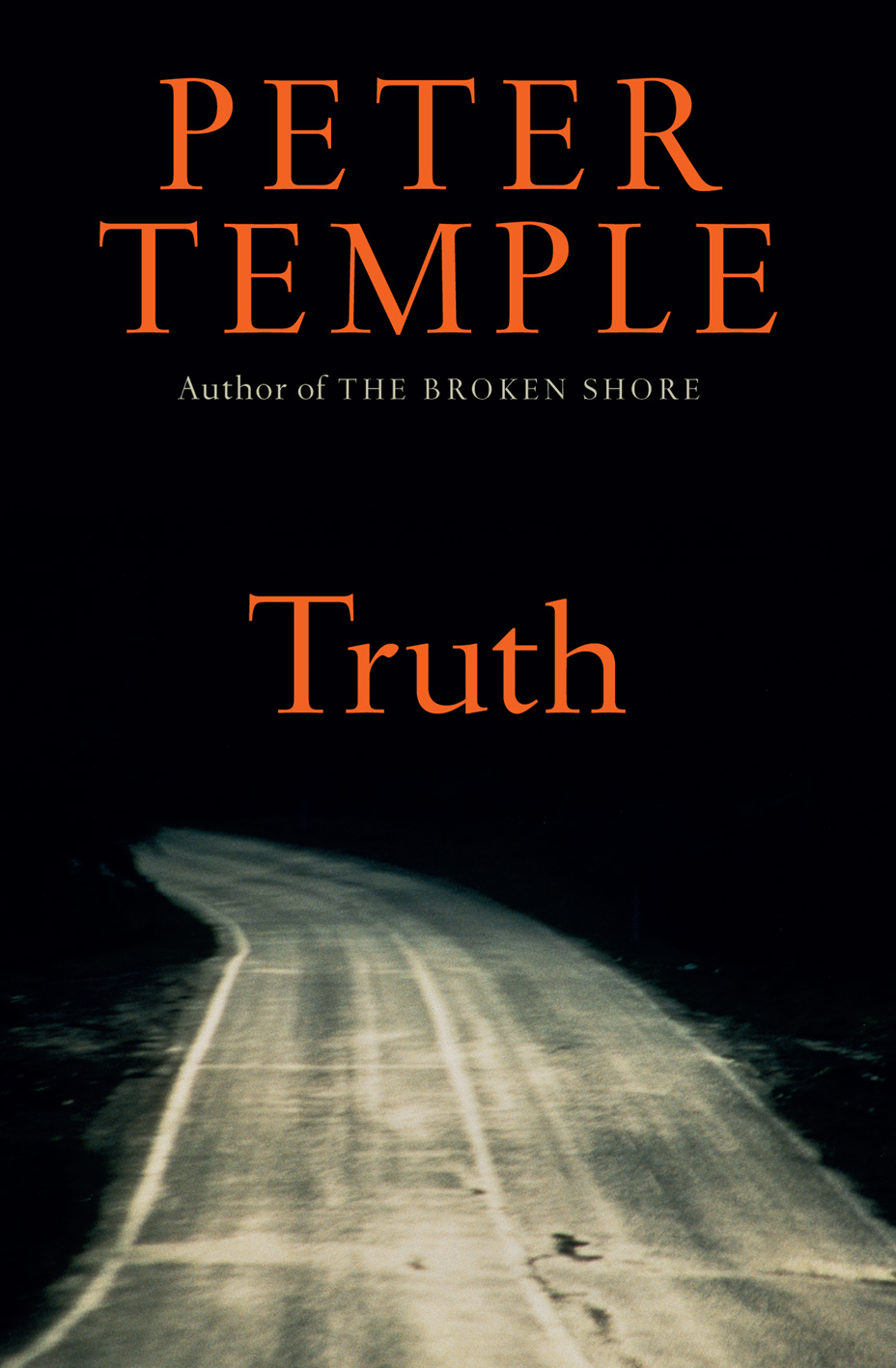
Some of you may have caught up with last night’s announcement that Peter Temple has won the 2010 Miles Franklin Award for his novel, Truth.

I want to post something about the award and its profile later this week, but for now I think it’s worth saying I think it’s an interesting decision. There’s no doubt Temple’s a truly gifted writer, and while I suspect his last novel, The Broken Shore, is probably marginally better, Truth is a very impressive piece of work (to my mind the unrelenting darkness is a bit overwhelming, and the highly stylized language actually gets in the way of Temple’s real strength, which is his uncanny ear not just for the Australian vernacular, but for the darkness below the surface of Australian society).

But simultaneously, Truth is, at its heart, a piece of genre fiction. Now before you all leap down my throat, let me point out that I don’t mean that as criticism, and neither am I suggesting that there’s a hierarchy at the pinnacle of which sits the literary novel. What I am saying is that it’s possible to recognise and define forms of writing that operate within particular conventions, and which are, to a greater or lesser extent, judged by their success within those conventions. Crime fiction is one such genre, as is SF. I’m generally resistant to the notion that literary fiction constitutes another but I recognise many people believe it does. These genres aren’t better or worse than literary fiction, nor are they absolute (in fact they’re actually highly fluid). Nor, despite the tendency to dismiss them as such, are they mere marketing devices. What they are is a kind of critical shorthand, a system that provides ways of understanding and appraising the success or otherwise of different kinds of novels.

Understood like this, I hope no-one will take it askance if I say that whatever else it is, Truth is basically a crime novel, and therefore a piece of genre fiction. That’s not to say it’s not an extremely good crime novel, but it’s still a crime novel, and operates within the conventions and constraints of the genre. And that, in turn, makes it an unusual choice for an award like the Miles Franklin, which has traditionally been reserved for literary fiction.

I suspect the decision is actually a good one, since it goes some way towards breaking down the apartheid between genre and literary fiction, but I also think it’s one that may turn out to be more problematic than the judges realise. That’s partly because it demands they begin making quite difficult choices between different sets of criteria. After all, the quality of a piece of genre fiction is at least partly a function of its success at fulfilling the expectations that define the genre, but is a book that meets those expectations as “good” as a literary novel that meets the expectations we place upon literary fiction by successfully taking risks with language and structure, or challenging the expectations of its readers in interesting ways?[1]

My point isn’t that one’s more significant, or more important than the other, simply that they’re very different sorts of questions, and balancing them is likely to present real challenges. After all, it’s not snobbery that’s seen the development of awards designed specifically for crime novels, but a recognition that crime fiction is a recognisable form, and deserves to be celebrated on its own terms.

But more deeply, opening the door to crime fiction also raises the question of why the judges haven’t opened the door to other genres. Does this decision mean they’ll be reading Greg Egan’s new novel, Zendegi, for next year’s award (assuming, of course, it features an Australian character)? Or Margo Lanagan’s new one (assuming the same thing)? Because surely if they’re prepared to admit crime novels they should be admitting SF and Fantasy? Or indeed Horror, and Romance.

One answer might be that Truth is just a really good novel, and stands comparison with the literary fiction that also made the shortlist. Certainly the judges are at pains to emphasise they think it possesses “all the ambiguity and moral sophistication of the most memorable literature”. And while I think that’s true, it might just as easily be read as an admission the judges are a little uneasy about the basis of their decision. And, more problematically, isn’t this assertion a way of tacitly suggesting “genre” sits somewhere lower on the hierarchy of quality than “literary” fiction, because what you’re really saying is that Truth isn’t just a crime novel (with the emphasis very much upon the “just”)?[2]

As I said above, my point here isn’t to detract from Temple’s win, or to suggest Truth isn’t a worthy winner. But I do think it’s worth registering that it’s a decision that throws up some difficult questions the judges will need to work through in years to come, and one that emphasises the way our criteria for literary quality, and the categories they give shape to, are changing. Is that a good thing? Probably. But it’s definitely a thing, and one that deserves to be recognised, and not hidden away behind shifty notions about Truth being more than “just” a crime novel.

Update: I’ve just noticed that in the time it’s taken me to write this post, Culture Mulcher’s whipped up something on exactly the same point. It’s the quick and the dead, obviously.

1 Just for the record I think Truth fulfils both these criteria.
2 More deeply, you’re also denying the fact that unlike the novels of a writer such as Richard Price, which really do exceed the genre we tacitly group them within, much of Truth’s power derives from its success as a crime novel, so to pretend its generic elements are irrelevant is to place a good part of what makes it a success beyond scrutiny.

Break text

Trivia time: two famous sons of famous fathers

Over the past few days I’ve been listening to two of my favourite albums of 2009, Elvis Perkins in Dearland’s self-titled sophomore effort, and Justin Townes Earle’s third album, Midnight at the Movies. They’re both great records (in particular Midnight at the Movies, which I’ve come to like more and more as time’s gone on) but they’re also noteworthy because both Perkins and Earle both boast interesting family histories.

Of the two, Earle is the musical blueblood: the son of Steve Earle, his middle name is in honour of the singer and songwriter Townes van Zandt, he is also the stepson of Shelby Lynne’s sister, Allison Moorer. But in a way it’s Perkins’ family history that’s really interesting: the son of actor Anthony Perkins, who died of AIDS-related illnesses in 1992, and Berry Berenson, who was a passenger on American Airlines Flight 11, and was killed in the attacks on the World Trade Centre on September 11, 2001, an event whose shadow hangs heavily over Perkins’ first album, Ash Wednesday.

Anyway, here are a couple of tracks from Midnight at the Movies (the title track and a live version of ‘Mama’s Eyes’) and ‘Shampoo’, one of my favourite tracks from Elvis Perkins in Dearland.

Break text

Break text

Break text

Break text

Peter Carey an inane literary snob?

It’s not often a literary story gets above the fold on the front page, but yesterday Bryce Courtenay managed it by serving up an extended spray at Peter Carey in Crikey!. Beginning by observing, “Peter Carey is a perfect example of . . . inane literary snobbery,” Courtenay goes on to deride Carey’s sales figures (“[i]f I’m a popular writer then Peter Carey is an unpopular writer . . . [i]f I’m a best-selling writer than he’s a worst-selling writer”), his education (“my education is every bit as good as Peter’s, possibly better”), the “self-perpetuating club” of government-funded snobs who force students to read books they hate instead of books they love (presumably the latter is code for books by Bryce Courtenay), before really throwing down the gauntlet by declaring, “unequivocally I could write his kind of stuff”.

Unfortunately the article itself is only available to subscribers, though as Stephen Romei points out over at A Pair of Ragged Claws, if you’re desperate to read it in its entirety you can always take out a trial subscription for free. That said, I’m not sure the full piece adds a lot to what’s above.

Courtenay’s remarks were prompted by Carey’s argument in both his closing address to the Sydney Writers’ Festival and in his appearance on ABC 1’s Q&A that there is a connection to be made between declining educational standards, the rise of popular fiction, and the increasing triviality of public debate, vectors which, in combination, are eroding the foundations of civil society. Put simply, “[w]e are getting dumber every day, we are really literally forgetting how to read . . . consuming cultural junk . . . is completely destructive of democracy”.

Putting aside the rights and wrongs of Carey’s argument (for what it’s worth, I have sympathy with a lot of what he says, but the issues he’s touching upon are complex and deserve rather fuller attention than I’m able to give them now), what interests me about Courtenay’s spray (aside from how utterly self-serving it is) is that it’s part of a rather larger shift in the cultural landscape, and one which is connected to the sorts of issues I was discussing a while back in a post about the rise of genre.

Back then I was arguing that the retreat of the “literary” can be understood, at least in part, in terms of the loss of the critical vocabulary that enables us to make meaningful judgements about quality. That’s partly about changes in what and how students are taught, partly about a broader unease about imposing cultural judgements, and partly about the rise of the consumer/reader which is being driven by consumer capitalism and the manner in which the internet is breaking down traditional loci of cultural authority. In such a context it becomes very difficult to mount a defence to the argument that the real test of a book’s quality is its popularity.

You probably won’t be surprised to learn that I actually don’t think the test of a book’s quality is its popularity. Nor that I don’t think much of Courtenay’s books (and yes, I’ve read several of them). But I’m not sure that makes me a snob, and neither does it mean I’m riven with envy about the hordes of readers who throw themselves at the feet of the Bryce Courtenays of the world. Quite the reverse in fact: I have immense respect for many “popular” writers.

What it does mean is that I think there are many forms of literary expression and literary pleasure, and while I respect the skill and craft of a writer such as George Pelecanos or James Lee Burke, that doesn’t preclude me from dismissing Dan Brown (for instance) as crap. Nor (and I think this is the point of Carey’s Courtenay completely fails to engage with) does it stop me from believing that serious writing is important, both because it makes intellectual and moral demands of us, and because it enlarges our understanding of ourselves and the world we inhabit by doing so. I’m not sure I agree that the chatter of the new world, and the changes in our reading habits are necessarily or purely corrosive, but I do think the increasing antipathy to writing that forces us to think , and the celebration of writing that exists purely to entertain is. We all know the increasingly trivial and self-serving nature of the media is bad for public life, so why is literature any different? Because that is, in the end, what Courtenay and others like him are claiming.

Obviously I’m keen to hear your views on all of this, but I’d be remiss if I didn’t direct you to Tony Martin’s hilarious rant about the odious Lee Child’s performance on First Tuesday Book Club a few weeks back. You think Bryce is bad? Wait till you see Child in action.

Break text

The Absence of God

Can there be too much Jenny Lewis in the world?

Break text

Break text

True Blood

I’ve been meaning to write something about True Blood forever, but in lieu of actually doing so, perhaps I can offer this, rather delicious trailer for Season 3, which starts in the US next week. More Eric and Dallas, and less Tara and Bon Temps? How can that be wrong?

Click to embiggen.

Break text

Break text

A Gate at the Stairs

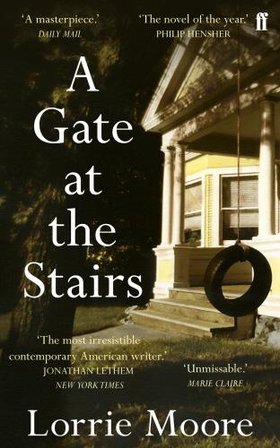
I’ve spent the last day or so reading Lorrie Moore’s A Gate at the Stairs, a book I’ve been meaning to knock over for a while. Besides a few of the more-anthologized stories I’ve not read much Moore until now, so she’s come as something of a revelation, not least because of the effortlessness with which she allows her characters to be at once sad, ridiculous and painfully real, a combination which lends the book a luminosity and a wit that don’t often go together. But the line that had me laughing out loud this afternoon was this, awful, hopeless, hilarious out-take from a marriage:

“You emptied the top rack of the dishwasher but not the bottom, so the clean dishes have gotten all mixed up with the dirty ones – and now you want to have sex?”

How can one not love this woman?

Break text

Mark Mordue wins Pascall Prize

Mark Mordue

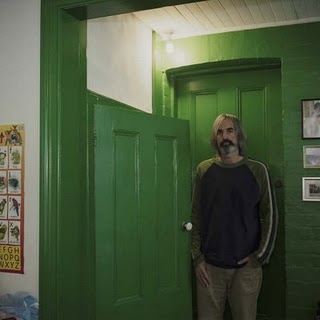
I’m not sure anything’s brightened my day up lately quite as much as the weekend’s news that Mark Mordue has been awarded the 2010 Pascall Prize for Critical Writing. Set up in 1988 in memory of the journalist Geraldine Pacall, the prize is Australia’s only major award for critical writing or reviewing, and is awarded in recognition of a significant contribution “to public appreciation, enjoyment and understanding of the area or areas of the arts in which he or she is involved”.

I know Mark a bit, so it’s difficult not to feel pleased for him at a personal level, especially since he’s one of the world’s good people. But it’s also exciting because I’ve long been an admirer of Mark’s writing. Mark is – in the best sense of the word – a Romantic. In a time when people are increasingly uneasy talking about the transformative power of art, Mark embraces it, both as a writer and a critic.

There’s something salutary about being reminded that books and films and music matter, in some deep sense, but Mark’s writing goes one step further, and makes itself an expression of the same belief in the transformative power of art.

I almost always find the results both fascinating and strangely intense. Whether Mark’s writing about Nick Cave, John Hillcoat’s adaptation of The Road, or growing up in Newcastle, he’s always also questing after a sort of transcendence in his own writing as well. And that, to my mind, is what makes him so exciting to read, since in so doing he puts himself at risk. Which is, in a way, the most important thing you can ask of a critic (or indeed any writer): that they be prepared to demand the same things of themselves they demand of their subjects.

Anyway, I’ll stop raving. My heartfelt congratulations to Mark, and kudos to the judges for a great choice. And if you’re not familiar with Mark’s writing I heartily recommend checking out his website (which looks like it’s been a bit dormant for a while). And if you haven’t read his wonderfully unconventional travel narrative/memoir, Dastgah: Diary of a Headtrip, try and lay your hands on a copy.

Break text

The Antlers’ Hospice

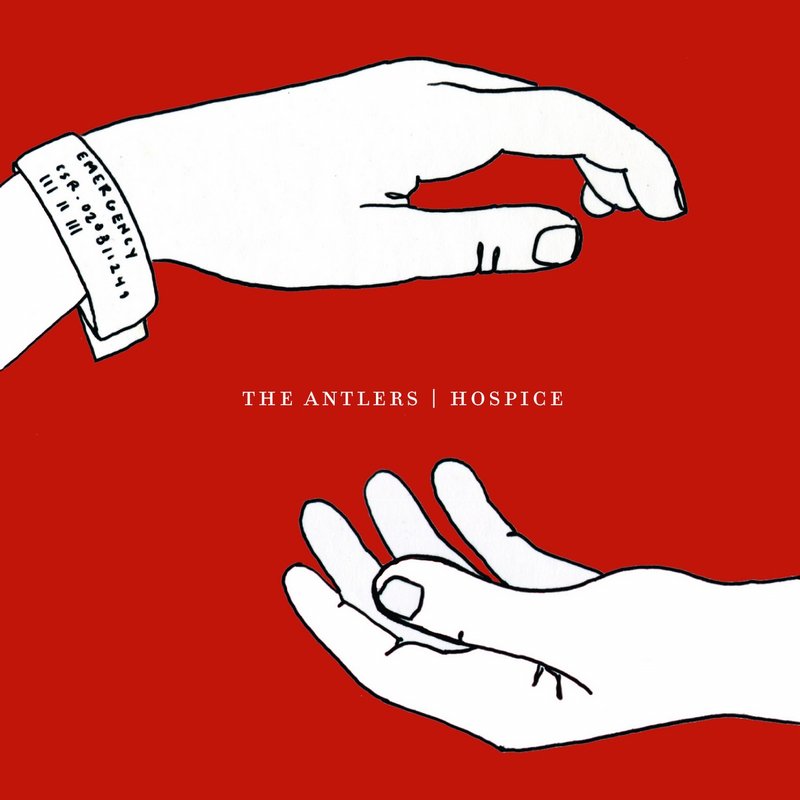
I’ve been meaning to post something about The Antlers’ fantastic debut, Hospice, since I stumbled across a copy of the original release on the band’s own label, but other things kept getting in the way. By rights I should have mentioned it in my list of my favourite music of 2009, but since then they’ve gone on to rather bigger and better things, with Hospice picked up and rereleased by French Kiss Records, and rave reviews around the world.

What’s fascinating to me about Hospice (aside from the fact it’s completely thrilling) is its self-conscious literariness. Rather than craft a series of individual songs, Antlers front-man Peter Silberman uses the album’s ten tracks to map out the intense and conflicted feelings surrounding the death of the narrator’s young wife from bone cancer.

It sounds bleak, but isn’t. Rather like John Darnielle of The Mountain Goats’ equally fabulous album about his troubled adolescence and abusive stepfather, The Sunset Tree (one of my all-time favourites) much of Hospice’s brilliance lies in its refusal to sentimentalise or mistake indulgence for integrity. But whereas The Sunset Tree is based in real experience, Hospice is essentially metaphorical, a work of fiction drawn from Silberman’s imagination. And, as a result, it manages to retain both a degree of allusiveness a more overtly confessional work would almost of necessity lack, and a coherence and shape a simple series of songs could only dream about, offering a journey through confusion and pain to loss, and finally, and improbably, a sort of catharsis.

You can buy Hospice on Amazon, iTunes or via online retailers such as Chaos.

Break text

Break text

Break text

Sydney Writers’ Festival

Just a quick note to let you know that if you’re heading down to Sydney Writers’ Festival next weekend I’ll be appearing with Overland Editor and author Jeff Sparrow, Meanjin Editor and author Sophie Cunningham and the ABC Bookshow’s Sarah L’Estrange as part of a panel about eReaders and the future of publishing. Rather mysteriously entitled ‘Let the Games Begin’, the session is on in the Sydney Philharmonia Choir Studio at 1:00pm on Friday 21 May, and should, I think, be an interesting session.

And while I’m not the focus of the event, I’ll also be speaking at the launch of Rodney Hall’s memoir, Popeye Never Told You: Childhood Memories of the War, in the Bangarra Mezzanine on Saturday 22 May at 5:30pm.

Hopefully I’ll see some of you down there. And whether I do or not, I’ll be back here soon.

Break text

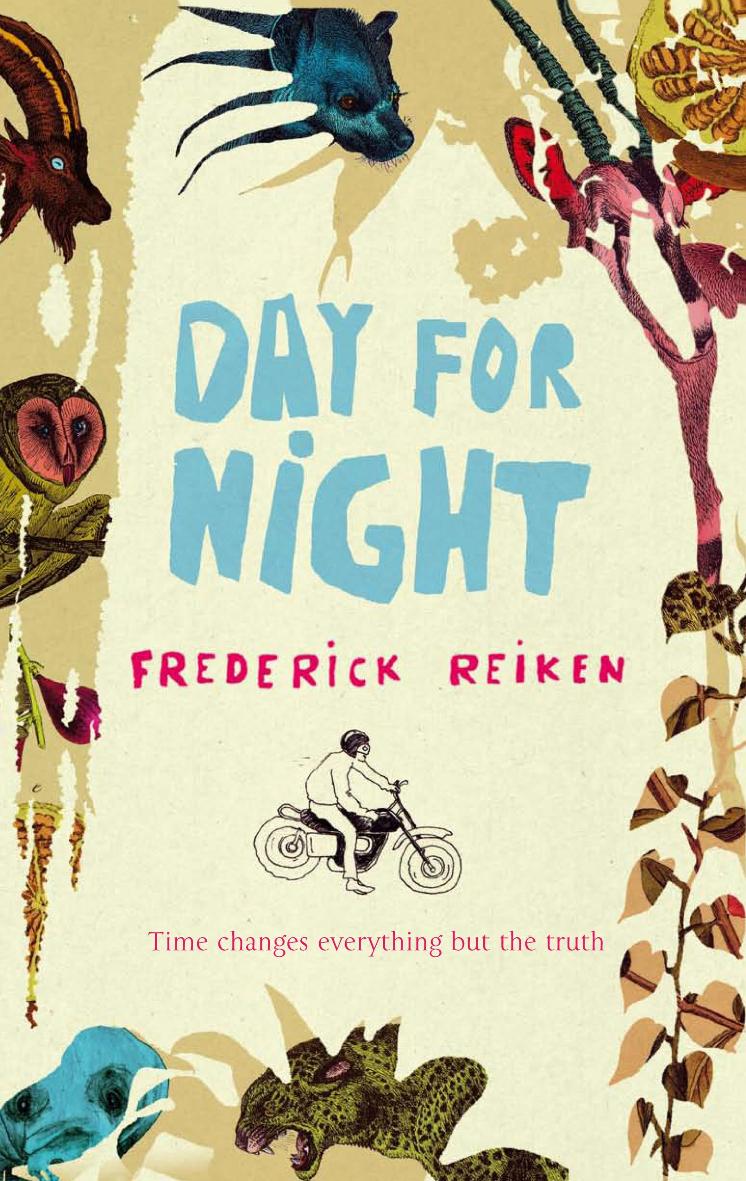
Frederick Reiken’s Day for Night

My apologies for the somewhat sporadic posting over the last couple of weeks, but I’ve just been completely overwhelmed by work and domestic responsibilities (sick children, impending delivery dates etc). I’m away for a chunk of this week so that’s unlikely to improve immediately but hopefully things will be back to normal soon.

In the meantime I thought I’d link to my review of Frederick Reiken’s Day for Night, which appeared in last Saturday’s Weekend Australia. I’ve just had a poke round online, and I’m not really clear whether it’s a book that’s got a big push behind it or not, or whether it’s likely to get much media attention, but even if it doesn’t, it’s worth a look. It’s not a perfect book (I could have done without the cult plotlines and the weird superhuman 1960s radical/angel/golem) and it’s quite an odd one in many ways, but because it’s so dependent upon the intricate web of coincidence and layered imagery that holds its disparate pieces together it’s also the sort of book which creeps up on you in subtle and unexpected ways.