Skip to content

Scary Monsters (and Super Creeps)

In an idle moment yesterday I found myself reading Paul Morley’s Financial Times piece about the rerelease of David Bowie’s Station to Station. I’m aware Morley is one of those figures who generate strong feelings in the music world (though let’s face it, when it comes to grudges music people make Al’Qaeda look like amateurs), but the piece reminded me not just of how thrilling a lot of the music Bowie made in the 1970s was, but just how important it was to me when I was growing up.


I think the first time I really became aware of Bowie was in 1980. I was 13, in my first year at high school, and not doing well. I was overweight, unpopular and genuinely struggling to fit in.

Like most Australian kids in the early 1980s, my experience of music was largely mediated by Countdown. I don’t think it’s easy for people who grew up after Countdown’s heyday to grasp its cultural reach, but it really was a phenomenon, not just because everybody – and I mean everybody – under the age of 30 watched it, but because its choices informed Australian popular culture in a really direct way. Monday mornings at school were all about whatever it was that was on Countdown last night, and the bands and music Countdown endorsed were pretty much guaranteed to dominate the charts and airplay.

It’s difficult, in many ways, to reconcile the images of old Countdown episodes and their clusters of screaming kids in ugg boots and duffle coats and footy scarves with Bowie’s cerebral pop, but it was Countdown that introduced me to Bowie, and more particularly, to ‘Ashes to Ashes’. I don’t remember exactly when I heard it the first time, but I do remember the feeling I was seeing something quite unlike anything I’d seen before. It wasn’t just the video, which still looks remarkable today (perhaps not surprising given that at the time it was made it was the most expensive film clip ever produced), it was the song itself, its enigmatic, haunting lyrics, the layered synths and beats, even the ticks and pops of the percussion layered over the top.

I knew Bowie’s name, of course, though I’m not sure I knew the music. He’d been on tour to Adelaide a couple of years before, and I remember watching the ads on the television and thinking he looked like some sort of vampire, but the music came as a revelation, and as soon as I could afford it I bought the album.

I wonder now what I made of Scary Monsters back then. Presumably details like ‘Fashion’s play on “fascism” went straight over my head. But irrespective of how much of what I was listening I understood in an intellectual sense (or indeed an emotional sense: listening to ‘Ashes to Ashes’ at 43 I wonder what my 13 year-old self made of its riffs on loss, middle-aged failure and addiction (“Time and again I tell myself/I’ll stay clean tonight/But the little green wheels are following me/Oh no, not again”)). But I understood enough to know this was music that mattered, and which spoke to me in a very personal way.

I suppose all of us feel the need to read our own lives through the prism of music, and to accord songs and artists more significance than they probably possess. But Bowie is one of those figures, like Dylan, who were genuinely significant, and even today exercise considerable influence (though I’d have to say I think it’s probably better to pretend he never recorded anything after about 1981). And, like Dylan, it wasn’t all about the music either, but about what he represented.

Much is made of Bowie’s metamorphoses, the creation and shedding of personas, from Ziggy to Aladdin Sane to The Thin White Duke, but in a way the point of him was never the individual personas, but the process of metamorphosis, the sense that identity could be polymorphous, and that the self might be something one could invent.

I’m not sure I would have put it in quite these terms in 1980, but it’s interesting that both the films Bowie has inspired – Todd Haynes’ Velvet Goldmine and John Cameron Mitchell’s Hedwig and the Angry Inch, are about precisely this process of self-creation, and grounded in a sense of the confusion and yearning of adolescence. They’re about the need to become something and someone else, and of the cost of that process.

I’m often struck listening to people a few years older than me by the importance they accord The Go-Betweens, a band I’ve always found considerably less interesting than others clearly do. But I’m quite clear that once again the music is less important than what the band represented, their conspicuous artiness in a place deeply mistrustful of difference and sophistication, the way they suggested a different way of being Australian, and of ways in which the Australian landscape and European traditions might speak to each other.

For me though it was always about Bowie. In suburban Adelaide in the 1980s I could listen to him over and over again, and imagine a different sort of world, a larger, more urgent one, and just as importantly, a different way of being me. He taught me that glamour matters, and chic, and that being different is something to celebrate.

Much later I met him in person. It was late 1983, and after the Serious Moonlight concert a friend of mine, who had made it his business to get the autograph of every rock star who came through Adelaide dragged me off to the hotel where Bowie was staying to stake him out. The place was surrounded by fans, but we snuck in, and somehow managed to catch him in a corner of the lobby alone. He smiled, and signed my friend’s book, and I shook his hand. Beyond that I’m not sure I remember much of the encounter, other than how slight he was, and the way the ordinariness of his London accent made him seem less glamorous than I had expected him to be. But that, I suppose, shouldn’t have surprised me: the man himself was never the point, what mattered was the music, and the image, and the things that represented. And they’re things I still feel connected to today.

Break text

Break text
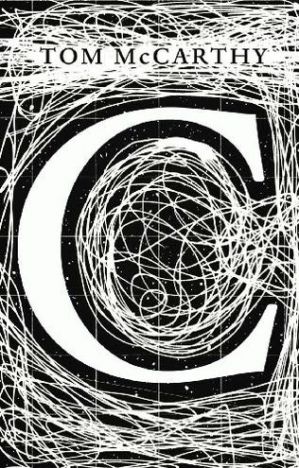
Man Booker Prize shortlist announced

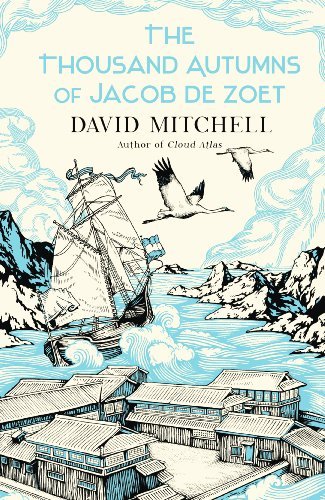
The shortlist for this years Man Booker Prize was announced this morning in London. Since the judges seem to have got the notable omissions out of the way when they assembled the longlist (Ian McEwan, Martin Amis) they’re not the big news this time round, though the two books many will note the absence of are Christos Tsiolkas’ The Slap and David Mitchell’s The Thousand Autumns of Jacob de Zoet. Not having read the whole list I’m not really in a position to guess at the likely winner, but I would say that Emma Donoghue’s fictional reworking of the Natasha Kampusch story, Room, has been attracting a lot of attention, and while Tom McCarthy’s C has probably slipped under many people’s radar, if it’s made it to the shortlist I think it’d have to be the dark horse candidate. It’s also pleasing (not least because I’m an admirer of the book) to see Peter Carey shortlisted for Parrot and Olivier in America.

The six books on the shortlist are:

Peter Carey, Parrot and Olivier in America
Emma Donoghue, Room
Damon Galgut, In a Strange Room
Howard Jacobson, The Finkler Question
Andrea Levy, The Long Song
Tom McCarthy, C

In other award-related news, Sunday saw the announcement of this year’s Hugo Award for Best Novel, which was split between China Mieville’s The City and the City and Paolo Bacigalupi’s The Windup Girl, a result which seems about right to me.

Break text

The Occupational Hazards of Book Reviewing

Oh, brother, I hear you . . .

Break text

Break text
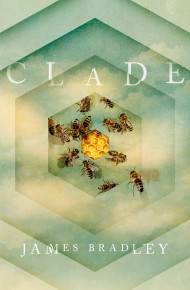
Mmmmm, coverlicious . . .

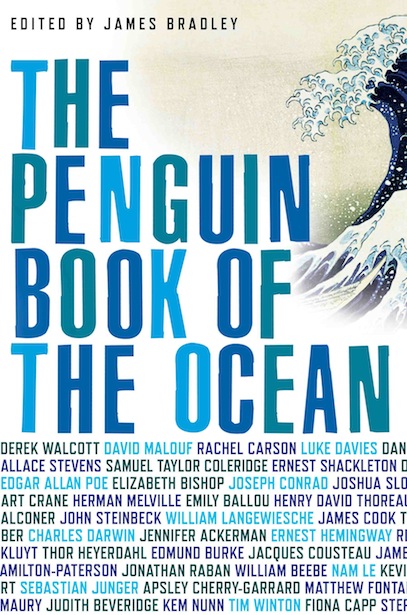
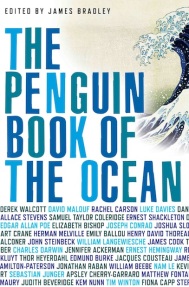
Somewhere in all the chaos of the past few weeks, I completely forgot to mention that I’d finally finished The Penguin Book of the Ocean.

I was going to post some long mournful piece about how sad finishing books makes me, but instead I think I’ll just let you feast your eyes on the cover . . .

Break text

Break text

AussieCon 4

Just a quick note to say I’ll be at AussieCon 4 in Melbourne next weekend, where I’ll be speaking on a panel on Friday at 1:00pm about the role of the critic in the 21st century. Given the panel also features John Clute (who co-edited The Encyclopaedia of Science Fiction with Australia’s own Peter Nicholls), Bill Congreve of MirrorDanse Books and Cheryl Morgan it should be a fascinating session. The full program is available on the AussieCon 4 website.

AussieCon 4 will also see the announcement of the 2010 Hugo Awards. I had a piece in The Sydney Morning Herald and The Age this weekend about the six books on the Best Novel shortlist. It’s a bit cursory in places, simply because of the difficulties inherent in reviewing six books in 1200 words, and it doesn’t seem to be online yet, but I’ve made a copy available on this site for anyone who’s interested.


Resuming Transmission . . .

Apologies for the resounding silence around these parts in recent weeks: I’ve been completely overwhelmed by work and family and the desperate attempt to get the new draft of my novel locked off by the end of August (a deadline I’m about to miss, but we won’t go there). I’m planning to get some stuff up over the next couple of weeks, but in the meantime, I thought I might link to a couple of things I’ve had published or broadcast recently.

The first is my review of Kenzaburo Oe’s novel The Changeling, which was published in Saturday’s Weekend Australian. Oe, as some of you would be aware, won the Nobel Prize for Literature in 1994, and despite something of a reputation as a public intellectual in his native Japan, is best-known in the English-speaking world for his fiction. I can’t say The Changeling really set my world on fire, but it’s a fascinating work in some respects, not least in the manner in which it explores many of the same issues relating to the relationship between the writer, their writing and the external world that Coetzee explores in Summertime.

The second is an interview with me and Sophie Cunningham about eReaders and eBooks whcih was broadcast on Radio National last week, and grew out of a session at this year’s Sydney Writers’ Festival which featured Sophie, Jeff Sparrow, Sarah L’Estrange and myself. I’m always a bit appalled by the sound of myself on the radio, but this one isn’t a bad piece IMHO. You can listen to it via the Bookshow’s website.

As I say, I’ll be back around these parts later in the week. In the meantime you might want to check out the greatest pop song about a writer ever. (A word of warning – it’s pretty definitely NSFW).

Break text


Zero History

I’m reviewing William Gibson’s new one, Zero History, for The Australian, so I can’t really talk about it here, but just to whet your appetite, here’s a trailer for it. It’s a little brief, compared to the trailer for Spook Country, and I’m not sure Gibson’s voice is really strong enough to drown out the soundtrack, but as the excerpt in the trailer suggests, it’s the book where the seemingly unconnected post-Iraq paranoia of Spook Country meets Pattern Recognition’s fascination with branding and the corporatisation of culture. I’d just say enjoy, but it’d be remiss of me not to suggest that if you haven’t read Pattern Recognition (or indeed Neuromancer and Virtual Light) you should do so immediately: it’s one of the best books of the last decade, and along with Richard Powers’ The Echo Maker, by far the best piece of writing to come out of the convulsions that began with September 11, 2001.

Break text


Australian Literary Review and Walkley Conference

I’ve somewhat belatedly realised today is Australian Literary Review day. As usual selected highlights are available online, including the Pascal Award-winning Mark Mordue on Bret Easton Ellis’ Imperial Bedroom (which I’ve been meaning to try and compose some thoughts on myself) and a number of pieces linked to the election, of which the most significant is probably Christine Jackman’s piece on Annabel Crabb, David Marr and Nicholas Stuart’s books about Kevin RuddALR Editor Stephen Romei’s Editorial is also online.

Reading Stephen’s Editorial has also reminded me that next week is the Walkley Foundation’s Annual Conference, which this year is focussed on narrative. Given it’s smack in the middle of the penultimate week of the election campaign it’s possible it’s not the most perfectly timed media conference in history, but it’s still got a pretty fantastic line-up. Featured international speakers include author and academic, Jay Rosen (the man behind PressThink), political blogger, John Nichols, South African activist and academic Harry Dugmore and NBC News Correspondent Bob Dotson. There’s also a host of Australian speakers, including Charlotte Wood, Malcolm Knox, Kerry O’Brien, Laurie Oakes, Annabel Crabb and Lawrie Zion.

I’m appearing on two panels on Wednesday 11 August, ‘Writing in the Internet Age’ at 11:40am with Jay Rosen, Crikey! Editor Sophie Black and Meanjin Editor and author, Sophie Cunningham, and ‘The Critics Speak’ at 3:30pm with Jenny Tabakoff, Stephen Romei and Sydney Morning Herald Literary Editor, Susan Wyndham. It looks like a fantastic program, so with luck I’ll see at least some of you there.

More information is available on the Walkley Conference website.


Mental Health and the Liberal Party

Not sure the world needed another series of The Chaser? Think again.

I’m still laughing.

Break text


From the sublime to the ridiculous . . .

Sometimes the juxtapositions the web throws up are just too good to be true, and these two galleries, which I stumbled upon within minutes of each other a couple of days ago, are a case in point. The first is a selection of photos from Translocations, a new book by UK-based photographer, George Logan, which place wild Asian and African animals in the British countryside. The effect is both beautiful and oddly unsettling, rather like the images of escaped lions prowling through ruined London or jackals on the streets of New York City one often comes across in post-apocalyptic fiction. You can check out a selection of the photos at Smashing Pics, or on Logan’s website. Copies of the book are available from Logan’s website as well. Proceeds from the project go to the Born Free Foundation.

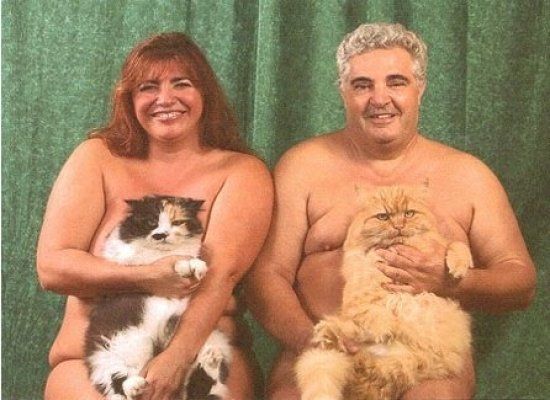
And then there’s Awkward Family Pets, the new project from the geniuses (genii?) behind the toe-curling Awkward Family Photos (if you’ve never been, you must). I’m not going to try and preempt the horrors that wait there, but let me just say you won’t be the same afterwards.


Man Booker Prize 2010 Longlist Announced

The Longlist for this year’s Man Booker Prize was announced yesterday in London. It comprises 13 books, drawn from a field of 138. For Australians the big news is likely to be the inclusion of Christos Tsiolkas’ The Slap, which was released in the UK earlier this year, but the list also features some notable omissions, in particular Martin Amis’ The Pregnant Widow and Ian McEwan’s Solar.

The full list is:

Peter Carey, Parrot and Olivier in America
Emma Donoghue, Room
Helen Dunmore, The Betrayal
Damon Galgut, In a Strange Room
Howard Jacobson, The Finkler Question
Andrea Levy, The Long Song
Tom McCarthy, C
David Mitchell, The Thousand Autumns of Jacob de Zoet
Lisa Moore, February
Paul Murray, Skippy Dies
Rose Tremain, Trespass
Christos Tsiolkas, The Slap
Alan Warner, The Stars in the Bright Sky

I always find longlists fairly inscrutable documents, but this one seems more so than most, not least because I’ve only read three and a half of the books on it (I’m in the middle of Skippy Dies at present). The exclusion of both the Amis and the McEwan strikes me as highly commendable – I’ve made my views on the McEwan clear, and as my review for the ALR a while back probably made clear, I wasn’t a fan of the Amis either (I’m sorry, Martin, but as political analysis, “Women are cocks,” just doesn’t cut it in 2010) – but it has to be said that without them the list feels a little underpowered, despite the inclusion of repeat shortlistees and former winners Rose Tremain, Helen Dunmore and Howard Jacobson (obviously Peter Carey adds a bit of wattage, but less than he might once have). It’s possible the crowd-pleasing David Mitchell makes up for that, and the Murray deserves more attention than it’s had, but beyond a general feeling there seems to be a trend towards sprawling, energetic books dependent upon pastiche (Carey, Mitchell, Murray) on the one hand, a preference for energy over refinement (Carey, Tsiolkas) and a preference for established writers over new talent I’m going to have to hold back until I’ve read a few more of them.

As for the shortlist and the eventual winner? Despite my qualms about it, my money’s on the Mitchell, which has been reviewed with great excitement around the world, not least because of the longstanding view that Mitchell should have won in 2004. The Slap might well make it through as well, though that may just be my preference for the home team speaking. Despite the fact I’m enjoying it, I’m less sure about the Murray’s chances of making the shortlist, and I’d say the Carey was about 60/40 to make it through.

Please discuss . . .


New Voices Festival

Just a quick note to let those of you in Melbourne know I’ll be speaking this weekend at the New Voices Festival in Eltham. I’m giving the keynote at 10:00am, and will be speaking about blogging and the way new media is transforming the way we write and read. That session will be followed by a panel discussion with Damon Young, Penni Russon and Karen Andrews. Other guests include Jon Bauer and Catherine Cole. I think it should be a great day and I’m looking forward to it very much.

You can book by phone on 03 9439 8700 or by email. And a copy of the program can be downloaded here.

Break text

Dracula meets The Road in Justin Cronin’s The Passage

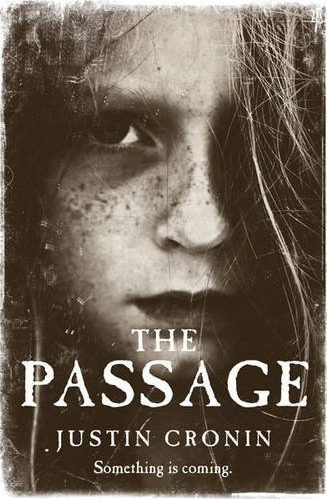
I’m always a little uncertain as to whether repurposing print reviews as blog posts really works, but I’m going to make an exception for my review of Justin Cronin’s The Passage, which appeared in this morning’s Sydney Morning Herald.

As books go it’s a pretty improbable one: the first part of a massive, millennia-spanning vampire saga, moving from America a few years from now to a distant future in which the vampire menace has (or just possibly has not) been defeated, with extended detours to a vampire-ravaged future that’s equal parts The Road and The Stand (what is it with these big books and the definite article?).

But despite a few wobbles and some fairly heavy-handed pump-priming here and there, it’s also one of the most entertaining things I’ve read in a while. All of which is a long-winded way of saying that it’s one of those “event” books that actually lies up to its hype, and well worth checking out.

If you’d like to know more you can visit the book’s website. Alternatively you might want to check out my piece, ‘Bloody Beauties: The Rise and Rise of Vampire Lit’, which appeared in The Australian Literary Review last year. And my review of The Passage is below:

Break text

The Passage
Justin Cronin

A while back I was asked on radio when I thought the vampire sensation would burn itself out. I laughed, and said I thought it must surely be past its peak if we were talking about it on Radio National. After all, there’s nothing more fatal to anything with even a whiff of cool than being embraced by the mainstream.

A little less than a year later and it seems I couldn’t have been more wrong. Post the near-universal “meh” that greeted Stephanie Meyer’s companion novella, The Short Second Life of Bree Tanner, the Twilight phenomenon may have degenerated into women’s magazine fantasies about Rob and Kirsten’s romantic entanglements, but elsewhere the undead are doing very nicely, thank you. On television True Blood’s third season premiered to ratings not seen on cable since The Sopranos, and while critical acclaim has eluded them, there are a host of True Blood/Twilight knockoffs in production. Likewise Dead in the Family, the most recent installment in The Southern Vampire Mysteries series that inspired True Blood sits at the top of the bestseller lists around the world.

And if they weren’t enough, now there’s Justin Cronin’s mammoth summer blockbuster, The Passage, the first part in a projected trilogy that was reportedly bought for a staggering US$3.75 million by Random House and is already being developed into a movie by Ridley Scott and his Gladiator co-writer, John Logan.

Not bad, especially for a man whose previous books, a critically-acclaimed novel and award-winning book of short stories were the sort of minutely-observed tales of quiet intensity set in Maine fishing camps that usually set an author up for a life of quiet obscurity teaching creative writing in a minor American university.

Like Stephen King’s The Stand, to which Cronin’s novel owes more than a little, The Passage inverts the usual notion of the vampire as something dreadful on the fringes of perception, and imagines a future where vampires rule. In King’s novel it is a bioweapon that causes the plague that writes humanity’s death warrant; in The Passage it’s a scientific project hoping to use a virus to cure disease and prolong life.

Thankfully, given its sheer size, the novel is broken up into twelve sections of varying length. The first few, which take place in America a little less than a decade from now, depict the events leading up to the release of the virus.

These first sections are undeniably creepy, conjuring a growing and almost palpable sense of unease as its elements are lined up: the doomed expedition to the jungle to recover the virus, the secretive project to develop a usable form, the group of death row inmates assembled to serve as subjects, the young girl co-opted by the program, the stirring darkness of the first, and most powerful of the subjects, Patient Zero, and his psychic subjugation of one of the reformed sex offenders recruited to work as attendants in the program.

Ironically, much of what makes these sections so unsettling is the way they embed the story in a larger, and more unsettling reality. Unlike the sections after the Fall, they inhabit a world on the fringes of contemporary society, a place where children are abused, and there is more than enough human evil and alienation without going looking for evil of a more supernatural bent.

These early sections might make a powerful novel in their own right, in particular the latter parts, after the virus is released, and Wolgast, the FBI Agent formerly charged with recruiting subjects for the program escapes with the girl, Amy, to the mountains to try and wait out the destruction in the cities and towns.

The narrative then jumps almost a hundred years into the future. The old world is gone, replaced by a barren, silent planet where isolated communities eke out a diminished existence behind high walls and powerful lights, trying and often failing to stay one step ahead of the Virals outside.

For those born into these societies, there is little to look forward to. Those who tend the machines know the end is coming when the last power runs out, and the Virals invade. But that changes when Amy, aged by only a few years despite the passage of more than nine decades, walks unarmed into one colony, and leads a small group of young men and women to set out to set off across a now-ruined landscape in search of a way of breaking the virals’ stranglehold on the Earth.

If much of the above sounds familiar it should, for in a very real sense The Passage is a Frankenstein’s Monster of a book, assembled from offcuts from sources ranging from The Stand to The X-Files, The Road and Dracula (to which it owes not just its vampires, or its use of documents such as diaries and emails to tell its story, but also its fascination with the tension between ancient, atavistic evil and modernity). Even the Virals themselves, with their rows of teeth, hypertrophic musculature and loping, apelike gait are a direct appropriation of Spiderman’s nemesis, Venom.

This sort of cannibalization has been part of the vampire tradition for almost as long as it has existed, each new entrant incorporating elements of its predecessors. Occasionally that process is intertextual, as in Elizabeth Kostova’s grinding pastiche of Dracula, The Historian, but more often these days it is ironic, the mythology internalized and deployed to comic or other effect, as it is when characters in films such as Fright Night or the more recent Lesbian Vampire Killers draw upon knowledge gleaned from movies to defeat vampires in “real” life.

Sadly this sense of play is seldom evident in The Passage. But in a way that hardly matters. For while Cronin’s control of his narrative occasionally falters, and there are moments where the writing strains towards a lyricism it cannot sustain, the book as a whole is never less than disgracefully, compulsively enjoyable. Indeed so addictive is its allure that my chief reaction, even after almost 800 close-set pages, was disappointment that the sequel is not already available.

Reproduced with the permission of The Sydney Morning Herald.


Eilen Jewell’s Sea of Tears

Apologies for how quiet it’s been round here: I’ve been caught in a nightmarish vortex of work and sick children, which has rather overwhelmed everything else (not least because I’ve been desperately trying to carve out time to get this bloody novel finished as well). I’m really, really hoping I’ll be getting a few things up over the next week or so, but in the meantime, I thought I’d give one of my most recent musical discoveries a spin.

The artist in question is the amazing Eilen Jewell, who I found via a recommendation from Tim Dunlop. I’ve only really heard her most recent album, Sea of Tears, but it’s a corker. At first blush you hear the electric folk sound of the Dylan era, but there’s nothing retro about Jewell’s voice, or the intelligence and feeling of the music. I know Tim’s a big fan of the closing track, ‘Codeine Arms’, which is indeed brilliant, but I think there are several tracks on the album which give it a run for its money, in particular the title track and the opener, ‘Rain Roll In’. All of which is a long-winded way of saying it’s a brilliant album, and Jewell’s something pretty damn special.

Break text

Break text
Break text

Called to Glory

Family history is one of those things you should never inflict upon people you like or respect, but this little story I learned last week is too good to let pass. It concerns my Great-Grandmother, Adelaide Bradley, who was run over by a tram on Jetty Road in Glenelg in 1942. Sad, obviously, but it’s difficult not to wonder what the family (who were Church of Christ in those days) were thinking when they drafted her death notice, which read, in one of those delightful collisions of religion and modernity, that she’d “been called to glory after contact with a moving vehicle.”

Break text