Apologies for the extended break in transmission, which is attributable to too much travel, too much work and a week in bed with some kind of virus. Since I’m still trying to get the edits on Black Friday done and finish a story for a collection that will be out later this year, as well as trying to catch up on all the work that didn’t get done while I was away and sick, things might stay a little quiet around here for a few weeks. But I’ll definitely be getting a few things up, in particular a piece on Wayne Levin’s gorgeous new book, Akule, which I reread over the weekend, and is simply amazing.
In the meantime, you might want to check out my review of Carol Birch’s Jamrach’s Menagerie, which appeared in The Weekend Australian on Saturday. I have to confess to not having read Birch before, but there’s a lot to like in this one (not surprisingly it’s recently turned up on the longlist for this year’s Orange Prize), not least the way it manages to eschew the fairly prosaic mode of much historical fiction in favour of something much more vivid and particular. Spookily it’s also a riff on the wreck of the Whaleship Essex, a story I was complaining was following me around just the other day.
Further afield Faber have uploaded a terrific recording of Willy Vlautin reading a new story based on the characters from Lean on Pete, which comes complete with music by Richmond Fontaine. And if you’re looking for reading matter I can thoroughly recommend both Lauren Beukes’ Arthur C. Clarke Award shortlisted Zoo City (urban fantasy, set in South Africa, with gangsters, guns and muti), which is both very stylish and a lot of fun (you can read the first chapter online) and China Mieville’s new one, Embassytown, which is out soon (I’m reviewing it, so I can’t say much beyond it’s one of the best things I’ve read in quite a while). Again the first chapter is available online.
And finally, I know it’s been out for a while, but this track from The Duke and the King’s new one, Long Live the Duke and the King, still rocks my world.
Having just spent several days having a rather fabulous time in Perth for the Perth Writers’ Festival, I’m about to head off again, this time to Queensland, to be part of the Outspoken Festival in Maleny.
As Festivals go, Outspoken is a relatively unusual one, taking the form of a season of monthly one-on-one interviews with writers, but I’m really thrilled to be a part of it, both because I’ve never been to Maleny (which is famously beautiful) and because the person doing the interviewing is the novelist Steven Lang, whose work I’ve known and admired for some time.
The event is in the Maleny Community Centre at 6:00pm next Wednesday, 16 March. Tickets are available from the Maleny Bookstore, 2/41 Maple Street, Maleny, or by phone on 07 5494 3666. If you live in the area it’d be great to see you.
As I mentioned on the weekend, on Friday I’m heading west for Perth Writers’ Festival. You can read the full program on the Perth Festival site, but the organisers have pulled together a great lineup of both Australian and international guests, with appearances by Andrew O’Hagan, Annie Proulx, Margo Lanagan and Armistead Maupin.
I think it’s going to be a great weekend, so with a bit of luck I’ll see some of you there. And please don’t be shy about saying hello: I don’t get west often so if you’re a reader or a commenter it’d be great to put a face to your name.
Finally, on a slightly sadder note, I was very sorry to read on Monday that Hazel Rowley, who was due to appear at the Festival, has had to cancel because she’s extremely ill following a serious stroke. I don’t know any more than what’s been reported in the media, but my best wishes to both her and her family in what must be a very difficult time.
Apologies if things have been a bit quiet around here this week: I’m deep in the horror of editing, and haven’t been particularly well. Things are likely to stay quiet for at least the next couple of weeks, partly because I really do have to get these edits locked away, partly because I’m interstate for Perth Writers’ Festival and an event in Maleny, Queensland (more on both soon).
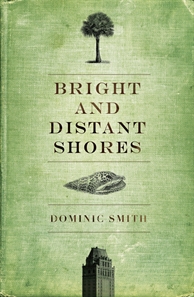
In the meantime, I wanted to point your attention to my review of Dominic Smith’s rather terrific new novel, Bright and Distant Shores in this morning’s Weekend Australian. Smith’s name may not be familiar to many Australian readers – I certainly wasn’t aware of him – but he’s actually an Australian who’s been resident in the United States for some years, and the author of two earlier novels, both of which have garnered considerable praise.
My sense of it is that Allen and Unwin see Bright and Distant Shores as his breakout book, and I don’t think their confidence is misplaced. Set on the cusp of the 19th and 20th centuries in Chicago, San Francisco and the islands of the Western Pacific, it’s a big, often beautiful book, buoyed by both its ambition and the depth of feeling that moves within its pages. For what it’s worth I also think it’s got literary award written all over it, so while I suspect it won’t qualify for the Miles Franklin, I’d expect to see a fair bit of it on the shortlists for the various Premier’s, Festival and Commonwealth Awards.
On the review and award front, I’ve also uploaded my review of Frederick Reiken’s rather lovely Day for Night, which along with Jonathan Franzen’s Freedom, Jennifer Egan’s A Visit from the Goon Squad and Richard Bausch’s Something Is Out There (which I’m planning to read soon) made the shortlist for the Fiction Category in this year’s LA Times Book Awards. I’d be very surprised to see it knock over either Franzen or Egan, not least because it’s one of those odd, slightly idiosyncratic books that some people will love and others won’t, but I liked it a lot, and I’m pleased to see it getting some attention. I’ve also uploaded a long review of Thomas Keneally’s The Widow and her Hero I wrote for the TLS back in 2007.
Just a quick note to apologise to anybody who’s been caught out by the antics of yesterday’s post about the collapse of Borders. After I posted it I discovered the system had somehow posted an unedited version of the text. Because I was out of the house I was reduced to trying to fix it on my phone, which made the formatting go berserk.
Deciding it wasn’t a problem I could fix sitting on a train, I trashed the post, intending to repair the problem later in the day, but in the end I didn’t get back to it until today, and at this point the prospect of manually repairing the formatting feels like more than I can face.
So, apologies to anybody who’s had the damn thing pop up in their RSS and then disappear. If I get really excited I might fix it tomorrow, but I suspect my energy for the question may have already dissipated.
I’ve been listening to a lot of choral music lately, and in particular to Eric Whitacre’s most recent collection, Light & Gold, which features the Eric Whitacre Singers and the King’s Singers, with soprano Grace Davidson on solos.
It’s a lovely disc, with gorgeous arrangements of poems by Cummings, Paz, Yeats and Silvestri, and five Hebrew love songs which also feature the Pavao Quartet. There’s a generosity and glow to Whitacre’s music which it’s difficult not to respond to, and this is captured beautifully in the recording, which is immensely warm and uncluttered (it’s probably not coincidental Whitacre himself conducted the pieces).
The highlight of the disc is probably the Hebrew Love Songs, but I’ve formed a great affection for the arrangement of Kipling’s ‘Seal Lullaby’. Almost too sweet, and deliberately sentimental, it’s similarly almost impossible not to respond to.
Some of you may know ‘Seal Lullaby’ from The Jungle Book, where it forms the epigraph to ‘The White Seal’, if not, it’s a poem that captures the intimacy and tenderness between parent and child very powerfully:
Rudyard Kipling, Seal Lullaby
Oh! hush thee, my baby, the night is behind us
And black are the waters that sparkled so green.
The moon, O’er the combers, looks downward to find us
At rest in the hollows that rustle between.
Where billow meets billow, there soft by the pillow.
Oh, weary wee flipperling, curl at thy ease!
The storm shall not wake thee, no shark shall overtake thee
Asleep in the storm of slow-swinging seas.
The arrangement reflects this, rising and falling like the sea, or breath, and in a way it’s unsurprising to learn Whitacre had his own child in mind when he write it.
Delightfully Whitacre wrote the piece at the request of Disney executives who were planning a movie of ‘The White Seal’. It was, as Whitacre explains, one of those commissions which strike a chord almost immediately, and he wrote the song quickly, delighted by the lyrics and the idea of the seal and her child, and sent it off in very short order.
But then silence fell:
“I began to despair. Did they hate it? Was it too melodically complex? Did they even listen to it? Finally, I called them, begging to know the reason that they had rejected my tender little song.
“Oh,” said the exec, “we decided to make Kung Fu Panda instead.”
I’ve uploaded a video of Whitacre conducting an impromptu performance of the piece in Canada a couple of years ago at the bottom of the post: there’s a rather more polished version featuring the California Lutheran University Choir on YouTube as well, but I like this one, both because Whitacre himself is conducting and because one of the singers (rather gorgeously) is holding a sleeping baby.
But Whitacre is fascinating in other ways as well. Not only is he that most improbable of things, a rock star classical composer (complete with flowing golden hair and rock star looks) he’s also one fo a relatively small group of classical musicians and composers leveraging the possibilities of social media and the web not just to connect with fans, but to build communities around their music.
Part of this process is simply about using Twitter to open up the process of composition to public view. While I know novelists increasingly exteriorize their process via social media, there’s still something very striking about hearing a composer like Whitacre say things such as, “YEEESSSSS! Solved the transition. As always, I was over-thinking it; it’s always the simplest solution that is the most elegant”.
But it also involves Whitacre’s remarkable Virtual Choir Project, a project that brought together 185 singers in 12 countries in a special recording of Whitacre’s ‘Lux Arumque’. Each member of the choir recorded their part separately, then submitted them to Whitacre and Producer Scott Haines, who mixed the recordings together, then created an accompanying video.
Whitacre (who blogs, naturally) has written about the process, but you can also listen to him explain it on the video below, and listen to the recording itself beneath that. And if you like what you hear you can buy Light & Gold from Amazon, iTunes or JB Hifi.
And finally, just a little reminder of the way that once you’re looking, everything connects. After spending a chunk of Sunday afternoon writing my post about George Pollard and Moby Dick, I sat down in front of the television and turned on a recorded episode of the BBC’s South Pacific. And what’s the episode using as its framing narrative? The story of the wreck of the Essex. Then after a week of listening to ‘Seal Lullaby’ I go upstairs to read the next book I have to review, Téa Obreht’s rather brilliant debut, The Tiger’s Wife, and what’s it all about? The frickin’ Jungle Book.
The discovery is fascinating for two reasons. The first, and more prosaic, is that there our understanding of life on board Whaleships is largely second-hand. As Ben Simons, of the Nantucket Historical Association points out in the article, “Very little material has been recovered from whale ships that foundered because they generally went down far from shore and in the deepest oceans … we have a lot of logbooks and journals that record disasters at sea, but to be taken to the actual scene of the sunken vessel — that’s really what is so amazing about this.”
But it’s also fascinating because the Two Brothers’ Captain, George Pollard Jnr, was also the captain of the Whaleship Essex, the ship whose sinking by a whale in 1820, and recorded in Owen Chase’s remarkable Narrative of the Most Extraordinary and Distressing Shipwreck of the Whaleship Essex, was one of the inspirations for Moby Dick.
For those of you who haven’t read Chase’s narrative I urge you to do so: its 60-odd pages are remarkable reading. As Jeremy Harding points out in a piece on Melville in the London Review of Books, contemporary interest in the Essex is, like Melville’s, largely confined to the story of the wreck itself, but as Chase’s narrative reminds us, the wreck is really only the prelude to a far more chilling story, involving the survivors’ journey several thousand kilometres westward, to the Pitcairn Islands, and gradual descent into starvation, cannibalism and madness.
Chase published his account of the wreck and its aftermath in 1821, and some years later it came to the attention of a young Herman Melville (interestingly it was not Melville’s first encounter with the story, which he first heard from Chase’s son, who was also a whaleman, while a crewman on a whaler himself). Later other versions of the disaster would appear, including a detailed account by Charles Wilkes of his conversation with Captain Pollard, and (interestingly) a manuscript held in the Mitchell Library in Sydney which details the experiences of the survivors who chose to remain on Henderson Island in the Pitcairns. These and many more are reproduced in Nathaniel and Thomas Philbrick’s excellent The Loss of the Ship Essex, Sunk by a Whale.
Prior to the wreck, Pollard was described as gentler and more contemplative than the average Nantucket whaleman, and was only 28 when given the command of the Essex. Yet the circumstances of the wreck, and more particularly the descent into cannibalism in the weeks before he and his companions were rescued, changed him.
As the piece in The New York Times points out, in a way the most surprising thing about Pollard’s presence on the Two Brothers is that he actually chose to take on another command. There’s something gut-wrenching about the description of him freezing and having to be physically dragged to a longboat when this second ship foundered, and deeply sad about his subsequent retirement to a position as a night watchman in Nantucket (he actually made one more voyage, upon a merchant vessel).
These days Pollard is mostly remembered as the prototype for Ahab and for his part in the murder and consumption of his cousin Owen Coffin while he and his companions drifted hopelessly in a whaleboat, but in details like the image of him moving through the darkened streets of Nantucket, it’s possible to glimpse a rather different man. Certainly Melville, who visited him after the publication of Moby Dick, was impressed by him, declaring “[t]o the islanders he was a nobody – to me, the most impressive man, tho’ wholly unassuming even humble – that I ever encountered”.
As I say above, the documents relating to the wreck of the Essex are well worth reading, in particular Chase’s Narrative, the opening section of which appears in The Penguin Book of the Ocean. And while I used the Spirit Spout chapter in the collection, if you’re unfamiliar with it I recommend reading the hellish description of the Pequod’s try works, which make the reality of life aboard a Whaleship viscerally real. And finally, if you can track down a copy of Nathaniel Philbrick’s In the Heart of the Sea: The Tragedy of the Whaleship Essex, do: it’s a splendid and harrowing account of a quite remarkable episode in maritime history, and of the fates of Pollard and the other men at its centre.
Two quick links to bands and albums that have been giving me a lot of pleasure over the past little while. The first is The Fabulous Ginn Sisters’ woozily brilliant You Can’t Take a Bad Girl Home, which I discovered via Flop-Eared Mule’s encyclopaedic best of 2010 list(s). I have to confess I don’t know a lot about the band itself, beyond the fact they’re actual sisters called Tiffani and Brit Ginn (rather than ironic rock ‘n’ roll siblings in the White Stripes mould) and proteges of Fred Eaglesmith, but the album’s pretty fantastic. In the word-salad vernacular of music journalism they’ve been variously described as “spooky garage-rock” and “Texas-toned Americana (country, voodoo blues, twangy waltzes and honky-tonk)” but if you ask me they sound like a 1950s girl band gone bad, with all the cracked sweetness and sultriness that implies. I’ve uploaded a couple of tracks from the album below, along with a live version of one more, but if you like them I recommend you track down the album in its entirety, because it’s pretty terrific
The other is the track I’ve been listening to all week, which is from Milwaukee outfit Sat. Nite Duets’ EP, One Nite Only. I think my friend Adam got it right when he said they were a band who managed to be both awesome and crap at the same time, because that lazy diffidence is definitely part of their charm, and is absolutely integral to the brilliant opening track, ‘All Nite Long’, which sounds like someone convinced Lou Reed to front for Pavement at a party in somebody’s back yard, and then that combination turned out as funny and as sexy and as basically awesome as it sounds. And the best thing is if you like ‘All Nite Long’ you can download the EP in its entirety for free from the band’s website (Thanks to Muzzle of Bees for the heads up).
It’s taken almost fifteen years, but my first novel, Wrack, about Portuguese navigators has finally been published in Portugal. Which seems sort of lovely, given how many other places it’s already been published. Now I just need Random House Australia to include it in their super-sexy, super-cheap Vintage Classics imprint . . .
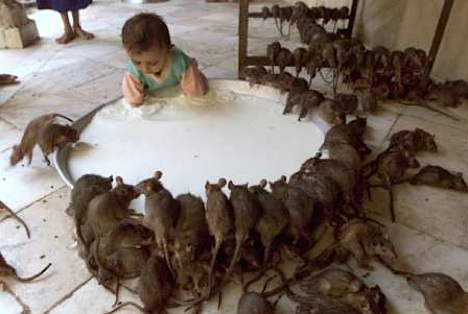
If like me you’re a little bit phobic about rats you probably don’t want to read this story about the rat plague afflicting the Myer Building in Sydney, or the swarms of them that rise up out of the foundations every night to take over the Food Court. And you definitely don’t want to read this piece by Sean Wilsey about the rats of New York City. Or hear the story I heard years ago about the tide of rats that swept across the lane behind the old Rex Hotel and into the building opposite when demolition began (apparently it looked like the ground was moving). And you absolutely, positively don’t want to read my Rat-King post again.
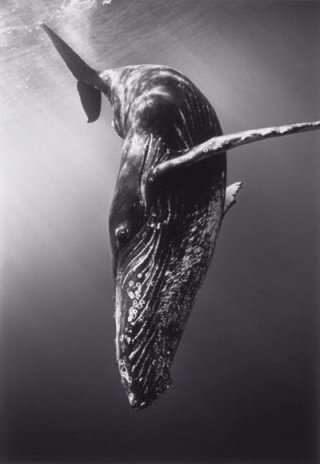
Wayne Levin, 'Diving Humpback Whale', from The Penguin Book of the Ocean
One of the real joys of the response to The Penguin Book of the Ocean has been the quality of the reviews. I don’t mean by that simply that reviewers have been positive about the book (though mostly they have) but the thought and care that’s gone into the reviews themselves. Late last year I linked to Felicity Plunkett’s wonderful review in The Weekend Australian, but there have also been long, thoughtful and very generous reviews by Michael McGirr in The Age, Jennifer Moran in The Australian Literary Review and more recently, a terrific piece by Stephen Wilks in The Canberra Times (mostly not online, sadly).
The terrific thing about all these pieces is the sense their writers have been genuinely engaged and excited by the collection, even where they have quibbles with it, which is to my mind exactly what you want from reviewers and readers.
The most recent review, by Gregory Kratzmann in Australian Book Review, is similarly exciting, not just because Kratzmann describes the book as a “remarkable anthology”, but because it’s such an intelligent, carefully crafted piece of writing. I’ll leave it to you to read it in full, but basically it’s the sort of review you dream of: thoughtful, lucid, informed, and which serves not just to contextualise the collection but to offer new insights and perspectives.
Elsewhere you might want to check out the Kill Your Darlings blog, which features an interview with me about the book. And in a completely different forum, the March issue of Madison, which should be in stores today, has me picking my favourite books, films, music and websites about the ocean.
’The Changeling'
Appears in Jonathan Strahan's Fearsome Magics. Compare prices for the UK print edition and US print edition; also available for Kindle (US and UK) and most other ebook formats.






 ,
, 

 , which I discovered via Flop-Eared Mule’s encyclopaedic



 city of tongues