Skip to content

Posts from the ‘Writing’ Category

The Dervish House

A couple of posts ago I was talking big about returning to regular posting, something I managed for all of about a week before everything fell in a hole again. I’m not going to make any more rash promises for the moment, simply because I’m still caught in the perfect storm of work and external commitments that has made blogging difficult since the end of last year. But I will try and make sure I do a bit better than I have in recent weeks.

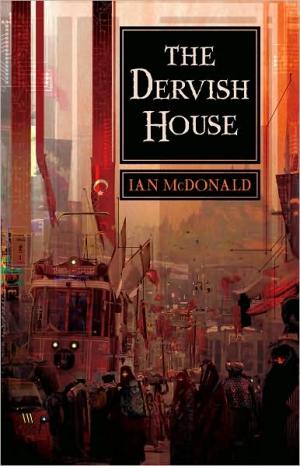
In the meantime, I’ve got a few things happening around the traps. Over at The Spectator’s Book Blog I’ve got a long piece on Ian McDonald’s The Dervish House, which despite being passed over for the Arthur C. Clarke Award in favour of Lauren Beukes’ rather fab Zoo City won the BSFA Award for Best Novel last week and is shortlisted for the Hugo Award for Best Novel. As I say in the piece it’s a travesty a writer of McDonald’s talents isn’t better known outside SF circles, especially given how little separates his work from that of writers such as Richard Powers and David Mitchell, so if you don’t know him I really do recommend checking the book (and indeed the review) out.

Elsewhere I’ve posted my review of Téa Obreht’s The Tiger’s Wife to the Writing page, something I promised to do weeks ago. Obreht is in Sydney for Sydney Writers’ Festival in a few weeks, and the book is both good and interesting, so take a moment to check it out if you get a chance.

And finally if you’re in Sydney you’ve got two chances to hear me gasbagging on in the next couple of weeks (and then about a thousand once the Festival begins, but I’ll do a separate post about that soon).

The first is on this week’s episode of TVS Channel 44’s Shelf Life, which features an interview with me about reviewing and writing online. I’ve not seen it, and the first screening was actually last night, but the show is on air three more times this week: today (Wednesday) at 1:30pm, Friday at 8:00am and Saturday at 12:30pm. If you don’t get Channel 44 or you’re outside Sydney you can stream the show from the TVS website.

And if that’s not enough I’ll be appearing alongside P.M. Newton, Kirsten Tranter and Sophie Hamley as part of When Genres Attack at Shearer’s Bookshop in Leichhardt at 7:30pm on Friday 13 May, a session devoted to exploring what it is that fascinates each of us about genre television and fiction, and to asking some questions about how we think and talk about genre, and how that’s changing as the cultural landscape changes.

And yes, I’ll be back later this week. At least I hope I will.

Me and Patrick White

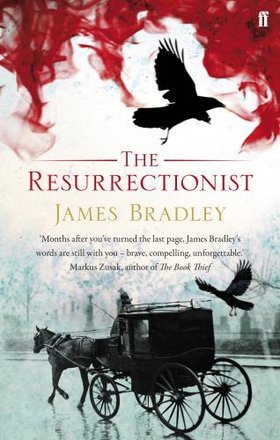
Just a quick note to say I’ve uploaded an article I wrote back in 2004 about Patrick White and the anxiety of influence to the Writing page. It’s not a long piece, and it was never actually published (I wrote it to coincide with the publication of The Resurrectionist, but delays in publication meant I forgot about it, so it languished on my hard drive until today) but it may be of interest nonetheless, especially given the recent announcement Random House will be publishing the first of two previously unpublished White novels early next year (if you’d like to know more about the new novels I very much recommend taking the time to read David Marr’s fabulous essay about them and White’s death that appeared in The Monthly in 2008).

You can read my piece about Patrick White here.

Bright and Distant Shores

Apologies if things have been a bit quiet around here this week: I’m deep in the horror of editing, and haven’t been particularly well. Things are likely to stay quiet for at least the next couple of weeks, partly because I really do have to get these edits locked away, partly because I’m interstate for Perth Writers’ Festival and an event in Maleny, Queensland (more on both soon).

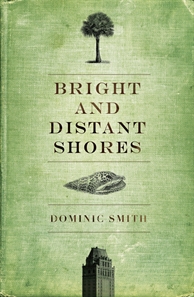
In the meantime, I wanted to point your attention to my review of Dominic Smith’s rather terrific new novel, Bright and Distant Shores in this morning’s Weekend Australian. Smith’s name may not be familiar to many Australian readers – I certainly wasn’t aware of him – but he’s actually an Australian who’s been resident in the United States for some years, and the author of two earlier novels, both of which have garnered considerable praise.

My sense of it is that Allen and Unwin see Bright and Distant Shores as his breakout book, and I don’t think their confidence is misplaced. Set on the cusp of the 19th and 20th centuries in Chicago, San Francisco and the islands of the Western Pacific, it’s a big, often beautiful book, buoyed by both its ambition and the depth of feeling that moves within its pages. For what it’s worth I also think it’s got literary award written all over it, so while I suspect it won’t qualify for the Miles Franklin, I’d expect to see a fair bit of it on the shortlists for the various Premier’s, Festival and Commonwealth Awards.

On the review and award front, I’ve also uploaded my review of Frederick Reiken’s rather lovely Day for Night, which along with Jonathan Franzen’s Freedom, Jennifer Egan’s A Visit from the Goon Squad and Richard Bausch’s Something Is Out There (which I’m planning to read soon) made the shortlist for the Fiction Category in this year’s LA Times Book Awards. I’d be very surprised to see it knock over either Franzen or Egan, not least because it’s one of those odd, slightly idiosyncratic books that some people will love and others won’t, but I liked it a lot, and I’m pleased to see it getting some attention. I’ve also uploaded a long review of Thomas Keneally’s The Widow and her Hero I wrote for the TLS back in 2007.

The journey home . . .

It’s taken almost fifteen years, but my first novel, Wrack, about Portuguese navigators has finally been published in Portugal. Which seems sort of lovely, given how many other places it’s already been published. Now I just need Random House Australia to include it in their super-sexy, super-cheap Vintage Classics imprint . . .

You can buy a copy of Destroços from fnac, read an excerpt in Portuguese on the Presenca site, or chase up a copy of the Australian edition, the UK edition or the award-winning audio edition read by Humphrey Bower. And there’s more information, including links to reviews etc on my Books page.

Summer and the myths of Australianness

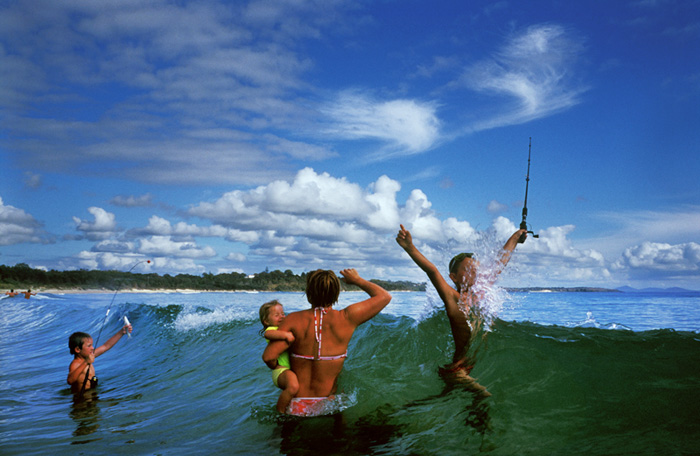
Narelle Autio, 'The Climb', © Narelle Autio 2001

Some of you may have noticed my piece in The Weekend Australian about summer and the myths of Australianness a couple of weeks back. It was an interesting piece to write, not least because the process of putting it together was, in an odd way, very similar to the processes of remembering and reliving the past that seem to me to so essential to the experience of summer. Certainly while writing it I was reminded very powerfully of my childhood and adolescence in Adelaide, and of the silent, empty streets and wakeful nights.

As a writer you have next to no control over the illustrations that appear with your pieces(I think I’ve been asked for a suggestion once and offered them unsolicited twice in all the years I’ve been writing for newspapers). But in the case of this piece I’m not sure I could have chosen something more appropriate, because Review’s Editor, Deborah Jones, chose to use not just an image by Narelle Autio, but her photo ‘The Climb’, which was taken on Brighton Jetty, only a kilometre or so from where I grew up.

I’ve been an admirer of Autio’s photos for a long time, and my partner and I actually own several of them. While the early black and white images of swimmers and surfers bear a passing resemblance to Wayne Levin’s images of bodysurfers, they have an informality and sense of play that’s very much their own, a celebratory aspect that seems to capture something not just of the joy and spontaneity of their subject, but of the odd way that joy and spontaneity seems to exist suspended on the edge of memory.

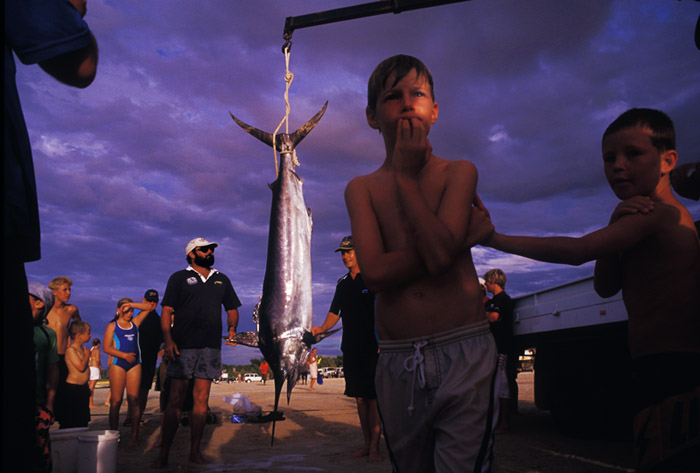
But the series ‘The Climb’ is a part of has always been my favourite. Partly that’s because the images that comprise it are so vivid and immediate, in particular photos such as ‘Black Marlin’. But it’s also because they capture that oddly informal and shapeless communality that summer holidays often involve, the groups of people and sudden pleasures of caravan parks and camping grounds.

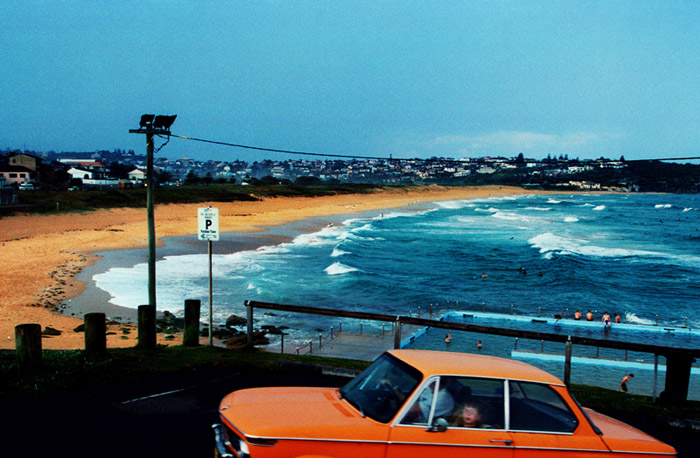
Part of what makes them so beautiful is the sheer saturation of colour, not just the blues of the water but its greenness, the yellow of the sand, even the brooding, impossible purple of late afternoon cloud. I suspect to many it’s a saturation that will seem immediately tropical, but oddly enough I remember standing in front of these pictures in the gallery and being immediately, unshakeably certain that Autio was from South Australia like me. It wasn’t the subjects of the photos – indeed I’m reasonably certain the photo that made me so sure she and I grew up near each other, ‘Orange Car’, is actually of somewhere in New South Wales – rather it was something about the quality of the light and its intensity, the degraded nature of the yellows.

As it turned out I was right: Autio grew up two beaches away from me in Adelaide. But that certainty was a reminder of somethign I’ve long thought about the nature of the Australian experience fo the beach. I keenly remember reading Robert Drewe’s brilliant memoir, The Shark Net, for the first time and being struck by the way it spoke to the summer landscape I knew as a child. Partly that was about it being set amidst the emptiness of sandhills and marram grass of the west coast rather than the cliffs and broken bays one finds on Australia’s east coast, but it was also about the way it made the landscape so palpable, not just the heat and the wind, but the denuded palette of sand and sea and sky, the intense, almost unbearable light.

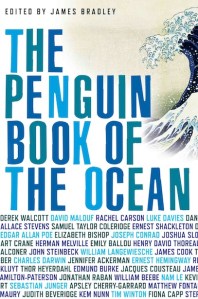
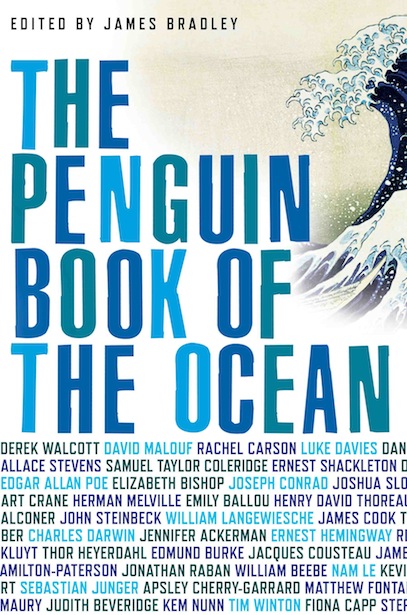
One of my enduring regrets about The Penguin Book of the Ocean is the fact I couldn’t find a way to include something of Rob’s, not just because he was one of the first two or three writers I thought of when I was planning the book, but because he’s a writer I’ve admired enormously for many years, and whose writing played an important part in inspiring me to become a writer in the first place. I’ve been meaning for some time to write something about the process of putting the anthology together, and the way my desire for it to work as a whole, rather than as a collection of pieces made a lot the decisions for me. But in the end I just couldn’t find a piece by him that spoke to the ocean in the way I needed it to (for a writer whose public image is so indelibly associated with the beach Drewe’s books are usually only interested in landscape in a fairly passing sense, and tend to focus much more on the illusions and betrayals of middle class life).

But I do wonder whether that sense of the differences between the bays and beaches of the east coast and the more denuded landscapes of the south and west coast isn’t one of the reasons Penguin decided to use Autio’s photos to illustrate their recent rerelease of Tim Winton’s coastal memoir, Land’s Edge.

Originally published in 1993, with photographs by Trish Ainslie and Roger Garwood, Land’s Edge is at one level an account of Winton’s enduring love of the ocean, and of the part it played in shaping him. But it’s also a sort of manifesto, a mapping out of the emotional and philosophical territory Winton’s fiction has explored over the years.

To my mind it’s an interesting, if slightly unsatisfying book. I’ve read it twice now, and both times I kept wanting Winton to go further, push harder, dig deeper. But that’s not to say it’s without its pleasures. Certainly it’s fascinating to see the way Winton’s experiences have been woven into the larger fabric of the work, and to be made aware of echoes and allusions between the books and the life which would not otherwise be apparent. It’s also interesting to be reminded how much deeper and darker Winton’s work has grown in the last two decades, and of the manner in which his command of language has kept pace with that deepening: word by word, sentence by sentence I’m not sure there’s any writer working in Australia  at the moment (except maybe Delia Falconer) who can match the raw power of Winton’s prose. Even its rough-hewn textures are deceptive, intimations of the steel beneath (in this context you might want to check out my review of Breath from a couple of years back) .

But in a way the real pleasure of this new edition is the book itself, and the use it makes of Autio’s photographs. Penguin have clearly gone to considerable expense to use excellent paper, and it shows, lending both the text and the images a richness and a clarity they might otherwise lack. It’s also convinced Winton to speak publicly, something he doesn’t often do (if you’re interested there’s a long interview with him by Stephen Romei in yesterday’s Australian, complemented by an audio recording of Winton reading from Land’s Edge). If you’d like a taste of the book I’ve reproduced several of the images in it below, and there’s an extract available on Penguin’s website. Likewise if you’d like to see more of Autio’s images you should visit Stills Gallery. Otherwise you can read my piece on summer at The Australian.
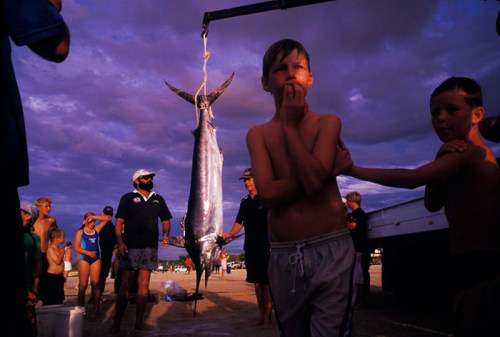
Narelle Autio, 'Black Marlin', © Narelle Autio 2001

Narelle Autio, 'Before School', © Narelle Autio 2001

Narelle Autio, 'Orange Car', © Narelle Autio 2001

 

A blast from the past: me talking about The Resurrectionist

I was chatting about book trailers this morning and it reminded me of the video below, which was produced and directed by Steve Macdonald to coincide with The Resurrectionist’s inclusion as one of Richard and Judy’s Summer Reads in 2008. If you can get past the fact I look even more crumpled and feral than usual, my hair’s about a foot high and my stammer is particularly noticeable, it’s actually not too bad. And of course if you’re so excited after you’ve watched it you want to buy a copy, you can check out Booko for prices on the Australian and UK editions.


Waves, the ocean and the sublime

Today’s Australian contains the last Australian Literary Review for 2010. A chunk of the issue is given over to a long piece by Michael Costa suggesting some solutions to the problems facing the ALP and a forum of prominent academics such as Glyn Davis, Peter Doherty and Stephen Lincoln exploring the challenges and opportunities facing Australia and the world as we look forward to 2020.

But the issue also features a long piece by me about Susan Casey’s new book, The Wave: In Pursuit of the Ocean’s Greatest Furies. Some of you may know Casey as the author of The Devil’s Teeth, which explored the world of Great White Sharks and the researchers who study them, and while it’s largely shark-free, The Wave often reads like a sequel or counterpart to its predecessor, using the career of big wave surfer Laird Hamilton as the springboard for a much larger study of the science of waves and the gathering storm of climate change.

I won’t rehearse the arguments of the book here, except to say that it’s an intelligent, if sometimes slightly slick piece of work. I’ve subsequently learned there’s been something of a scandal about the fact Casey shared the proceeds from the book with Hamilton, a fact that lends her already over-eroticised and hagiographical descriptions of him a distinctly queasy edge. But as I say in the review, Casey writes brilliantly about the breaks themselves, and the larger picture the book paints of the effects of climate change on ocean turbulence and wave height is likely to be deeply disturbing to anybody who’s not familiar with the facts surrounding the changes taking place beneath the ocean’s surface (if this material is new to you you might want to take a moment to read this story from the ABC, and perhaps this piece by Elizabeth Kolbert as a primer).

Much of what I want to say is in the review itself, but there is one story in Casey’s book I desperately wanted to include but just couldn’t shoehorn in, and that concerns the wave that hit Alaska’s Lituya Bay in 1958. Situated midway between Vancouver and Anchorage, Lituya Bay is one of those rare places where the various factors that generate tsunamis converge, combining a narrow fjord and near vertical cliffs on three sides with a steeply rising bottom, large glaciers and seismic instability. First charted by La Perouse in 1786, it has a long history of sudden and violent wave activity.

But the wave that struck on 9 July 1958 dwarfs all other recorded waves. Triggered by an earthquake, the ocean sent a tsunami which reached 524m in height rolling through the bay and out to sea.

The notion of a wave more than half a kilometre high beggars belief. Yet it is not the most remarkable part of this story. That honour belongs to the fact that at the time of the tsunami several fishing boats were moored in the bay, and one of the captains, Howard Ulrich, survived by steering his boat up the face of the approaching wave.

You can read the review in full here.

Update: I thought these two videos, one of Laird Hamilton in action, the other of an unidentified surfer riding a very big wave might be of interest (thanks to Tim Dunlop for the reminder).


Another great review for The Penguin Book of the Ocean

In case any of you missed it, last Saturday’s Weekend Australian had a long and extremely positive review of The Penguin Book of the Ocean by Felicity Plunkett.

I recommend you read the piece in full, because it’s a terrific piece of writing in its own right, which tries (and succeeds) to find a language capable of responding to the pieces in the book. I’m still delighted by her description of Hakluyt’s ‘The Last Voyage of Thomas Cavendish’ as “a vertical wave of a piece”, or her recognition of the manner in which the ocean’s (and by extension the moon’s) imagined femininity underpins both our sense of its imaginative infinity and its capriciousness, or of the way the language in Wallace Stevens’ extraordinary ‘The Idea of Order at Key West’ suggests not just “Yeats’s sea-compounds, his ‘dolphin-torn’ and ‘gong-tormented’ sea”, but the way that desire to push language to its limits “attests to the ocean’s mystery as well its ineffability”, its capacity to wreck and reimagine language.

And I’ve mentioned it before but I’ll mention it again: if you’d like to buy a copy without leaving your desk Booktopia are currently doing a special 26% discount on all online orders.

Sam Twyford-Moore on sadness, madness and creativity

Albrecht Durer, Melncholia 1

Many of you may already have seen it, but if not you could do a lot worse than to head over to The Rumpus and check out Sam Twyford-Moore’s piece about writing and depression, ‘Don’t Get Me Down’. I don’t want to preempt what Sam has to say in the piece, but I will say that I think it’s both a brave piece and an intelligent one, and that I suspect a lot of it will ring true for many readers.

The piece is doubly interesting to me because Sam talks at some length about my own essay about depression and creativity, ‘Never Real and Always True’, which was published in Griffith Review last year. I’m not in a hurry to revisit the territory or the times that piece explores, but I will say how moved I’ve been by the number of people who, like Sam, have written to say the piece has helped them or spoke to them in some way: it’s not often as a writer you get to feel you’ve really touched people but with this piece I know I did, and that’s a wonderful feeling.

It’s also sort of exciting to find myself in dialogue in this way with Sam, who’s someone I don’t know well, but have a lot of time for. I’ve not read a lot of his fiction but I like what I’ve read, and as I said in my piece about literary magazines for the ALR last year, it’s difficult not to be impressed by what he’s done with the literary journal he founded a couple of years back, Cutwater. It probably makes me sound old to say this, but Sam – along with other younger writers like Rebecca Giggs, Sam Cooney and Jessica Au – makes me really excited about the future of writing: they seem not just to be a group of genuinely new voices, but to be negotiating a moment of profound cultural transformation with energy and aplomb.

Sherman Alexie’s War Dances

I’m off to speak at the Emerging Writers Festival in an hour or so, but in the meantime I thought I’d pop up my review of Sherman Alexie’s War Dances, which ran in yesterday’s Sydney Morning Herald. I think it’s fair to say Alexie is a rather bigger name in the US than he is here in Australia, but hopefully Scribe’s publication of War Dances will change that a bit. Certainly War Dances is one of those books I read with increasing excitement, a feeling that culminated with the incredibly assured title story, which is one of the best pieces of short fiction I’ve read in some time (indeed if you read only two things out of the collection, make sure they’re ‘War Dances’ and the opening poem, ‘The Limited’). With a couple of weeks distance I suspect the collection as a whole is a little less consistent than I felt it to be when I was reading it, but it’s still a very striking, intelligent and blackly funny book, and well worth a look.

You can read the full review here.

More Penguin Book of the Ocean goodness

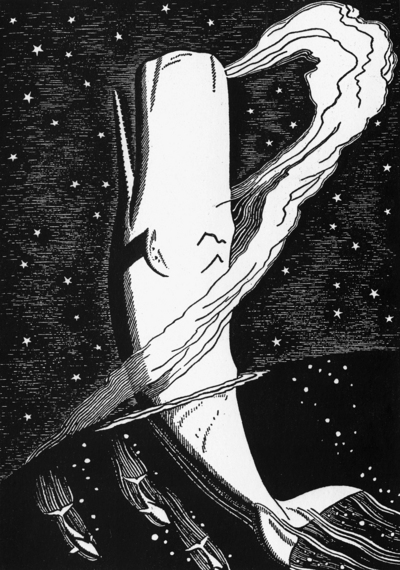
Rockwell Kent, Moby Dick

I mentioned earlier in the week that I was going to be on ABC Radio National’s Bookshow this morning for an interview about The Penguin Book of the Ocean. That interview’s now been and gone, but if you’d like to catch up with it the ABC have now posted the audio on the Bookshow’s website. And I’m not sure how long it’s been there, but I’ve also realised you can read the introduction to the collection in full on Penguin’s website. And finally the good people at Booktopia are doing a special price of 25% off, so if you want to pick up a copy cheap online, they’re very definitely the place to go.

First reviews of The Penguin Book of the Ocean

This month’s Australian Literary Review features a fantastic review of The Penguin Book of the Ocean by Jennifer Moran. Unfortunately it’s not online, and I didn’t get a chance to pop something up yesterday when it was in the print edition, but suffice it to say it’s pretty much the sort of review authors (and editors!) dream about:

“Bradley has collected admirably: allusions and echoes tie the pieces to each other, building a layered and complex whole that is as varied as its subject. Like energy rolling through a wave, the shifts of pace and mood keep the reader constantly engaged.”

The book’s also just had a rave from Geordie Williamson on ABC 702, which is fantastic. Again it’s not online, but if it turns up I’ll link to it.

In the meantime, at the risk of sounding like a cracked record, you can pick up a copy at your local bookstore or check out online pricing on Booko.

Emerging Writers’ Festival

Just a quick note to say I’m speaking this Sunday at the Emerging Writers’ Festival in Sydney. I’m sure the EWF, which brings together new writers and more established literary professionals (their term, not mine!) will be familiar to many of you already, whether by virtue of their program of online events, their various Melbourne-based events at the Wheeler Centre or their Reader, but Sunday’s event, which is presented in conjunction with the NSW Writers’ Centre, this will be the first time the EWF, which brings together new writers and literary professionals (their term, not mine!), has had a Sydney presence. I’m speaking about writing for Australian and international markets at 12:00pm with Leah Greengarten and Tim Sinclair, but you can check out the full program, which also features P.M. Newton, Emily Maguire, Kathryn Heyman, Sam Twyford-Moore and Mark Mordue on the NSW Writers Centre website. You can also follow EWF on Twitter for updates about future events, online and off.

A message from the other side

My apologies if it’s have been a bit quiet around here of late: I’ve spent the past few weeks desperately trying to get the new draft of my novel done and in the week since I actually did stagger over the finish line I’ve been under the weather with some kind of bug.

The upside of all this is that the new draft of my next novel, Black Friday, is finally, actually done. It’s still not perfect, and there are definitely some gaps and problems, but I think a lot of the heavy lifting is now done, which is really exciting. I want to try and talk a bit more about it and the process of writing it over the next few months, but for now let me just say that I think it’s got some great stuff in it, and while it’s more in the mode of The Resurrectionist than my earlier novels, it’s also sharper and more contemporary, which is exciting (though I also have to say I think I’ve written my last dark, disordered novel about morally unanchored characters for a while).

The downside (and let’s face it, there’s always something) is that I managed to miss posting about the publication of The Penguin Book of the Ocean, which hit shelves last Monday. I’m going to get a few things up about it over the next week or two, but in the meantime you can check prices at Booko, or read a bit more about the collection on the Books page. I’ve also uploaded a full list of the works included in case you’d like to take a look. It’s a book that’s been a big part of my life for the last twelve months and I’m very proud of it, so I really hope others find the same pleasure and excitement reading it I had putting it together.

I’m doing various bits of media over the next few weeks, which I’ll link to as they happen, but if you’re dying to hear me talk about the collection I’ll be on The Book Show on Radio National next Friday, November 5, at 10:00am. In the meantime, as Molly Meldrum used to say, do yourself a favour.

Break text

“A country founded on the air”

I’ve always been struck by the difference in the way Australian and British readers seem to respond to the last third of The Resurrectionist, in which the narrator is transported to New South Wales to begin again with a new name and a new identity. While Australian readers seem to grasp the significance of this Australian section, I’ve always got the sense that for many British readers it seems a slightly bizarre (and I suspect fairly unsatisfying) add-on to what they see as a novel about London and a very particular piece of British history. Which is why it’s so lovely to read this analysis of it in Jerome de Groot’s new book, The Historical Novel:

“Is it the case that historical novelists may only write about ‘their’ history in so far as they have some kind of ethnographic, sociological, nationalist, geographical claim to a past? Clearly not, as writers have amply shown. However, it does tend to be the case, primarily, presumably, because of access to source material, or language problems, or lack of confidence, that historical novelists keep within their own national historical boundaries. Yet does this mean that ‘history’ is somehow inert and neutral, mere source material? Again, clearly not. However, this tension and dynamic infects our reading and understanding of historical fiction. The Australian writer James Bradley appears to have broken free of his country’s past in The Resurrectionist, setting his novel in the grim London streets of the early 1820s and specifically amongst the grave robbers servicing the various professional anatomists of the time. However, the novel inverts this for the last section, as one of them is transported to Australia for his crimes, and the novel becomes a meditation upon origin, a consideration of the relationship between mother country and colony. The inhabitants of the colony are formerly prostitutes, convicts, criminals and murderers, yet ‘To laugh at them, or mock them, however, is no easy thing, for what lies in their pasts is there for all of us. And so we conspire not to enquire, nor to tell, as if by this silence we might forget what was and make a life without a past, as if this were a land without history, a country founded on the air’. This is impossible, however: ‘And yet the past is ever there’. The Resurrectionist elegantly creates a dialogue about national character and self-definition through its historical setting, reclaiming ‘British’ history for a postcolonial audience.”

break text