Skip to content

Posts from the ‘Writing’ Category

New novelette, ‘Beauty’s Sister’, available now

I’m delighted to announce my story ‘Beauty’s Sister’ has been selected as one of the first four pieces for Penguin’s Shorts program, which launches today.

Designed to offer quality fiction and non-fiction able to be read in a single sitting in digital-only formats, Penguin Shorts are also an attempt to create a space in which new and established writers can experiment with work that’s too short for a book and too long for a magazine. The number of works available will grow over time, but for now there are four titles available: two exclusive short works from Women of Letters curators Marieke Hardy and Michaela McGuire, Nam Le’s story, ‘Love and Honour and Pity and Pride and Compassion and Sacrifice’ and ‘Beauty’s Sister’. Full details of all the titles are available on the Penguin Shorts website.

‘Beauty’s Sister’ is a bit of a departure for me. A reworking of Rapunzel, it’s the first of a collection of tales I’ve been working on (and which I’ll hopefully find a way to publish in the next year or so). It’s also a bit more substantial than the other pieces I’ve published recently – in SF/Fantasy terms it’s a novelette – but I think it whips by all the same.

You can read the blurb below, but if you’d like to grab a copy it’s available for Kindle, iBooks, Google Play and Kobo.

“Juniper, living deep in the forest with her parents, is stunned to discover that the beautiful girl living isolated in a nearby tower is her sister. When the two girls meet, what begins as a fascination and a friendship ultimately develops into something truly sinister.

“A story of jealousy, passion and power, Beauty’s Sister is a dark and gripping reimagining of one of our oldest tales, Rapunzel, from acclaimed novelist James Bradley.”

Distrust That Particular Flavor

Just a heads-up to say I had a review of William Gibson’s new collection of non-fiction, Distrust That Particular Flavor, in yesterday’s Sydney Morning Herald and The Age. I think collections of non-fiction made up of occasional pieces by novelists are generally to be approached with caution, but this one most definitely isn’t: it’s smart, provocative and offers a genuinely fascinating glimpse of the way Gibson’s thinking has evolved over the past decades.

And if that’s not enough Gibson for you, you might want to check out my reviews of Zero History, Spook Country and Pattern Recognition, as well as a couple of follow-up thoughts about Zero History, and a now rather antique review of All Tomorrow’s Parties.

Angelmaker

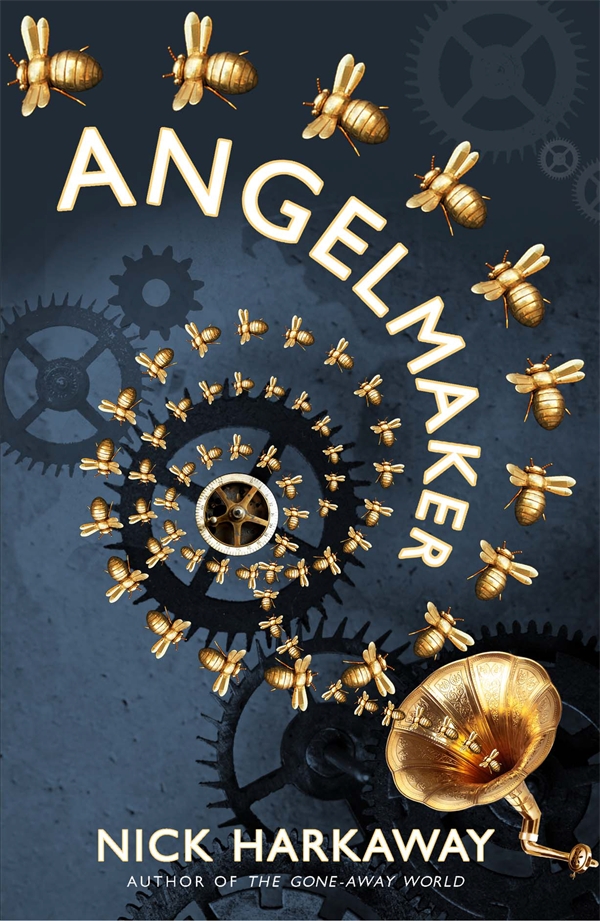
I’ve got reviews of Nick Harkaway’s Angelmaker and John Lanchester’s Capital in this morning’s papers. You can read the Lanchester piece unpaywalled at The Weekend Australian, but because the Harkaway isn’t on the Sydney Morning Herald site I’ve posted it over on my Writing Page.

If you’re interested you can also read my review of Harkaway’s first book, The Gone-Away World, but in the meantime I thought I might post the first couple of paragraphs, which touch on some ideas about the way changing cultures of reading are transforming literary culture I’ll be exploring further in the not too distant future:

“I sometimes wonder whether the real transformative force in contemporary writing isn’t digitization but fandom, and more particularly the technologies that underpin it. For while digitization is transforming the publishing landscape, the internet is breeding not just a new breed of highly engaged readers deeply invested in their particular area of interest, but also a new hierarchy of taste, founded not in traditional literary verities but in ideas of delight and generic awareness.

“Fandom’s rising power is visible in phenomena as seemingly unconnected as the hegemony of the superhero movie and the influence writers such as Neil Gaiman wield on Twitter. Yet it’s also visible in the rise of a new kind of fiction, one whose playfulness and generic promiscuity might once have seen it labelled post-modern, yet which more effectively elides the boundaries between high and low culture and art and entertainment than the writers of the 1980s could ever have dreamed of doing.” Read more …

The Inconvenient Dead

Sorry for the intermittent posting – I’ve been insanely busy. Hopefully I’ll get something proper up later this week or next but in the meantime I just wanted to alert you to the fact I’ve got a new story, ‘The Inconvenient Dead’, in the Autumn issue of Overland, which also has fiction by SJ Finn and Paul Dawson and poetry from Mark Mordue.

For the moment at least it’s not available online, so you’ll have to track down the issue to read it If you’d like to read it, it’s available for free on the very funky new Overland site (you can also buy copies or subscribe), but here’s how it begins:

“A week after he killed himself, Dane Johnson came to visit Toby at the service station. It was a Friday, which wasn’t usually one of Toby’s nights, but Toby was working anyway because one of the other guys had quit unexpectedly and the manager hadn’t had time to put a replacement through the two day unpaid customer service accreditation scheme new employees were required to complete before beginning their trial period.” Read more …

The mouse that roared

My apologies for my silence over the past couple of months: despite good intentions about getting back to regular posting after two months trapped in the time vortex of school holidays I’ve ended up swamped with work, which has rather slowed me down.

I suspect that situation isn’t going to change any time soon, not least because I’m now working on a new book and at least two sets of short stories on top of my usual reviewing commitments (which is exciting but more than a little consuming) but with luck I’ll still be able to keep things at least ticking over here.

I’ll link to some of those stories as they appear (in case you missed it I had one in Get Reading’s 10 Short Stories You Must Read in 2011, I’ve got one in the next Overland, another in a forthcoming anthology designed to raise funds for The Sydney Story Factory, and two which are being published as part of digital initiatives: a story in the second volume of The Review of Australian Fiction and a novelette which will appear next month as part of something I’m not really allowed to talk about yet).

In the meantime you might want to check out a few of my recent reviews (though many are now hidden behind The Australian’s paywall), in particular my pieces on Colson Whitehead’s terrific zombie novel, Zone One, Dana Spiotta’s electric Stone Arabia and Margaret Atwood’s deeply flawed In Other Worlds: SF and the Human Imagination.

And finally, if you haven’t seen this outstanding video of the savage grasshopper mouse, I recommend you watch it now. Apparently they’re carnivorous mice that let out their piercing shrieks before moving in for the kill, and you can read all about them over on Wired’s Laelaps blog, but basically they’re just made of awesome.

World Fantasy Convention 2011

I’m just back from a whistlestop tour of the West Coast of the US, one of the highlights of which was a long and fascinating weekend at the World Fantasy Convention in San Diego. In the way of these things it wasn’t an experience that’s really amenable to description, but I met a lot of great people, caught a couple of terrific panels (the conversation between Connie Willis and Neil Gaiman was a real highlight) and learned a lot.

As usual it was the conversations that mattered, not least the chance to catch up with old friends like Garth Nix, Sean Williams and (although we don’t go back as far) Jonathan Strahan and Liza Trombi (of Locus), but also the opportunity to meet new people such as Sean E. Williams (or Evil Sean as we came to know him) and Damien Walter.

But in an odd way the real highlight was meeting the Australian contingent, which included people like Alison Goodman, Alisa Krasnostein and Deborah Biancotti.

The Convention was also the occasion for the announcement of the 2011 World Fantasy Awards, which saw the prize for Best Novel go to Nnedi Okorafor for Who Fears Death, the prize for Best Short Story Collection go to Karen Joy Fowler’s fabulous What I Didn’t See and Other Stories (which is still easily one of the best things I’ve read this year), and the prize for Best Novella go to Elizabeth Bear’s Hand’s strange, sad and entirely lovely The Maiden Flight of McCauley’s Bellerophon.

I’ve not read the Okorafor, but I’m interested to, not least because it edged out both Lauren Beukes’ Zoo City (a book I’ve raved about before) and Guy Gavriel Kay’s lapidary Under Heaven.

But in a way the award I was most pleased by was the Special Award Non-Professional, which went to Australia’s own Alisa Krasnostein for her work with Twelfth Planet Press. If you’d like to know more about Alisa and her work you might want to check out the profile that ran recently in Locus.

The Awards Banquet was also distinguished by a very, very funny speech by Toastmaster Connie Willis, the video of which is below. The quality’s not great, but the good stuff begins around 19:10 (or if you’d like to hear Neil Gaiman and Peter S. Beagle you can play it from the beginning).

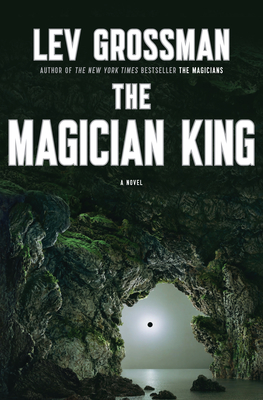
Lev Grossman’s The Magician King

I’ve just uploaded my review of Lev Grossman’s The Magician King, which appeared in Saturday’s Sydney Morning Herald to my Writing page, but if you can’t be bothered clicking through I’ve attached the text below. To sum up in a sentence, it’s brilliant: funny, addictive and ferociously intelligent, and if you haven’t read it or its prequel, The Magicians, you should do so immediately.

You might also want to check my partner, Mardi McConnochie’s piece about it over at her blog, Big Red. You’ll be glad you did. And if you’d like to read more about Grossman and his books, you can visit his website.

The Magician King
Lev Grossman

A few years ago A.S. Byatt wrote a famous critique of J.K. Rowling’s Harry Potter series, dismissing them as “jokey latency fantasies”. In it Byatt argued that unlike works such as Susan Cooper’s The Dark is Rising or Alan Garner’s troubling and often unsettling children’s books which demand children grapple with a world larger and stranger than they had previously imagined, Rowling’s books allow children to fulfil their infantile fantasies of unrecognized importance and power.

Whatever one makes of Byatt’s argument, it’s difficult not to wonder whether her essay played a part in the formation of Lev Grossman’s exuberantly entertaining 2009 novel, The Magicians. At once loving homage and deadly accurate deconstruction, it imagined a world where magic is real, and asked, with considerable sophistication, what it might mean if that particular fantasy came true. And in the process it created something at once strikingly original and deliberately subversive, not just a story about the loss of illusions and the beginnings of adulthood that was simultaneously an exercise in re-enchantment but a exploration of the manner in which power and trauma distort our inner selves.

The Magicians centres on Quentin Coldwater. “Sarcastic and spookily smart”, Quentin is also, as his friend Julia admits to herself at one point, “basically a kind person who just needed a ton of therapy and maybe some mood-altering drugs”. Lonely and isolated at high school, Quentin’s one solace (other than his hopeless passion for Julia) is his absorption in the Narnia-like Fillory novels. Yet when an alumni interview for Princeton turns into an exam for an ultra-secret, ultra-exclusive school for magicians called Brakebills, Quentin finds himself initiated into a world where his oddness is no longer a liability, and where, amazingly, Fillory is more than just a story.

Grossman’s follow-up, The Magician King, begins two years after the events at the end of The Magicians. Quentin is now one of the kings of Fillory. It’s a good life: populated by magical creatures and impossibly beautiful, Fillory is as close to perfection as any place could be. But as Quentin is beginning to realise it’s also a little bit boring. And so, when a carelessly arranged day in pursuit of an enchanted hare ends in tragedy, Quentin decides to embark on a quest. As quests go it’s no big thing, just a trip on a refitted sailing boat to an island in the Eastern Ocean to find out why the inhabitants haven’t been paying their taxes. But for the now-restless Quentin it seems enough just to have a purpose again.

These early chapters unspool with a brisk efficiency, but the novel only really kicks into gear when Quentin stumbles on a golden key, which when used does not transport him somewhere magical, but dumps him and his childhood friend and fellow tetrarch, Julia, back on Earth. Desperate to return, the two of them must navigate a hitherto unglimpsed magical underworld populated by self-trained wizards and witches, and utterly unlike the cosy prep school world of Brakebills, a process that gives Quentin his first glimpse of the price Julia, who was rejected by Brakebills, paid to acquire her powers. But as they discover on their return to Fillory, their experiences on Earth were only the prelude to a much larger and more perilous quest to save not just Fillory, but magic itself.

If much of the pleasure of The Magicians lay in its unfeigned delight in the books from which it drew its inspiration, much of its power lay in the tension between the magical elements drawn from C.S. Lewis and Harry Potter and elsewhere and the restless, dissatisfied and painfully human dramas of its protagonists. For all its playful energy it was ultimately a surprisingly dark book about loss, and failure.

Something similar is true of The Magician King. Once again the book riffs wickedly on the tradition it inhabits, managing to seem as comfortable invoking the secret lore of 1970s role-playing games and Neal Stephenson novels as it is gesturing to Le Guin and Tolkien. And once again it manages the not-inconsiderable feat of managing to be both extremely funny and utterly believable.

Yet it is also a more ambitious book than The Magicians. Moving beneath its surface are a series of deeply disquieting questions about the corrupting nature of power and the theological underpinnings of fantasy worlds such as Narnia. The gods Quentin and his friends glimpse are not benevolent, but cold and distant, while their expressions on Earth are not just capricious but actively malevolent. Certainly it’s safe to say that you’ll never look at Aslan the same way again.

Despite the achievements of writers such as Guy Gavriel Kay and Neil Gaiman Fantasy is a genre that has long struggled to be taken seriously, often treated as faintly ridiculous or an embarrassing overhang from childhood. In The Magician King Lev Grossman demonstrates it is neither, producing a book that does not simply crackle with energy and ideas, but which manages to be at once an inquiry into the underpinnings of the tradition it occupies and a brilliantly eloquent demonstration of its possibilities. The Magician King is not a book for children, or even a book about the stories of childhood for grown-ups. It is quite simply one of the smartest, funniest, most exciting novels you’re likely to read this year.

Originally published in The Sydney Morning Herald, 15 October 2011.

Moby Duck

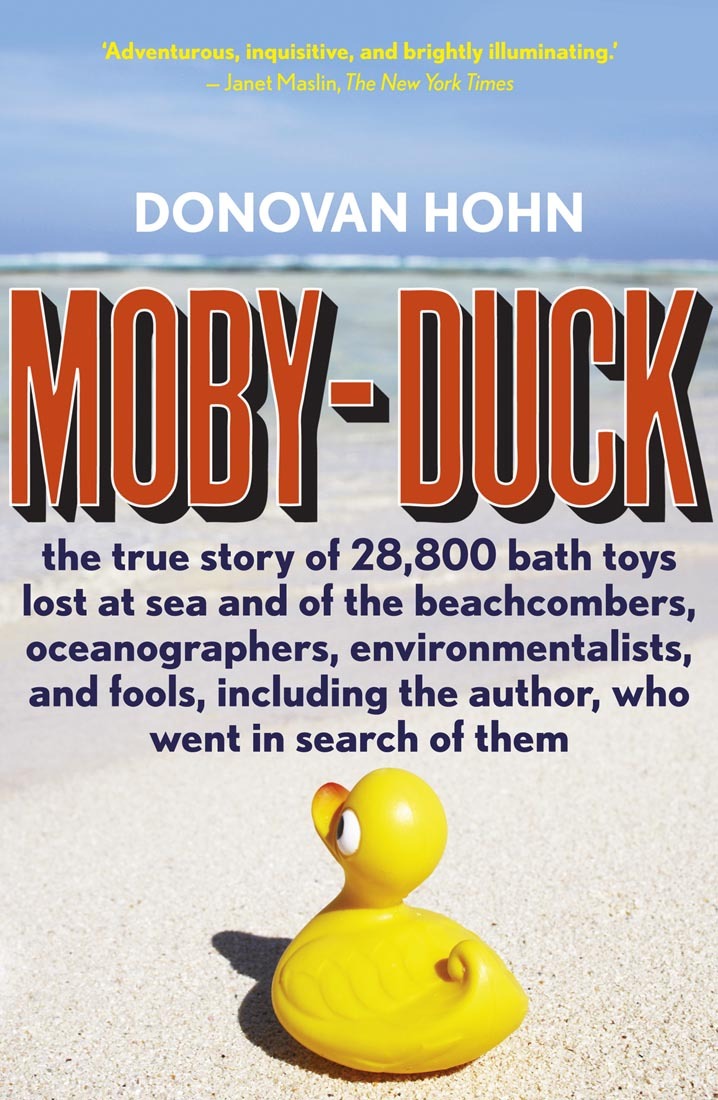
I’ve got a review of Donovan Hohn’s Moby Duck: the true story of 28,800 bath toys lost at sea and of the beachcombers, oceanographers, environmentalists, and fools, including the author, who went in search of them in this weekend’s Weekend Australian. As the review hopefully makes clear I liked it quite a bit, not least because despite the silly title (and the sometimes irritatingly digressive style) it’s a book that’s grappling in genuinely interesting ways with a series of questions about what Nature actually is, and perhaps just as importantly, how we should think about ideas such as wilderness and preservation in a globalised world.

These aren’t new questions, of course. There’s a growing body of theoretical work exploring them, and even in a more popular context recent years have seen the publication of books such as Bill McKibben’s Eaarth and Mark Lynas’ The God Species, but what makes Hohn’s book so refreshing is his interest in using the reality of the contemporary natural world to ask quite difficult questions about many of the assumptions underpinning environmental thinking. Some of these relate to what we actually mean by natural in 2011: there’s a great moment where he hikes through a rainforest only to realise when he hears a popping underfoot that it’s rooted in a great mound of old plastic bottles. But others are political, such as his argument the corporate-funded Keep America Beautiful campaign was less about cleaning up the environment than about transforming the public perception of litter and waste from a responsibility of polluting companies into something connected to personal conduct.

The book’s also interesting because it deliberately avoids the pieties of so much nature writing. Hohn isn’t interested in the chiselled prose and watchful reverence of Barry Lopez or Peter Matthiessen or Robert MacFarlane, instead he adopts a more contemporary (and more garrolous) style, one that allows him to write as lucidly about Chinese factories as vast, submarine gyres.

All of which is a roundabout way of saying there’s a lot to like about the book, and if you get a chance it’s well worth checking out. As I say, the review’s in The Weekend Australian, and you can find links to buy the book on Booko.

Ten Short Stories You Must Read In 2011

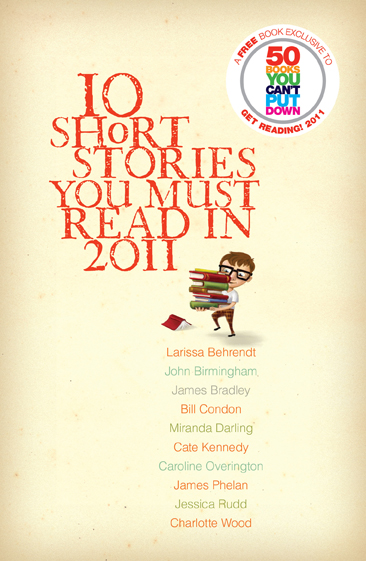
Today marks the launch of Get Reading 2011, an Australia-wide program designed to promote books and writing. As part of the campaign anybody who buys a book in a participating bookshop will receive a free book, Ten Short Stories You Must Read in 2011, featuring contributions from John Birmingham, Charlotte Wood, Caroline Overington, Cate Kennedy, Larissa Behrendt and myself (amongst others).

I haven’t seen an actual copy of the book yet, so I can’t wax lyrical about the contributions of my fellow authors, but I can say I’m pretty pleased with my story, ‘The Flats’, which is set near where I grew up in Adelaide, and is about three boys who accidentally see something terrible.

As I say, the collection is being given away for free with any purchase at all participating bookshops. My understanding is bookshops will also have copies of this year’s 50 Books You Can’t Put Down guide, but if you’re in a hurry you can also download it from the Get Reading website, which also has information on the various events taking place as part of the program and links to download the Get Reading 2011 app. You can also find Get Reading on Twitter and Facebook.

Get Reading 2011 runs until 30 September.

The Marine Quarterly reviews The Penguin Book of the Ocean

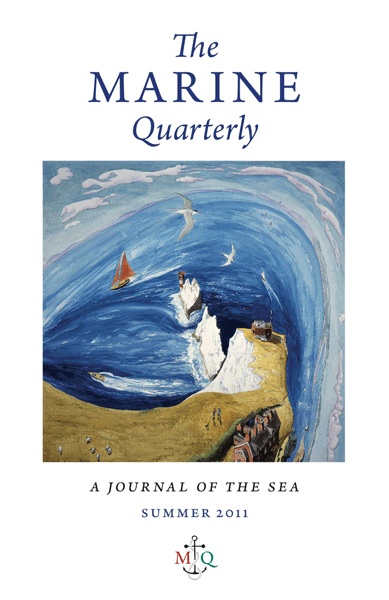
In amongst accounts of sailing the Falklands and advice on how to swim the English Channel, the Summer issue of the (rather fabulous) Marine Quarterly has a short review of The Penguin Book of the Ocean:

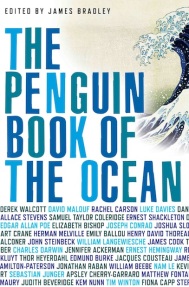
“It may be hard to get hold of the Penguin Book of the Ocean, edited by James Bradley, because it is published by Penguin Australia, and there are no plans to publish it in Britain. Goodness knows why. Many seagoing miscellanies are litanies of shipwreck and disaster. While I appreciate that a seagoing miscellany without shipwreck is like bread without salt, there are other aspects that should be considered. Bradley has done just that. He has reintroduced Rachel Carson’s marvellous The Sea Around Us, and unearthed passages of Thoreau, Hakluyt, Darwin, Steinbeck and Jonathan Raban, to name but a few, mingling them with plenty of very good poetry and a spot of surfing. As well as being a good read in its own right, this is a sampler for anyone looking for the foundations of a library of sea reading.”

Obviously you all own multiple copies of the book already, but with Father’s Day coming up on Sunday week, surely now’s the moment to buy another

The Rules of Genre

Apologies for the late notice, but if you’re a NSW Writers’ Centre member, you’re in Sydney and you’re at a loose end tonight, you could do a lot worse than heading out to the NSW Writer’s Centre for tonight’s Writing Genre: is it all about the rules? which features Margo Lanagan, P.M. Newton and myself kicking the genre can around. The event is members only (though I’m not going to claim to know how rigorously that rule is enforced) and bookings can be made by emailing the Centre.

“We have pierced the veneer of outside things”: Four books about Antarctica

Frank Hurley, Aurora alongside the ice off Western Base, 1911-1914

I’ve just finished a long review of Alasdair McGregor’s excellent new anthology, Antarctica: that sweep of savage splendour. The review will appear in the September Australian Book Review, but in the meantime I thought I’d post a link to a review I wrote back in 2005 of four books about Antarctica (including McGregor’s very impressive biography of Frank Hurley, A Photographer’s Life) which may be of interest, as well as pointing to my review of Jon Ronson’s rather fab The Psychopath Test, which appeared in last week’s Weekend Australian.

Metamorphoses

How do you do that? she asks, seated on the stairs to his loft, How do you know which notes to play without sheets?

Memory, he says, I do it by memory.

It is Boxing Day, and Anna has woken to the sound of the piano. Downstairs Seth seated before it, his fingers moving slowly across the keys.

What is it? I’ve never heard anything like it.

Seth smiles, his fingers continuing to pick out the notes in ones and twos, each separated by a gap, the space between them seeming as important as the notes themselves, the way they fade into it, leaving the memory of their resonance hanging. She shivers.

It doesn’t have a name, he says, An artificial intelligence composed it.

In front of her she can see the muscles in his back shift beneath his skin, the articulated cage of his ribs beneath them.

I have a recording of it, but I prefer to play it myself. There’s an alien quality to it, a sense of another way of being I can get closer to.

It sounds . . . sad. No, she corrects herself, listening to the strange, ghostly sound of the piano, the dying notes, not sad, something else I can’t quite describe, Like the sound of wind in grass or moving water, that quietness, that colourless feeling. She hesitates. Maybe I can’t find the words because there are no words.

It’s like trying to describe the sound of geometry, isn’t it? Can you imagine what it must be like to be conscious, aware, but without matter, without form? Without place. A ghost in a machine.

Anna shakes her head. But listening to the slow patterns of this music she can hear the loneliness of this thing of bits and light, this artificial mind shifting like the aurora through the circuits of some optical computer, like the siren call of a whale in the oceanic night, the long, clicking song that goes unanswered.

 From The Deep Field.

Totally Hip Book Reviews

I’m a little muzzy this morning from last night’s Sydney Writers’ Festival Opening Party (oh yes, the writer’s life is a fabulous one) but one thing I definitely remember from last night was a conversation in which I was recommending Ron Charles’ hilarious video reviews to somebody. Since that person’s identity has now fled my mind, I thought I might use that conversation as an excuse to post his rather fabulous review of Jonathan Franzen’s Freedom. Unfortunately Ron’s taking a breather from producing them for a while, but if you’d like to see more you can visit The Washington Post’s Totally Hip Book Review page or Ron’s Youtube Channel. In the meantime, enjoy!

Sydney Writers’ Festival

This week is the second of Festival Director Chip Rolley’s Sydney Writers’ Festivals, and unlikely as it seems, it looks even bigger than his first.

Full details are available on the SWF website, but guests include David Mitchell, Tea Obréht, last year’s Man Booker Prize-winner Howard Jacobson, Michael Connelly, philosopher A.C. Grayling and James Gleick. Sadly another of the major overseas guests, Liao Yiwu, was last week prevented from travelling to Australia by Chinese authorities, a decision that serves as a stark reminder of the challenges facing writers and dissidents in the People’s Republic.

If you’d like to catch me at the Festival I’m doing four events. On Thursday I’ll be discussing anthologising and The Penguin Book of the Ocean with Tim Herbert and Best Australian Stories editor and novelist Cate Kennedy in ‘On Our Selection’; on Friday I’ll be joining Malcolm Knox (whose new book, The Life, I’m halfway through and loving (info and ebook here, hard copy prices here)) and Lisa Pryor for a session about writers and fatherhood entitled ‘Daddy, Daddy, I …’, and on Saturday my partner Mardi McConnochie and I will join Mandy Sayer and Louis Nowra for ‘Au Pairs’, a session about life as one half of a literary couple. I’ll also be speaking to Georgia Blain about her fascinating new book, Too Close To Home on Thursday morning.

And if you’d like to see Mardi, she’s also on a number of panels, including ‘A Question of Character’ on Thursday, ‘Over Here’ on Sunday, and in conversation about her new book, The Voyagers, on Friday.