I’ve had my head down working for a while, but over the next few months I’m doing a number of events around the country. First up is the weekend after next, when I’ll be at Byron Bay Writers’ Festival, where I’ll be in conversation with Wendy Were at midday on Saturday 8 August, and will be speaking about the limits of forgiveness alongside Sarah Armstrong, David Vann and Anneli Knight at 12:15pm on Sunday 9 August and about Climate Fiction with Mireille Juchau (whose much-anticipated new novel, The World Without Us, has just been released) and Anneli Knight at 2:15pm. Tickets are available from the Festival office, by calling 02 6685 5115 or online.
On Thursday of the same week I’ll be back in Sydney, this time at Randwick Library, where I’m speaking at 6:30pm. Tickets for this event are free, and can be booked online or by calling 02 9399 6966.
The second, which I’m also very much looking forward to, is with Anson Cameron and David Schlosberg on Sunday 24 May at 3:00pm, and is entitled ‘Climate Change and the New Nature’. I think this should be a fascinating and quite provocative session. Tickets are $14.
Anyway, hopefully I’ll see some of you at some of these events. And if not, take a look at the full program: it’s an incredible line-up.
Just a quick heads-up to say that if you’re in Melbourne I’ll be appearing at a special event at The Lindrum Hotel on Flinders Street at 6:30pm on Thursday 14 May. The event is part of the new MGallery Literary Collection series, which is being run by Accor Hotels in conjunction with the Wheeler Centre, and includes dinner and canapés. Tickets are $65 or $55 for members, and are available online. It’s a pretty amazing location and it should be a great night.
As I mentioned the other day, I’ve just finished Jonathan Gould’s Can’t Buy Me Love, which is one of the best books about the Beatles I’ve ever read (and I’ve read more of them than I probably should have). Not quite as good on the music as Ian MacDonald’s dazzling Revolution in the Head, and a bit less precise in its focus than it might be from time to time (I’m not convinced some of the detours into contemporary history are really necessary) but smart, suitably sceptical about some of their achievements and very usefully engaged with both the individual narratives and the wider picture against which they played out.
One of the problems for any study of the Beatles is the seemingly impenetrable mystery of how it all happened. How did four young men from Liverpool become the most famous people in the world in the space of a few short months, then, once they were famous, go on to dominate popular culture for a decade and produce a string of records that redefined popular music while also acting as one of the catalysts for the immense social change that swept through the western world in the 1960s? As Ruth and Martin on RAM Album Club put it in their hilarious piece about Help the other day (don’t argue, just read it), “The Beatles? It’s the maddest story I’ve ever heard”.
Confronted with this question a lot of writers fall back on handwaving about their extraordinary talent and singular personalities, or mystification about the unique psychology of Lennon and McCartney. But the problem with these sorts of arguments is that they simply beg the question: after all, as Gould’s book makes clear, in the early days they really were just another band (describing their infamous rejection by Decca in 1962, he notes rather dryly that “faced with an oddly named, oddly dressed and openly quarrelsome four-piece group playing a grab bag of outdated material, none of it too well, Decca did what any other well-run record label would have done: after a polite interval, it turned the Beatles down”). And while with the benefit of hindsight it’s possible to see the intersection of qualities that made their records so particular – the harmonies, George Martin’s production and preparedness to experiment, the interplay of Lennon and McCartney’s different sensibilities, the way Lennon’s tough guy exterior made the vulnerability of songs such as ‘Help’ and ‘You’ve Got To Hide Your Love Away’ so affecting, the humour and wordplay – it’s difficult not to allow the story we know to determine the weight we place upon those characteristics.
Gould by contrast offers a fascinatingly nuanced account not just of the social and political preconditions that made their sudden, unprecedented popularity possible, but of the particular personal elements that allowed them to sidestep the sorts of mistakes other acts made, an account that is complemented by a thoughtful and nuanced account of their creative evolution (and subsequent unravelling).
In respect of the former he has a particularly interesting argument about the way the band both internalised and transcended class distinctions, at least in Britain (Americans, less attuned to the complexities of the class system, responded differently), but he also makes clear the shift away from DJ-driven programming to top 40 formats in the aftermath of the payola scandal in the United States allowed the band to achieve national exposure in a way that had not been possible only a year or so earlier.
But he’s also very aware of the importance of Epstein’s unconventional management style, and his insistence the band should seek status over money (apparently Ed Sullivan’s producers were bemused by his simultaneous focus on the band receiving top billing on the show and lack of interest in their fee), and of the practical ways the band’s fame was manufactured, as his anecdote about the promoter of their 1964 concert in Carnegie Hall guaranteeing mayhem in the city by deliberately booking the show for a school holiday attests.
He’s also pleasingly even-handed in both his approbation and his criticism. In contrast to Phillip Norman’s championing of Lennon in Shout! he’s sympathetic to McCartney, both as a composer and a human being, but that admiration doesn’t preclude criticising some of McCartney’s schmaltzier tendencies, In this regard his discussion of the way ‘Maxwell’s Silver Hammer’ demonstrates the way McCartney’s “workmanlike tendency to build on past successes had caused him to translate the genuinely charming novelty and subversive parody of ‘When I’m Sixty-Four’ into a personal subgenre of songs that had devolved in the two years since Sgt Pepper into a form of musical schtick” is particularly well-judged (his praise of McCartney’s 1981 album, Tug of War, in the final chapter is a bit over the top though). Nor does he pull his punches when describing the band’s excesses and their occasional musical limitations (in one memorable image he says the two sides of Please Please Me, resemble musical bridges between the strong songs at either end and the progressively weaker material at their middles)
It’s also extremely well-written, at least for the most part, both at a line by line level and, more importantly, at an observational level. Describing the press conference when the four of them arrived at Kennedy Airport in 1964 for example he writes that “through it all, the four of them exuded an almost mysterious sense of solidarity and self-possession. They were their own show and their own audience”. Similarly his discussion of the albums is extremely thorough and perceptive, particularly in the book’s middle section (interestingly the book’s best sections relate to the albums from A Hard Day’s Night to Sgt Pepper) and his analysis of the film of A Hard Day’s Night is simply exhilarating. And he’s genuinely fascinating not just on the complex ways in which Dylan influenced the band after their famous meeting at the Delmonico Hotel in New York in August 1964, but on the rather less often acknowledged impact the Beatles and their success had on Dylan. Likewise he is admirably succinct in his analysis of the band’s various psychologies, and interesting about the way they shape the music and, ultimately, the band’s demise.
And then there are the fascinating nuggets of information scattered through the book: apparently the Stones chose the title of Let It Bleed after hearing the album that was originally called Get Back was now going to be called Let It Be, ‘The Continuing Saga of Bungalow Bill’ was Lennon taking the piss out of Dylan’s John Wesley Harding (which he was obsessed with), ‘And Your Bird Can Sing’ was at least partly an attack on Frank Sinatra, who had been very critical of the Beatles and used to call people “birds” all the time, and Brian Wilson used to lead the Beach Boys in prayer meetings in the studio to ask God to help them make a better record than Rubber Soul.
So while I think MacDonald’s book is still the gold standard when it comes to discussion of the music (and one of the best books of popular criticism written in the past few decades), the first volume of Mark Lewisohn’s mammoth All These Years, Tune In offers the most exhaustive account of the band’s formation, and Pete Doggett’s wonderfully-titled You Never Give Me Your Money gives a better account of the band’s breakup and its aftermath, if you’re after a wide-ranging biography of the band that’s also attuned to the social context, sympathetic to the human side of the story and interesting in its analysis of the work, it’s absolutely the one I’d recommend.
I’m going to put together a roundup of reviews and articles about Clade soon, but in the meantime I’ve done a pair of Q&As you might like to check out. The first was for Penguin, and you can read it on their website; the other was for the fabulous Angela Slatter’s blog.
And while it’s not about the book, I’ve also just done a little thing for Zena Shapter about the music I’ve been enjoying recently. You can read the whole thing over on Zena’s blog, but because I wrote it a couple of weeks ago I didn’t include two things I’ve been loving in the past little while. The first is Israeli singer-songwriter Asaf Avidan’s fabulous album, Gold Shadow, which rather like Angel Olsen’s excellent Burn Your Fire For No Witness, looks back to the 1960s and beyond for a series of sounds and production techniques which manage to sound both retro and completely contemporary. And the other is The Beatles’ fourth album, Beatles For Sale, a record I was convinced to go back to by Jonathan Gould’s enthusiastic discussion of it in his biography of the Fab Four, Can’t Buy Me Love (which I’m planning to write something about on the weekend). For various reasons I’d come to accept the line that it’s an album born of exhaustion and creative burnout, a trough between the high points of A Hard Day’s Night and Help, but having listened to it again I’ve realised it’s actually much more interesting than I’d given it credit for, not just because original songs like ‘No Reply’ are so terrific, but because the choice of covers implies a fascinating conversation with their various influences and antecedents (and also, I suspect, prefigure the engagement with music hall and other, older forms on albums like Sgt Pepper).
The second is at Stanton Library in North Sydney at 1:00pm on Tuesday 17 March. Again you can book tickets by calling the library on 02 9936 8400 or through their website.
Later in the month I’ll be appearing at two events in Melbourne as well. At 7:15pm on Tuesday 24 March I’ll be appearing at the Wheeler centre with Jane Bryony Rawson, and Alice Robinson on a panel about ‘New Dystopias: Climate Change and Fiction’. I’ve not read Alice’s book yet but I’ve read Jane’s, A Wrong Turn at the Office of Unmade Lists and it’s a terrific book that grapples with the questions of climate change and how you might write about it in innovative and very creative ways, so I think it’ll be a great evening. Tickets are free and can be booked through the Wheeler Centre website.
And finally, on Wednesday 25 March I’ll speaking at Readings Carlton at 6:30pm. Tickets are free and available via the Readings website.
If you’re in Sydney or Melbourne it’d be great to see you at one of them. If not I’ll have some news about events elsewhere soon. And hopefully I’ll get a few other things up here sometimes soon.
Just a quick note to say that if you’re interested you can catch me chatting about Clade and associated subjects with Tonile Wortley on the latest Dymocks podcast. I’ve embedded the podcast below, but it’s also available via the Dymocks website.
You can now watch Geordie Williamson’s characteristically generous and thoughtful speech at the launch of Clade at Better Read Than Dead Bookshop in Newtown last week. My heartfelt thanks to Geordie, the team at Better Read Than Dead and everybody who came along for making it such a special event.
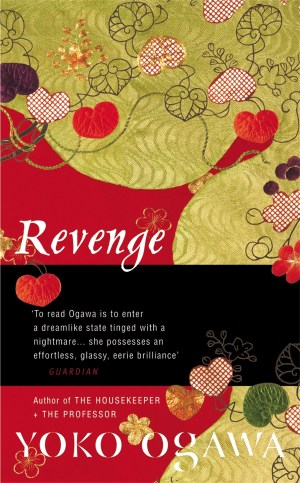
Towards the end of ‘Afternoon at the Bakery’, the opening story of Japanese author Yoko Ogawa’s slim but mesmerizing volume, Revenge, the narrator describes the discovery of the body of her late son, who suffocated after crawling into an abandoned refrigerator.
“He’s just sleeping,” she says, refusing to believe he is dead, “He hasn’t eaten anything, and he must be exhausted. Let’s carry him home and try not to wake him. He should sleep, as much as he wants. He’ll wake up later, I’m sure of it”.
It’s an exquisitely unsettling moment, and not just because of the way it plays upon our deep-seated sense of the strangeness of death, its closeness to life, but because of the way it evokes a particular sort of psychological instability, reminding us of how easy it is for our minds recoil from reality and take refuge in fantasy and denial.
Yet it might also serve as a microcosm of the emotional landscape and method of the book as a whole. For as becomes clear when the image of the abandoned refrigerator recurs to deeply disquieting effect in the book’s final pages, the stories in Revenge are not so much a collection, or even a suite or sequence, but something more closely resembling a set of uncanny matryoshka dolls, each nestled inside the last like the dead boy folded into his refrigerator.
For many readers this sort of metafictional gameplay will probably be reminiscent of Murakami, in particular his sprawling opus, 1Q84, with its worlds within worlds and floating cocoons. But where Murakami’s fiction is characterised by the tension between the curiously bland, almost affectless, prose (and its digressive fascination with cooking and running and whatever else seems to take its author’s fancy) and its surreal elements, Ogawa’s draws much of its power from somewhere considerably darker, the almost preternatural clarity of the prose belying the profound cognitive dissonance that lies at the heart of many of these stories.
Sometimes that dissonance reflects a disengagement from reality, rather as the calm words of the narrator of ‘Afternoon at the Bakery’ offer an unsettling suggestion of a mind both rational and profoundly disturbed, a quality that is repeated in ‘Old Mrs J’, in which the slightly-over-familiar landlord of the neighbour turns out to have murdered her husband and buried him in her vegetable plot, an act that has led, in one of the book’s more disturbing images, to crops of carrots resembling human hands (apparently the carrots are “plump, like a baby’s hand, and perfectly formed”).
Elsewhere though it takes other forms, as in stories such as ‘Welcome to the Museum of Torture’, in which a young woman abandoned by her boyfriend (whether for her disturbing affectlessness or for her interest in a nearby murder is never entirely clear) finds herself fascinated by the exhibits in the titular museum, or ‘Lab Coats’, in which a young woman with a crush on her co-worker hears her shocking confession (the story ends with the unnerving image of a tongue lolling out of the pocket of a used coat. “It’s still soft,” the narrator says. “And maybe even warm”).
As the repeated images of bodily mutilation and death suggest, much of the power of the stories in Revenge lies in their capacity to articulate anxieties that are usually suppressed. And certainly the book is at its strongest when it is exploring repression and sublimation, rather than in more deliberately surreal moments such as ‘Sewing for the Heart’, in which a bagmaker is commissioned to make a special bag for a woman whose heart is outside her body.
Yet in many ways what is most striking about Revenge is the way its nested imagery echoes and recurs, weaving a web of implication that is as suggestive as it is disturbing, and giving shape to a world in which the line between reality and our most morbid imaginings is never entirely clear.
As usual the February issue of Locus Magazine includes its annual Recommended Reading List, covering books and stories published over the previous calendar year. Compiled by the magazine’s editors, reviewers and a panel of outside critics, it always makes for fascinating reading, and this year’s list, which includes a number of books and stories I have read and would heartily recommend (David Mitchell’s The Bone Clocks, Garth Nix’sClariel, Adam Roberts’Bête, Katherine Addison’sThe Goblin Emperor, Ann Leckie’sAncillary Sword, William Gibson’s The Peripheral) and a number I haven’t but I’m looking forward to a lot (Rjurik Davidson’s Unwrapped Sky, Ben Peek’s The Godless, Nina Allan’sThe Race) is no exception.
At a personal level though I was delighted to discover my story, ‘The Changeling’, which was published in Jonathan Strahan’sFearsome Magics (which also gets a mention in the Recommended Anthologies list) included in the list of Recommended Novelettes.
You can read the full list of recommended books and stories over at Locus. And if you’d like to read ‘The Changeling’ you can pick up a copy of Fearsome Magics (which also features stories by Garth Nix, Karin Tidbeck, Kaaron Warren, Frances Hardinge, Isobelle Carmody and a bunch of other excellent people) from online and bricks and mortar retailers or through your favourite ebook retailer.
My new novel, Clade, hits bookshop shelves today. I’m incredibly excited it’s finally out: Penguin have done an amazing job and it looks gorgeous, but more importantly it’s a book I’m very proud of, and which means a great deal to me.
If you’re going to be in Adelaide please come along; in the meantime here’s Writers’ Week Director Laura Kroetsch talking about Clade a couple of months ago.
’The Changeling'
Appears in Jonathan Strahan's Fearsome Magics. Compare prices for the UK print edition and US print edition; also available for Kindle (US and UK) and most other ebook formats.

 I’ve had my head down working for a while, but over the next few months I’m doing a number of events around the country. First up is the weekend after next, when I’ll be at
  It’s only a few weeks until the main program for
  Just a quick heads-up to say that if you’re in Melbourne I’ll be appearing at a special event at

 Towards the end of ‘Afternoon at the Bakery’, the opening story of Japanese author Yoko Ogawa’s slim but mesmerizing volume, Revenge, the narrator describes the discovery of the body of her late son, who suffocated after crawling into an abandoned refrigerator.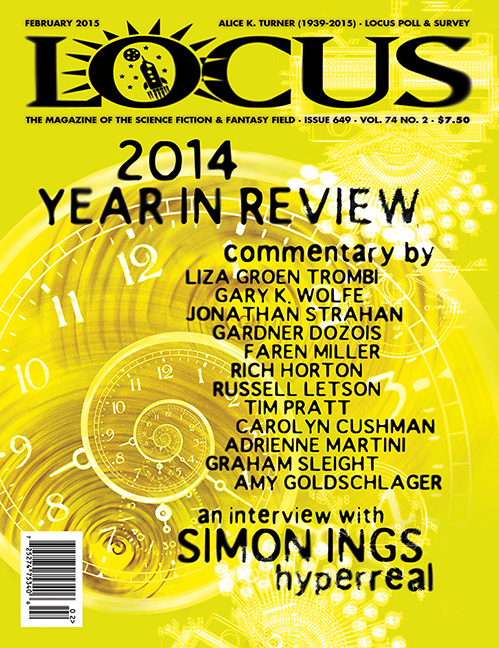
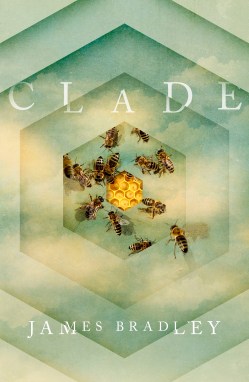 My new novel,
  My new novel,



 city of tongues