Skip to content

Archive for

A message from the other side
My apologies if it’s have been a bit quiet around here of late: I’ve spent the past few weeks desperately trying to get the new draft of my novel done and in the week since I actually did stagger over the finish line I’ve been under the weather with some kind of bug.

The upside of all this is that the new draft of my next novel, Black Friday, is finally, actually done. It’s still not perfect, and there are definitely some gaps and problems, but I think a lot of the heavy lifting is now done, which is really exciting. I want to try and talk a bit more about it and the process of writing it over the next few months, but for now let me just say that I think it’s got some great stuff in it, and while it’s more in the mode of The Resurrectionist than my earlier novels, it’s also sharper and more contemporary, which is exciting (though I also have to say I think I’ve written my last dark, disordered novel about morally unanchored characters for a while).

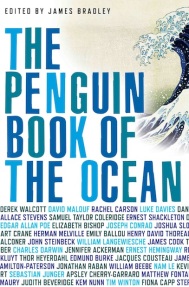
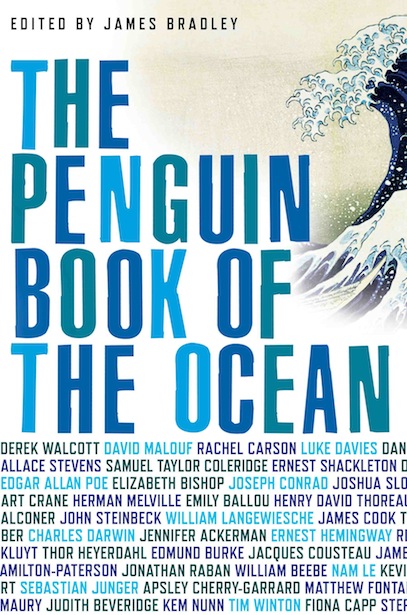
The downside (and let’s face it, there’s always something) is that I managed to miss posting about the publication of The Penguin Book of the Ocean, which hit shelves last Monday. I’m going to get a few things up about it over the next week or two, but in the meantime you can check prices at Booko, or read a bit more about the collection on the Books page. I’ve also uploaded a full list of the works included in case you’d like to take a look. It’s a book that’s been a big part of my life for the last twelve months and I’m very proud of it, so I really hope others find the same pleasure and excitement reading it I had putting it together.

I’m doing various bits of media over the next few weeks, which I’ll link to as they happen, but if you’re dying to hear me talk about the collection I’ll be on The Book Show on Radio National next Friday, November 5, at 10:00am. In the meantime, as Molly Meldrum used to say, do yourself a favour.

Break text
“A country founded on the air”

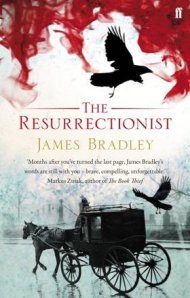
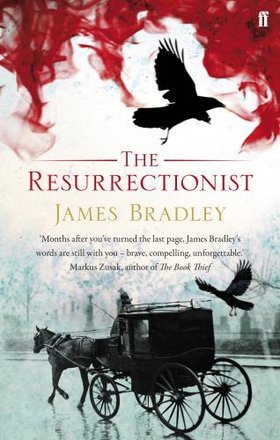
I’ve always been struck by the difference in the way Australian and British readers seem to respond to the last third of The Resurrectionist, in which the narrator is transported to New South Wales to begin again with a new name and a new identity. While Australian readers seem to grasp the significance of this Australian section, I’ve always got the sense that for many British readers it seems a slightly bizarre (and I suspect fairly unsatisfying) add-on to what they see as a novel about London and a very particular piece of British history. Which is why it’s so lovely to read this analysis of it in Jerome de Groot’s new book, The Historical Novel:

“Is it the case that historical novelists may only write about ‘their’ history in so far as they have some kind of ethnographic, sociological, nationalist, geographical claim to a past? Clearly not, as writers have amply shown. However, it does tend to be the case, primarily, presumably, because of access to source material, or language problems, or lack of confidence, that historical novelists keep within their own national historical boundaries. Yet does this mean that ‘history’ is somehow inert and neutral, mere source material? Again, clearly not. However, this tension and dynamic infects our reading and understanding of historical fiction. The Australian writer James Bradley appears to have broken free of his country’s past in The Resurrectionist, setting his novel in the grim London streets of the early 1820s and specifically amongst the grave robbers servicing the various professional anatomists of the time. However, the novel inverts this for the last section, as one of them is transported to Australia for his crimes, and the novel becomes a meditation upon origin, a consideration of the relationship between mother country and colony. The inhabitants of the colony are formerly prostitutes, convicts, criminals and murderers, yet ‘To laugh at them, or mock them, however, is no easy thing, for what lies in their pasts is there for all of us. And so we conspire not to enquire, nor to tell, as if by this silence we might forget what was and make a life without a past, as if this were a land without history, a country founded on the air’. This is impossible, however: ‘And yet the past is ever there’. The Resurrectionist elegantly creates a dialogue about national character and self-definition through its historical setting, reclaiming ‘British’ history for a postcolonial audience.”

break text

Magic squids and mid-life crises

Just a quick note to say I’ve got reviews in both The Australian and The Sydney Morning Herald this weekend. The first, in The Australian, is of Michael Cunningham’s rather underwhelming new novel, By Nightfall. As someone who admires a lot of Cunningham’s work (especially his last book, the gloriously weird Specimen Days) I wanted to like By Nightfall more than I did, but in the end it’s just too finely wrought and exquisitely felt to ever quite come to life.

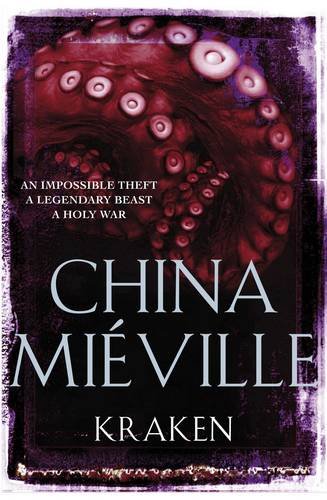
The second, in The Sydney Morning Herald, is of China Miéville’s Kraken. Some of you may have seen my review of the nominations for the 2010 Hugo Award for Best Novel a few weeks back, which talked a bit about Miéville’s last book, The City And The City, which went on to share the Hugo with Paolo Bacigalupi’s The Windup Girl. As I said in that review one of the things that’s fascinating about The City And The City is how thoroughly it expunges the glitter of Miéville’s earlier work, and in that sense Kraken reads like a return to more familiar territory for Miéville (if a writer as restlessly imaginative as Miéville could ever be said to have a “territory” in any meaningful sense). But it’s also a much more light-hearted and playful book than many of Miéville’s earlier books, a quality which is oddly disarming at first but which (at least to my mind) means the book never seems prepared to fully commit to its own existence in some deep sense.

Break text

You know how there are bad days and really bad days?

Well I reckon news HarperCollins in the UK is in the process of pulping many thousands of copies of Jonathan Franzen’s Freedom because they inadvertently printed an old version of the manuscript pretty definitely falls into the latter category. Ouch.

Break text