Skip to content

Archive for

Excitement Plus!

Break text

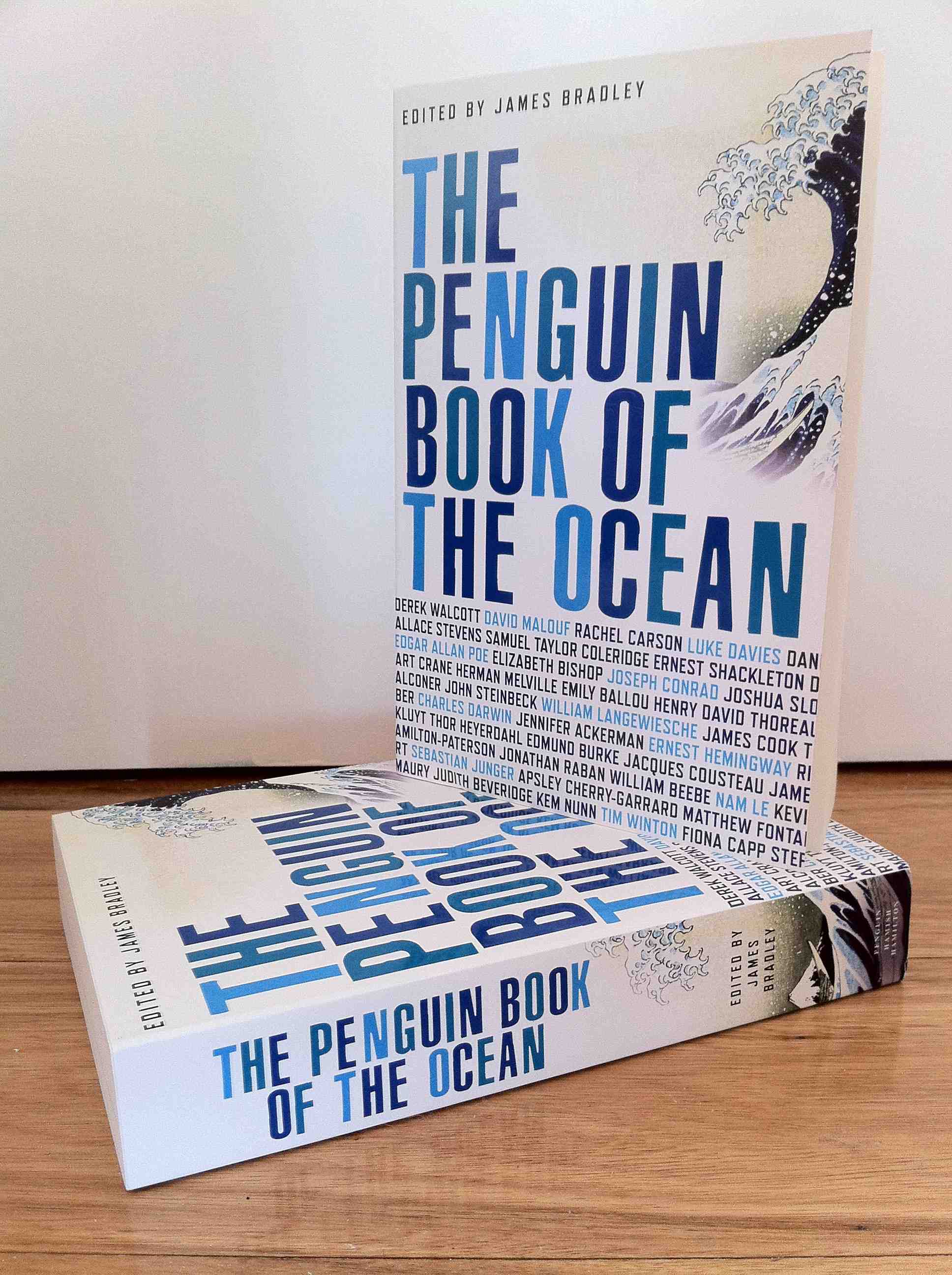
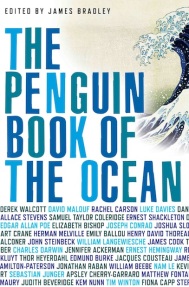
I’ve just received my first copies of The Penguin Book of the Ocean. Holding a book you’ve worked on for the first time is one of those feelings that never gets old, but it’s also one of those moments when you’re painfully aware just how many people it takes to bring a book into the world. So rather than just gloat, or stand stroking the incredibly gorgeous cover, I’d like to say a few thank yous.

First up, I’d like to thank everyone at Penguin, especially my publisher, Ben Ball, for trusting me enough to commission the thing in the first place, and my editor, Cate Blake, who had the unenviable task of transforming a small mountain of photocopies and typed notes into an actual book. I’d also like to thank everyone whose work is included for their generosity. Thank you also to the friends, colleagues and commenters on this site who contributed ideas and suggestions; your input was hugely helpful. And finally thank you to the designer, Tony Palmer, for creating what is flat-out one of the most beautiful covers I’ve ever seen. My crappy photo really doesn’t do it justice, so let me just say that if Tony doesn’t win a Design Award for it next year there’s no justice in this world.

The official release date is 25 October. I’m excited.

Break text

William Gibson goes culture jamming

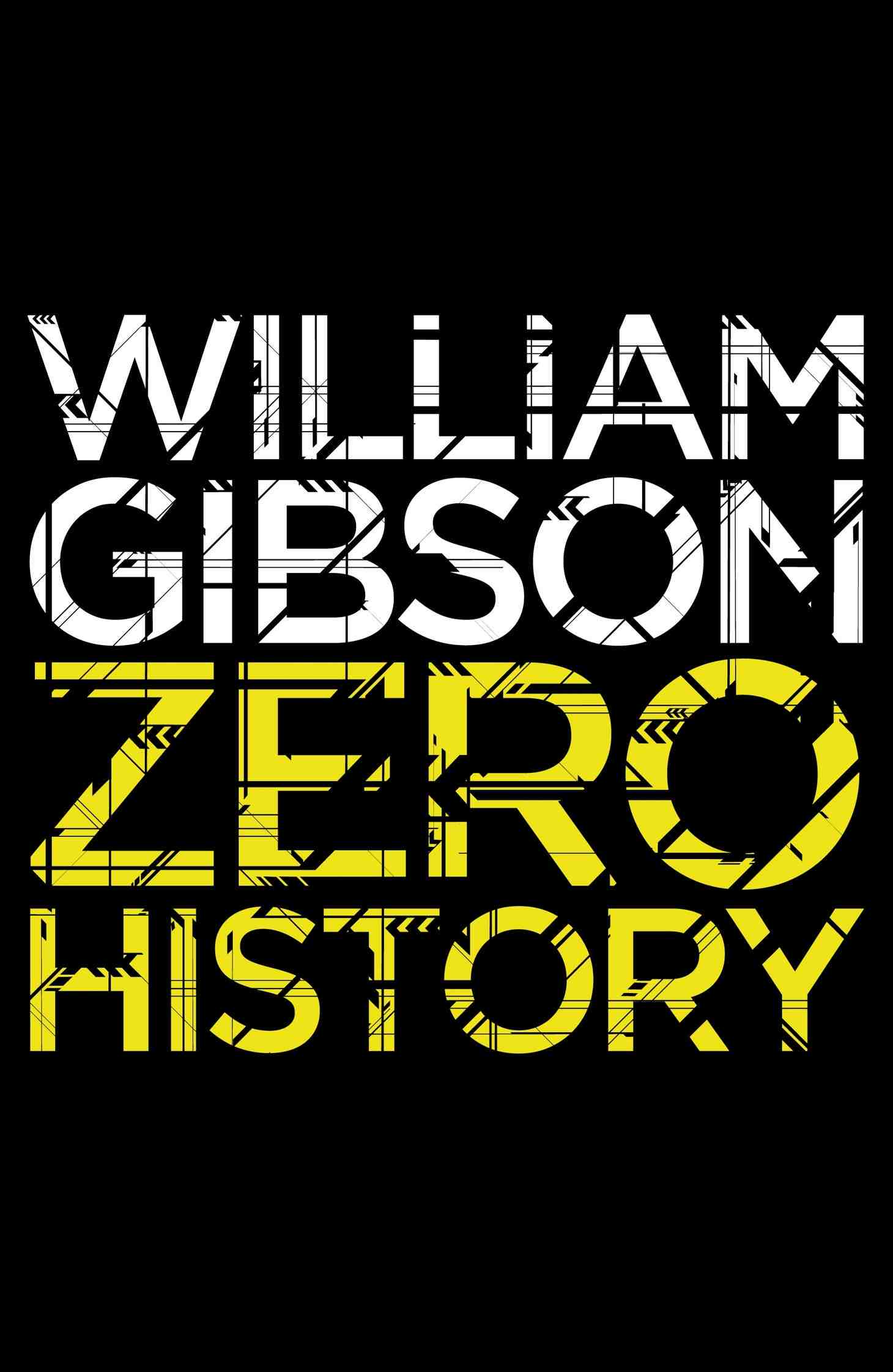
A couple of weeks back I posted a promotional video featuring William Gibson reading from his new novel, Zero History. At the time I mentioned I was reviewing it, so I couldn’t really say much about the book, but I’m now free of that restriction because the review is in this morning’s Weekend Australian.

Obviously you can read the review in full over at The Weekend Australian on my Writing page but in case it’s not clear on the face of it, I liked the book a lot. As I say in the review, I think both Zero History and its predecessor, Spook Country, can be at least partly understood as a sort of literary culture jamming, clever, essentially parodic attempts to expose the inner workings of what McKenzie Wark once called the Military-Entertainment Complex (if you haven’t seen it I urge you to check out Ken’s experiment in crowd-sourced cultural analysis, GAM3R 7H30Ry, published in conjunction with The Institute for the Future of the Book).

I think there’s probably a level at which this playfulness is now beginning to subvert the capacity of Gibson’s novels to do the things he wants them to do. Interestingly, the problem isn’t that the playfulness necessarily detracts from the more serious questions the novels explore, it’s that the business of the novels, and more particularly the relatively conventional narrative structures Gibson employs to play out their plots, hold the books back from really cracking open reality in the way I think they want to. I’ve said before that I think Gibson bears comparison to Delillo, but reading Zero History I did find myself wishing it would show some of Delillo’s preparedness to allow the textures and conceptual armature of the novels to become an end in themselves, or recover some of the more formally innovative qualities that make the final instalment in Gibson’s Bridge Trilogy, All Tomorrow’s Parties, so exciting.

But by the same token, it’s this quality that makes the book so satisfying at an emotional level. For all his fascination with textures and technology, Gibson is a surprisingly gentle and human writer in many ways, and that quality is on full display in Zero History. It’s not just that there’s real tenderness in his depiction of the recovering addict Milgrim’s rediscovery of a larger world, or that Gibson writes with considerable empathy and acuity about addiction, it’s that he grants the reader the not inconsiderable satisfaction of seeing the heroines of Pattern Recognition and Spook Country, Cayce and Hollis, find a measure of happiness.

As I say, you can read my review in full at The Weekend Australian. But because I realise I’m now one of the few people who have reviewed the entire trilogy, I’ve also uploaded my pieces on Pattern Recognition and Spook Country (originally published in The Sydney Morning Herald and The Australian Literary Review) to the site. And if that’s not enough Gibson for one morning, you might want to check out the promotional videos for Zero History and Spook Country. Or visit the man himself at William Gibson Books or on Twitter. Or, if you’d like to take a step sideways, check out Gibson’s introduction to photographer Greg Girard’s wonderful book, Phantom Shanghai.

Break text

On blogging

Just a quick note to say my article about blogging from the most recent issue of Australian Author is now online. It’s basically a personal piece, exploring the way working online has affected the way I think about both my writing and my life as a writer, but it covers some of the same ground Alison Croggon explores in her recent piece for The Drum, ‘The Return of the Amateur Critic’, which is also well worth reading.

As I say in the piece:

Blogging has made me feel as if I’m part of something. To call it a movement is probably going a bit far, but it wouldn’t be entirely incorrect. Because like Twitter, blogging is only one facet of a much more profound transformation of the way we think about reading and writing that is being driven by technology, a process of transformation that isn’t just allowing a host of exciting new writers to emerge, but is actually giving birth to a host of new literary forms, and changing many existing ones, driving a blurring of the boundaries between fiction and non-fiction, genre and the literary, even the printed word and more visual forms such as the graphic novel . . . Read more

Break text

Scary Monsters (and Super Creeps)

In an idle moment yesterday I found myself reading Paul Morley’s Financial Times piece about the rerelease of David Bowie’s Station to Station. I’m aware Morley is one of those figures who generate strong feelings in the music world (though let’s face it, when it comes to grudges music people make Al’Qaeda look like amateurs), but the piece reminded me not just of how thrilling a lot of the music Bowie made in the 1970s was, but just how important it was to me when I was growing up.


I think the first time I really became aware of Bowie was in 1980. I was 13, in my first year at high school, and not doing well. I was overweight, unpopular and genuinely struggling to fit in.

Like most Australian kids in the early 1980s, my experience of music was largely mediated by Countdown. I don’t think it’s easy for people who grew up after Countdown’s heyday to grasp its cultural reach, but it really was a phenomenon, not just because everybody – and I mean everybody – under the age of 30 watched it, but because its choices informed Australian popular culture in a really direct way. Monday mornings at school were all about whatever it was that was on Countdown last night, and the bands and music Countdown endorsed were pretty much guaranteed to dominate the charts and airplay.

It’s difficult, in many ways, to reconcile the images of old Countdown episodes and their clusters of screaming kids in ugg boots and duffle coats and footy scarves with Bowie’s cerebral pop, but it was Countdown that introduced me to Bowie, and more particularly, to ‘Ashes to Ashes’. I don’t remember exactly when I heard it the first time, but I do remember the feeling I was seeing something quite unlike anything I’d seen before. It wasn’t just the video, which still looks remarkable today (perhaps not surprising given that at the time it was made it was the most expensive film clip ever produced), it was the song itself, its enigmatic, haunting lyrics, the layered synths and beats, even the ticks and pops of the percussion layered over the top.

I knew Bowie’s name, of course, though I’m not sure I knew the music. He’d been on tour to Adelaide a couple of years before, and I remember watching the ads on the television and thinking he looked like some sort of vampire, but the music came as a revelation, and as soon as I could afford it I bought the album.

I wonder now what I made of Scary Monsters back then. Presumably details like ‘Fashion’s play on “fascism” went straight over my head. But irrespective of how much of what I was listening I understood in an intellectual sense (or indeed an emotional sense: listening to ‘Ashes to Ashes’ at 43 I wonder what my 13 year-old self made of its riffs on loss, middle-aged failure and addiction (“Time and again I tell myself/I’ll stay clean tonight/But the little green wheels are following me/Oh no, not again”)). But I understood enough to know this was music that mattered, and which spoke to me in a very personal way.
I suppose all of us feel the need to read our own lives through the prism of music, and to accord songs and artists more significance than they probably possess. But Bowie is one of those figures, like Dylan, who were genuinely significant, and even today exercise considerable influence (though I’d have to say I think it’s probably better to pretend he never recorded anything after about 1981). And, like Dylan, it wasn’t all about the music either, but about what he represented.

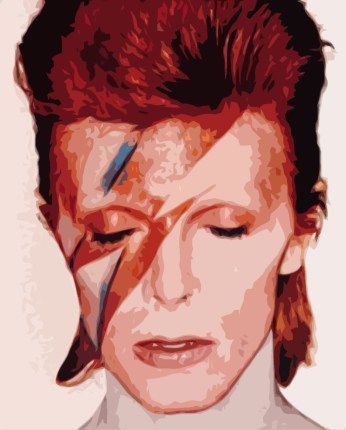
Much is made of Bowie’s metamorphoses, the creation and shedding of personas, from Ziggy to Aladdin Sane to The Thin White Duke, but in a way the point of him was never the individual personas, but the process of metamorphosis, the sense that identity could be polymorphous, and that the self might be something one could invent.

I’m not sure I would have put it in quite these terms in 1980, but it’s interesting that both the films Bowie has inspired – Todd Haynes’ Velvet Goldmine and John Cameron Mitchell’s Hedwig and the Angry Inch, are about precisely this process of self-creation, and grounded in a sense of the confusion and yearning of adolescence. They’re about the need to become something and someone else, and of the cost of that process.

I’m often struck listening to people a few years older than me by the importance they accord The Go-Betweens, a band I’ve always found considerably less interesting than others clearly do. But I’m quite clear that once again the music is less important than what the band represented, their conspicuous artiness in a place deeply mistrustful of difference and sophistication, the way they suggested a different way of being Australian, and of ways in which the Australian landscape and European traditions might speak to each other.

For me though it was always about Bowie. In suburban Adelaide in the 1980s I could listen to him over and over again, and imagine a different sort of world, a larger, more urgent one, and just as importantly, a different way of being me. He taught me that glamour matters, and chic, and that being different is something to celebrate.

Much later I met him in person. It was late 1983, and after the Serious Moonlight concert a friend of mine, who had made it his business to get the autograph of every rock star who came through Adelaide dragged me off to the hotel where Bowie was staying to stake him out. The place was surrounded by fans, but we snuck in, and somehow managed to catch him in a corner of the lobby alone. He smiled, and signed my friend’s book, and I shook his hand. Beyond that I’m not sure I remember much of the encounter, other than how slight he was, and the way the ordinariness of his London accent made him seem less glamorous than I had expected him to be. But that, I suppose, shouldn’t have surprised me: the man himself was never the point, what mattered was the music, and the image, and the things that represented. And they’re things I still feel connected to today.

Break text

Break text

Man Booker Prize shortlist announced

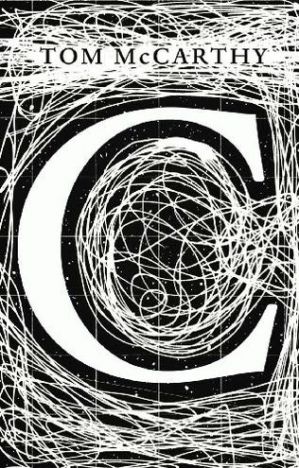
The shortlist for this years Man Booker Prize was announced this morning in London. Since the judges seem to have got the notable omissions out of the way when they assembled the longlist (Ian McEwan, Martin Amis) they’re not the big news this time round, though the two books many will note the absence of are Christos Tsiolkas’ The Slap and David Mitchell’s The Thousand Autumns of Jacob de Zoet. Not having read the whole list I’m not really in a position to guess at the likely winner, but I would say that Emma Donoghue’s fictional reworking of the Natasha Kampusch story, Room, has been attracting a lot of attention, and while Tom McCarthy’s C has probably slipped under many people’s radar, if it’s made it to the shortlist I think it’d have to be the dark horse candidate. It’s also pleasing (not least because I’m an admirer of the book) to see Peter Carey shortlisted for Parrot and Olivier in America.

The six books on the shortlist are:

Peter Carey, Parrot and Olivier in America
Emma Donoghue, Room
Damon Galgut, In a Strange Room
Howard Jacobson, The Finkler Question
Andrea Levy, The Long Song
Tom McCarthy, C

In other award-related news, Sunday saw the announcement of this year’s Hugo Award for Best Novel, which was split between China Mieville’s The City and the City and Paolo Bacigalupi’s The Windup Girl, a result which seems about right to me.

Break text

The Occupational Hazards of Book Reviewing

Oh, brother, I hear you . . .

Break text

Break text

Mmmmm, coverlicious . . .

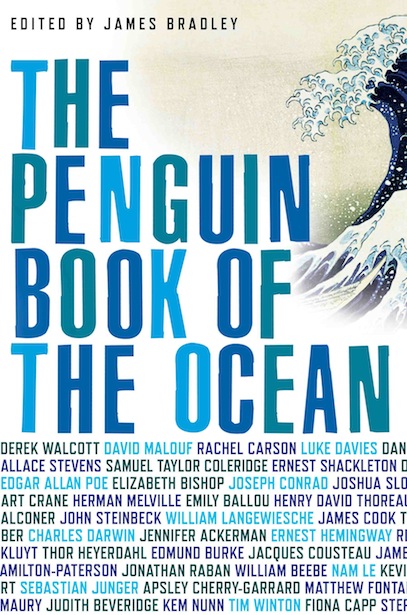
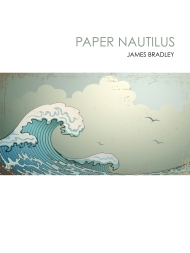
Somewhere in all the chaos of the past few weeks, I completely forgot to mention that I’d finally finished The Penguin Book of the Ocean.

I was going to post some long mournful piece about how sad finishing books makes me, but instead I think I’ll just let you feast your eyes on the cover . . .

Break text

Break text