Skip to content

Archive for

Vale Peter Porter

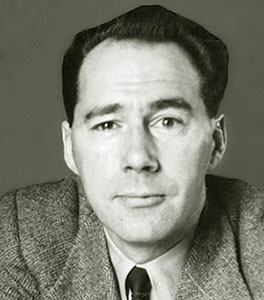
I descended from Sydney Airport’s Arrivals Lounge last night to the sad news that Peter Porter has died aged 81. I only met Porter once, and briefly, at an awards dinner, where I was mostly struck by how out of place he seemed in that context: despite being one of the guests of honour, there was a diffidence about him that made it seem he would have been happier away from the press of the crowd.

I came to Porter’s actual writing relatively late; other than odd poems in anthologies I’d read almost nothing of his until 2001, when I bought a copy of Max is Missing. As you get older those moments when you realise you’ve discovered a major writer become less frequent, but they’re no less thrilling when they arrive. Porter’s poetry is often praised for its depth of learning, and its fascination with the metaphysical, but I’ve always thought its power lay as much in the way that depth of learning and philosophical insight is worn so lightly: for a poet of such range and vision Porter’s poetry has an extraordinary lightness of touch, a conversational poise that belies its seriousness. In this it naturally recalls Auden, but Porter was, in many ways, a more contemporary poet than Auden, as likely to draw inspiration from the television as Tacitus.

I’m sure in the coming days and weeks there will be many, many appraisals of his life and work, but for now there are terrific obituaries in the Telegraph and The Independent, and another, much shorter one in The Guardian, as well as brief mentions in the local media. You might also want to take a look at Sarah Crown’s profile of Porter, which was published in The Guardian last year.

For my part I’d just like to express my admiration for Porter and his work, by recalling his reminder in ‘Last Words’, that “Death/Has only one true rhyme,” a line that in its haunting simplicity captures something of the way a single line of Porter’s poetry could open worlds of possibility.

Update: Stephen Romei has set up a tributes page at A Pair of Ragged Claws, which already includes a lengthy and heartfelt contribution by Jaya Savige. If you knew Porter, or admired his poetry you might want to head over and leave a note.

Break text


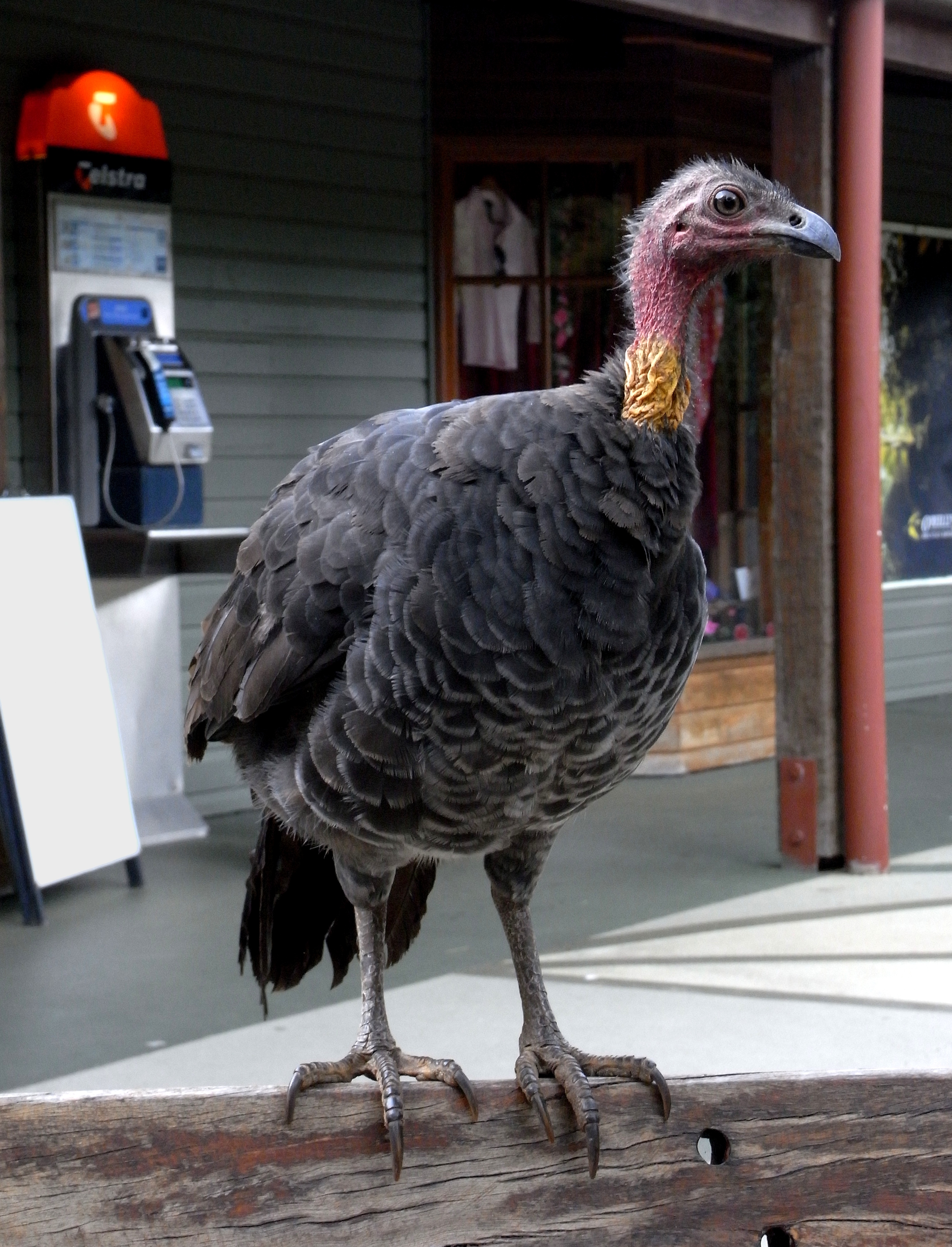
Is that a turkey in your pocket or are you just pleased to see me?

Brush Turkey phone home?

So, I’m driving through East Sydney at about 5:15 last night, on my way to pick my daughter up from childcare, when I look out the window and see a Brush Turkey trotting along the footpath. Not a bird that looked like a brush turkey, or some other random Megapode, but an honest-to-Betsy, full-grown, black and red Brush Turkey.

Now I have to confess that threw me a bit. Sydney’s blessed with an abundance of bird life, including a number of quite large birds (Black and Sulphur-Crested Cockatoos, Channel Billed Cuckoos, even the omnipresent Sacred Ibises) but a Brush Turkey? In the inner city? If nothing else Brush Turkeys are pretty much flightless, so it would have to cross the road on foot to get anywhere. And where on earth would it nest? (for those of you overseas, Brush Turkeys nest in huge (and I mean HUGE) mounds of leaves and sticks). Bizarre.

Pleasingly though, it reminded me of one of my favourite stories, which concerns the bird painter John Gould, and is to be found in Isabella Tree’s biography, The Bird Man. The story stems from Gould’s visit to Sydney in the late 1830s, a visit which saw Gould visit many of the local worthies, including one (who if memory serves was Alexander Macleay, one of the founders of the Australian Museum and the original owner of Elizabeth Bay House) who Gould was delighted to discover had a Brush Turkey nesting in his garden.

Gould spent some time observing the turkey and made some sketches of it, but the real treat comes later in a footnote by Tree, in which she notes (rather sardonically if I remember correctly) that despite its success on the day of Gould’s visit, the Brush Turkey later met with an unfortunate end, when it drowned attacking its own reflection in a bucket of water, a fate that suggests a degree of focus that’s not so much admirable as alarming.

Break text

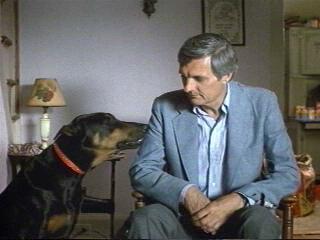
On the internet nobody knows you’re a dog

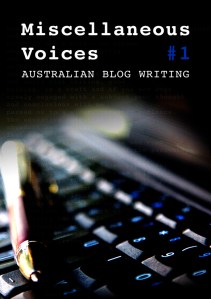
The other day I linked to Geordie Williamson’s piece in The Weekend Australian about Karen Andrews’ Miscellaneous Voices #1: Australian Blog Writing, a piece that’s excited considerable debate and a number of responses around the traps.

I have to confess to being a bit surprised by just how much the piece seems to have irritated people, not least because I thought it was genuinely trying to grapple with some issues about the way we think about blogging and its relationship to the literary. But as so often is the case, I also think the discussion that’s flowed out of the piece has been both interesting and illuminating (Lani at Cerebral Mum’s piece is particularly worth reading, as is the comments string from my original post).

That discussion has now spawned a terrific post by Jessica Au at Spike, which tries to approach some of the questions raised by Geordie’s piece, and developed in the arguments that followed, from slightly different directions. I think the piece is worth reading in its own right – if nothing else I think Jess’ reading of Geordie’s piece is probably closer to its actual intent than some others have been – but I’d also strongly recommend reading the comments string, which seems to me to be asking some interesting questions about the blogosphere’s often antagonistic relationship with the mainstream media (the links provided by Genevieve from Reeling and Writhing are definitely worth a look as well).

You might also want to check out Nigel Featherstone’s Canberra Times piece about blogging, ‘Bloggers unplugged’ which is now available over at Nigel’s Under the counter or a flutter in the dovecot, and features comments from Kerryn Goldsworthy, Charlotte Wood, Alec Patric, Sophie Cunningham and myself. I suspect there’s something to be made of the degree of consensus amongst the interviewees’ when it comes to questions about community, and the rather more divergent responses about why and how we approach it. Alec Patric at least has also posted the full text of his answers to Nigel’s questions on his blog; I may well do the same in the next few days, but given my schedule over the next couple of weeks I’m not going to make any wild promises.

And finally, I should mention Solid Gold Creativity’s thought bubble about why so many of the writers in Miscellaneous Voices have abandoned their online monikers for their real names. I’m not going to try and grapple with it here, but I suspect it’s a question with legs, especially in the light of the decision by several major news sites to disallow anonymous comments.

Break text

Ethical advice from a priest? Don’t make me laugh.

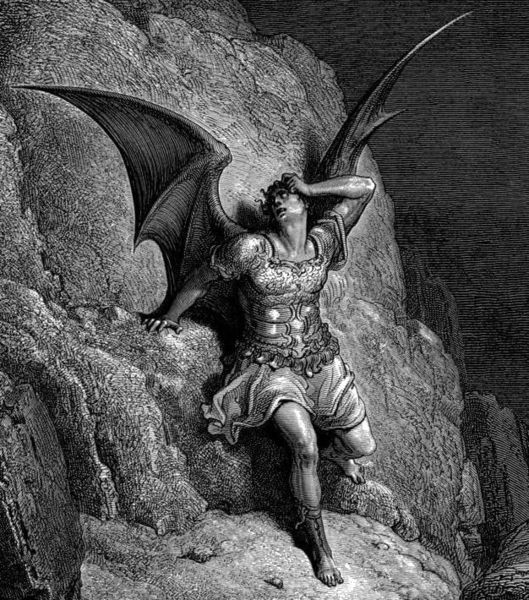
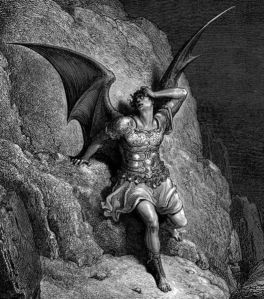
Satan realises Peter Jensen has seen through his evil scheme

Yesterday’s Sydney Morning Herald had a short piece about the decision of New South Wales Premier Kristina Keneally to allow the Archbishop of Sydney, Dr Peter Jensen, to “vet” the ethics course the NSW Government is considering introducing to NSW schools.

I’ve written before about my general irritation with the influence the Church continues to exercise over NSW politics, and just how unhealthy I think it is, but this is one of those stories that shits me in so many ways I hardly know where to begin.

Perhaps the best way though is with a quick bit of context. For reasons which are themselves difficult to understand, students in NSW public schools are expected to spend part of each week in religious education classes. My understanding is that these classes are offered on the basis of demand, or, to put it more simply, if there are a lot of Catholic kids at a school a priest comes in once a week, if there are a lot of Muslim kids a mullah is organised, etc etc.

That of course leaves open the question of what happens to kids whose religion isn’t catered for by a particular school (I’m guessing there aren’t a lot of Zoroastrians in the eastern suburbs, for instance) or kids whose parents are not religious.

The solution until very recently was that they did nothing. And by nothing I mean nothing. Not only is no alternative is offered, the system explicitly prohibits them from taking other classes or activities while the other kids are doing religion classes.

Not surprisingly, this has been a bone of contention for the parents of these children. And so in 2009 the NSW Minister for Education and Training Verity Firth agreed to trial an ethics course in ten schools, a move which was bitterly opposed by a number of churches and religious organisations.

So, where to begin? Perhaps with the fact that they’re still teaching religion in public schools in the first place, which, quite frankly, appalls me. Quite aside from the question of whether it’s an appropriate use of the already limited time available for actual education, it’s deeply inappropriate for public schools to be facilitating religious education. Schools are not the place for religious instruction: parents who want their kids to have a religious education should send them to a private school, or do it outside of school hours.  (I’d also be curious to know exactly what some of the more fundamental churches are teaching in these classes, not least since more than a few of them cleave to literal interpretations of the Bible).

Then there’s the notion that children whose parents are not religious, or who choose to opt out of the lessons, should be prohibited from doing something else in its place, which is just disgusting. Why should children of atheists be discriminated against? Because that’s really what this prohibition is about: the denial of education on the grounds of religion.

Of course discrimination is something the Church, and Peter Jensen in particular, knows more than a little about. He is, after all, the man who has spent most of the last decade trying to block the ordination of women and homosexuals, and who regards homosexuality as “not very different to something like alcoholism”.

Yet despite all this, Kristina Kenneally thinks he should be given input into the ethics course? Why? On what possible grounds? After all, I’m assuming atheists like myself aren’t about to be given the opportunity to have input into the classes run by Anglicans. And why Jensen and not the Catholics, or indeed representatives of the various Synagogues and Muslim organisations?

The answer, of course, is that religious organisations continue to exercise an unhealthy and largely unscrutinised degree of influence over our public life and institutions. A great deal is made of Tony Abbott’s Catholicism, but that debate mostly serves to obscure the fact there are any number of Labor politicians who allow religious figures considerable access, and the preparedness of figures such as John Howard and Peter Costello to play footsie with fundamentalist groups like the Exclusive Brethren and Catch the Fire.

But it also underlines exactly why we shouldn’t be allowing characters like Jensen to be involved in these processes. Because this is a man who is so intolerant of the beliefs of others that he’d deny children access to education because their parents’ beliefs differ from his own. Which says it all, really.

If you’d like to know more about the Ethics Course, which was designed by the philosopher Professor Phil Cam, from the  University of NSW, there are some FAQs and a couple of sample lessons available on the St James Centre website (in a slightly odd move the Centre has declined to post the full course for copyright reasons).

break text

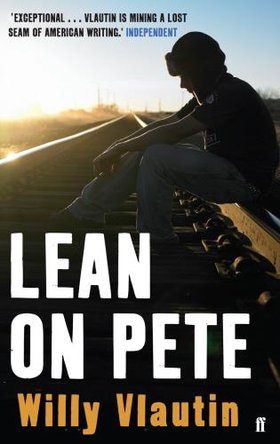
Willy Vlautin, Lean on Pete and the literary song

Some of you may remember me waxing lyrical about Willy Vlautin’s new novel, Lean on Pete, a few weeks back. At the time I was planning to write a rather longer post about it, and about Willy’s fiction more generally, but before that could happen I was asked to review it, which put paid to the post.

Anyway – the review was in this weekend’s Australian, and you can read it on their website, but if you want the potted version, the book’s an absolute gem: gentle, shocking, sad and hopeful all at once.

What’s particularly fascinating about the book to me is the fact that Vlautin’s skills as a songwriter so obviously underpin the success of the fiction. You often hear songwriters like Paul Kelly being celebrated as storytellers, but in fact the qualities that lend Kelly’s songs their particular magic are quite different to those that underpin fiction. Partly this is a question of scale: even relatively brief fictional forms such as the short story dwarf the lyrical component of most songs, allowing them a degree of complexity songs are denied. But it’s also about the relative simplicity of song lyrics: whereas fiction tends to use narrative as a thread to explore the interior lives of characters, and more particularly the tensions, contradictions and discontinuities, songs usually shy away from these qualities, preferring to communicate feeling in a more direct manner (if you’re interested, I talked a bit about more these questions last year, in my post about Don Walker’s memoir, Shots).

What’s interesting about Vlautin’s songs is that they are, in some deep sense, highly literary creations. Despite the relative simplicity of their lyrics, their effect is usually dependent upon the manner in which what is being said and what we understand are at odds with each other. In my review I mention ‘The Boyfriends’, from We Used To Think The Freeway Sounded Like A River, and its narrator’s anguished cry of ‘I ain’t like that’ upon realising the child of the woman he has picked up in a bar has been watching them having sex, but many of Vlautin’s songs rely upon this sort of irony. What makes songs like ‘The Boyfriends’ (or indeed songs such as ‘$87 And A Guilty Conscience That Gets Worse The Longer I Go’ or ‘I Fell Into Painting Houses In Phoenix, Arizona’) so powerful is the fragility of their narrators’ self belief, and Vlautin’s keen eye for the deceptions that sustain it, and more importantly, the moments at which that belief finally – and painfully – gives way.

Last time I looked, Vlautin was listed as one of the guests at this year’s Sydney Writers’ Festival, where, amongst other things, he’s being interviewed by my old pal, Richard Fidler, but you can hear him reading from Lean on Pete in the video before (and yes, I know I’ve posted it before). And if you’re interested in the music, you’ll find a live version of ‘The Boyfriends’ beneath it, together with a video for ‘Capsized’, one of my favourite songs from my favourite Richmond Fontaine album, Thirteen Cities. Enjoy.


Yet More Chaos

John Wyndham

In case you’re interested the ABC has posted audio of my Bookshow interview about John Wyndham’s “new” novel, Plan for Chaos.

As I say in the interview (and indeed in my post a while back) I don’t think the book’s much chop, but it’s not without interest, not least because of the way it prefigures many of the themes and ideas that animate Wyndham’s later work, and in particular The Day of the Triffids.

And I know I’ve mentioned it before, but if you have a moment do take the time to read David Ketterer’s fascinating introduction to the Liverpool University Press edition of the novel: I’m not sure I accept his larger thesis that Wyndham intended Plan for Chaos and The Day of the Triffids to be the first two parts in an uncompleted trilogy of novels, but the article offers a rich and fascinating portrait not just of the intensely private Wyndham’s personal life, but of the connections between that life and the larger world of his fiction, and is well worth reading in its own right.

The audio of the interview is available on the ABC website. You might also want to check out my article in The Australian about Wyndham from a few weeks back or my post about The Day of the Triffids and the differences between British and American visions of the apocalypse (which also appears in Miscellaneous Voices 1: Australian Blog Writing).

Break text

All This Useless Beauty

Ah, Elvis. And two of my all-time favourite songs.

Break text

Break text

Break text

Blogging and telling the truth

I’ve got a review of Sam Lipsyte’s scabrously funny new novel, The Ask, in this morning’s Australian, and while I don’t necessarily advocate reading the review I absolutely recommend reading the book, which is hugely entertaining.

This morning’s Australian also features a fascinating piece by Geordie Williamson about blogging, which attempts to resituate the deeply tedious debate about the value of online writing by asking some questions about the aesthetics of blogging, and how the form alters the way we write.

Before I go any further I should point out that Geordie (who’s a friend) says nice things in the piece about me and this blog, and in particular the posts I’ve got reproduced in Karen Andrews’ new anthology of Australian blog writing, Miscellaneous Voices (‘On Novels and Place’ and ‘The Day of the Triffids . . .’). But his kind words about me notwithstanding, I think the piece makes some interesting and valuable points, not the least of which is the manner in which many writers who operate in more controlled forms are made uneasy by the immediacy and gregariousness of the online environment, and the importance of recognising that for all its apparent openness, online writing still seeks to control the terms of the reader’s interaction with the writer by controlling what aspects of the writer’s life and experience they have access to.

In a way this is an unsurprising thing to say. Despite the illusion of openness, all writing is fundamentally an exercise in controlling the terms of the reader’s access to the writer’s inner life. This is probably clearest in forms like the personal essay, but it’s equally true of fictional forms, in which the raw material of feeling and experience is encoded and transfigured by the process of creation: even at their most honest writers are always withholding, shaping, controlling. A good reader understands that, just as they understand that a writer often reveals as much or more about themselves through what they don’t say, through their tics and blind spots, as they do in the things they choose to tell us. But it’s also something we sometimes seem to forget in our rush to celebrate the openness and collaborativeness of the online environment. Because whatever else it is, online writing is still about inventing versions of the self, whether as pleasing personas, disguises or simply creations to be deconstructed and analysed, and as such needs to be understood within a critical framework capable of making sense of the complexities of that process. All of which makes pieces like Geordie’s, which is attempting to make connections between the ways we talk about more ostensibly “literary” forms such as the essay, and blogging (and indeed books like Karen’s, which seeks to place blogging in a wider context) all the more valuable.

Break text

Will the real Philip Roth please stand up?

Many of you will have seen this piece by Judith Thurman in The New Yorker, which focuses on the revelation that an Italian journalist has been making headlines by attributing inflammatory remarks about President Obama to Philip Roth and John Grisham. The story came to light after Roth was interviewed by another Italian, Paolo Zanuttini:

“Zanuttini asked Roth why he was so “disappointed” with Barack Obama. She translated, aloud, remarks attributed to him in an article by a freelance journalist, Tommaso Debenedetti, that was published last November in Libero, a tabloid notably sympathetic to Silvio Berlusconi, the Prime Minister of Italy (who is embroiled in his own sex scandals with much younger women). ‘It appears that you find him nasty, vacillating, and mired in the mechanics of power,’ Zanuttini said. ‘But I have never said anything of the kind!’ Roth objected. ‘It is completely contrary to what I think. Obama, in my opinion, is fantastic.'”

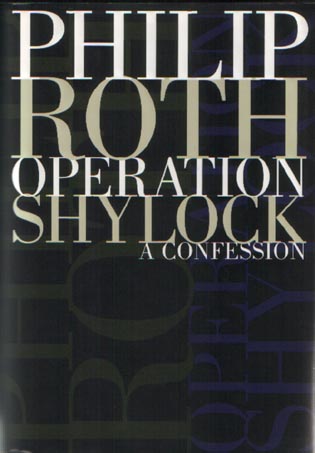
The delicious thing to my mind is that it should be Roth who finds himself in this situation. To her credit Thurman notices the way the story echoes the plot of Roth’s 1993 novel, Operation Shylock, in which a character called “Philip Roth” pursues a doppleganger who has been using his identity to spread anti-Zionist propaganda. But in a way invoking Operation Shylock is to miss the point. Because Operation Shylock’s game-playing isn’t an isolated phenomenon: in fact Roth has spent a sizeable portion of his career trading on the blurry line between fictional representations and the real. After all, Operation Shylock itself is only one of three novels featuring central characters called “Philip Roth”, who share many of their author’s characteristics (presumably the “Philip Roth” of Operation Shylock is the same Philip Roth as the one in Deception, but the one in The Plot Against America, which tales place in an alternative history, is a different one again), but it’s a trick which is also on view in the character of Nathan Zuckerman, whose early career so closely parallels Roth’s, and indeed in books such as The Ghost Writer, in which Zuckerman convinces himself a young woman is really Anne Frank, inventing a fictitious past for her in which she escaped death and immigrated to America, and even in any of the many, many other novels by Roth which explore questions of identity in one form or another (the black man “passing” as a Jew in The Human Stain, for instance, or even the infernal puppets in Sabbath’s Theatre). Even the most casual reading of Roth’s fiction can’t help but emphasise his fascination with these sorts of games of identification and misidentification, and with the fiction of unlikely antecedents such as Gogol and Kafka.

All of which makes it tempting to wonder whether this story is itself a Rothian fiction, and Thurman a player in some strange, meta-narrative of Roth’s devising. The only problem is that I’m reasonably confident those killjoys in the fact-checking department at The New Yorker will have made sure it isn’t.

But I can dream.

Break text