Skip to content

Archive for

Is it possible to write good fiction about climate change?
Is it possible to write good fiction about climate change? It might sound like a frivolous question, but it’s one that’s been on my mind for the last couple of days.

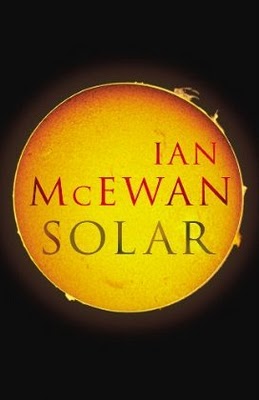
It’s been occasioned by two things. The first was a post by one of Overland’s new guest bloggers, Stephen Wright, arguing the failure of Australian novelists to engage with issues such as indigenous dispossession and climate change reflects a profound moral failure. The other was reading Ian McEwan’s startlingly awful new novel, Solar, a book that quite deliberately sets out to address the “elephant in the room” of climate change.

Being lectured about what’s wrong with contemporary fiction is one of the more dreary fringe benefits of being a novelist. And it’s made more irritating by the fact that those who do it are usually advocating replacing one sort of (perceived) narrowness with another.

But unlike most of these sorts of tirades, Wright has a serious point, and he’s doing rather more than simply whinging about the state of Australian fiction. As he says in his post:

“It’s not about trying to fit an indigenous eco-friendly character into your novel, or writing novels full of didactic speeches. It has very little to do, I’d venture to say, with being incredibly topical or writing about Copenhagen and climate science . . .

“It’s probably got more to do with the depth of our awareness of just where we are living: on stolen land, on an ecologically devastated continent. Meanwhile, an inexorable planetary disaster unfolds around us. An awareness of this situation could enable us to write, give texture and ambivalence to our work, enable us to track and expose and map the fault lines of where we live “.

For what it’s worth, I agree with Wright about the urgency of the problem. But simultaneously I think it’s easy to make sweeping statements about the need for new kinds of fiction to address the burning issues of the day, and rather more difficult to actually write such things. So perhaps there’s a different question we could ask here, which is what would a book which succesfully addressed the issue of climate change actually look like?

One thing it certainly wouldn’t look like is Solar. For those of you who haven’t read it or seen the first reviews, the book is McEwan’s long-awaited “climate change novel”, and – not to put too fine a point on it – it’s a stinker.

McEwan gets a lot of stick, mostly for being a slick, smug parody of the bourgeois novelist. I think most of that criticism is misplaced, and fails to engage with the skill and sophistication of a lot of his writing. And while he certainly turns out the occasional dud (Amsterdam is a shocker) books like Atonement and Enduring Love are the work of a writer of pretty remarkable gifts (I challenge anyone to forget the tongue scene towards the end of Atonement in a hurry).

All of which makes the sheer awfulness of Solar even more puzzling. It’s not so much that it’s didactic, or even that it feels like the work of a writer who feels so passionate about a subject that they have to do something (though it does), it’s that it’s so under-imagined and structurally uncertain, so embarrassingly unfunny, and – perhaps most damningly – that McEwan himself doesn’t feel convinced by what he’s doing.

The plot, such as it is, seems to be assembled out of offcuts from McEwan’s other books. There’s the requisite accidental and destabilising death. There’s the requisite unloading of scientific information and musings on the interplay between the subjective interior world of the individual and the objective world of scientific fact. There’s even the requisite scene of hideous physical dismemberment/disfigurement (the already famous frozen penis scene). But instead of feeling fresh, or fascinating, they feel like attempts to prop up the otherwise faltering business of the novel. Even the scenes describing the landscape I saw Andrew Reimer waxing lyrical about in The Sydney Morning Herald sound to me like McEwan on auto-pilot. Indeed, in a very real sense, the book reads like McEwan is doing a parody of himself: the only problem is that it’s a pretty feeble parody.

Part of the problem is that McEwan has clearly decided to save himself from writing an awful “issue” novel by flicking the switch to vaudeville, a decision which clearly made sense at the time, but given that McEwan’s real strength is exquisitely modulated depictions of violence and transgression (and more particularly the intrusion of that violence into the ostensibly “safe” world of middle class life) seems a little misguided in retrospect.

But I suspect Solar’s failure is also reflective of some of the conventional realist novel’s more general limitations, especially when confronted by an issue as large, and as systemic as climate change.

The problem is that the things social realist novels are good at – characters, narrative, interiority, social context – are hopelessly inadequate when it comes to something like climate change. Obviously I’m talking to some extent about the limitations of my own imagination here, but it’s very difficult to imagine how one could encompass such a subject in a conventional novel without projecting some sort of coherence or shape onto it which does violence to the scale and difficulty of the problem.

In a way the problem is analogous to that of fictional representations of the Holocaust. The sheer enormity of what actually happened means fictional recreations of it tend to be cheapening at best, downright offensive at worse. As Jonathan Littell’s The Kindly Ones demonstrates it’s not impossible to do (though interestingly The Kindly Ones’ success depends at least in part on its success at mimicking the authority of non-fiction, and synthesising vast amounts of factual detail into its fabric). It’s that the desire of the novel to make sense of events, and find shape in lives is fundamentally at odds with the brutal and senseless nature of the reality, so much so that attempting to impose those shapes on the events often ends up looking like the worst sort of kitsch.

Solar, which has a relatively simple narrative and a small cast is one example of this problem at work, but I suspect it’s also a problem for larger, multi-strand narratives that attempt to grapple with the problem. Imagine, for example, the Underworld or (to use a filmic example) the Syriana of climate change. To work either dramatically or thematically they require the imposition of order upon what is an open-ended and diffuse problem. As James Wood correctly observes of Underworld, it “insist[s] on connections (the atom bomb is somehow connected to JFK’s assassination and to paranoia) as Dickens’s plots insist on connections (wills, lost relatives, distant benefactors)”. The problem is there are no connections in climate change, unless of course you believe there really is a vast conspiracy linking oil companies to governmental inaction (which there is, of course, but it’s the sort of messy, mutating, ad hoc conspiracy that crusading journalists can’t expose). Inventing a conspiracy, even a vanishing one as in Syriana, trivialises the problem by making it a function of individual action, rather than the system itself.

So, to return to my question before, what might a good novel about climate change look like? One answer might be science fiction. But while the capacity of SF to step outside the strictures of reality makes it better at dealing with these sorts of big ideas than conventional literary fiction, it’s hobbled by many of the same problems when it comes to climate change.

Take Stephen Baxter’s recent novel, Flood, as an example. In Flood Baxter graphically depicts the consequences of rapidly rising sea levels. At least initially this process is driven by climate change, but Baxter then adds a wrinkle of his own, suggesting that the release of the melting ice’s pressure on the earth’s crust allows vast sub-surface oceans to begin to pour forth, dramatically accelerating the process, so that within the space of a few decades the entire world is submerged.

When Flood works, it really works. The scenes in which the Thames Barrier gives way and London floods are truly terrifying, and there are any number of amazing details. But because it is, like most SF, essentially realist, it’s still compelled to at least gesture towards character and story (there’s actually an oddly clinical detachment to the whole book, so in many ways it is only a gesture). And, as a result, the thing it most resembles is a fictional version of a disaster movie, and more particularly films like The Day After Tomorrow and 2012 (with which it shares a number of important devices).

So if not SF, then what? Some sense of an answer might be found in the work of William Vollman, and more particularly books like Imperial or Seven Dreams. Imperial is actually non-fiction, but all Vollman’s books sit on the borderland between fact and fiction, and seem to be less interested in representing the world than actually recreating it. They push at the boundaries of both fictional and non-fictional forms, and indeed at the limits of what readers are prepared to read, but they also suggest a point beyond the neatness and coherence of conventional fiction. And, with them in hand, it’s at least possible to imagine a book that might be able to draw together the many strands of the climate change catastrophe without trying to impose an obviously artificial order upon them.

The question to my mind though is less whether a writer like Vollman, or a book like Imperial might be able to assimilate and represent the subject, but in what sense it would be fiction if it did, especially if it also incorporated large slabs of factual detail or reportage. In this I am, of course, articulating the same sort of anxiety about fiction David Shields explores in Reality Hunger (a book I’ll post about soon) but it’s a real question: at what point have we so exploded the idea of the novel, and of fiction, that what we’re reading isn’t really a novel anymore? And if writing about climate change demands that sort of dismantlement, what does that tell us about the “failure” of contemporary writers to deal with the issue?

Break text

I’ve got a million other things to keep me up at night . . .

Who says perfect pop is wrong?

Break text

Break text

The Future Eater: John Wyndham and his Plan for Chaos

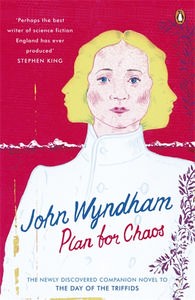
I’ve got a long piece about Penguin’s “new” John Wyndham novel, Plan for Chaos, in this morning’s Weekend Australian. As I say in the review, it’s a pretty dreadful book, but if you’re an admirer of Wyndham (as I am) it’s not entirely without interest, if only for the way it offers a link between his career as a pulp novelist before World War II and the amazing run of novels that begins with The Day of the Triffids and ends with The Midwich Cuckoos.

If you’re in the mood for a Wyndhamesque Saturday you might also want to check out my post from a while back about The Day of the Triffids, and why British visions of the end of the world differ so much from American fantasies about the apocalypse. Or you could take a look at David Ketterer’s excellent introduction to the Liverpool University Press edition of Plan for Chaos. And if you’d like to take a look at the rather fab Brian Cronin covers Penguin have commissioned for the reissued set of Wyndhams they’re available on Penguin’s blog, and make an interesting contrast to the covers I remember from the 1980s (Penguin’s UK site also features a rather fun historical index of all Penguin’s SF covers for those who want to take these things to extremes).

Break text

Welcome to the real world

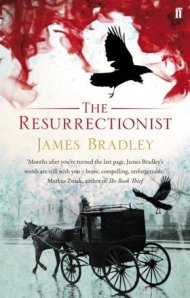
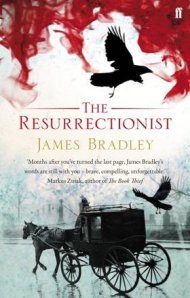
As some of you may be aware, UK book site, Bookhugger, has been running an occasional series of online Author Panels, in which selected authors are asked to discuss an issue pertinent to their work. Past panels have included Aly Monroe, Helen Walsh and Armand Cabasson on Writing from Life and Ian Thomson, Daniel Kalder and John Geiger on Reportage. I’m very pleased (and a bit flattered) to have been asked to contribute to their newest instalment, Welcome to the real world, which focusses on the use of real life characters and settings in fiction (something I did quite a bit of in The Resurrectionist). It’s a fascinating question, both because of what it tells us about the changing nature of fiction and fictionality, and because of the creative questions it throws up. As I say in the panel:

“All of that said, as a writer I’ve always been a bit wary of over-emphasising the role of research. At some deep level it seems to me that as a writer your responsibility is to the story, and to the way you’re telling it, and everything else is subservient to that. Indeed often too much research can be a trap, because you begin to feel constrained by it, as if you have a responsibility to what really happened.”

You can read the full piece on the Bookhugger site.

Break text

Miles Franklin longlist announced

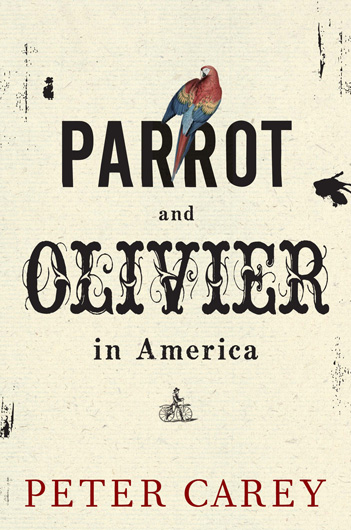
Just a quick note to let you know the longlist for this year’s Miles Franklin Award has been announced. I’ll leave discussion of it to others, but it includes both big names like Thomas Keneally and Peter Temple and debut books from writers such as Deborah Forster (for The Book of Emmett) and Patrick Allington (Figurehead). And, as always, there are surprising omissions: just off my head I would have thought Steven Amsterdam’s Things We Didn’t See Coming and Kalinda Ashton’s The Danger Game were shoo-ins for the longlist at least, and while I’ve not read it I’m interested (especially given the reviews it’s received) Cate Kennedy’s The World Beneath didn’t make the cut. Interesting also that the definition of “portraying Australian life in any of its phases”, which has so bedevilled the Award in the past, is now elastic enough to include Peter Carey’s “American” novel, Parrot and Olivier in America, a book that, while one might make an argument seeks to explore the differing origins of the Australian and American minds, is really only Australian in the sense that one of the narrators was, for a time, a convict.

The full longlist is:

Patrick Allington, Figurehead
Peter Carey, Parrot and Olivier in America
Brian Castro, The Bath Fugues
Jon Doust, Boy on a Wire
Deborah Forster, The Book of Emmett
David Foster, Sons of the Rumour
Glenda Guest, Siddon Rock
Sonya Hartnett, Butterfly
Thomas Keneally, The People’s Train
Alex Miller, Lovesong
Craig Silvey, Jasper Jones
Peter Temple, Truth

Congratulations to all the longlisted writers.

Break text

Book Review Bingo

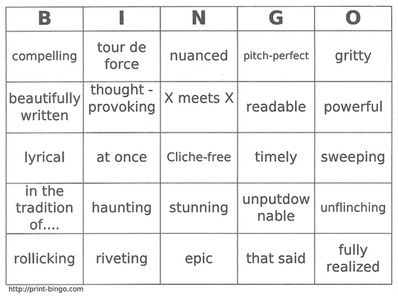
This time last year The Book Examiner’s Michelle Kerns compiled a list of the 20 most annoying book reviewer cliches. Now, in the interests of having a bit of fun with them, she’s gone one step further, and compiled cards allowing readers to play Book Review Cliche Bingo.

It’s a funny piece but Kerns has a serious point. As someone who writes a lot of reviews I’m all too familiar with the unhealthy allure of Reviewerspeak. So much of what you need to do in a review is formulaic (situate the book, give a sense of the plot, pick out some of the main threads, communicate something of what does and doesn’t work) that’s it’s easy to fall back on formulaic language and devices. It’s a problem that’s accentuated by the increasingly abbreviated length of reviews (though to be fair to my editors at The Australian and The Sydney Morning Herald the slide in review length has been halted and to some extent reversed over the last year or two) and by the fact that the brutal truth is that when you review for a living you do occasionally come across books you don’t have much to say about, or have days when the juices really aren’t flowing.

But Reviewerspeak is also part of a larger shift in our critical culture. Part of it, as I’ve said before, is to do with a broader decline in educational standards. The shared literary culture that once underpinned our judgements about books has largely vanished, and that makes it difficult to carry on sophisticated conversations about books. In the absence of that culture people – reviewers and readers – tend to fall back on the lingua franca of book talk, which is, increasingly, that of marketing.

But by the same token it’s important not to confuse the health of our critical culture with the health of the newspaper review pages (just for the record I think this is one of the major problems in Gideon Haigh’s recent assault on Australian reviewers). I don’t actually accept the argument that the dead hand of Reviewerspeak lies heaviest on the pages of our broadsheets (evidence for the defence reviewers such as Delia Falconer, James Ley, Geordie Williamson, Richard King and Kerryn Goldsworthy to name just a few) but even if it does, then the boom in online forums for the discussion of books offers an antidote, by admitting new and often interesting voices into the conversation.

All the same, I’d see Kerns’ list, and the thinking behind it as reflective of a process any decent reviewer should be engaged in at all times. I’m not particularly guilty of most of the sins she enumerates (“unputdownable”? I mean, really) but I certainly have my tics and tendencies, and many years of writing to deadline and length has taught me bad habits as well as good. I’ve developed various strategies to help me keep the worst of those in check. Some of these are pretty simple: every so often I’ll ban myself from using a particular word, or a particular formulation for a few weeks or months, for instance. Others are more complex: I make a very real effort to avoid putting myself in the way of banality by making sure I avoid reviewing books I feel unable to be forthright about (my test of a conflict of interest is actually quite simple: if I hated it would I feel able to say so).

But in the end it’s really about having pride in your craft and skill as a writer. Whether I’m a good reviewer or a bad one (and I change my mind on that front daily) one thing I do know is that writing isn’t just a representation of thought, it’s a way of thinking, and as such the search for original language is indistinguishable from the search for original – and by extension interesting – things to say.

Break text

Writing The Past

Just a quick note to say I’m speaking at the 2010 History Festival on Saturday (13 March). This year’s Festival, entitled Writing The Past,which is being held at the NSW Writers’ Centre, is focussed on the complexities of representing the past, and features writers and historians such as Delia Falconer, Gabrielle Carey, Robert Gray and Mark McKenna.

Full details of the program are available on the NSW Writers’ Centre website, or you can download the program. I’m on at 3:15pm, along with the impossibly charming Tom Gilling, my old pal Ashley Hay and Catherine Jinks. Given all three of them know more than a bit about the questions thrown up by the Festival’s title it should be an interesting event.

Hopefully I’ll see you there.

Break text

A couple of reviews and some links worth a few minutes of your valuable time

Apologies again for my somewhat sporadic posting: I’ve been in a bit of a work-hole for the last little bit. I think – I hope – I can see the light at the end of the tunnel, but in the meantime I thought I’d link to a couple of reviews I’ve had in the papers recently (there have actually been a number more but exactly what gets posted online seems to be a bit arbitrary these days).

The first is my review of Tom Rachman’s The Imperfectionists, which was published in The Australian a few weeks back. I may have some more things to say about Rachman’s book in the not-too-distant future, but for now the review will have to do.

The second is also from The Australian, and is of John Ajvide Lindqvist’s follow-up to the truly unsettling Let The Right One In, Handling the Undead, a book which despite its subject matter (zombies in Sweden) and Lindqvist’s bizarrely unmodulated prose, is both oddly beautiful and more than a little upsetting.

(If you feel like hunting out the print versions I’ve also had pieces on Martin Amis’ The Pregnant Widow, Richard Powers’ entirely wonderful “enhancement” Generosity (one of the most exciting books I’ve read in ages), and Jim Crace’s All That Follows).

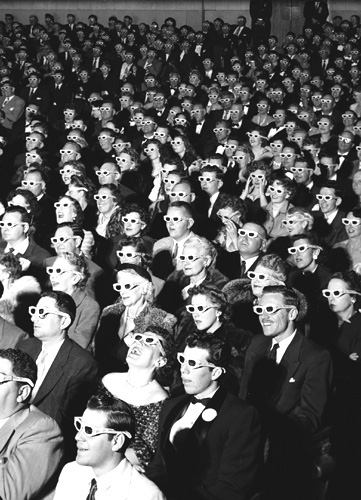
I’d also like to suggest three (or four, to be precise) things from elsewhere which are very definitely worth reading (assuming you haven’t already). The first is Anthony Lane’s breezy and entirely entertaining tour of the history of 3D (in the context of which I’d refer you to my post on Avatar a few weeks back). If you’re not completely over Avatar by now Daniel Mendelsohn’s piece on the film is also worth a look (though I have to confess I think anything by Mendelsohn is worth reading).

Also worth a look is Jason Epstein’s piece in The New York Review of Books on the future of publishing: I suspect I feel less wedded to the past than he does but it’s a pretty good summary of the situation at present.

And last (but very definitely not least) Jonah Lehrer’s fascinating piece from The New York Times Magazine about the controversial but tantalising studies suggesting depression may confer evolutionary advantage, a piece which is distinguished not just by being the only place I’ve ever seen the word “heterogeneity” used in a newspaper article, but by meshing suggestively with the desire of a wide range of writers (including myself) to try and understand depression in terms beyond the simplistically pathological.

Enjoy – I’ll be back online later this week.

Break text

Some quick thoughts on editing

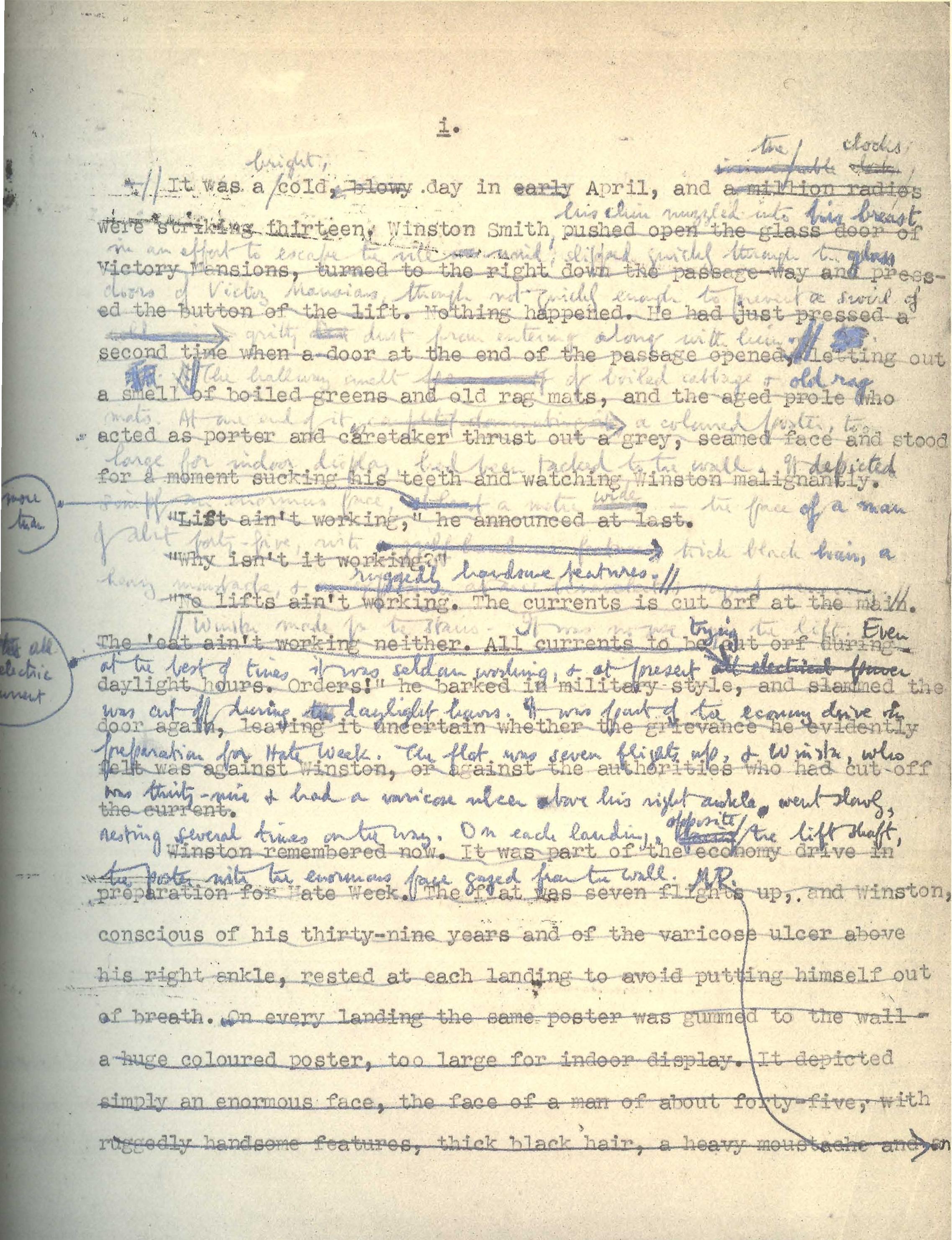
A page of the manuscript of George Orwell's 1984 with corrections

Just a quick reminder that the March issue of the Australian Literary Review is available for free in today’s Australian. I’ve only had time to scan the issue but it looks good, with pieces by Luke Davies on the novel in the Age of Terror (a term which must surely be as close to its use-by date as it sounds) and Hazel Rowley on French intellectuals under Nazi Occupation (neither of which, annoyingly, are on line).

Further in though you’ll find a piece by James Ley which uses the new, deLished edition of Carver’s Beginners to ground a broader discussion of the role of the editor, and which features some fabulously unguarded comments by yours truly (“anyone who tells you books are as carefully or rigorously edited as they were a generation ago is either lying or deluding themselves”).

I’ll let you read the piece in full, because there are a number of smart people saying smart things in it, but looking at it this morning I was struck by the fact that my own comments don’t go far enough. As you’ll see if you read the piece, I suggest it’s worth remembering that editing is only one part of a larger equation for publishers, and that as a result the question of how much or how little a book gets is really a commercial decision. As a publisher acquaintance (who shall remain nameless) once pointed out to me, editing is often a process of diminishing returns: there comes a point with every book when spending 20% more won’t make the book 20% better.

As I say in the piece, I think this is a useful way of thinking about the question, both because it reframes the question in commercial terms rather than as an unwinnable argument about artistic standards and because it reminds us that questions about editorial standards are intimately connected to the changing landscape of contemporary publishing (kudos to Jane Palfreyman for pushing back against the tedious narrative of decline that usually comes riding shotgun with discussions of editorial practice).

I think what’s really interesting though is what our anxiety about editorial standards tells us about our attitudes to writing, and more particularly how difficult we find it break free of Romantic notions of the artist as solitary genius when we’re talking about authors and authorship. Because in the end that’s what this whole conversation is really about: our unease with accepting that literary fiction and non-fiction are not, in many ways, all that different to more collaborative forms such as television or film.

I’m not saying they’re exactly the same. Books are always going to be more defiantly expressions of individual vision than film or television, but they’re not fundamentally different, more different points on a spectrum. But while we have no problem with the idea that script editors and directors work in a relatively utilitarian manner with scriptwriters we’re made very uneasy by overly intrusive editing of books. But in the end, what’s the difference between David Chase rewriting an episode of The Sopranos from the ground up and Gordon Lish rewriting Carver?

I suppose one answer might be that those of us who write books do so at least partly because it allows us more control over our work. I know one of the reasons I gave up writing film was that I wasn’t temperamentally suited to the collaborative process (though if I’m being honest I’d have to say the fact I was crap at it also played a part). But again I think it’s really a question of how much collaboration we’re comfortable with, not whether we’re comfortable with collaboration at all: even the most arrogant and single-minded author can’t help but take on board at least some of what an editor says.

But I suspect that at a fundamental level this anxiety about editing and editing standards is as much about a refusal to give away very old and cherished ideas about the primacy of the artistic imagination as anything. That and a failure to understand that publishing, like television or film, is essentially an industry, and that the process of transforming a manuscript into a book is as much an industrial process as the process of transforming a script into half an hour of television.

Break text