Laws of the thriller

Sean O'Brien (image via Wikipedia)
This week’s TLS has a terrific piece about the thriller and crime fiction by Sean O’Brien, author of last year’s T.S. Eliot and Forward Prize-winning The Drowned Book
Break text


Feb 14
Sean O'Brien (image via Wikipedia)
This week’s TLS has a terrific piece about the thriller and crime fiction by Sean O’Brien, author of last year’s T.S. Eliot and Forward Prize-winning The Drowned Book
Break text
Feb 11

For anyone who’s interested, William Gibson has started posting excerpts from his new novel on his blog at www.williamgibsonbooks.com. The first was posted on New Year’s Day, and there have been several more substantial pieces over the past couple of weeks.
The excerpts suggest the new book picks up somewhere after Gibson’s last novel, Spook Country

Gibson experimented with the same practice during the writing of Spook Country, and though a lot of his fans were excited by it, I felt it was better to stay away and wait for the real thing. Perhaps I’m just too busy, perhaps it’s a more deepseated, novelist’s prejudice against the idea of wiki-ing a book (though I’d be interested to know how many of the responses the excerpts receive Gibson will take on board).
break text
For those wanting more Gibson paraphernalia, here is the very stylish video Gibson’s publishers released to coincide with the publication of Spook Country in 2007.
break text
break text
And here is a short review of Pattern Recognition I wrote for The Sydney Morning Herald in 2003. It’s still available online, but for some reason the quotes in the version on the SMH website have dropped out, rather changing the sense of the piece. That being the case I’ve taken the liberty of reproducing my original review below with the missing quotes reinstated (I hope the SMH won’t mind).
Break text
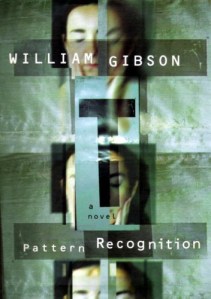 Pattern Recognition
By William Gibson
Somewhere in the middle of Pattern Recognition, William Gibson’s seventh novel, the central character, Cayce Pollard, describes her memories of that day in New York, of the impact of the second plane. The experience, related in a fragmented, dream-like language, seems to collapse time, collapse meaning. It is “like watching one of her own dreams on television. Some vast and deeply personal insult to any ordinary notion of interiority. An experience outside of culture.”
What Gibson’s language strains to reveal in that event, or more properly, in our experience of it, is the sense of vertigo it induced, of the collapsing of boundaries: political, geographical, personal, ethical, its singularity lying not in its death toll, or in its nature but in our experience of it, the way it unmade the certainties that not just our present but our future were grounded in.
Whether it was begun before or after September 11, this sense of our experience of reality exceeding itself is wound deeply into Pattern Recognition. Not only is it the first of Gibson’s novels to take place in the immediate present, it also seems to represent the closure of some kind of circle in his writing, not least in the allusive play between the names of its protagonist, Cayce and the anti-hero of his groundbreaking first novel, Neuromancer, Case.
Of course to call Gibson a writer of science fiction has always been to misunderstand him. Gibson’s antecedents lie more in Burroughs and Pynchon than Arthur C. Clarke, their strange, essentially poetic assemblages of image and echo designed to explore the inner textures of a culture which exists increasingly outside of time and space. The effect is probably nearest to that of an intellectually rigorous brand of video-art: suggestive, unsettling, and unresolved, its meanings arising out of the interplay between the elements rather than residing within them.
And so, despite its contemporary setting Pattern Recognition is classic Gibson. Moving between London, Tokyo and Moscow, it turns upon a series of film fragments which have been appearing anonymously upon the internet. These fragments, in an echo of the Joseph Cornell-like assemblages of Count Zero’s artificial intelligence, are possessed of a mute, almost inexplicable power, a power attested to by the global underground following they have attracted. Carefully denuded of any identifiable signs of context or origin, the fragments may or may not be part of some larger work, yet regardless their power stems from their sense of compression, the way they seem to signify the possibility of a meaning which they simultaneously deny.
Cayce, a follower of the footage herself, is commissioned by her sometime boss, the wonderfully-named Belgian market-guru, Hubertus Bigend (who “seems to have no sense at all that his name might be ridiculous to anyone, ever”) to establish the identity of the footage’s creator. Bigend’s motives for doing so are ambiguous to say the least, but Cayce accepts nonetheless, a decision which drops her deep into a world of obsessed footage-heads, industrial espionage, Russian mafia and cryptography, only to fetch up, finally, in the painful truth of the footage’s origins.
Woven through this are a collection of images which play off each other with ever-increasing subtlety and power. The pictures of the missing pinned to windows and walls and doors in New York. An amateur archaeological dig near Stalingrad, where guns and badges, uniforms and eventually an entire Stuka, its pilot still in its cockpit are being drawn from the suffocating, erasing mud by Russian skinheads. Diagrams of the arming mechanism of antiquated American explosives are uncovered coded deep inside the footage. Mechanical calculators designed in Buchenwald are traded to collectors from car boots, resembling nothing so much as grenades. And everywhere, out of the fragments of the past, the present and the future, meaning suggests itself, elusive, partial yet possessed of a strange and ultimately deeply moving poetry.
Like Gibson’s futuristic novels, which refract the present hauntingly through the lens of their possible futures, there is something at once utterly immediate and strangely timeless about Pattern Recognition. It captures the fluidity of meaning and the sense of shifting certainties which infect our historical moment, strung between the unrecoverable past and the nascent future. ‘“The future is there . . . looking back at us,” as Cayce herself says. “Trying to make sense of the fiction we have become. And from where they are, the past behind us will look nothing at all like the past we imagine behind us now.”
First published in The Sydney Morning Herald, 15 March 2003.
© James Bradley, 2003.
break text
Feb 5
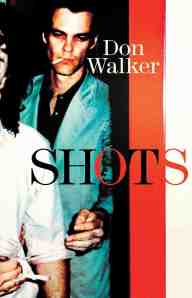 On Wednesday 11 March I’m hosting a conversation with Don Walker at Gleebooks in Sydney. Don’s name may be unfamiliar to anyone from outside Australia, but to almost any Australian under the age of 50 his name will be immediately recognizable as one of the creative forces behind Cold Chisel.
The event is to promote Don’s first book, a memoir called Shots. In recent years there’s been a spate of memoirs by members of the iconic Australian bands of the 1980s – Rob Hirst of Midnight Oil published Willie’s Bar and Grill a few years ago, Mark Seymour’s take on his career with Hunters and Collectors, Thirteen Tonne Theory, was published last year, and Paul Kelly has a book coming out with Penguin later this year. Yet all of them are essentially accounts of the lives and times of the bands with which their authors are associated.
Shots is a quite different and much more ambitious proposition. Written in a free-flowing, impressionistic stream of consciousness, it deliberately downplays Don’s time with Cold Chisel. They – the band – are never mentioned by name, and even Jimmy Barnes is only ever identified as Jimmy.
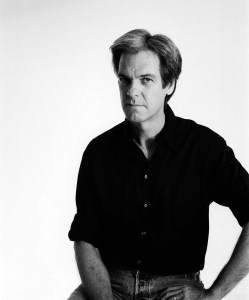
Don Walker
This decision allows not only allows Shots to break free of the expectations usually associated with memoirs by musicians, but has the effect of emphasizing the fact that Don’s time with Cold Chisel, and in particular the period of their greatest success, was relatively brief. Reading the book I was struck by the realization that despite dominating the Australian music scene in a way no other band ever has, in fact there is only about three years between the release of their first really big album, East, in 1980, and the band’s breakup in 1983.
In place of lengthy reminiscences about life with the band, Don tries to give a portrait of the textures of a life as it is lived, spanning from his childhood in North Queensland and Grafton to his reunion with his daughter several years ago (indeed in many ways the book reads as a sort of gift of his life to his daughter, a process of documenting and recording the steps which brought him to his life with her, and his love for her), and taking in his failed career as a physicist, his many years as a struggling musician, and the sprawling disaster of Cold Chisel’s fame and the years that followed.
It’s a fascinating document, and not least because it’s so beautifully written. Don has managed to graft the spareness and vernacular rhythms of his songwriting to the larger narrative frame of the book with startling success, and there’s a swing and a tensile strength to the seemingly plainspoken prose it’s difficult not to admire. But it’s also fascinating as a kind of psychogeography, a mapping of places, and people.This is immediately apparent in the early sections, about growing up in Ayr and Grafton. But it’s in the chapters set in Adelaide, and later Sydney, where it really comes to life. Again and again the book very clearly captures the textures of life in Kings Cross in the 1970s, and of the spaces and secret worlds that moved within the Sydney of that time.
In a way this shouldn’t be surprising. Although I suspect their intelligence and precision has been somewhat obscured by years of FM radio play, the songs Don wrote for Cold Chisel are best seen as little word-pictures, depictions of people and places. Many – ‘Breakfast at Sweetheart’s’, or ‘Cheap Wine’, to name just two – are rooted in the demi-monde Don depicts so well in Shots, others, such as ‘Flame Trees’ are about the landscape of regional Australia. But at their best, all are remarkably successful, not just as songs, but as evocations of particular moments and lived realities which owe more than a little to Carver or Tobias Wolff. They’re not narrative in form, more impressionistic, prose poems of a sort, but they’re very effective nonetheless. Indeed for all that it is usually Paul Kelly who comes to mind when Australians talk about storytelling songwriters, Don does it just as well, if not better, precisely because he eschews the narrative devices that people celebrate in Kelly’s songs.
The interesting thing is that this sort of writing is not, as a rule, something Australians do well. With the not inconsiderable exception of Tim Winton’s recent work, our fiction, and in particular our short fiction, is not particualrly good at the sort of pared-back, realist writing which draws its integrity from its observation of regional lives that is seldom far away in American writing. This is partly because the economics of our industry militate against the short story as a form, and partly, presumably, because our population is essentially urban, but it is also at least in part a function of our sense that stories of ordinary Australian life are somehow lacking in ambition. Not for nothing have the most celebrated Australian writers of the last few decades been those who produce foundational narratives about the imaginary origins of Australia, whether in the highly-coloured vein of Peter Carey or in the more conventional vein of Kate Grenville. As the taste for this sort of capital “N” national literarure has dissipated in recent years this has begun to change, and writers as various as Malcolm Knox, Christos Tsiolkas and Steven Carroll have begin to write fiction which more deliberately situates itself in the lives of the city and the suburbs, but I suspect many still have trouble placing their work in a larger critical framework, precisely because it isn’t national literature in any meaningful sense.
But I digress. I’m embarassingly excited to be involved in this event, not least because Don’s songs have been such an important part of my life. I’m old enough to have seen Cold Chisel play live as a teenager. I picked a drunken Jimmy Barnes up off the floor at a gig at the Apollo Stadium in Adelaide in 1983 or 1984, which was the height of glamour to me then (I also remember a very different Jimmy roaming the dancefloors of Mardi Gras and Sleaze back in the 1990s, though that’s another story) and I still love many of their songs. But I’m also excited to be able to help Don promote the book, which is a genuinely impressive achievement.
More information about the Gleebooks event is available on the Gleebooks website. For information about events in Melbourne and elsewhere contact Readings or visit the Black Inc website.
Shots can be purchased from Gleebooks, Readings or bricks and mortar bookstores anywhere.
Break text
Feb 4
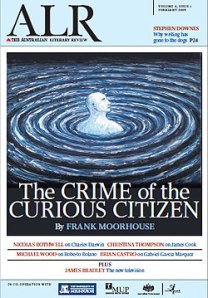 I’ve got a piece about the new television in today’s issue of the Australian Literary Review. The full text of the article is available online, as is Michael Wood’s excellent piece about Roberto Bolano’s 2666, but print copies are available free with today’s Australian, and are well worth picking up, not least because only a small portion of the issue is reproduced online.
The idiot box grows a brain | The Australian.
Break text
Jan 31

I linked yesterday to Peter Carey’s excellent piece in The Age attacking the proposed changes to Australia’s copyright laws (I can see already I’m going to need to find a way to create some kind of second stream, or news-ticker to throw up links to articles and sites which I like without actually adding full-blown posts, but that’s another story). Since I’m working on a piece about some of these questions at the moment, they’re rather on my mind, but I thought it might be a good moment to link to several other pieces that have appeared recently, one about the Google Books settlement in the US, another by Jeff Sparrow, editor of Overland from yesterday’s Crikey! about the decline of the review and the third a piece from Time about the future of publishing.
At first blush, the two topics are only tangentially related. The first, parallel importation, is a story about protecting the rights of Australian authors to manage their rights within their home territory, and about protecting Australian culture. The others are about a larger, economic and cultural transformation being driven by information technology. But I can’t help thinking they’re actually connected. Sparrow’s piece, the Time piece and the Google Books piece are all about a shift away from the print culture that has existed for the last few hundred years. This was a culture which relied upon particular reading habits, and which gave birth to the dominant cultural form of the last 150 years, the novel. One part of that culture was an economic system in which publishers controlled copyright both legally and physically by controlling the distribution and reproduction of the physical object. Yet as the experience of the music industry has demonstrated, once the physical object evaporates it becomes almost impossible to continue to control reproduction. So as the print culture of the past, and its dependence on both the modes of reading that go with it and the physical object fades, isn’t it possible the debate of parallel importation may begin to look like one of those skirmishes fought on the edge of a larger conflagration?
I’m not suggesting we should give up the fight to prevent the push by Dymocks and their crony, Bob Carr, to roll back territorial copyright becoming reality (why anyone who lives in NSW would listen to the advice of Bob Carr about anything, let alone educational or cultural questions, is completely beyond me, but we won’t go there). That’s a fight that needs to be won. But I also wonder whether it should begin to be seen in a larger context, as part of a more profound shift which will ultimately make questions about the parallel importation of physical objects a relatively minor question within an almost unrecognizable information culture.
The articles mentioned above are:
Time Magazine: Books Gone Wild: The Digital Age Reshapes Literature
Crikey: The Death of the Literary Review
The New York Review of Books: Google and the Future of Books
The Australian Society of Authors also provides this set of links to various resources about the Productivity Commission Inquiry into Copyright Restrictions on the Parallel Importation of Books, and submissions to the Inquiry (which have now closed) are available on the Productivity Commission’s website. I suggest anyone who’s interested in this question spend a few moments perusing the many, many submissions from authors and publishers.
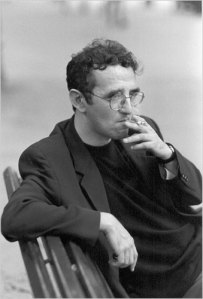 I’m working my way through the immense, amazing and completely exhilarating 2666 (more on that later) at the moment, but it seems Bolano might have been doing a little self-mythologizing of his own . . .
A Chilean Writer’s Fictions Might Include His Own Colorful Past



 city of tongues