Skip to content

Dexys Midnight Runners

I’ve long thought Dexys Midnight Runners were one of the great misunderstood bands of the ’80s. Mostly remembered for ‘Come on Eileen’, a song most people treat as a novelty single, they were actually much more than that, managing to combine the energy of bands like The Pogues, the Celtic Romanticism of Van Morrison and an odd combination of anger and passion that was very much their own. It’s a combination that’s most obviously on show on their most successful album, Too-Rye-Aye, and its commercially disastrous follow-up, Don’t Stand Me Down (an album which these days sounds like a model for creations like Josh T. Pearson’s glorious Last Of The Country Gentlemen).

All of which makes it oddly exciting to hear Dexys (now sans not just the possessive apostrophe but the Midnight Runners as well) are back with an album The Guardian is saying is nothing short of brilliant. There’s a long interview with lead singer and songwriter Kevin Rowland and – even more excitingly – a new single, ‘Nowhere is Home’, which is full of the questing passion and anger that makes the best of their back catalogue so electric. You can hear the single below, but I’ve also pulled out two other tracks that are well worth hearing, ‘Let’s Make This Precious’, from Too-Rye-Aye and ‘That’s What She’s Like’ from Don’t Stand Me Down. So enjoy (and be sure to check out the drummer’s decision to get back to sartorial basics in ‘That’s What She’s Like’).
http://www.youtube.com/watch?v=7r4fcnpbYdo&w=490

Pascall Prize for Criticism

I’m incredibly excited to be able to say that on Saturday night I was awarded the Pascall Prize for Criticism. It’s a huge honour, and needless to say I’m delighted, although in a way the really wonderful (and weirdly humbling part) has been how many people have written, tweeted or sent messages to say congratulations.

If you’d like to read my acceptance speech, it’s available on the Pascall website, as is the Judge’s Report, but since I suspect most of you won’t make it over there I’d like to say again how grateful I am to the judges, Geordie Williamson and Alison Croggon (both of whose work I admire immensely) and to the Pascall Foundation itself, for its commitment to the idea of criticism as something important and worthy of celebration. You can also read an extended interview with me over at Stephen Romei’s blog, A Pair of Ragged Claws.

I should also thank all of you, since at least part of the reason I was chosen was the work that appears on this site, work that has been shaped considerably by the generosity and intelligence of the many, many people who have taken the time to comment and engage with each other here. I’m aware things are a bit slow around here at the moment but hopefully that will change once I’ve got a couple of the things I’m working on locked away.

Read my new story, ‘Visitors’, in the latest issue of the Review of Australian Fiction

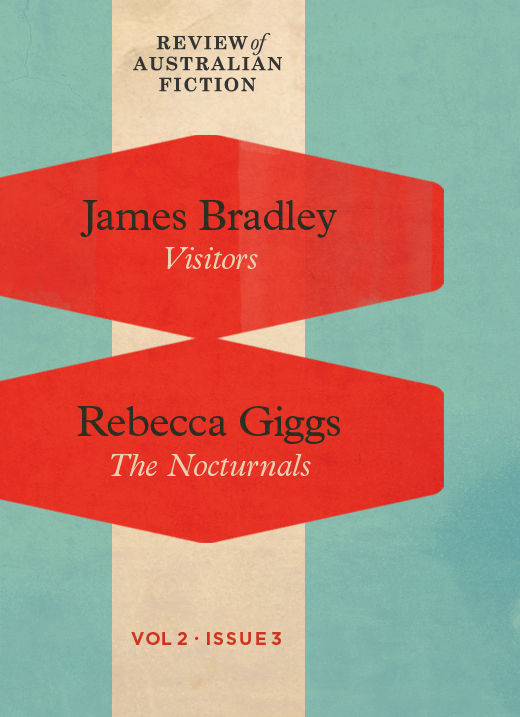
If you’re a subscriber to the Review of Australian Fiction you may already have received this week’s issue, which features stories by me and Rebecca Giggs; if not, copies are available for $2.99 on Booki.sh.

I’ve been meaning to write something about the Review for a while, because it’s a fantastic project on a whole range of levels. The brainchild of Hobart-based writer and editor Matthew Lamb and his Brisbane-based associate, Phil Crowley, it publishes two stories a fortnight, the first by an established writer, the second by an emerging writer nominated by the established writer, with stories published in digital-only form on the Booki.sh platform.

Thus far the Review has published an amazing collection of stories by a fantastic selection of writers, with previous issues featuring work by Georgia Blain, Christos Tsiolkas, Kalinda Ashton, P.M Newton, Kim Wilkins and Susan Johnson, to name just a few.

The story I’ve got in the new issue is a slightly Science-Fictional thing called ‘Visitors’, about a woman involved with one of a community of botanical aliens. It’s short and intense and a bit off-kilter and I rather like it. It also pairs nicely with Rebecca’s story, ‘The Nocturnals’, which is about a couple grieving for the loss of their son and stargazing.

I’m delighted to be part of the growing family of writers who have contributed to the Review. It’s a great project and a real reminder of just what how much creative use of digital publishing models can achieve. I’m also delighted to have played some part in helping to bring Rebecca’s work to a wider audience: I’ve mentioned her before, and some of you may have seen her work in Meanjin or Overland or Best Australian Stories 2011, but I think she’s quite something, and I suspect once you’ve read ‘The Nocturnals’ you will as well.

If you’d like to grab the latest issue of the Review it’s available for $2.99 on Booki.sh (a cross-platform, multi-device, DRM-free and cloud-based e-reader system supported by a number of Australian independent bookshops (it’s good, and very worth taking a look at)). You can also buy back issues for $2.99 or subscribe to Volume 2 for $12.99 (the first 30 new subscribers also receive a free Text Classic).

And while you’re here, you should very free to check out my novelette, ‘Beauty’s Sister’, which was published last week as part of Penguin’s new Shorts program, and is available for KindleiBooksGoogle Play and Kobo. And if you missed it, you can read my zombies in suburbia story, ‘The Inconvenient Dead’, for free at Overland.

New novelette, ‘Beauty’s Sister’, available now

I’m delighted to announce my story ‘Beauty’s Sister’ has been selected as one of the first four pieces for Penguin’s Shorts program, which launches today.

Designed to offer quality fiction and non-fiction able to be read in a single sitting in digital-only formats, Penguin Shorts are also an attempt to create a space in which new and established writers can experiment with work that’s too short for a book and too long for a magazine. The number of works available will grow over time, but for now there are four titles available: two exclusive short works from Women of Letters curators Marieke Hardy and Michaela McGuire, Nam Le’s story, ‘Love and Honour and Pity and Pride and Compassion and Sacrifice’ and ‘Beauty’s Sister’. Full details of all the titles are available on the Penguin Shorts website.

‘Beauty’s Sister’ is a bit of a departure for me. A reworking of Rapunzel, it’s the first of a collection of tales I’ve been working on (and which I’ll hopefully find a way to publish in the next year or so). It’s also a bit more substantial than the other pieces I’ve published recently – in SF/Fantasy terms it’s a novelette – but I think it whips by all the same.

You can read the blurb below, but if you’d like to grab a copy it’s available for Kindle, iBooks, Google Play and Kobo.

“Juniper, living deep in the forest with her parents, is stunned to discover that the beautiful girl living isolated in a nearby tower is her sister. When the two girls meet, what begins as a fascination and a friendship ultimately develops into something truly sinister.

“A story of jealousy, passion and power, Beauty’s Sister is a dark and gripping reimagining of one of our oldest tales, Rapunzel, from acclaimed novelist James Bradley.”

Distrust That Particular Flavor

Just a heads-up to say I had a review of William Gibson’s new collection of non-fiction, Distrust That Particular Flavor, in yesterday’s Sydney Morning Herald and The Age. I think collections of non-fiction made up of occasional pieces by novelists are generally to be approached with caution, but this one most definitely isn’t: it’s smart, provocative and offers a genuinely fascinating glimpse of the way Gibson’s thinking has evolved over the past decades.

And if that’s not enough Gibson for you, you might want to check out my reviews of Zero History, Spook Country and Pattern Recognition, as well as a couple of follow-up thoughts about Zero History, and a now rather antique review of All Tomorrow’s Parties.

The Voyagers wins FAW Christina Stead Award

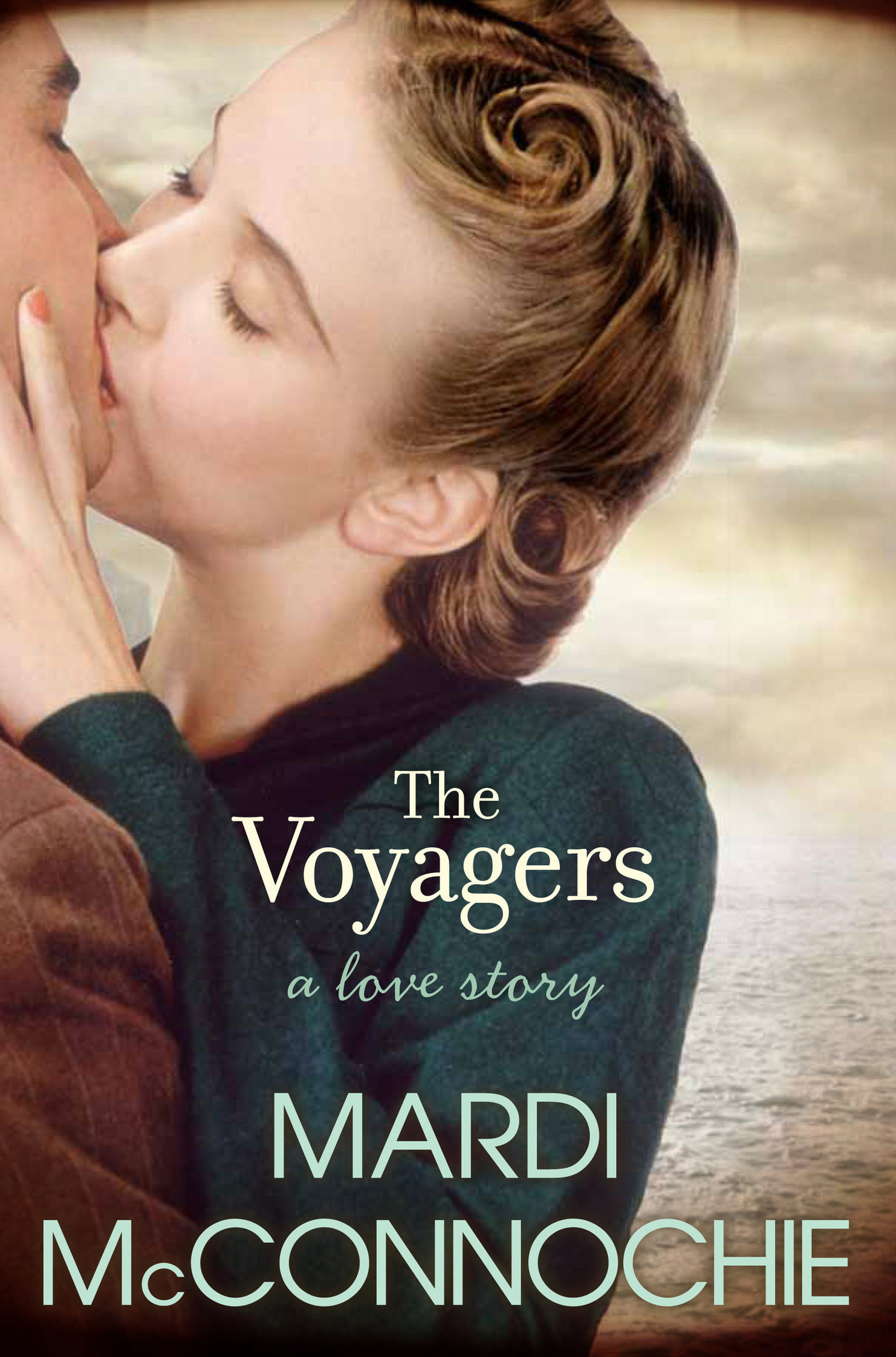
Mardi McConnochie, The VoyagersI’m thrilled to announce my partner Mardi McConnochie’s most recent novel, The Voyagers, has won the FAW Christina Stead Award for Best Novel. I know I’ve said it before, but it’s a fantastic book and it totally deserves it. If you’d like to know more about it you can read Angela Meyer’s interview with Mardi or read the first chapter for free, otherwise you can find prices for print copies on Booko (or you can grab it for 20% off via Booktopia), or buy it in digital format from the Kindle, Kobo and iBook stores.

And while you’re there you might want to check out Mardi’s blog, which is a bit occasional (though no more so than this one has been lately) but very worth a look.

Dalek Relaxation Tape

I’m still laughing …

Angelmaker

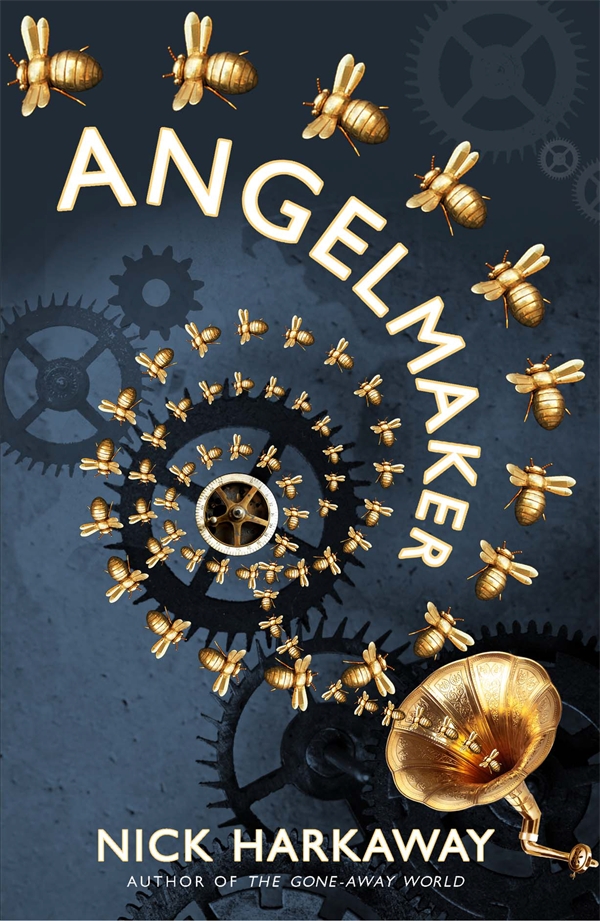
I’ve got reviews of Nick Harkaway’s Angelmaker and John Lanchester’s Capital in this morning’s papers. You can read the Lanchester piece unpaywalled at The Weekend Australian, but because the Harkaway isn’t on the Sydney Morning Herald site I’ve posted it over on my Writing Page.

If you’re interested you can also read my review of Harkaway’s first book, The Gone-Away World, but in the meantime I thought I might post the first couple of paragraphs, which touch on some ideas about the way changing cultures of reading are transforming literary culture I’ll be exploring further in the not too distant future:

“I sometimes wonder whether the real transformative force in contemporary writing isn’t digitization but fandom, and more particularly the technologies that underpin it. For while digitization is transforming the publishing landscape, the internet is breeding not just a new breed of highly engaged readers deeply invested in their particular area of interest, but also a new hierarchy of taste, founded not in traditional literary verities but in ideas of delight and generic awareness.

“Fandom’s rising power is visible in phenomena as seemingly unconnected as the hegemony of the superhero movie and the influence writers such as Neil Gaiman wield on Twitter. Yet it’s also visible in the rise of a new kind of fiction, one whose playfulness and generic promiscuity might once have seen it labelled post-modern, yet which more effectively elides the boundaries between high and low culture and art and entertainment than the writers of the 1980s could ever have dreamed of doing.” Read more …

Doctor Who Season 7 Teaser Trailer

“Give me a Dalek any day …”

Love’s making its way back home

A lovely little tune from Josh Ritter, complete with a super-cute video. Perhaps not quite as gorgeous as the entirely wonderful video for ‘The Curse’, but still pretty great:

The Inconvenient Dead

Sorry for the intermittent posting – I’ve been insanely busy. Hopefully I’ll get something proper up later this week or next but in the meantime I just wanted to alert you to the fact I’ve got a new story, ‘The Inconvenient Dead’, in the Autumn issue of Overland, which also has fiction by SJ Finn and Paul Dawson and poetry from Mark Mordue.

For the moment at least it’s not available online, so you’ll have to track down the issue to read it If you’d like to read it, it’s available for free on the very funky new Overland site (you can also buy copies or subscribe), but here’s how it begins:

“A week after he killed himself, Dane Johnson came to visit Toby at the service station. It was a Friday, which wasn’t usually one of Toby’s nights, but Toby was working anyway because one of the other guys had quit unexpectedly and the manager hadn’t had time to put a replacement through the two day unpaid customer service accreditation scheme new employees were required to complete before beginning their trial period.” Read more …

Morris Lessmore and the cult of literary nostalgia

Some of you may have seen The Fantastic Flying Books of Morris Lessmore, which yesterday won the Oscar for Best Animated Short, or if you haven’t you may have encountered the iPad app based on the film.

With its nods to The Wizard of Oz and other works it’s pleasingly smart and literate, and while the iPad app is a bit cutesy for my taste, it’s a nice example of the things the medium can achieve (and my five year-old daughter loves it, so what do I know).

More interesting to me is the way the film embodies the growing vogue for literary nostalgia. Like the endless films featuring dancing books and films such as Martin Scorcese’s Hugo (which is interestingly engaged with the ways in which technology affects the imagination), it’s part of a growing tendency to sentimentalise and fetishise the physical book and the material culture surrounding it.

I don’t think the reasons for this sort of nostalgia are particularly difficult to discern. Literary culture in all its forms is in the midst of a series of changes that are fundamentally altering what we read, how we read it and the ways we access and trade in words and ideas. Unsurprisingly this process generates intense cultural anxiety, at least some of which is expressed in a desire for the certainties of the past.

It’s possible to see these effusions as harmless. Certainly the idea of an iPad app celebrating the magic and mystery of the physical book in the way Morris Lessmore does is so absurd it’s almost funny. But it’s difficult not to wonder whether this nostalgia is at least a little unhealthy.

Part of this stems from the way this culture of nostalgia focusses on celebrating books from the past. Its makers might be reading Franzen and Egan and Bolano but the books they namecheck are Dickens and Melville and Poe. Obviously I’m not averse to people celebrating the classics (hell, I think half our problem is we don’t celebrate them enough) but as the choice of them indicates (A Tale of Two Cities over Copperfield? ‘The Raven’ over Emily Dickinson?) they’re mostly celebrating books people (or at least Americans) are likely to have read at High School and College.

Again this wouldn’t be a problem if what was being celebrated was the books themselves, but I suspect what’s actually being celebrated is the idea of the books themselves. Nobody’s suggesting we actually engage with Poe or Dickens or Melville, they’re just suggesting we feel a quick inner glow at the thought of them.

Coupled with the fetishisation of the technology of the physical book and the library it’s a strangely pernicious brew. Because if we want books and reading to survive and continue to thrive the single worst thing we can do is turn them into Hallmark card symbols of past certainty. What we need to be doing is emphasising the energy and ambition of contemporary writers, and developing new cultures of reading. And call me cranky, but I find it difficult to see how sentimentalising the past does that.

Light

Inspired by the work of Dutch designer Pieke Bergmans, filmmaker David Parker set out to make a film about the ways we waste energy, but somewhere along the way it grew into Light, a haunting, poetic meditation not just on human wastefulness, but on the eerie, even spectral textures of the urban landscape.

There’s a short interview with Parker at The Atlantic.

Nothing’s Gonna Change The Way You Feel About Me Now

A new Justin Townes Earle album, with the first single available for free? I’m a little bit excited.

Check out the awesome ‘Slipping’ and Slidin” from Harlem River Blues, then watch the trailer for the new one and tell me you aren’t as well …

The mouse that roared

My apologies for my silence over the past couple of months: despite good intentions about getting back to regular posting after two months trapped in the time vortex of school holidays I’ve ended up swamped with work, which has rather slowed me down.

I suspect that situation isn’t going to change any time soon, not least because I’m now working on a new book and at least two sets of short stories on top of my usual reviewing commitments (which is exciting but more than a little consuming) but with luck I’ll still be able to keep things at least ticking over here.

I’ll link to some of those stories as they appear (in case you missed it I had one in Get Reading’s 10 Short Stories You Must Read in 2011, I’ve got one in the next Overland, another in a forthcoming anthology designed to raise funds for The Sydney Story Factory, and two which are being published as part of digital initiatives: a story in the second volume of The Review of Australian Fiction and a novelette which will appear next month as part of something I’m not really allowed to talk about yet).

In the meantime you might want to check out a few of my recent reviews (though many are now hidden behind The Australian’s paywall), in particular my pieces on Colson Whitehead’s terrific zombie novel, Zone One, Dana Spiotta’s electric Stone Arabia and Margaret Atwood’s deeply flawed In Other Worlds: SF and the Human Imagination.

And finally, if you haven’t seen this outstanding video of the savage grasshopper mouse, I recommend you watch it now. Apparently they’re carnivorous mice that let out their piercing shrieks before moving in for the kill, and you can read all about them over on Wired’s Laelaps blog, but basically they’re just made of awesome.