Skip to content

Posts from the ‘Writing’ Category

A couple of reviews and some links worth a few minutes of your valuable time

Apologies again for my somewhat sporadic posting: I’ve been in a bit of a work-hole for the last little bit. I think – I hope – I can see the light at the end of the tunnel, but in the meantime I thought I’d link to a couple of reviews I’ve had in the papers recently (there have actually been a number more but exactly what gets posted online seems to be a bit arbitrary these days).

The first is my review of Tom Rachman’s The Imperfectionists, which was published in The Australian a few weeks back. I may have some more things to say about Rachman’s book in the not-too-distant future, but for now the review will have to do.

The second is also from The Australian, and is of John Ajvide Lindqvist’s follow-up to the truly unsettling Let The Right One In, Handling the Undead, a book which despite its subject matter (zombies in Sweden) and Lindqvist’s bizarrely unmodulated prose, is both oddly beautiful and more than a little upsetting.

(If you feel like hunting out the print versions I’ve also had pieces on Martin Amis’ The Pregnant Widow, Richard Powers’ entirely wonderful “enhancement” Generosity (one of the most exciting books I’ve read in ages), and Jim Crace’s All That Follows).

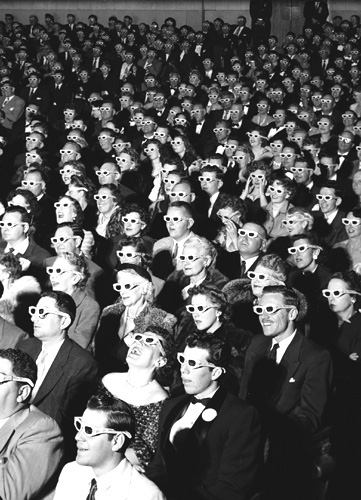
I’d also like to suggest three (or four, to be precise) things from elsewhere which are very definitely worth reading (assuming you haven’t already). The first is Anthony Lane’s breezy and entirely entertaining tour of the history of 3D (in the context of which I’d refer you to my post on Avatar a few weeks back). If you’re not completely over Avatar by now Daniel Mendelsohn’s piece on the film is also worth a look (though I have to confess I think anything by Mendelsohn is worth reading).

Also worth a look is Jason Epstein’s piece in The New York Review of Books on the future of publishing: I suspect I feel less wedded to the past than he does but it’s a pretty good summary of the situation at present.

And last (but very definitely not least) Jonah Lehrer’s fascinating piece from The New York Times Magazine about the controversial but tantalising studies suggesting depression may confer evolutionary advantage, a piece which is distinguished not just by being the only place I’ve ever seen the word “heterogeneity” used in a newspaper article, but by meshing suggestively with the desire of a wide range of writers (including myself) to try and understand depression in terms beyond the simplistically pathological.

Enjoy – I’ll be back online later this week.

Break text

Some quick thoughts on editing

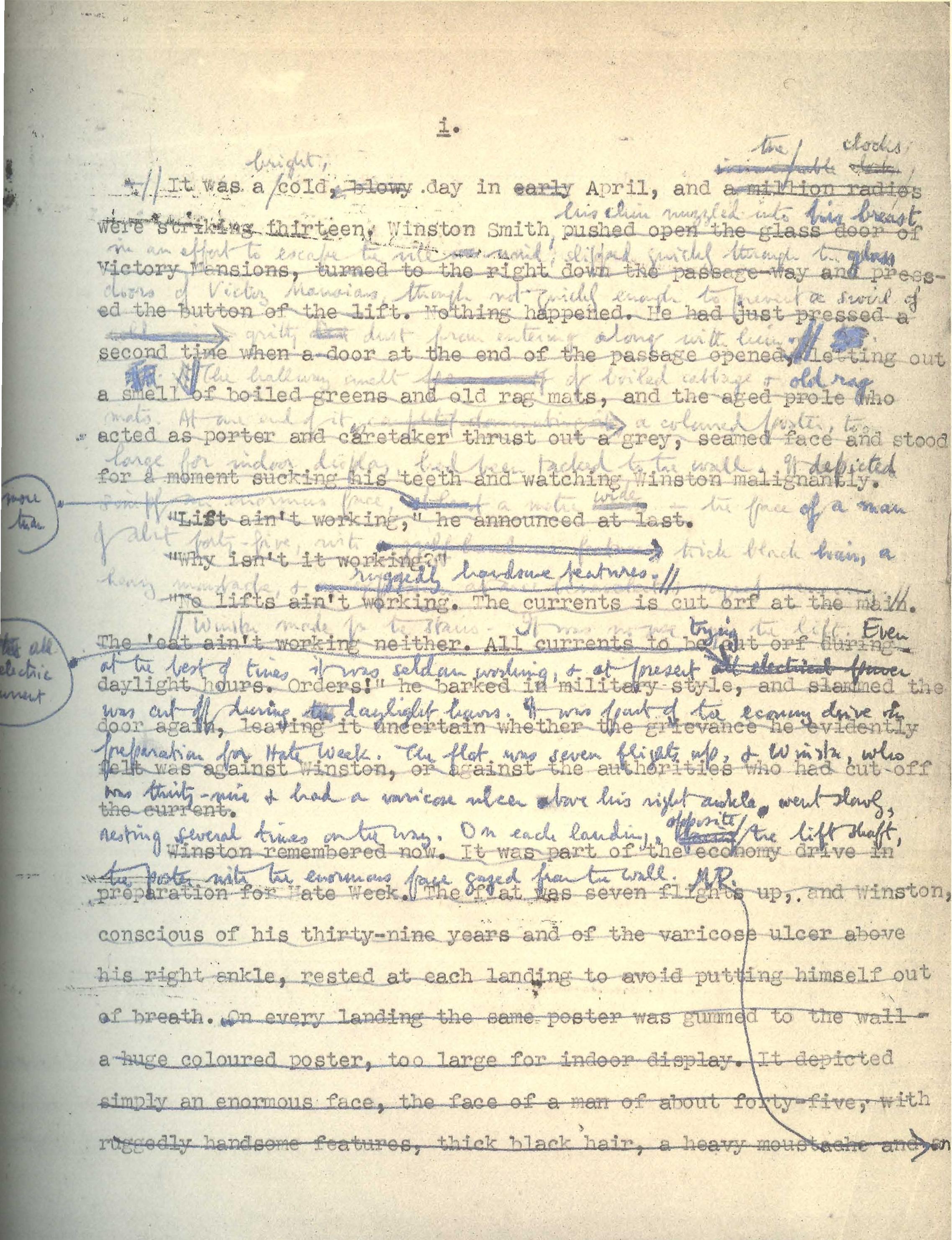
A page of the manuscript of George Orwell's 1984 with corrections

Just a quick reminder that the March issue of the Australian Literary Review is available for free in today’s Australian. I’ve only had time to scan the issue but it looks good, with pieces by Luke Davies on the novel in the Age of Terror (a term which must surely be as close to its use-by date as it sounds) and Hazel Rowley on French intellectuals under Nazi Occupation (neither of which, annoyingly, are on line).

Further in though you’ll find a piece by James Ley which uses the new, deLished edition of Carver’s Beginners to ground a broader discussion of the role of the editor, and which features some fabulously unguarded comments by yours truly (“anyone who tells you books are as carefully or rigorously edited as they were a generation ago is either lying or deluding themselves”).

I’ll let you read the piece in full, because there are a number of smart people saying smart things in it, but looking at it this morning I was struck by the fact that my own comments don’t go far enough. As you’ll see if you read the piece, I suggest it’s worth remembering that editing is only one part of a larger equation for publishers, and that as a result the question of how much or how little a book gets is really a commercial decision. As a publisher acquaintance (who shall remain nameless) once pointed out to me, editing is often a process of diminishing returns: there comes a point with every book when spending 20% more won’t make the book 20% better.

As I say in the piece, I think this is a useful way of thinking about the question, both because it reframes the question in commercial terms rather than as an unwinnable argument about artistic standards and because it reminds us that questions about editorial standards are intimately connected to the changing landscape of contemporary publishing (kudos to Jane Palfreyman for pushing back against the tedious narrative of decline that usually comes riding shotgun with discussions of editorial practice).

I think what’s really interesting though is what our anxiety about editorial standards tells us about our attitudes to writing, and more particularly how difficult we find it break free of Romantic notions of the artist as solitary genius when we’re talking about authors and authorship. Because in the end that’s what this whole conversation is really about: our unease with accepting that literary fiction and non-fiction are not, in many ways, all that different to more collaborative forms such as television or film.

I’m not saying they’re exactly the same. Books are always going to be more defiantly expressions of individual vision than film or television, but they’re not fundamentally different, more different points on a spectrum. But while we have no problem with the idea that script editors and directors work in a relatively utilitarian manner with scriptwriters we’re made very uneasy by overly intrusive editing of books. But in the end, what’s the difference between David Chase rewriting an episode of The Sopranos from the ground up and Gordon Lish rewriting Carver?

I suppose one answer might be that those of us who write books do so at least partly because it allows us more control over our work. I know one of the reasons I gave up writing film was that I wasn’t temperamentally suited to the collaborative process (though if I’m being honest I’d have to say the fact I was crap at it also played a part). But again I think it’s really a question of how much collaboration we’re comfortable with, not whether we’re comfortable with collaboration at all: even the most arrogant and single-minded author can’t help but take on board at least some of what an editor says.

But I suspect that at a fundamental level this anxiety about editing and editing standards is as much about a refusal to give away very old and cherished ideas about the primacy of the artistic imagination as anything. That and a failure to understand that publishing, like television or film, is essentially an industry, and that the process of transforming a manuscript into a book is as much an industrial process as the process of transforming a script into half an hour of television.

Break text

Ten rules for writing fiction

These days they prefer vans.

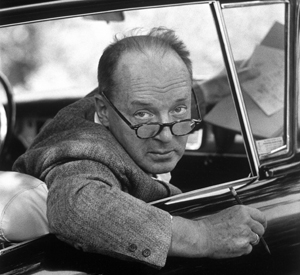
For those of you who haven’t seen it, this piece (and the second instalment) from The Guardian about the rules of writing fiction is definitely worth a read. Highlights include Geoff Dyer (“Don’t be one of those writers who sentence themselves to a lifetime of sucking up to Nabokov”), Anne Enright (“Only bad writers think that their work is really good”) and Jonathan Franzen (“Interesting verbs are seldom very interesting”).

Which reminds me of rule number one of writing blogs, which is – as with novels –actually write them. To which end I’ll definitely get something up later today. Or tomorrow. Or soon, anyway.

Break text

Of Penguin Worms and Hairy Water

Launch of the James Caird from the shore of Elephant Island by Ernest Shackleton and his men, April 1916

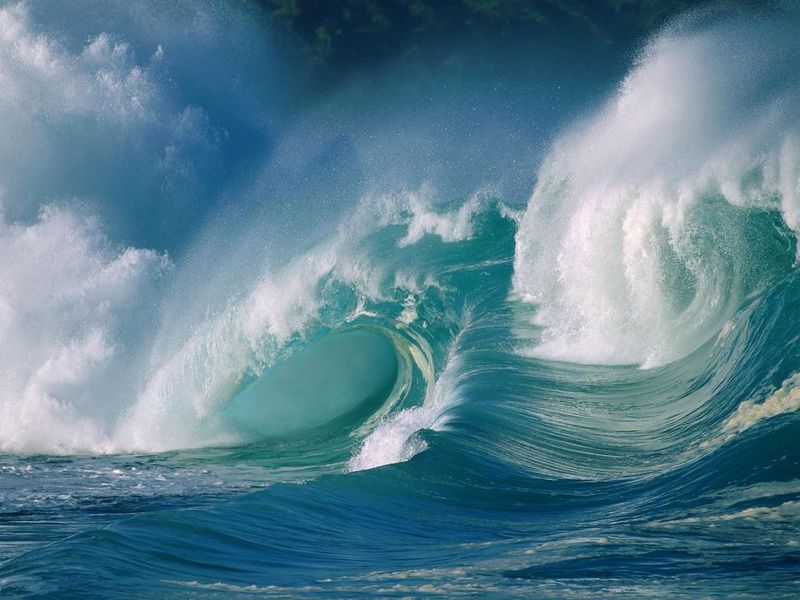
As the ongoing silence in Tonguesville no doubt suggests, I’ve been a little busy, mostly trying to whip The Penguin Book of the Ocean into shape. I’m pleased to say that it’s finally beginning to take shape (indeed I’d go so far as to say it’s looking really good) and I’m not going to reflect too much on the irony that I’ve been so busy reading about the bloody ocean I’ve barely visited visit the beach all summer (admittedly the three month old baby may also have something to do with that, but it sounds better if I blame the book).

My irritation at being kept from the beach aside, I think it’s safe to say the real joy of putting this book together has been the reading it’s involved. Some of it’s been achingly beautiful, a lot of it’s been fascinating, and some of it’s been deeply chastening in its reminders of the sheer dangerousness and brutality of life at sea.

That being the case, I thought I’d share two snippets from the masses of books and documents I’ve worked my way through that have really stuck with me.

Both are from records of almost unimaginably dreadful struggles against the elements (there have been moments in the making of this book when I’ve wondered whether I shouldn’t just retitle it The Penguin Book of Truly Appalling Journeys by Open Boat and be done with it). The first is from Hakluyt’s account of the journey of Captain John Davis and his men aboard the Desire in 1592. Separated from the rest of their fleet in the Straits Of Magellan they made their way east to the Falklands, where, mad with hunger and thirst, they fell upon the local penguin population with a vengeance, killing 14,000 in the space of a few days. Without salt they could only attempt to dry their haul, which they did, and so, on a boat piled to the gunwales with rotting penguin meat they set sail for England, and home. The trip was difficult, to say the least, but eventually, after managing not to die of thirst or go mad while becalmed they reached warmer waters.

Which is when things got really bad:

“After we came near unto the sun, our dried penguins began to corrupt, and there bred in them a most loathsome and ugly worm of an inch long. This worm did so mightily increase, and devour our victuals, that there was in reason no hope how we should avoid famine, but be devoured of these wicked creatures: there was nothing that they did not devour, only iron excepted: our clothes, boots, shoes, hats, shirts, stockings: and for the ship, they did so eat the timbers, as that we greatly feared they would undo us by gnawing through the ship’s side. Great was the care and diligence of our captain, master and company to consume these vermin, but the more we laboured to kill them, the more they increased; so that at the last we could not sleep for them, but they would eat our flesh, and bite like mosquitoes.

“In this woeful case, after we had passed the Equinoctial toward the north, our men began to fall sick of such a monstrous disease, as I think the like was never heard of: for in their ankles it began to swell; from thence in two days it would be in their breasts, so that they could not draw their breath. . . . For all this, divers grew raging mad and some died in most loathsome and furious pain. It were incredible to write our misery as it was; there was no man in perfect health, but the captain and one boy. The master being a man of good spirit, with extreme labour bore out his grief, so that it grew not upon him. To be short, all our men died except sixteen, of which there were but five able to move.”

Choice.

The other, much shorter snippet is from Shackleton’s account of he and his men’s extraordinary journey from Elephant Island, just off the coast of Antarctica, to South Georgia in April 1916 (if you haven’t read South, do: it’s one of the more amazing books ever written).

After more than a fortnight alone in an open boat in the waters of the Southern Ocean they came into sight of land, only to discover the seas were so huge, and the shore so hazardous they couldn’t land. At which point they:

“stood off shore again, tired almost to the point of apathy. Our water had long been finished. The last was about a pint of hairy liquid, which we strained through a bit of gauze from the medicine-chest”.

My OED’s in storage, so I haven’t had a chance to check whether “hairy” has an archaic meaning I’m not aware of, or whether it’s just poetic license on Shackleton’s part, but the notion of “hairy liquid” certainly isn’t one I’ll be forgetting in a hurry.

Break text

When Giants Walked The Earth

Saturday’s Guardian has a long piece by broadcaster Mark Lawson about Capturing America, a new BBC Radio 4 series on the history of American literature. Judging by the article the series will be well worth checking out, but in the meantime the BBC have posted extended versions of the interviews on which the series is based on their website. I’ve only managed to listen to the Marilynne Robinson interview thus far, but there are more than twenty others there, ranging from Stephen King to John Updike and Don Delillo (whose new novel, Point Omega, was reviewed in Saturday’s New York Times). If you’ve got a few minutes I highly recommend taking a look: it’s an amazing resource.

Break text

The Book of the Ocean

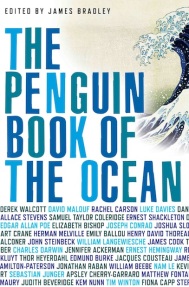
As I mentioned a while back, one of the projects I’ve been working on for a while now is an anthology of writing about the ocean for Penguin. It’s been a fascinating process, both because it’s given me a chance to revisit a number of books that have meant a great deal to me over the years and because it’s forced me to acquaint myself with many more I didn’t know, or only knew by reputation.

As the imbroglio over the Macquarie/PEN Anthology demonstrates, assembling anthologies is a perilous business. The bigger the subject, the more people have invested in it, the more likely you are to come in for a bucketing for mistaken emphases and omissions. And since the literature of the ocean is one of those subjects which is both vast and weighed down by its history it’s one that offers plenty of pitfalls.

As a result I decided early on that I had no desire to be either definitive or exhaustive. Instead my intention has been to assemble a relatively personal collection, which draws together a selection of writing I love. As someone whose life has been spent on the shores of the Southern and Pacific Oceans I also decided I wanted to put together a collection that spoke to and about that experience, rather than concentrating on the exploration of the northern seas that has traditionally preoccupied collections of this sort. In practice that’s meant letting go of a number of things I wanted to use, but it’s also helped give the collection a shape and cohesiveness it might not otherwise have had.

All of which brings me to the point of this post. The book’s now largely done, but I’ve still got space for a few more pieces, so I thought I might call upon all of you out there for suggestions. Is there anything you can think of that absolutely, definitely should be in a book of this sort? Or do you have ideas for things I might have overlooked? Because if you do I’d love to hear them.

A few caveats. I’m not looking for unpublished work or submissions. And while it doesn’t have to be Australian I’m very keen for a couple more pieces by Australians. Likewise, given the fact most of the pieces I’ve got so far are by men, I’m very interested in suggestions about work by women which might be suitable. And in the interests of preserving my sanity I’ve also limited the collection to writing in English, so no Jules Verne or Bachelard.

And please don’t assume I’m only after prose. Although the collection is predominantly prose it contains poetry, so suggestions for poems (especially Australian poems!) about the ocean are very welcome. Likewise I’m relaxed about whether it’s fiction or non-fiction, though since this is a book aimed at the general reader I’m not after academic writing, or monographs (which has, much to my regret, precluded a couple of idols of mine like Greg Dening I was hoping to include). What matters is that it feels urgent, and necessary, and – though obviously this isn’t something any of you are able to gauge – that it fit with what’s already in place.

I’ll look forward to your ideas.

Break text

Fair suck of the sav (or the revenge of the poo dinosaur)

"Grr, baby."

On Twitter the other day, Angela from Literary Minded pinged me for wrongly attributing her quip about this year’s male-dominated Miles Franklin shortlist being a sausagefest to Kerryn Goldsworthy.

Angela was joking, but I know where she’s coming from. Every writer’s got stories about having ideas pinched or misattributed. And though it happens less often than a lot of people think, it does happen. I keenly remember pitching a story to a TV show and being told it wasn’t for them, only to see the same story turn up a few eps later in the season, virtually unchanged.

For the most part though, I try not to get too hung up about these things. But a few years ago I had the very disconcerting experience of sitting down to read a new book of essays by a highly celebrated Australian writer, only to come across two pages that had been transcribed pretty much verbatim from a conversation I’d had with them at Adelaide Writers’ Week a year or 18 months previously.

It’s difficult to know what to do in this sort of situation, since squealing just makes you look over-sensitive, so I just copped it. But it meant that when my friend Delia Falconer called me a couple of weeks later to ask whether I wanted to be acknowledged as the source for a section in her novel, The Lost Thoughts of Soldiers, I told her I did. Definitely. No questions asked.

The catch was that the section in question was based on a story from my brother’s time working as a bouncer in an Adelaide pub. One night, at closing time, he went to check the toilets, and there on the cistern was a sleekly glistening brown dinosaur crafted from human shit. Disgusting, yes, but what was worse was the care its creator had lavished upon it, inserting little sticks for arms and match-heads for eyes. That and the fact that the tap in the toilet was broken, so whoever had made it had gone back out into the pub without washing their hands.

Of course in Delia’s hands the story gained a literary patina the original lacked, but all the same I was pleased when my copy of the novel arrived to see my name in black and white in the acknowledgements page. This time at least I’d kept control over my material.

Or so I thought. A couple of weeks later I went to the launch of the book, and quickly became aware people were looking at me strangely. At first I thought I was being paranoid, but then, during the speeches I realised what was going on. Having read the story and the acknowledgements people had put two and two together and decided it was me personally who’d made the dinosaur. Appalled at the notion I might have become known as some sort of demented coprophiliac, crafting little animals out of poo in between writing books, I told people they were wrong, it was a story my brother had told me, to which they smiled patronisingly, and said, ‘Oh right, whatever you say’.

But worse was to come. A few months later, when the book came out in the US, Delia did an interview about it which mentioned the story, and namechecked me as the source. which meant that for a long time afterwards if you googled my name and “poo dinosaur” you pulled up multiple hits (all gone now, I note with relief).

Oh yes, me and Auguste Rodin, artists of the living clay.

Break text

Why are all the best bloggers women?

Why are all the best bloggers women? What is it about the online space that allows women's voices to predominate?

Read more

The day after

Honey I Blew Up The Party?

I’m sure I’m not the only one who’s finding this morning a bit of a letdown after the madness of the last few days. Lunchtime already and no challenges for the Liberal leadership? No open treachery or attacks upon colleagues? Even the ABC’s no longer broadcasting live from Canberra. It’s a bit like the day after Christmas.

Anyway, if you’re after something to brighten up the emptiness of your post #spill day, you might want to hustle down to the shop and pick up the December issue of the Australian Literary Review, which is available free in today’s Australian. As usual some of the highlights are available online, not least Inga Clendinnen’s on Noel Pearson’s manifesto to rebuild indigenous communities, Peter Pierce on Thomas Keneally and Rowan Callick on criminal justice in China, as well as a long piece by yours truly about the Australian lit mag scene (obviously the real highlight of the issue) but a lot isn’t, so if you can lay your hands on a copy of the print edition, do.

Break text

Parrot and Olivier in America

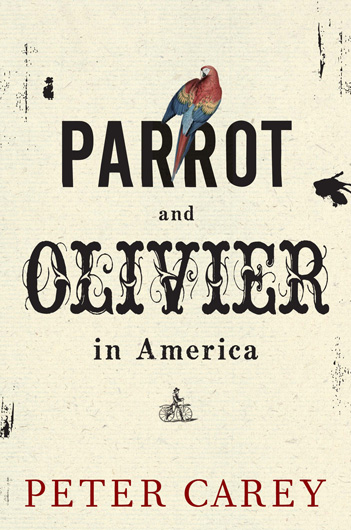
parrot-olivier-ausJust a quick note to say my review of Peter Carey’s new novel, Parrot and Olivier in America, is available on The Australian’s website.

It’s been interesting speaking to people who’ve read the piece, not least because it’s difficult to escape the feeling Carey’s burned through some of his goodwill in recent years. The reasons for that seem to be complex – certainly there’s a view the last few books have been a bit patchy – but I also suspect changing literary fashion has left his brand of big, rough-hewn post-modernity looking a little awkward in the contemporary landscape (I’d say something similar about Doctorow and Rushdie, though I have to say I think Carey’s streets ahead of either of them). Of course that’s always a problem for writers as distinctive as Carey, but I do hope it won’t stop readers seeking out this new one, not least because it’s his best book in years, and definitely up there with early masterpieces like Illywhacker. Nor am I alone in this judgement: in Saturday’s Sydney Morning Herald Andrew Reimer calls it a tour de force (not online), and Jennifer Byrne says something similar in Saturday’s Age.

And if you’re interested in reading more about Carey you might like to check out this piece I wrote for Meanjin a while back. It’s a bit long in the tooth these days but it’s got some good moments.

Break text

addthisTweet this

Work in progress

work-in-progressThe other day I mentioned a couple of events I was speaking at, one at Gertrude and Alice Bookshop in Bondi, the other at the National Library of Australia. At the time it slipped my mind that I’m also reading as part of the UTS Centre for New Writing’s Work in Progress event, next Wednesday 4 November at 6:00pm.

It’s should be a fun evening, not least because it’s deliberately designed as a showcase for unpublished work by established writers, and will feature Frank Moorhouse reading from his new novel, as well as readings by John Dale, Delia Falconer, Anthony Macris, Mandy Sayer, Gabrielle Carey, Martin Harrison, and others. In keeping with the spirit of the event I’m planning to give my new novel, Black Friday (which I was talking about here a week or two ago) its first airing.

Event details:

Date: Wednesday 4 Nov 2009, 6:00 PM – 8:00 PM
Location: The Loft, Broadway Campus, The University of Technology, Sydney
Contact: John.Dale@uts.edu.au
Admission: Free

Break text

addthisTweet this

The death of the letter

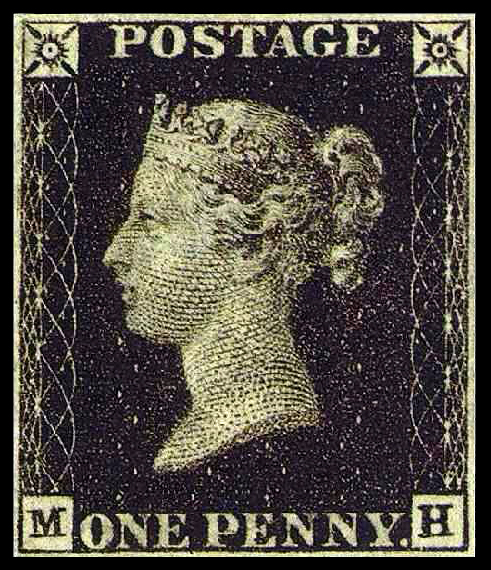
Penny Black-1On Friday a journalist friend rang looking for some comments about the death of the letter. The story grew out of reports of a sharp decline in the use of snail mail, and having already spoken to historian Les Carlyon and linguist Sue Butler, both of whom had made the usual noises about the loss of a form which has allowed us to communicate complex thought and emotion for many generations, he wanted a literary perspective on the question.

Before I go any further I should say that I agree, at least generally, with the remarks by Carlyon and Butler which are quoted in the article. The letter is a remarkable form, not just because of its capacity to record the feelings and impressions of the moment for posterity, but because it is a form that has always been as much about a process of self-creation and exploration as communication.

In a way that shouldn’t be surprising. The act of writing isn’t simply about putting thoughts down on paper, it’s about a process of thought. And, as a result, the process of writing a letter allows us to explore thoughts and ideas we might not be able to express or even access in everyday life. Indeed in a very real sense, writing letters is less about communication than the creation of a self through the act of writing. Usually these selves are freer, smarter, sometimes they’re something like our best self, more often they’re versions of our everyday self which only find their true expression on the page. It’s a process you see at work in the correspondence of writers such as Philip Larkin or Flaubert, both of whom were capable of being scatological and filthy with one friend, and considered and thoughtful with another. Or in the epistolary relationship between Robert Lowell and Elizabeth Bishop, a relationship in which both revealed aspects of themselves they concealed from everyone else.

But the thing that struck me while I was talking to my friend on Friday, was that despite the passing of the letter, these are exactly the same processes one sees at work when people blog, or tweet, or even update their Facebook statuses. In all cases they’re projecting versions of themselves outwards, and in so doing engaging in the same processes of self-invention that once went on in correspondence. The only real difference is that they’re doing it in public, or at least semi-public.

Obviously there’s nothing particularly radical about observing that technology is altering our notions of identity. But it does suggest that the usual anxieties provoked by the passing of cultural forms and institutions are at least partly misplaced in this context.

More importantly though, it’s a reminder that the transition from the written letter to email isn’t simply a story about changing technology. It’s part of a much larger story about the way technology is redefining the boundaries between our public and private selves. It’s not a neutral process by any means, and its effects can be seen in the increasing anxiety about the management of confidential information, in the arguments about the use (and abuse) of surveillance technologies, and even in the rise of celebrity culture. But it’s also a story that’s as much about possibility as decline, something which can be obscured when one concentrates on only one aspect of the story.

Break text

addthisTweet this

Whale Sharks

I’ve just noticed my piece from September’s Monthly about diving with whale sharks at Ningaloo is now available online. You can read it (and a pretty impressive selection of other pieces from the magazine) here.

Break text

addthisTweet this

On novels and place

beaumont_kids,0

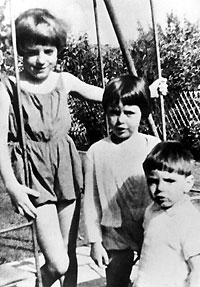
The Beaumont Children, who disappeared in Glenelg on Australia Day, 1966.

If this blog’s been looking a bit neglected lately, it’s because I’ve been frantically trying to knock over a first draft of my new novel. I had been hoping to have a draft done by the time our second child is born in November, and while I suspect that goal has now slipped away from me, I’m at least halfway there, so I think there’s a good chance I’ll have something by Christmas.

Writing first drafts is always a weird process. A lot of writers are planners, but I’m not, or not particularly. I’ve usually got a rough idea of the shape of the book, and at least a few key scenes, but I usually don’t have a terribly clear sense of how those pieces stick together, or what order they happen in. So mostly what I’m doing when I write first drafts is looking for the rhythm, and the energy. Sometimes that can be exhilarating, but mostly it’s a matter of feeling my way forward, looking for the moments when the thing chimes into life.

I’m still not quite sure what I think of this one (which is currently called Black Friday, though that may change). If you’d asked me a few weeks ago I would have said I wasn’t sure if it would work, but in the last fortnight or so I’ve become a lot more confident it will. Partly that’s because I’ve slid past the halfway mark, but mostly it’s because I can feel the characters beginning to live, and breathe, and the narrative beginning to develop the forward energy it needs.

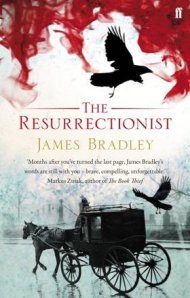
That’s not to say all’s right with it. I’ve got a point of view problem that won’t go away, and the plotting of the section I’ve just finished is a shambles. And it’s precisely the sort of dark, disordered book I promised myself I wouldn’t write after the experience of writing The Resurrectionist. And my central character is pretty spectacularly unpleasant (as is the subject matter), but she also feels scarily real to me, which has to be a good thing.

What’s been strangest though, has been the manner in which the setting of the book has come bubbling out of me. Although it begins in the present day, the bulk of the action tales place in the early 1980s, and focuses on the actions of a small group of political radicals who decide to kill the Prime Minister. These characters come from a variety of backgrounds, but one of them – the central character – grew up in Adelaide, and there’s an extended sequence near the beginning depicting her absorption into the alternative demi-monde of the time in the backlots of Glenelg.

Although the scenes in question take place in 1980, and I didn’t finish school until 1984, the world this section takes place in is absolutely one I remember. The characters go to school at the school I went to (though it’s not named) and though they live a couple of suburbs further north along the coast, most of the action takes place in Glenelg, where I grew up (I’ve actually based the share-house she becomes entangled in on the house an old friend’s mother bought not long after we finished school).

In a way it’s unsurprising that the book has such a definite location. All three of the novels I’ve published so far are powerfully anchored in the places they’re set. Given that two of them – The Resurrectionist and The Deep Field – are set in places which don’t actually exist (the London of the 1820s and the Sydney of the future, respectively) that might seem an odd thing to say, but it’s true. Whenever I write about a place I need to feel I have a connection with it in an emotional sense, and to feel it’s an integral part of the larger symbolic and textural landscape of the novel. And so while the places they describe may not be real, in a literal sense, they need to be real to me, and to resonate with the book as a whole.

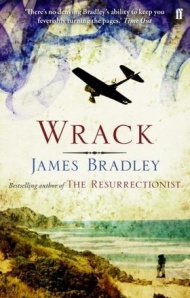
The curious thing is that I never had any desire to write about Adelaide. I left the best part of 20 years ago, and though when I visit it still seems almost overwhelmingly familiar, it’s been a long, long time since it felt like home. And although the South Australian landscape I grew up in has found its way into my work from time to time (the sandhills on the southern coast of New South Wales in which much of the action of Wrack takes place are imaginary versions of the Coorong, and the sandhills at West Beach, rather than anywhere you’d find on a map) I’ve not just not written about the place I grew up in, but actively not wanted to write about it.

In a way, of course, all I’m saying here is something I think any writer, and most readers understand, at least intuitively, which is that place, or location in fiction is never physical, or at least not in any simple sense. Place is always really a psychological space, a thing evoked through the layering of detail, and emotion. And like the strange, almost mystical capacity of characters to be conjured into life by a few words of dialogue or description (not for nothing, I think, do Christians understand God’s Word as a living thing; language has a primal and often quite unsettling power to take on life of its own) places are brought to life by the suggestion of great strata of meaning layered beneath the details we use to evoke them.

I’m not sure precisely what led me back to Adelaide, and the world I knew as an adolescent. What I do know is that it’s a process that began when I was struggling to finish The Resurrectionist. One of the inspirations for that book was the Snowtown murders, and having heard me talk about them, and about Adelaide and its history of serial murder more generally, my agent, David Miller, convinced me I should write about them, and about what seemed to me the very particular experience of growing up in Adelaide in the 1980s.

I still think the piece that came out of that conversation, ‘The Element of Need’, is one of the better things I’ve written in recent years. For contractual reasons there was a lag between me writing it and it being published, but a version was published in Heat last year (you can read a brief extract on the Giramondo website) and it’s recently been picked up for inclusion in Best Australian Essays 2009.

But good or not, writing the piece seemed to unlock something inside me. For a time I toyed with expanding it into a full length book, but for various reasons to do with my reluctance to spend too long in the headspace it inhabits that didn’t happen (though it still might). But alongside the book I didn’t write I found myself playing around with stories and novels which used the landscapes of my childhood and adolescence in quite direct ways. And although few, if any, of these are ever likely to find their way into print, the thing I kept running up against was the manner in which the landscapes they inhabit are so vivid and so particular.

I always think it’s dangerous to assume you know why you find yourself writing about particular things (and I’m painfully aware that even when you think you do know you’re often wrong, and the real reasons are hidden from you). But I do wonder whether this process of moving back, into the past, isn’t at least partly to do with growing older. My father is 76, and he routinely says his childhood, which he once barely remembered, is now almost frighteningly vivid. And while he’s got three and a half decades on me, the last few years have been pretty tumultuous. I’ve turned 40, become a father, felt the always unstable cycle of my moods spin frighteningly out of control, felt the only thing I ever wanted to do – writing – leave me, and then, tentatively at first, but then with greater certainty, return, all experiences which have left me painfully aware of the fragility of life, and of our vulnerability to its vicissitudes.

Yet at the same time the spaces I’m exploring are not simply memory. Despite various disruptions I had a pretty happy childhood. But the landscapes of the writing that draws on it are alienated and often downright creepy, populated by people with important parts of themselves missing. This is partly to do with my sense that there is something haunted and even sinister about Adelaide, some sense in which the outward peacefulness and order disguises something cruel and brutal. But I’m also aware that this view is itself coloured by my own fairly uncomfortable relationship with the place, and the person I was when I lived there.

I’m not sure this is terribly surprising. Like a lot of people who have left places I’ve allowed Adelaide to stand in for my past, and going back is always a pretty uncomfortable experience. But it’s also a reminder of the way fiction takes elements of our inner lives and gives them shape. For the Adelaide (and more particularly the Glenelg) I’m writing about in my new book isn’t a real one, in any literal sense, but an expression of whatever it is in me that has drawn me back there. I’m not going to try and unpack that part of me here – that’s what the novel’s for – but it is a reminder of the dangers of assuming fiction is, in ever, in any narrow sense, autobiographical, and simultaneously an illustration of Faulkner’s dictum: “The past is not dead. It is not even past”.

Break text

addthisTweet this

Gertrude, Alice and the Flight of the Mind

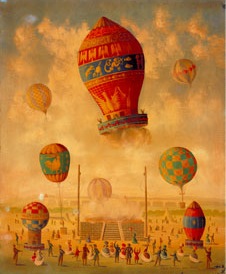
balloonsIn case you’re at a loose end over the next couple of weeks, I’m doing two events. The first is a literary breakfast this Friday (16 October) at Gertrude and Alice Bookstore here in Bondi Beach. Tickets are $12, and bookings can be made by emailing info@gertrudeandalice.com.au or by phone on 02 9130 5155. I’m going to be talking about my most recent novel, The Resurrectionist (all that darkness and death seem so appropriate for breakfast in Bondi, after all).

And the weekend after next (24-25 October) I’m one of a very impressive line-up of writers appearing at the National Library of Australia’s Flight of the Mind Conference in Canberra. Held over two days, the Conference is designed to explore a range of questions about creativity and the writing imagination, and speakers include Alex Miller, Peter Goldsworthy and Sophie Cunningham. I’m speaking on Sunday morning at 10:00am, and given what a big part of my life this site’s become over the last year, I’m planning to speak about the way technology is altering both what and how we write. The full Conference program is available here, and bookings can be made by emailing events@nla.gov.au or calling 02 6262 1122.

Break text

addthisTweet this