Skip to content

Posts from the ‘Writing’ Category

‘Visitors’ shortlisted for the Aurealis Awards

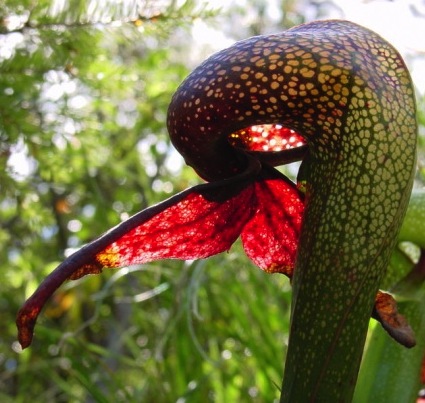
Pitcher PlantI woke up this morning to the very lovely news that my story, ‘Visitors’, which was published in the Review of Australian Fiction in the middle of last year, has been shortlisted for an Aurealis Award in the Short Fiction Category alongside stories by Margo Lanagan, Greg Mellor and Kaaron Warren.

Obviously being on the shortlist is pretty fabulous in itself, but I’m doubly pleased because it feels like a real vote of confidence in the time and effort the Review’s editor, Matthew Lamb, has invested in the publication. Matthew’s now editing Island (a process he spoke about recently) but in his time at the Review he helped create a space in which both new and established writers could stretch themselves and try new things, a process that’s paid off in spades over the past couple of years.

You can read the full list of finalists over on the Aurealis Awards website, and if you’d like to read the story itself it’s available for $2.99 through the Review of Australian Fiction (or you can get the whole of Volume 2 for $9.99). My congratulations again to all my fellow finalists (and in particular Margo Lanagan, whose novel, Sea Hearts, was also shortlisted for the Stella Prize earlier this week) and my thanks to the judges and organisers for all their hard work.

Oh, and the picture of the pitcher plant? If you read the story you’ll understand.

Perth Writers’ Festival and the Stellas

3262_8415-width=620&height=385&scale_mode=c_PWF-Base-imageThis is a little late in the day (although it’s been that kind of month), but if you’re in Perth and heading to the Writers’ Festival over the weekend I’m doing a few sessions you might want to check out.

The first two are on Friday: ‘Critical Thinking’ with Stephen Romei, Geordie Williamson and John Freeman at 12:30pm in the Juliet Tent and ‘The Problem With Beauty’ with Ali Alizadeh and Dennis Haskell at 5:00pm in the Woolnough Lecture Theatre. They’re followed by ‘HBO and the Rise of the TV Novel’ with Sue Masters, David Petrarca and Rosemary Neill on Saturday at 11:00am in the Octagon Theatre, ‘To the Point’, with Susan Midalia, Zane Lovitt and Julienne van Loon at the somewhat brutal hour of 9:30 on Sunday morning, and my final session, ‘Inside the Imagination of China Miéville’ at 12:30pm on Sunday in the Octagon Theatre (although I’m only asking the questions in that one). They all look like fascinating sessions and I’m really excited to be a part of them and the Festival more generally (the line-up this year, which includes Margaret Atwood, David Marr and James Meek is really impressive and the programming is thoughtful and provocative).

You can also catch my partner, Mardi McConnochie at ‘Love Story’ in the Juliet Tent at 11:00 on Friday, ‘Is Happy a Dirty Word?’ in the Dolphin Theatre at 12:30pm on Saturday and ‘Of the Time’ in the Woolnough Lecture Theatre at 11:00am on Sunday. She’s also one of the guests at the Stella Prize Trivia Night in the Sunken Garden on Saturday at 6:30pm.

And while we’re on the subject of the Stellas it was great to see the release of the inaugural longlist for the award. It’s a really interesting and diverse collection of books that span fiction, non-fiction and memoir. Big congratulations both to everybody on the list and to all the people who have worked so hard to make the award happen.

UK editions of ‘The Element of Need’ and ‘Beauty’s Sister’ now available

Beauty's SisterIt’s taken a while, but the Penguin Specials editions of my Rapunzel novelette, ‘Beauty’s Sister’, and my essay about Adelaide, adolescence and serial murder, ‘The Element of Need’, are now available in the UK. At the moment they’re only available for Kindle, but iBook and Google Play editions should be available soon, and as soon as they are I’ll post links. I understand they should be available in the US reasonably soon as well.

Both cost £1.99. You can buy the UK edition of ‘The Element of Need’ here and the UK edition of ‘Beauty’s Sister’ here.

Australian readers can download copies of ‘The Element of Need’ for KindleiBooksKobo, and Google Play, and Beauty’s Sister’ for KindleiBooksKobo and Google Play.

That was the year that was

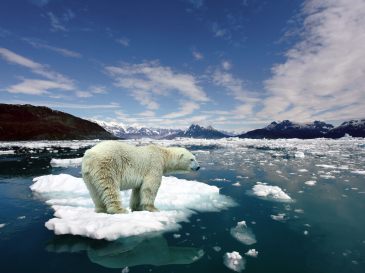
Polar Bear

So, it’s December, and although I’m still scrambling to get some things locked away the year is pretty much done. I’m going to post something about the books I’ve enjoyed most over the past twelve months next week (I’m leaving it so late because I don’t want to preempt the picks I’ve made for The Weekend Australian and The Thought Fox, although if you want a preview you can check out my picks for The Sydney Morning Herald and The Age, which were published last week) and if I get really excited I might do a musical round-up as well (although I’m not going to make any big promises on that score).

Looking back over the past twelve months I’m sort of amazed by how much I’ve gotten done. I haven’t managed to write much long non-fiction, but I’ve written a lot of reviews, written and submitted my doctoral dissertation and somehow managed to stay on top of all my normal commitments (or at least mostly on top).

More importantly though I’ve written a lot of fiction, some of which is even good. I’ve knocked over most of the first draft of a new novel (or novelly thing – in fact it’s a discontinuous narrative made up of ten interconnected stories), and with luck I’ll have something deliverable by April next year. Although it still doesn’t have a title the opening section was published as a standalone story in The Big Issue earlier this year and I’m hoping two more sections will be published as stories in the new year. What I’ve got is rough but I’m really pleased with it.

As well as the novel I’ve written and published a number of stories. Some – like my Rapunzel novelette, ‘Beauty’s Sister’, which was published as part of Penguin’s excellent Penguin Specials series (and is available for KindleiBooksKobo and Google Play), and my alien invasion story, ‘Visitors’, which was published by The Review of Australian Fiction – have been published as in electronic formats only, others, like my zombies in suburbia story, ‘The Inconvenient Dead’ are available online and in print (you can pick up ‘The Inconvenient Dead’ in Best Australian Stories 2012 as well as Overland 206). In addition to the stories above I’ve got another two which will be published in the new year and several more about to go out, all of which I’ll link to as they appear.

I’m also pleased to say my essay about growing up in Adelaide, ‘The Element of Need’, was also republished as a Penguin Special a few months back. If you haven’t read it you might want to check it out: I think it’s one of the best things I’ve written in recent years. There’s a post with more details about it here, or you can buy it for KindleiBooksKobo, and Google Play. And staying with the creepy theme, you might also want to check out my essay about ghosts and ghost stories, ‘Encounters with the Uncanny’, which appeared in Meanjin earlier this year. I’ve also just finished a longish piece on 2001: A Space Odyssey that I’m really pleased with and will link to once it’s published in the new year.

At this point I’m hoping next year will be equally productive – I’ve got a pile of stories that need writing and at least two novels I want to get written once this one is done – but for now I’m just happy to have gotten so much done over the past twelve months. I hope you’ve all had equally productive years.

And, finally, because it’s summer in Australia I thought I might direct you to this piece I wrote about summer and the myths of Australianness a couple of years ago: it’s not new but I like it. Or you could check out my review of John Smolens’ Quarantine, which appeared in The Washington Post a few weeks back, or my review of Ronald Frame’s Havisham, which appeared in The Weekend Australian last Saturday.

The Best Australian Stories 2012

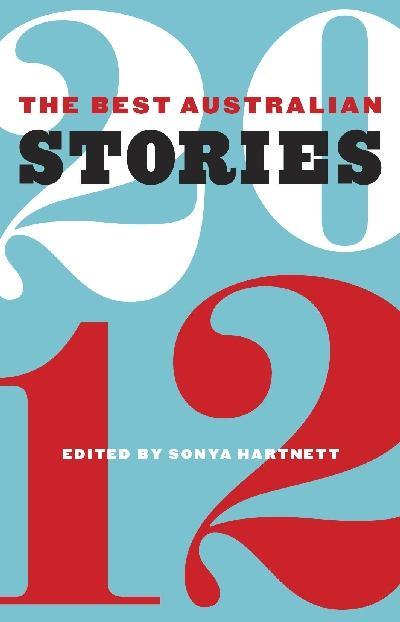
Best Australian StoriesSince it’s been out for a couple of weeks this is a little after the fact, but I wanted to say how delighted I am my story ‘The Inconvenient Dead’ has been selected for this year’s Best Australian Stories (which comes complete with a spiffy redesign). The volume, which was put together by Sonya Hartnett, also includes stories by a bunch of good people such as David Astle, David Sornig, Romy Ash and newcomers like Rebecca Harrison, and while I haven’t read all of it yet, I’m happy to report that what I have read is fantastic.

I’ve also added three reviews to the site: my pieces on Patrick Flanery’s striking and often unsettling exploration of trauma, memory and complicity,  Absolution and Dana Spiotta’s stunning third novel Stone Arabia (if you haven’t read it run, don’t walk to your nearest shop and buy it now), both of which appeared in The Weekend Australian earlier this year, and my review of Peter Heller’s haunting excursion into apocalyptic fiction, The Dog Stars, which ran in The Sydney Morning Herald and The Age a few months back. And while we’re on the subject of reviews you might also want to check out my piece on James Meek’s The Heart Broke In, which appeared in The Weekend Australian a few weeks ago.

And the novel? Nice of you to ask. It’s grand: not there yet but close-ish to a (very rough) first draft, which is nice.

Podcasts, Poems and P76

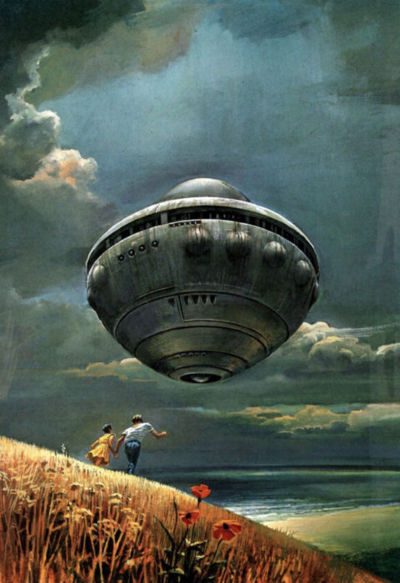
Bruce Pennington, ‘Children of Tomorrow’

Busy writing, which is cutting down on the posts, but in the meantime I thought I might point you in the direction of a couple of things that might be of interest.

The first is the latest episode of Jonathan Strahan and Gary Wolfe’s excellent Coode Street Podcast, which I was lucky enough to be a part of last weekend. If you’re interested in SF and Fantasy and you don’t already listen to Coode Street I heartily recommend you check it out; recent episodes have featured discussions with Paul Kincaid about his stinging critique of the state of contemporary SF in the Los Angeles Review of Books a few weeks ago (there’s a nice roundup of other responses to the piece on Kincaid’s website) and the brilliant Kij Johnson (if you haven’t read her new collection, At the mouth of the river of the bees, you should do so immediately, although not before you’ve read the opening story, ’26 monkeys, also, the abyss’). The episode featuring me is available for free from the Coode Street website or direct from iTunes.

The second is this week’s launch of issue 6 of P76. This is a project with a rather wonderful story behind it. As some of you may remember, P76 was a small but adventurous literary journal that produced five issues in the late 1980s and early 1990s before folding just before the publication of its sixth issue in the summer of 1992/3.

Earlier this year P76’s editors, Mark Roberts and Linda Adair, found the setting for this lost issue, which features work by M T C Cronin, joanne burns, Gary Dunne and others and decided to publish it as a time capsule showcasing the state of Australian literature 20 years ago. This was a decision that was of particular interest to me because the issue also contained one of the first poems I ever sold, and which, as a result of the magazine’s collapse, never saw the light of day. If you’d like to read the issue it’s available from Rochford Street Press. Issue 1 of P76 is also available for free online. My poem’s called ‘Wintering’, and it’s actually not bad.

Now, back to the novel …

Encounters with the Uncanny: Postscript

Last week I mentioned that the September Meanjin has an essay by me about ghosts and ghost stories. At the time the piece was print-only, but I’m delighted to say it’s now available online in its entirety.

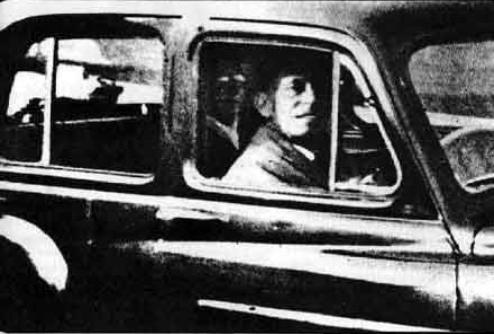
Obviously I think you should read it right away, but once you have I think you should come back here, because in the week since it was published it’s acquired an extremely unsettling postscript …

Read more

Encounters with the Uncanny: Ghost Stories and the Brain

Bronwyn Rennex, ‘Safety Pin’, © Bronwyn Rennex, 2004.

The new Meanjin is out today, and as well as being an incredibly gorgeous physical object, includes a piece by me about ghost stories and recent research suggesting many of our encounters with the uncanny may have a physiological basis. You can buy the issue in good bookshops, online or you can subscribe (a particularly good deal at present because Meanjin are offering five issues for the price of four during September), but if you’d like a taste, here are the first few paragraphs:

In 2007, while on a residency in Paris, my partner and I took time out to visit friends in London. It was August, and we were fortunate enough to be offered the opportunity to mind a friend’s mother’s house in Balham Hill. The first night we stayed we were tired; it had been a long day, travelling on the Eurostar with our fifteen-month-old, and so we ordered a pizza, watched television and went to bed early.

I have never been a good sleeper, especially in unfamiliar places, but that night I was asleep almost as soon as my head hit the pillow. For a time I slept undisturbed, but then, sometime deep in the night, I woke, falling out of a deep dreamless sleep into the sort of strange wakefulness jetlag induces. At first I was disoriented, the room unfamiliar in the darkness. Next to me I could hear my partner breathing. Gradually I realised where I was, but even as I did
I was gripped by the certainty I had not woken of my own accord, and that something, somewhere, was wrong.

And then, quite suddenly, I heard a child cry …

Update: the piece is now online, so you can read it at your leisure. But when you have make sure you come back and read the postscript. Alternatively you can buy Meanjin 71/3 online or subscribe.

Ian McEwan’s Sweet Tooth (and some other reviewy stuff)

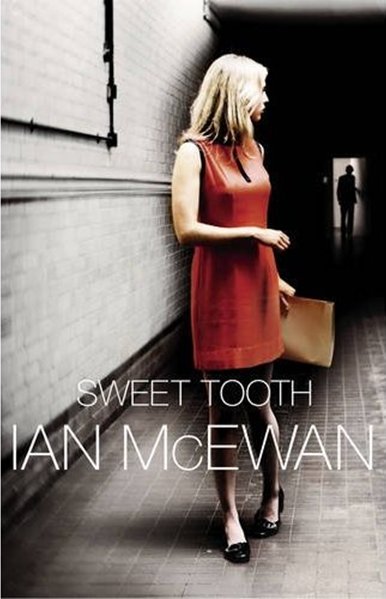
Some of you may have noticed I had a review of Ian McEwan’s new novel, Sweet Tooth in Saturday’s Weekend Australian.

I’ve reproduced the review over the fold in case you’d like to read it, but before you do I thought I might point you toward my reviews of Karen Walker’s vastly overhyped The Age of Miracles and Lauren Groff’s wonderful Arcadia, both of which appeard a few weeks ago, and both of which are books I want to fold into a longer piece I’m working on about the current fashion for dystopia, and what it tells us about the state of science fiction and our imagining of the future more generally.

And while you’re there you might want to check out my reviews of G. Willow Wilson’s Alif the Unseen, and Kim Stanley Robinson’s 2312, both of which I’ve now posted on the site.

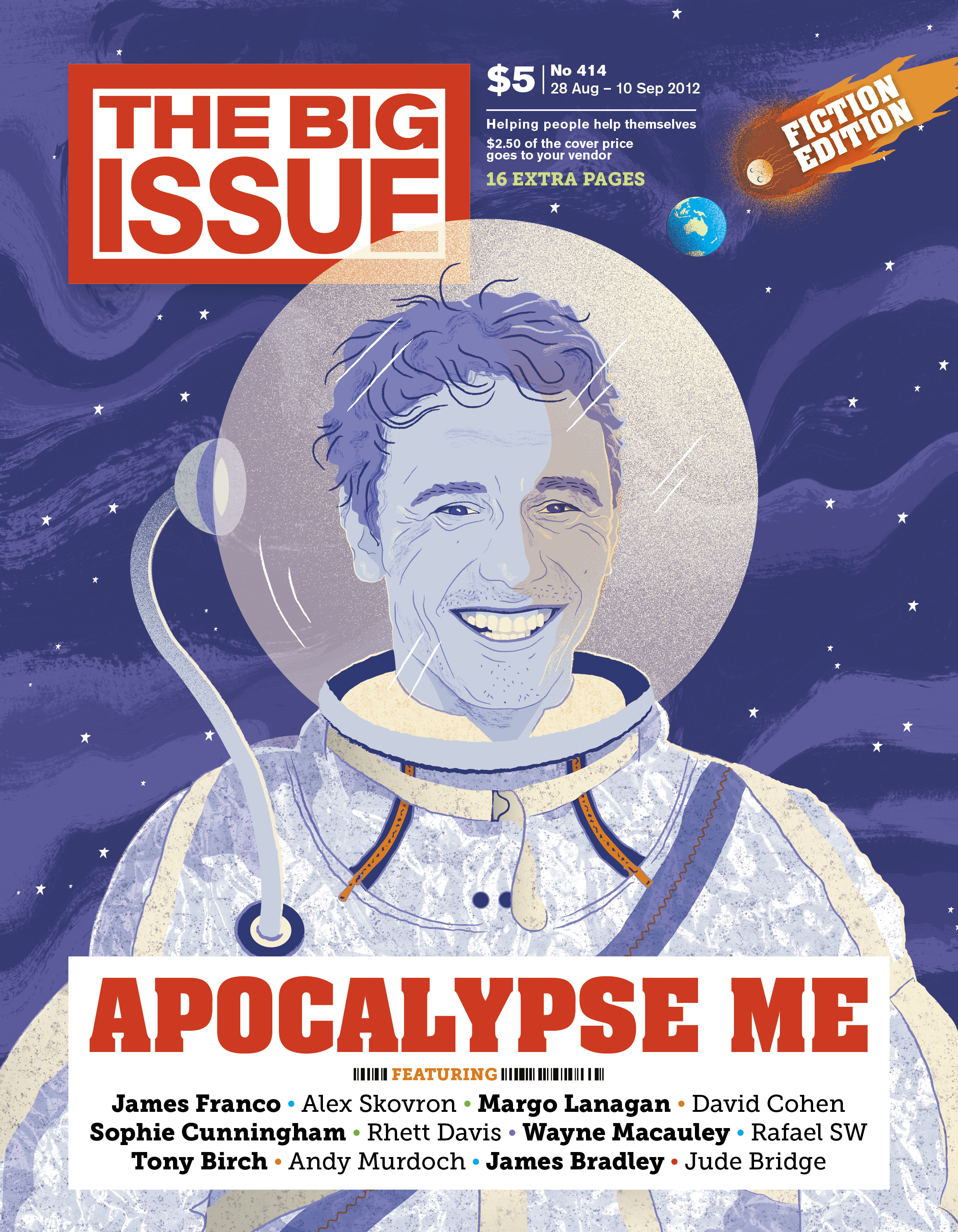
Apocalypse Now? The Big Issue’s Fiction Issue

I’ve got a story in the new Big Issue, which hits the streets today. Entitled ‘Solstice’, it’s part of the magazine’s annual Fiction Issue, which this year is focussed on fiction about the end of the world.

I’ve not had a chance to read the whole magazine yet but since it features stories from writers of the calibre of Margo Lanagan, Miles Franklin shortlistee Tony Birch and Sophie Cunningham, as well as an essay by the depressingly multi-talented James Franco I’m sure it’s brilliant.

Of course it’s always a buzz when a new story goes out into the world, but I’m particularly pleased about the publication of this one (which is set ten minutes from now amidst the melting glaciers of Antarctica) because it’s also the first part of the novel I’ve been working on for the past few months, and which I’m very, very excited about.

So what else can I say but do yourself a favour and grab a copy of the magazine today? After all, how often do you get to grab a pile of great stories and help people who really need it at the same time?

Murder and Memory

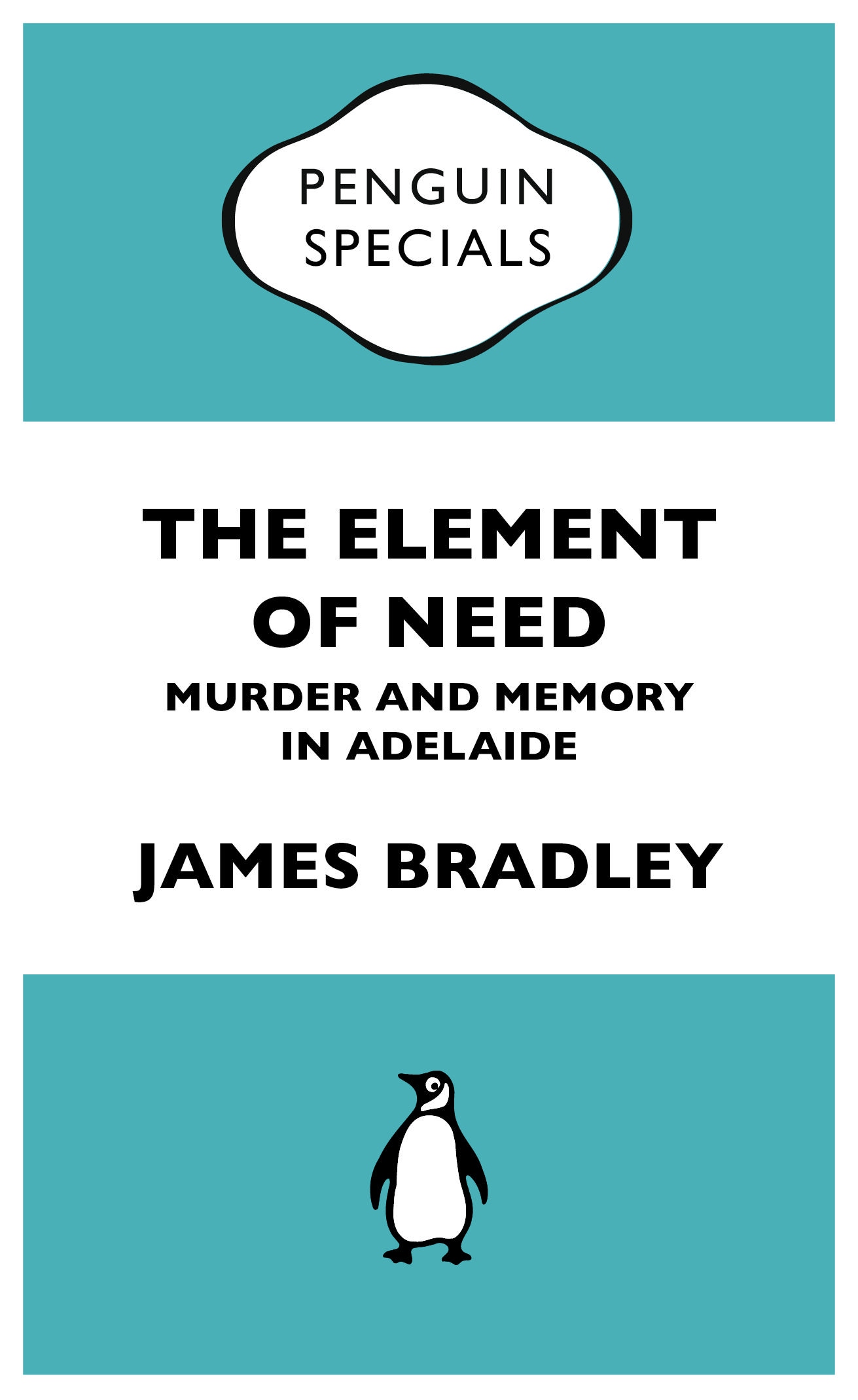
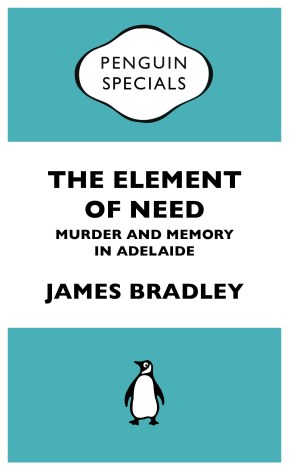
I’m delighted to be able to say my essay ‘The Element of Need’ has just been released as one of Penguin’s new digital-only Specials. Originally published in 2008 in Heat, and republished in Best Australian Essays 2009, it’s a work that matters very much to me, not just because I’m very proud of it as a piece of writing, but because I’ve lived with the material in it for a long time.

As you’ll probably guess if you read it, it was a very personal and quite confronting piece to write, not just because the material in it about the various murders and abductions that have taken place in Adelaide over the past four and a half decades is so unsettling, but because it’s very much about trying to tease out some things about my own past and identity that aren’t easy to talk about.

You can read the blurb for it on the Penguin website, but in case you’d like a sample here are the opening paragraphs:

“At night, in summer, gully winds push down out of the hills encircling Adelaide and swirl across the plain towards the sea. Produced by the weight of the cooling atmosphere above pressing down and forcing the warmer air trapped in the valleys outwards, they build through the evening and into the small hours, moving restlessly through the suburbs and parks with a sound that seems to belong somewhere else, somewhere far from human habitation.

“No doubt winds of this sort are a common enough phenomenon, but for me they are inextricably connected with the city of my birth, its peculiar geography and isolation. When I think back to my adolescence and the disrupted, disconnected years that followed, my memories are almost exclusively of the city at night, my own restless movement through its empty streets, the way the winds could make it seem a place of ghosts, its carefully planned grid of streets uninhabited.

“I suspect every adolescent knows this feeling, this need for motion, the restless search for something ill-defined. Sex, or desire, is part of it. But it’s not just about sex, it’s about the need for something to happen, something large enough, powerful enough to answer the need within.

“Of course this is not how it was, or not entirely. But memory deceives us, decomposing into textures, feelings, images. We remember who we were as much as what was, each of us carrying other versions of ourselves inside, things and thoughts we do not speak, or sometimes even fully understand.”

‘The Element of Need’ is available for KindleiBooksKobo, and Google Play in the next day or two. Sadly it’s only available in Australia for the time being, but international versions will be released soon.

You should feel very free to pick up the Penguin Special edition of my Rapunzel novelette, ‘Beauty’s Sister’, which is also available for KindleiBooksKobo and Google Play) at the same time. Or if you want to go really crazy, you can grab my short story ‘Visitors’, which was published in the Review of Australian Fiction in May). You might also want to read my 2009 piece ‘On Novels and Place’, which touches on some of the material explored in ‘The Element of Need’.

Ocean of Life

I don’t often come across books I think everybody should read, but Callum Roberts’ Ocean of Life, which I reviewed for Saturday’s Weekend Australian, is definitely one of them.

My desire for people to read it isn’t because it’s beautiful, or liberating or even particularly wonderfully written. It’s because it manages, better than almost any other book I’ve read, to communicate the sheer scale of the catastrophe that’s taking place beneath the waves.

As I say in my review, I think its contents are likely to prove deeply confronting for many people. Although much of the material Roberts gathers together will be familiar to anybody with an interest in marine ecosystems I suspect the urgency and complexity of the crisis will come as a shock to people who aren’t. I challenge anybody to read the sections on ocean acidification or anoxic dead zones and not feel disturbed, or to feel comfortable reading Roberts’ lucid analysis of the speed with which fish stocks are collapsing through overfishing.

But in a way the most shocking bits of the book aren’t the facts and figures but the allusions early on to the sheer fecundity of the oceans before humans began to harvest them. Early in the book there’s a remarkable pair of excerpts from a work by the Roman writer, Oppian of Corycus (somebody, I have to confess, I wasn’t familiar with prior to reading the book), describing the methods used to catch the huge schools of tuna that once existed in the Mediterranean.

Most of these involve nets, into which the tuna pour, “without end”, but one is more basic, and relies on the use of a heavy log with spikes in it which is then dropped into the water.

I found the idea that fish might have been so plentiful it was possible to catch them with a  spiked log mind-boggling, as I’m sure many others will. But once one goes looking there are many such examples available.

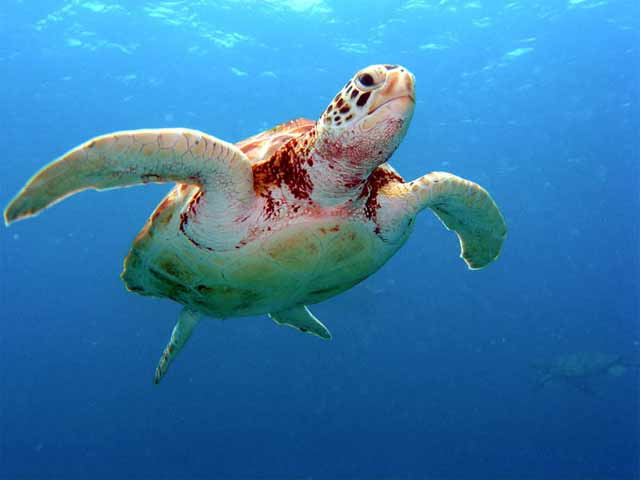
One of my favourite concerns turtles. I have a longstanding fascination with turtles, which have always seemed to me to be creatures of great grace and beauty (I’ve wanted to write about them for years), and some of the most distressing material in Roberts’ book concerns them and the rapid declines taking place in many populations. Pacific populations of leatherback turtles, for instance, have declined more than 95% in the past 50 years.

But the example I’m thinking of doesn’t appear in Ocean of Life and doesn’t concern leatherbacks. Instead it relates to green sea turtles. These days there are estimated to be less than 90,000 nesting female green sea turtles left worldwide, yet when Europeans first arrived in the Americas 500 years ago it is believed there were 100 million in the Caribbean alone.

Exactly how reliable these sorts of estimates are is obviously an open question, and not one I’m in a position to assess. Ocean of Life includes an interesting discussion of attempts to derive historical fishing yields from extant data, while other studies have used at prices at market to estimate the same. But whether the figure was accurate or not, the fact is that turtles were once so common in the Caribbean that when Columbus arrived feeding groups often filled the ocean to the horizon, and as late as the eighteenth century ships that had lost their way to the Cayman Islands could steer there entirely by the noise of green sea turtles returning to nest.

If you’re staggered by that idea I suggest you read Ocean of Life, a book that doesn’t just make clear how much trouble the oceans are in, but goes one step further and offers an outline for a plan of action. And once you’ve read it, buy a second copy and send it to your local member of parliament, or hand it on to somebody else. Because as I say in my review, this is one of those rare books about the ocean that should be read not just by everybody with an interest in marine ecosystems, but by business leaders, politicians and policy-makers around the world.

Update: I’ve just discovered there’s an excerpt from Ocean of Life over at Newsweek. Please read it.

And … you’re back in the room

So, I’ve been away for a while. It wasn’t really intentional, but I’ve been completely overwhelmed by work and family commitments since about March, and this site is one of the many, many things that have fallen by the wayside. Things have eased off a little lately, but since I’m now working hard on a new book I’m not going to make any rash promises about how much I can manage on top of that.

I’m hoping I’ll get a few things up in the next week or two, but in the meantime I thought I’d link to my reviews Kim Stanley Robinson’s 2312, a book that seems to be getting fairly polarised reactions from readers and critics (for what it’s worth I thought it had extraordinary bits but was less good than I wanted it to be overall) and of G. Willow Wilson’s Arabian Nights/Arab Spring/tech thriller Alif the Unseen, a book that’s generating a huge amount of buzz overseas.

And I’ve plugged the Alabama Shakes before, but if you haven’t heard them, you might want to take a moment to check out this live recording of the title track from their new album, Boys and Girls. It’s a great song, and Britanny Howard’s voice is even more jaw-dropping live than in the studio.

Pascall Prize for Criticism

I’m incredibly excited to be able to say that on Saturday night I was awarded the Pascall Prize for Criticism. It’s a huge honour, and needless to say I’m delighted, although in a way the really wonderful (and weirdly humbling part) has been how many people have written, tweeted or sent messages to say congratulations.

If you’d like to read my acceptance speech, it’s available on the Pascall website, as is the Judge’s Report, but since I suspect most of you won’t make it over there I’d like to say again how grateful I am to the judges, Geordie Williamson and Alison Croggon (both of whose work I admire immensely) and to the Pascall Foundation itself, for its commitment to the idea of criticism as something important and worthy of celebration. You can also read an extended interview with me over at Stephen Romei’s blog, A Pair of Ragged Claws.

I should also thank all of you, since at least part of the reason I was chosen was the work that appears on this site, work that has been shaped considerably by the generosity and intelligence of the many, many people who have taken the time to comment and engage with each other here. I’m aware things are a bit slow around here at the moment but hopefully that will change once I’ve got a couple of the things I’m working on locked away.

Read my new story, ‘Visitors’, in the latest issue of the Review of Australian Fiction

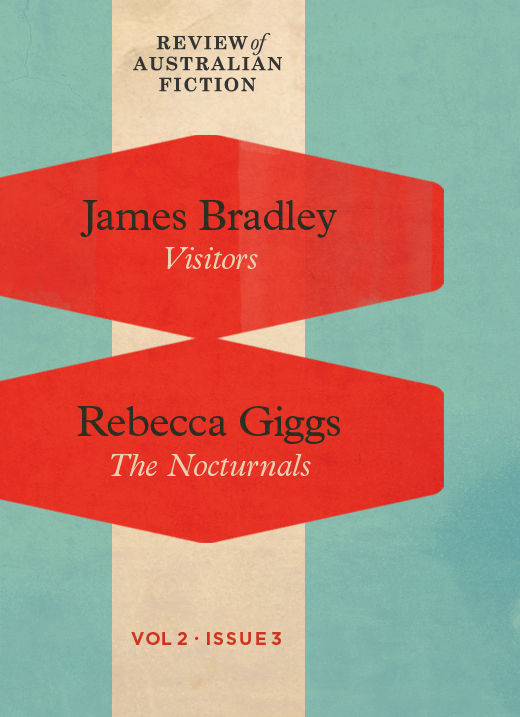
If you’re a subscriber to the Review of Australian Fiction you may already have received this week’s issue, which features stories by me and Rebecca Giggs; if not, copies are available for $2.99 on Booki.sh.

I’ve been meaning to write something about the Review for a while, because it’s a fantastic project on a whole range of levels. The brainchild of Hobart-based writer and editor Matthew Lamb and his Brisbane-based associate, Phil Crowley, it publishes two stories a fortnight, the first by an established writer, the second by an emerging writer nominated by the established writer, with stories published in digital-only form on the Booki.sh platform.

Thus far the Review has published an amazing collection of stories by a fantastic selection of writers, with previous issues featuring work by Georgia Blain, Christos Tsiolkas, Kalinda Ashton, P.M Newton, Kim Wilkins and Susan Johnson, to name just a few.

The story I’ve got in the new issue is a slightly Science-Fictional thing called ‘Visitors’, about a woman involved with one of a community of botanical aliens. It’s short and intense and a bit off-kilter and I rather like it. It also pairs nicely with Rebecca’s story, ‘The Nocturnals’, which is about a couple grieving for the loss of their son and stargazing.

I’m delighted to be part of the growing family of writers who have contributed to the Review. It’s a great project and a real reminder of just what how much creative use of digital publishing models can achieve. I’m also delighted to have played some part in helping to bring Rebecca’s work to a wider audience: I’ve mentioned her before, and some of you may have seen her work in Meanjin or Overland or Best Australian Stories 2011, but I think she’s quite something, and I suspect once you’ve read ‘The Nocturnals’ you will as well.

If you’d like to grab the latest issue of the Review it’s available for $2.99 on Booki.sh (a cross-platform, multi-device, DRM-free and cloud-based e-reader system supported by a number of Australian independent bookshops (it’s good, and very worth taking a look at)). You can also buy back issues for $2.99 or subscribe to Volume 2 for $12.99 (the first 30 new subscribers also receive a free Text Classic).

And while you’re here, you should very free to check out my novelette, ‘Beauty’s Sister’, which was published last week as part of Penguin’s new Shorts program, and is available for KindleiBooksGoogle Play and Kobo. And if you missed it, you can read my zombies in suburbia story, ‘The Inconvenient Dead’, for free at Overland.