Skip to content

Posts from the ‘Writing’ Category

Dreaming in the Dark and a Best of Trifecta

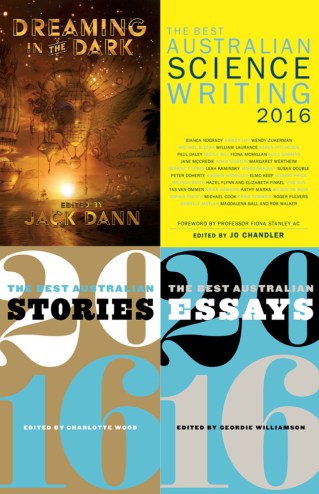
Best ofs.jpgA little after the fact, but I’ve got a story in Dreaming in the Dark, the first book from PS Publishing’s new imprint, PS Australia. Edited by Jack Dann, the collection features stories by a roll call of brilliant writers, ranging from Garth Nix and Sean Williams to Angela Slatter, Lisa L. Hannett, Rjurik Davidson and many more (you can check out a full list of contributors and order a copy on PS’ website). Like all PS’ books it’s also a stunning-looking object, with a gorgeous cover designed by Greg Bridges, and if you hurry you can get an illustrated slipcased limited edition. It’s a fantastic book and I’m delighted to be in such fantastic company.

I’m very proud of the story that appears in the collection. Entitled ‘Martian Triptych’, it moves from the dying moments of Percival Lowell to billions of years in the future, and explores the way human time and geological time intersect in our imaginations and in reality. So I’m absolutely delighted Charlotte Wood has selected it for Best Australian Stories 2016, where it appears alongside stories by people such as Elizabeth Harrower, Tegan Bennett Daylight, Fiona McFarlane, Gregory Day and Georgia Blain. It’s a real honour to be included and I’m very grateful.

It’s also a real honour to be able to say my essay about the late David Bowie, ‘Loving the Alien’, which began life as a post on this site, has been included in Best Australian Essays 2016, edited by Geordie Williamson. It’s a piece I’m very proud of and one I’m thrilled is now going to find a new audience.

I’m also thrilled to say ‘Slippery Migrants’, a piece I wrote for The Monthly about the amazing lifecycle of the long-finned eel, has been included in Best Australian Science Writing 2016, which was edited by Jo Chandler. I’m not sure I’ve ever thought of myself as a science writer – certainly when I look at people who write about science for a living like Chandler and Bianca Nogrady I’m keenly aware of the skill and knowledge they bring to bear on their work – so it’s wonderful to find myself in their company, and even more wonderful to be able to say the piece was shortlisted for the 2016 Bragg Prize for Science Writing.

And finally I’d like to thank both the editors who helped shape and refine the original pieces – ‘Slippery Migrants’ in particular benefited from careful and thoughtful editing by the team at The Monthly – and Black Inc Books and New South Publishing for their continued support of these Best of series, which play an incredibly important role in celebrating and supporting Australian writing and Australian writers.


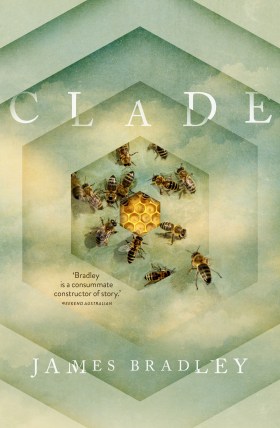
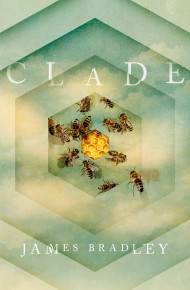
Clade cover reveal

Very excited. Out September in the UK and US with Titan Books.

clade-titan

The world has changed: on writing in the Anthropocene

Here’s me in conversation with the wonderful Iain McCalman (if you haven’t read his marvellous The Reef: A Passionate History it’s brilliant).

Clade shortlisted for the 2016 ALS Gold Medal

CladeI’m delighted to be able to announce that Clade has been nominated for Australia’s oldest literary award, the ALS Gold Medal, which is both completely unexpected and a huge honour. My congratulations to the other shortlisted writers, Tegan Bennett Daylight, Drusilla Modjeska and Brenda Niall – it’s fantastic to be in such distinguished company – and my heartfelt thanks to the judges and the organisers of the prize, the Association for the Study of Australian Literature. The winner is announced on 6 July at the Association’s conference in Canberra.

Clade now available through Audible

Clade AudibleI’m very excited to say the audio book edition of my Victorian Premier’s, Christina Stead and Aurealis Award-shortlisted novel Clade is now available through Audible in Australiathe UK and internationally. It’s read by Ian Bliss, and features a rather lovely new cover, so if you’ve been holding off reading it perhaps now’s the time to grab a copy.

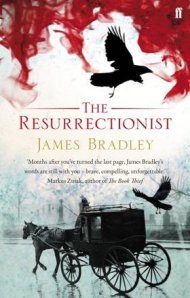
And if audio books are your thing you might also want to check out the audio editions of The Resurrectionist, read by Stan Pretty (UK only), and Wrack, read by Humphrey Bower (AustraliaUK and US).

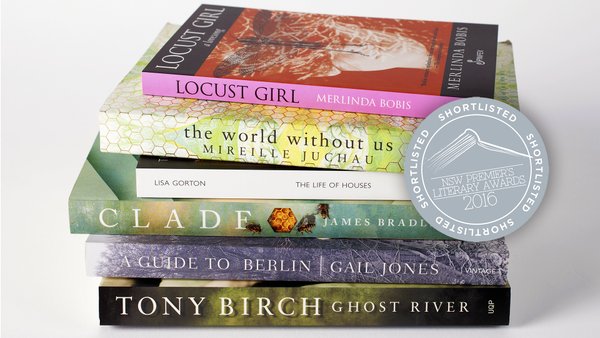
Clade shortlisted for the Christina Stead Award

Cf9peObUEAQ3Psa.jpg
I’m delighted to be able to say that Clade has been shortlisted for the Christina Stead Award for Fiction at the 2016 NSW Premier’s Literary Awards: it’s a huge honour and I’m absolutely thrilled. The other nominees for the fiction award are Tony Birch’s Ghost River, Merlinda Bobis’ Locust Girl, Lisa Gorton’s The Life of HousesGail Jones’ A Guide to Berlin and Mireille Juchau’s The World Without Us, several of which I’ve read and loved, but I do recommend taking a few minutes to check out the shortlists for the other awards as well. The winner will be announced in Sydney on 16 May; in the meantime I note without comment that voting is now open for the People’s Choice Award, and that Clade is one of the eligible titles.

Locus Recommended Reading List

LocusJust a quick post to say how delighted I am to discover Clade is one of the titles selected for Locus Magazine’s Recommended Reading List for 2015. You can check out the full list over at Locus, but needless to say I’m completely thrilled to be on a list that features books by Ann Leckie, Kim Stanley Robinson, Adam Roberts and Dave Hutchinson, and by the incredibly generous comments about the book in the issue itself. My sincere thanks to all concerned.

And just a reminder that if you’re in Australia Clade is available from any good bookstore, your favourite online retailer or as a ebook, and worldwide through Book Depository.


The End of Nature and Post-Naturalism: Fiction and the Anthropocene

One of the most interesting things about watching a novel go into the world is discovering what other people think it’s about. Sometimes that can be illuminating, sometimes it’s frustrating, but it’s always fascinating, not least because the book people seem to read is never quite the book you thought you were writing.

In Clade’s case this process was complicated by the fact a lot of people didn’t seem to know quite how to categorise it. For my part I tended to say it was science fiction, simply because that’s easy and relatively uncontroversial. A number of reviewers, especially in literary outlets, called it dystopian, which it isn’t, or not quite, while a couple of reviewers with an interest in science fiction described it a slow apocalypse or breakdown novel, which I suspect it is, at least in one sense. Others have called it cli fi, or climate fiction, a term that has some utility as a marketing category but seems to occlude more than it reveals when deployed as a critical tool; elsewhere some people have called it Anthropocene fiction.

Interestingly though, several reviewers registered the inadequacies of the terminology, and went on to ask about how exactly we should be describing the growing number of books engaged directly or indirectly with climate change and environmental transformation.

The most substantial of these discussions was in Niall Harrison’s characteristically thoughtful and perceptive review at Strange Horizons, a review that ended with what he described as “a coda about categories”. Noting first that Clade was only one of a number of recent novels “that to varying degrees explore the personal and social effects of environmental crisis”, he went on to note that while many such novels are “kinds of science fiction … there is a sound political logic for discussing them as a group unto themselves”.

Like others, Harrison thinks it’s possible to distinguish such novels from other kinds of science fiction because “climate change is already happening, which means it is in a different class of speculation and social relevance to, say, a pandemic: writing about it is a question of degree and perspective, not whether or not it will happen at all, and the degrees and perspectives that writers choose can be usefully compared” (a point Dan Bloom has also made). But he also – rightly – points out that acknowledging this distinction then demands we recognise the existence of novels such as Barbara Kingsolver’s Flight Behaviour, which are engaged with these questions but are not science fiction in any meaningful sense.

Like me Harrison is unconvinced of the utility of the notion of “cli fi” in this context (as I have also done he notes its troubling tendency to elide the long history of environmental science fiction), and similarly sceptical of trying to group such books together as dystopias or post-apocalyptic stories, even though many books in this area deploy tropes and strategies associated with these traditions, before acknowledging that while he doesn’t have a solution to the question he believes it deserves further attention, if only because “this is a vital literary area, and … we need to get better at describing and discussing it”.

For what it’s worth I agree with Harrison that this is an area in which our conventional terminology fails us, and that none of the options on offer seem to be able to make sense of the work that is being produced, its relationship to traditional genre categories like science fiction (and indeed non-fictional and essayistic forms such as nature writing), or the various strategies it deploys to open up the realist novel in ways that let it embrace and engage with environmental questions.

That’s partly because of the sheer diversity of such books, and their tendency to elide traditional genre boundaries: certainly there’s almost no meaningful family resemblance between a book like Kim Stanley Robinson’s Aurora and Sarah Hall’s The Wolf Border, but as I’ve argued elsewhere, the affinities between the two means they can (and should) be usefully discussed together.

At one level this diversity reflects the many and complex ways in which writers and artists are engaging with these questions, and more deeply their ongoing attempts to map out an imaginative language with which to make sense of what’s happening to our world (and indeed ourselves) in the 21st century, a point I’ve made elsewhere in the context of what might be best described as the new nature writing. Certainly it’s not accidental so many writers fall back on stories about lost parents and missing children when they seek to articulate their feelings about climate change, devices that capture something of the rupture and grief which suffuses the contemporary condition (something that has prompted the writer M. John Harrison to talk about “loss lit”, and which is also present in articles like this, or this). Nor is it a coincidence that so many of these books employ fractured structures, and borrow devices from science fiction and elsewhere to talk about time and deep time (I suspect all the lost parents and children are another way of getting at these questions as well), or that questions of landscape, and our solastalgic sense of loss about its erasure intrude over and over again (in an excellent piece earlier this year Robert MacFarlane made a similar point about the rise of the eerie in contemporary British culture).

More importantly though, this diversity suggests why thinking of these books in terms of genres or categories is to miss the wood for the trees. Because these books aren’t a genre, they’re expressions of the deeper and more pervasive transformation of the world and ourselves we have taken to calling the Anthropocene in exactly the same way novels like Mrs Dalloway and Ulysses reflected and embodied the transformative effects of modernity upon our culture and our selves. As Mckenzie Wark quipped on Facebook earlier this year, all fiction is anthropocene fiction, some of it just doesn’t realise it yet.

To my mind the benefits of thinking about the question in this way are considerable. Not only does it allow us to step away from fruitless arguments about generic definition, but it allows us to see climate change as simply one (if still a very considerable) part of a larger process of transformation, one that embraces, amongst other things, genetic engineering, virtuality, over-population, species loss, habitat destruction and the broader disruption of natural and social systems by environmental change and capitalism.

And, perhaps more deeply, it recognises that we inhabit a world in which we ourselves are being altered, not just by technology and social transformation, but by the shifting terms of our engagement with what we would once have called the natural world. If one wanted to define when this change became apparent perhaps you might point to the floods and fires that tore through Australia over the summer of 2010/11, or the devastation wrought by Hurricane Sandy in 2012, or the droughts in the Middle East in 2008, or any one of the flooding events or hurricanes or droughts or heatwaves that have struck countries around the world in recent years, but perhaps the really significant moment was earlier this year, when average CO2 levels in the Earth’s atmosphere passed 400ppm for the first time since the Pliocene. As Virginia Woolf might have put it, on or about March 2015, human character changed.

What we call the literary expressions of this condition is an open question. The obvious choice is Anthropocene fiction, although I’m resistant to that term, both because like cli fi it suggests a set of generic boundaries, instead of emphasising the degree to which this transformation leaches into everything, and because it emphasises human agency when, to my mind at least, what many of the books and stories we wish to discuss are attempting to find ways to talk about the non-human in fictional terms (I also think it’s worth making the point that while the idea of the Anthropocene is usually assumed to embrace the effect upon the natural world by human activity, but it also – and importantly – embraces a different and more interstitial kind of ecological awareness, one that recognises the presence of wildness and the natural world within the fabric of the human world).

Yet still, given that this idea of the transformation of the natural world, and of the end of a particular idea of nature is central, I wonder whether it mightn’t be simplest to begin to speak of the post-natural, or post-naturalism, and to begin to think of it not as a fad or a fashion or a genre, but as a tangible condition, something shaped and defined by the transformation of the natural world by human agency that is going on around us, and which helps determine the nature of the way we see the world, the questions we ask, and perhaps most importantly, the stories we tell.

 

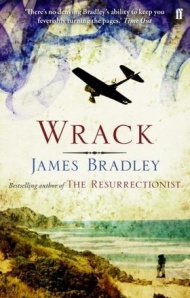
Wrack now available as an ebook in Australia

Wrack AU smallI’m thrilled to be able to say that as of today, my first novel, Wrack, is available as an ebook in Australia through Vintage. If you’d like to buy a copy you can pick it up for Kindle (via Amazon.com and Amazon.com.au), through the iBookstore, and on Kobo. If you’re in Australia and you’d rather read the print book you can check prices for that through Booko. Likewise if you’re in the UK you can check prices for the print book or pick up the ebook through Amazon and the iBookstore. And if you’re in the US or elsewhere you can pick up the print edition or the ebook. And there’s also an award-winning audio edition read by Humphrey Bower.
For those who haven’t read it, it’s set in Sydney, Singapore and the NSW south coast during World War 2, and is about maps and murder and love and obsession (you can read more here).


Write Around The Murray

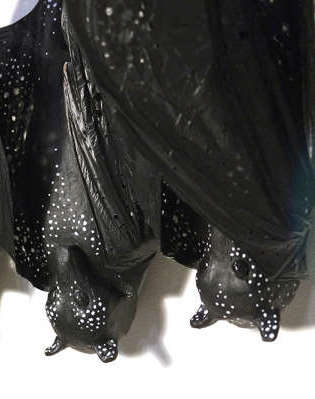
Detail from Kathy Holowko's 'Batmania', featured at Write Around the Murray.

Detail from Kathy Holowko’s ‘Batmania’, featured at Write Around the Murray.

Just a quick note to say that if you’re in the Riverina I’ll be appearing at Write Around The Murray in Albury on the weekend of 12-13 September. The full program was announced a couple of weeks ago, and features a bunch of fantastic people, but if you’d like to catch me I’ll be discussing ‘When Sci-Fi becomes Cli-Fi’ with Jane Rawson, Cat Sparks and Tim Flannery at 1:00pm on Saturday 12 September, and at 3:00pm on Sunday 13 September I’ll be in conversation with Jason Steger as part of Write Around the Murray’s Big Book Club. Both events are at LibraryMuseum, Corner of Kiewa and Swift Streets, Albury, and you can RSVP online.

And just a reminder that I’ll be appearing at Melbourne Writers Festival this weekend and Brisbane Writers Festival the weekend after.

Festivalorama

BBWF2015_07_WebsiteHeader3I’ve had my head down working for a while, but over the next few months I’m doing a number of events around the country. First up is the weekend after next, when I’ll be at Byron Bay Writers’ Festival, where I’ll be in conversation with Wendy Were at midday on Saturday 8 August, and will be speaking about the limits of forgiveness alongside Sarah Armstrong, David Vann and Anneli Knight at 12:15pm on Sunday 9 August and about Climate Fiction with Mireille Juchau (whose much-anticipated new novel, The World Without  Us, has just been released) and Anneli Knight at 2:15pm. Tickets are available from the Festival office, by calling 02 6685 5115 or online.
A few weeks after Byron I’ll be at Melbourne Writers’ Festival, where the scarily smart Jane Rawson, Michael Green and I will be discussing whether climate change is the new apocalypse at 11:00am on Friday 28 August and Mireille Juchau and I will be talking about novels of ideas at 2:30pm on the same day. Tickets are available via the pages for the individual events.

And finally, the week after Melbourne I’ll be in Brisbane for Brisbane Writers’ Festival, where I’ll be appearing at the Cooper Plains Library as part of the Festival’s BWF in the Burbs program at 10:00am on Friday 4 September, reading at 2:00pm on Saturday 5 September as part of the R[E]AD Box series, discussing climate fiction with Deb Fitzpatrick at 4:00pm on Saturday 5 September, appearing alongside the brilliant Sjón (if you haven’t read The Blue Fox run, don’t walk, and grab a copy), the multi-talented Debra Oswald and others as part of the Letter To My Future Self event at 8:00pm on Saturday 5 September and speaking about Clade at 4:00pm on Sunday 6 September. Tickets for all events are available online.

I’ll have details for a couple more events soon, but hopefully I’ll see some of you somewhere in the meantime. 


Sydney Writers’ Festival!

swf_bwrevlgIt’s only a few weeks until the main program for Sydney Writers’ Festival gets under way. This year’s program looks completely amazing, featuring writers such as Helen MacDonald, author of the frankly astonishing H is for Hawk, Daniel Mendelsohn (who will be in conversation with David Malouf about reading the classics on Thursday 21 May – be still my beating heart), Malcolm Knox (whose new novel, The Wonder Lover, is out now, and who was profiled in the Fairfax papers over the weekend) and many more.
If you’d like to catch me I’m doing a number of events in and around Sydney during the Festival. First up I’ll be in conversation with Geordie Williamson at the Carrington Hotel in Katoomba on Monday 18 May at 3:00pm, where we’ll be talking about Clade, climate change and writing the Anthropocene.

On Thursday of the same week I’ll be back in Sydney, this time at Randwick Library, where I’m speaking at 6:30pm. Tickets for this event are free, and can be booked online or by calling 02 9399 6966.

And then, over the weekend, I’m at two events at the main festival. The first is a panel at 11:30am on Saturday 23 May entitled ‘Imagined Futures’, chaired by Ashley Hay and featuring Emily St. John Mandel, David Mitchell, Jonathan Lethem. I’m incredibly excited abut this panel: I’ve been a huge admirer of Lethem for years, and as I said when I posted about my favourite books of 2014, I adored both The Bone Clocks and Station Eleven. Tickets for this one are $25 or $20 concession, and although there are still some available I suspect they won’t be for long.

The second, which I’m also very much looking forward to, is with Anson Cameron and David Schlosberg on Sunday 24 May at 3:00pm, and is entitled ‘Climate Change and the New Nature’. I think this should be a fascinating and quite provocative session. Tickets are $14.

Anyway, hopefully I’ll see some of you at some of these events. And if not, take a look at the full program: it’s an incredible line-up.

Questions, questions, questions. Also some music.

I’m going to put together a roundup of reviews and articles about Clade soon, but in the meantime I’ve done a pair of Q&As you might like to check out. The first was for Penguin, and you can read it on their website; the other was for the fabulous Angela Slatter’s blog.

And while it’s not about the book, I’ve also just done a little thing for Zena Shapter about the music I’ve been enjoying recently. You can read the whole thing over on Zena’s blog, but because I wrote it a couple of weeks ago I didn’t include two things I’ve been loving in the past little while. The first is Israeli singer-songwriter Asaf Avidan’s fabulous album, Gold Shadow, which rather like Angel Olsen’s excellent Burn Your Fire For No Witness, looks back to the 1960s and beyond for a series of sounds and production techniques which manage to sound both retro and completely contemporary. And the other is The Beatles’ fourth album, Beatles For Sale, a record I was convinced to go back to by Jonathan Gould’s enthusiastic discussion of it in his biography of the Fab Four, Can’t Buy Me Love (which I’m planning to write something about on the weekend). For various reasons I’d come to accept the line that it’s an album born of exhaustion and creative burnout, a trough between the high points of A Hard Day’s Night and Help, but having listened to it again I’ve realised it’s actually much more interesting than I’d given it credit for, not just because original songs like ‘No Reply’ are so terrific, but because the choice of covers implies a fascinating conversation with their various influences and antecedents (and also, I suspect, prefigure the engagement with music hall and other, older forms on albums like Sgt Pepper).

http://www.youtube.com/watch?v=y-lHjQrFJQ8&w=490

Aurealis Awards!

aurealis-awards-finalist-high-resA little after the fact because I’ve been in Adelaide for Writers’ Week, but last Friday saw the release of the finalists for this year’s Aurealis Awards, and I’m delighted to say my story, ‘Skinsuit’, has been shortlisted for Best Horror Short Story alongside stories by Deb Biancotti, Kirstyn McDermott, Garth Nix and Angela Slatter.

You can read the full list of finalists on the Aurealis Awards website, but suffice it to say there’s a lot of brilliant stuff on the various shortlists. And while the story isn’t online, if you’re in Australia you can read it by picking up a copy of #137 of Island Magazine

The winners are announced in Canberra on 11 April and tickets to the ceremony are $40 until 11 March and $50 thereafter. In the meantime my congratulations to all my fellow finalists, in particular Deb, Kirstyn, Garth and Angela, and thank you not just to the team at Island for publishing the story, but to the judges and organisers for making the awards happen in the first place.

Update: you can now hear Jonathan Strahan, Tehani Wessely, Alisa Krasnostein and Seán Wright discussing the awards and the various shortlists on a special episode of the Coode Street podcast.

Geordie Williamson launches Clade

You can now watch Geordie Williamson’s characteristically generous and thoughtful speech at the launch of Clade at Better Read Than Dead Bookshop in Newtown last week. My heartfelt thanks to Geordie, the team at Better Read Than Dead and everybody who came along for making it such a special event.