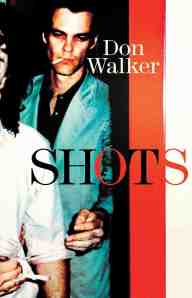
 On Wednesday 11 March I’m hosting a conversation with Don Walker at Gleebooks in Sydney. Don’s name may be unfamiliar to anyone from outside Australia, but to almost any Australian under the age of 50 his name will be immediately recognizable as one of the creative forces behind Cold Chisel.
The event is to promote Don’s first book, a memoir called Shots. In recent years there’s been a spate of memoirs by members of the iconic Australian bands of the 1980s – Rob Hirst of Midnight Oil published Willie’s Bar and Grill a few years ago, Mark Seymour’s take on his career with Hunters and Collectors, Thirteen Tonne Theory, was published last year, and Paul Kelly has a book coming out with Penguin later this year. Yet all of them are essentially accounts of the lives and times of the bands with which their authors are associated.
Shots is a quite different and much more ambitious proposition. Written in a free-flowing, impressionistic stream of consciousness, it deliberately downplays Don’s time with Cold Chisel. They – the band – are never mentioned by name, and even Jimmy Barnes is only ever identified as Jimmy.
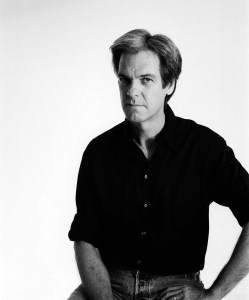
Don Walker
This decision allows not only allows Shots to break free of the expectations usually associated with memoirs by musicians, but has the effect of emphasizing the fact that Don’s time with Cold Chisel, and in particular the period of their greatest success, was relatively brief. Reading the book I was struck by the realization that despite dominating the Australian music scene in a way no other band ever has, in fact there is only about three years between the release of their first really big album, East, in 1980, and the band’s breakup in 1983.
In place of lengthy reminiscences about life with the band, Don tries to give a portrait of the textures of a life as it is lived, spanning from his childhood in North Queensland and Grafton to his reunion with his daughter several years ago (indeed in many ways the book reads as a sort of gift of his life to his daughter, a process of documenting and recording the steps which brought him to his life with her, and his love for her), and taking in his failed career as a physicist, his many years as a struggling musician, and the sprawling disaster of Cold Chisel’s fame and the years that followed.
It’s a fascinating document, and not least because it’s so beautifully written. Don has managed to graft the spareness and vernacular rhythms of his songwriting to the larger narrative frame of the book with startling success, and there’s a swing and a tensile strength to the seemingly plainspoken prose it’s difficult not to admire. But it’s also fascinating as a kind of psychogeography, a mapping of places, and people.This is immediately apparent in the early sections, about growing up in Ayr and Grafton. But it’s in the chapters set in Adelaide, and later Sydney, where it really comes to life. Again and again the book very clearly captures the textures of life in Kings Cross in the 1970s, and of the spaces and secret worlds that moved within the Sydney of that time.
In a way this shouldn’t be surprising. Although I suspect their intelligence and precision has been somewhat obscured by years of FM radio play, the songs Don wrote for Cold Chisel are best seen as little word-pictures, depictions of people and places. Many – ‘Breakfast at Sweetheart’s’, or ‘Cheap Wine’, to name just two – are rooted in the demi-monde Don depicts so well in Shots, others, such as ‘Flame Trees’ are about the landscape of regional Australia. But at their best, all are remarkably successful, not just as songs, but as evocations of particular moments and lived realities which owe more than a little to Carver or Tobias Wolff. They’re not narrative in form, more impressionistic, prose poems of a sort, but they’re very effective nonetheless. Indeed for all that it is usually Paul Kelly who comes to mind when Australians talk about storytelling songwriters, Don does it just as well, if not better, precisely because he eschews the narrative devices that people celebrate in Kelly’s songs.
The interesting thing is that this sort of writing is not, as a rule, something Australians do well. With the not inconsiderable exception of Tim Winton’s recent work, our fiction, and in particular our short fiction, is not particualrly good at the sort of pared-back, realist writing which draws its integrity from its observation of regional lives that is seldom far away in American writing. This is partly because the economics of our industry militate against the short story as a form, and partly, presumably, because our population is essentially urban, but it is also at least in part a function of our sense that stories of ordinary Australian life are somehow lacking in ambition. Not for nothing have the most celebrated Australian writers of the last few decades been those who produce foundational narratives about the imaginary origins of Australia, whether in the highly-coloured vein of Peter Carey or in the more conventional vein of Kate Grenville. As the taste for this sort of capital “N” national literarure has dissipated in recent years this has begun to change, and writers as various as Malcolm Knox, Christos Tsiolkas and Steven Carroll have begin to write fiction which more deliberately situates itself in the lives of the city and the suburbs, but I suspect many still have trouble placing their work in a larger critical framework, precisely because it isn’t national literature in any meaningful sense.
But I digress. I’m embarassingly excited to be involved in this event, not least because Don’s songs have been such an important part of my life. I’m old enough to have seen Cold Chisel play live as a teenager. I picked a drunken Jimmy Barnes up off the floor at a gig at the Apollo Stadium in Adelaide in 1983 or 1984, which was the height of glamour to me then (I also remember a very different Jimmy roaming the dancefloors of Mardi Gras and Sleaze back in the 1990s, though that’s another story) and I still love many of their songs. But I’m also excited to be able to help Don promote the book, which is a genuinely impressive achievement.
More information about the Gleebooks event is available on the Gleebooks website. For information about events in Melbourne and elsewhere contact Readings or visit the Black Inc website.
Shots can be purchased from Gleebooks, Readings or bricks and mortar bookstores anywhere.
Break text


 I was listening to Bruce Springsteen belt out ‘Radio Nowhere’, the opening track to his 2007 album, Magic, the other day, and as I did I was struck by how archaic it felt. Not in terms of its energy – as anyone who heard him perform ‘The Rising’ at the concert to celebrate Obama’s inauguration a few weeks ago knows, Bruce can still crank out the tunes like nobody’s business – but in terms of its invocation of the radio as a vehicle of connection.
![Reblog this post [with Zemanta]](https://i0.wp.com/img.zemanta.com/reblog_e.png)




 city of tongues