King of Limbs
Does the fact I laughed out loud at this make me superficial?

Feb 21
Does the fact I laughed out loud at this make me superficial?
Feb 15
 I’ve been listening to a lot of choral music lately, and in particular to Eric Whitacre’s most recent collection, Light & Gold, which features the Eric Whitacre Singers and the King’s Singers, with soprano Grace Davidson on solos.
It’s a lovely disc, with gorgeous arrangements of poems by Cummings, Paz, Yeats and Silvestri, and five Hebrew love songs which also feature the Pavao Quartet. There’s a generosity and glow to Whitacre’s music which it’s difficult not to respond to, and this is captured beautifully in the recording, which is immensely warm and uncluttered (it’s probably not coincidental Whitacre himself conducted the pieces).
The highlight of the disc is probably the Hebrew Love Songs, but I’ve formed a great affection for the arrangement of Kipling’s ‘Seal Lullaby’. Almost too sweet, and deliberately sentimental, it’s similarly almost impossible not to respond to.
Some of you may know ‘Seal Lullaby’ from The Jungle Book, where it forms the epigraph to ‘The White Seal’, if not, it’s a poem that captures the intimacy and tenderness between parent and child very powerfully:
Rudyard Kipling, Seal Lullaby
Oh! hush thee, my baby, the night is behind us
And black are the waters that sparkled so green.
The moon, O’er the combers, looks downward to find us
At rest in the hollows that rustle between.
Where billow meets billow, there soft by the pillow.
Oh, weary wee flipperling, curl at thy ease!
The storm shall not wake thee, no shark shall overtake thee
Asleep in the storm of slow-swinging seas.
The arrangement reflects this, rising and falling like the sea, or breath, and in a way it’s unsurprising to learn Whitacre had his own child in mind when he write it.
Delightfully Whitacre wrote the piece at the request of Disney executives who were planning a movie of ‘The White Seal’. It was, as Whitacre explains, one of those commissions which strike a chord almost immediately, and he wrote the song quickly, delighted by the lyrics and the idea of the seal and her child, and sent it off in very short order.
But then silence fell:
“I began to despair. Did they hate it? Was it too melodically complex? Did they even listen to it? Finally, I called them, begging to know the reason that they had rejected my tender little song.
“Oh,” said the exec, “we decided to make Kung Fu Panda instead.”
I’ve uploaded a video of Whitacre conducting an impromptu performance of the piece in Canada a couple of years ago at the bottom of the post: there’s a rather more polished version featuring the California Lutheran University Choir on YouTube as well, but I like this one, both because Whitacre himself is conducting and because one of the singers (rather gorgeously) is holding a sleeping baby.
But Whitacre is fascinating in other ways as well. Not only is he that most improbable of things, a rock star classical composer (complete with flowing golden hair and rock star looks) he’s also one fo a relatively small group of classical musicians and composers leveraging the possibilities of social media and the web not just to connect with fans, but to build communities around their music.
Part of this process is simply about using Twitter to open up the process of composition to public view. While I know novelists increasingly exteriorize their process via social media, there’s still something very striking about hearing a composer like Whitacre say things such as, “YEEESSSSS! Solved the transition. As always, I was over-thinking it; it’s always the simplest solution that is the most elegant”.
But it also involves Whitacre’s remarkable Virtual Choir Project, a project that brought together 185 singers in 12 countries in a special recording of Whitacre’s ‘Lux Arumque’. Each member of the choir recorded their part separately, then submitted them to Whitacre and Producer Scott Haines, who mixed the recordings together, then created an accompanying video.
Whitacre (who blogs, naturally) has written about the process, but you can also listen to him explain it on the video below, and listen to the recording itself beneath that. And if you like what you hear you can buy Light & Gold from Amazon
And finally, just a little reminder of the way that once you’re looking, everything connects. After spending a chunk of Sunday afternoon writing my post about George Pollard and Moby Dick, I sat down in front of the television and turned on a recorded episode of the BBC’s South Pacific. And what’s the episode using as its framing narrative? The story of the wreck of the Essex. Then after a week of listening to ‘Seal Lullaby’ I go upstairs to read the next book I have to review, Téa Obreht’s rather brilliant debut, The Tiger’s Wife, and what’s it all about? The frickin’ Jungle Book.
Feb 6
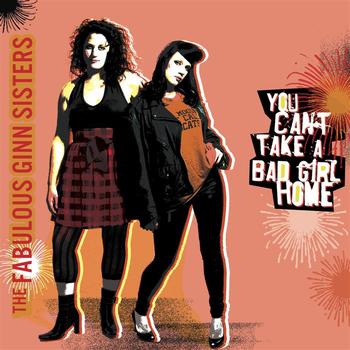 Two quick links to bands and albums that have been giving me a lot of pleasure over the past little while. The first is The Fabulous Ginn Sisters’ woozily brilliant You Can’t Take a Bad Girl Home
‘You Should’ve Known
‘Share Our Secrets‘
The other is the track I’ve been listening to all week, which is from Milwaukee outfit Sat. Nite Duets’ EP, One Nite Only. I think my friend Adam got it right when he said they were a band who managed to be both awesome and crap at the same time, because that lazy diffidence is definitely part of their charm, and is absolutely integral to the brilliant opening track, ‘All Nite Long’, which sounds like someone convinced Lou Reed to front for Pavement at a party in somebody’s back yard, and then that combination turned out as funny and as sexy and as basically awesome as it sounds. And the best thing is if you like ‘All Nite Long’ you can download the EP in its entirety for free from the band’s website (Thanks to Muzzle of Bees for the heads up).
Dec 2
I’ve come a little late to The Tallest Man on Earth, but after being pointed to his second album, The Wild Hunt, by my friend Hannah (literary agent to the (rock) stars), I’m now totally obsessed. As Tim Dunlop points out, Swedish singer/songwriter Kristian Masson’s vocals are Dylanesque, but hey, that’s not always a bad thing, especially when the songs are so beautifully crafted and full of life. Like the new Justin Townes Earle album, Harlem River Blues, this is music that understands its history but isn’t bound by it, and it’s wonderful.
Nov 17
Longtime readers may remember me waxing lyrical about Justin Townes Earle’s Midnight at the Movies, a disc which was right up there with my favourite albums of 2009. I’m not sure whether I’ll get my act together a list of my favourite albums for 2010 together, but if I do I can promise you Townes’ new album, Harlem River Blues, will be on it.
One of the strengths of Earle’s earlier albums was the way the drew upon the roots and country traditions Earle grew up in (as his name suggests, he’s the son of Steve Earle and was named for Earle Senior’s friend, Townes van Zandt). On Midnight at the Movies that sense of tradition was married to a richer sound that made songs like the title track more radio-friendly than Earle’s first album, The Good Life, but which also meant the album as a whole sometimes seemed a bit over-produced.
That’s not a charge that could be levelled at Harlem River Blues, an album that strips away the slicker studio sound of Midnight at the Movies and lets the energy Earle’s writing and performance come to the fore. Part of it’s about the band, who play like there’s no tomorrow, bringing an infectious, growling immediacy to the material, but it’s also about the songs themselves, which draw on the full spectrum of American music, from bluegrass to country, gospel and blues, a tradition that’s equally apparent in the album’s nods to singers and songwriters from Woody Guthrie to Dylan, and its loving sense of American musical history and iconography.
I’ve pasted in a couple of tracks below. One’s of the the foot-stomping title track, the other’s an interview and live performance of one of the other real stand-outs on the album, the Memphis-influenced ‘Slippin’ and Slidin”, but they’re only two cuts from an album filled with gems like ‘Wanderin”, the aching ‘Christchurch Woman’ and the Springsteenesque ‘Rogers Park’. Despite having to cancel tour dates in the US for personal reasons earlier this year Earle’s now back on the road and will be in Australia next year for Golden Plains (and presumably other dates around it). I reckon that’d be one show worth catching.
Break text
Break text
Sep 15

In an idle moment yesterday I found myself reading Paul Morley’s Financial Times piece about the rerelease of David Bowie’s Station to Station. I’m aware Morley is one of those figures who generate strong feelings in the music world (though let’s face it, when it comes to grudges music people make Al’Qaeda look like amateurs), but the piece reminded me not just of how thrilling a lot of the music Bowie made in the 1970s was, but just how important it was to me when I was growing up.
I think the first time I really became aware of Bowie was in 1980. I was 13, in my first year at high school, and not doing well. I was overweight, unpopular and genuinely struggling to fit in.
Like most Australian kids in the early 1980s, my experience of music was largely mediated by Countdown. I don’t think it’s easy for people who grew up after Countdown’s heyday to grasp its cultural reach, but it really was a phenomenon, not just because everybody – and I mean everybody – under the age of 30 watched it, but because its choices informed Australian popular culture in a really direct way. Monday mornings at school were all about whatever it was that was on Countdown last night, and the bands and music Countdown endorsed were pretty much guaranteed to dominate the charts and airplay.
It’s difficult, in many ways, to reconcile the images of old Countdown episodes and their clusters of screaming kids in ugg boots and duffle coats and footy scarves with Bowie’s cerebral pop, but it was Countdown that introduced me to Bowie, and more particularly, to ‘Ashes to Ashes’. I don’t remember exactly when I heard it the first time, but I do remember the feeling I was seeing something quite unlike anything I’d seen before. It wasn’t just the video, which still looks remarkable today (perhaps not surprising given that at the time it was made it was the most expensive film clip ever produced), it was the song itself, its enigmatic, haunting lyrics, the layered synths and beats, even the ticks and pops of the percussion layered over the top.
I knew Bowie’s name, of course, though I’m not sure I knew the music. He’d been on tour to Adelaide a couple of years before, and I remember watching the ads on the television and thinking he looked like some sort of vampire, but the music came as a revelation, and as soon as I could afford it I bought the album.
I wonder now what I made of Scary Monsters back then. Presumably details like ‘Fashion’s play on “fascism” went straight over my head. But irrespective of how much of what I was listening I understood in an intellectual sense (or indeed an emotional sense: listening to ‘Ashes to Ashes’ at 43 I wonder what my 13 year-old self made of its riffs on loss, middle-aged failure and addiction (“Time and again I tell myself/I’ll stay clean tonight/But the little green wheels are following me/Oh no, not again”)). But I understood enough to know this was music that mattered, and which spoke to me in a very personal way.
 I suppose all of us feel the need to read our own lives through the prism of music, and to accord songs and artists more significance than they probably possess. But Bowie is one of those figures, like Dylan, who were genuinely significant, and even today exercise considerable influence (though I’d have to say I think it’s probably better to pretend he never recorded anything after about 1981). And, like Dylan, it wasn’t all about the music either, but about what he represented.
Much is made of Bowie’s metamorphoses, the creation and shedding of personas, from Ziggy to Aladdin Sane to The Thin White Duke, but in a way the point of him was never the individual personas, but the process of metamorphosis, the sense that identity could be polymorphous, and that the self might be something one could invent.
I’m not sure I would have put it in quite these terms in 1980, but it’s interesting that both the films Bowie has inspired – Todd Haynes’ Velvet Goldmine and John Cameron Mitchell’s Hedwig and the Angry Inch, are about precisely this process of self-creation, and grounded in a sense of the confusion and yearning of adolescence. They’re about the need to become something and someone else, and of the cost of that process.
I’m often struck listening to people a few years older than me by the importance they accord The Go-Betweens, a band I’ve always found considerably less interesting than others clearly do. But I’m quite clear that once again the music is less important than what the band represented, their conspicuous artiness in a place deeply mistrustful of difference and sophistication, the way they suggested a different way of being Australian, and of ways in which the Australian landscape and European traditions might speak to each other.
For me though it was always about Bowie. In suburban Adelaide in the 1980s I could listen to him over and over again, and imagine a different sort of world, a larger, more urgent one, and just as importantly, a different way of being me. He taught me that glamour matters, and chic, and that being different is something to celebrate.
Much later I met him in person. It was late 1983, and after the Serious Moonlight concert a friend of mine, who had made it his business to get the autograph of every rock star who came through Adelaide dragged me off to the hotel where Bowie was staying to stake him out. The place was surrounded by fans, but we snuck in, and somehow managed to catch him in a corner of the lobby alone. He smiled, and signed my friend’s book, and I shook his hand. Beyond that I’m not sure I remember much of the encounter, other than how slight he was, and the way the ordinariness of his London accent made him seem less glamorous than I had expected him to be. But that, I suppose, shouldn’t have surprised me: the man himself was never the point, what mattered was the music, and the image, and the things that represented. And they’re things I still feel connected to today.
Break text
Break text
Jul 22
Apologies for how quiet it’s been round here: I’ve been caught in a nightmarish vortex of work and sick children, which has rather overwhelmed everything else (not least because I’ve been desperately trying to carve out time to get this bloody novel finished as well). I’m really, really hoping I’ll be getting a few things up over the next week or so, but in the meantime, I thought I’d give one of my most recent musical discoveries a spin.
The artist in question is the amazing Eilen Jewell, who I found via a recommendation from Tim Dunlop. I’ve only really heard her most recent album, Sea of Tears, but it’s a corker. At first blush you hear the electric folk sound of the Dylan era, but there’s nothing retro about Jewell’s voice, or the intelligence and feeling of the music. I know Tim’s a big fan of the closing track, ‘Codeine Arms’, which is indeed brilliant, but I think there are several tracks on the album which give it a run for its money, in particular the title track and the opener, ‘Rain Roll In’. All of which is a long-winded way of saying it’s a brilliant album, and Jewell’s something pretty damn special.
Break text
Break text
Break text
Jun 23
While The Mountain Goats’ amazing 2005 album, The Sunset Tree, would sit in any list I’d make of my favourite records of all time, I have to say I was a little unmoved by last year’s excursion into Biblically-inspired songwriting, The Life Of The World To Come. But having spent the morning watching Rian Johnson’s amazing documentary/concert movie of John Darnielle performing the album song by song I now wonder whether I’ve failed to hear what’s really there. Either way, I don’t think there’s any doubting the beauty and intensity that’s captured in Johnson’s film; certainly all the qualities of fragility and tenderness that make The Mountain Goats’ best songs so powerful are on display, but stripped back to their essence.
If you’d like a taste of the film, I’ve embedded a couple of tracks below, and if you like what you hear you can watch the whole thing over at Pitchfork TV. The only catch is it’s only available for a week, so it won’t be around for long. So I suggest you take a listen while you can: it’s wonderful stuff.
Break text
Vodpod videos no longer available.


Jun 16
Over the past few days I’ve been listening to two of my favourite albums of 2009, Elvis Perkins in Dearland’s self-titled sophomore effort, and Justin Townes Earle’s third album, Midnight at the Movies. They’re both great records (in particular Midnight at the Movies, which I’ve come to like more and more as time’s gone on) but they’re also noteworthy because both Perkins and Earle both boast interesting family histories.
Of the two, Earle is the musical blueblood: the son of Steve Earle, his middle name is in honour of the singer and songwriter Townes van Zandt, he is also the stepson of Shelby Lynne’s sister, Allison Moorer. But in a way it’s Perkins’ family history that’s really interesting: the son of actor Anthony Perkins, who died of AIDS-related illnesses in 1992, and Berry Berenson, who was a passenger on American Airlines Flight 11, and was killed in the attacks on the World Trade Centre on September 11, 2001, an event whose shadow hangs heavily over Perkins’ first album, Ash Wednesday.
Anyway, here are a couple of tracks from Midnight at the Movies (the title track and a live version of ‘Mama’s Eyes’) and ‘Shampoo’, one of my favourite tracks from Elvis Perkins in Dearland.
Break text
Break text
Break text
Break text
Jun 10
May 16
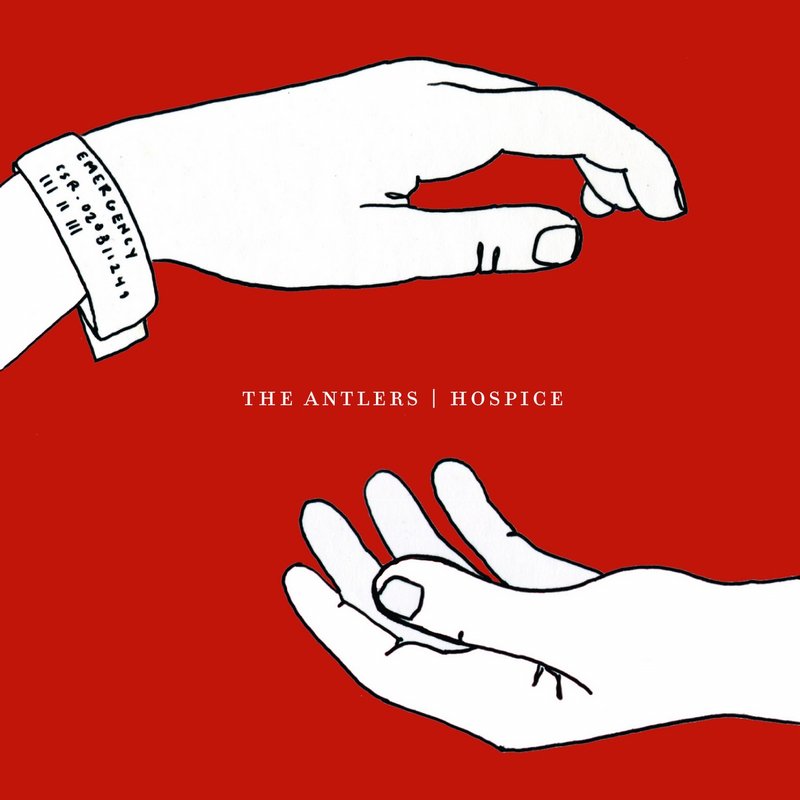 I’ve been meaning to post something about The Antlers’ fantastic debut, Hospice, since I stumbled across a copy of the original release on the band’s own label, but other things kept getting in the way. By rights I should have mentioned it in my list of my favourite music of 2009, but since then they’ve gone on to rather bigger and better things, with Hospice picked up and rereleased by French Kiss Records, and rave reviews around the world.
What’s fascinating to me about Hospice (aside from the fact it’s completely thrilling) is its self-conscious literariness. Rather than craft a series of individual songs, Antlers front-man Peter Silberman uses the album’s ten tracks to map out the intense and conflicted feelings surrounding the death of the narrator’s young wife from bone cancer.
It sounds bleak, but isn’t. Rather like John Darnielle of The Mountain Goats’ equally fabulous album about his troubled adolescence and abusive stepfather, The Sunset Tree (one of my all-time favourites) much of Hospice’s brilliance lies in its refusal to sentimentalise or mistake indulgence for integrity. But whereas The Sunset Tree is based in real experience, Hospice is essentially metaphorical, a work of fiction drawn from Silberman’s imagination. And, as a result, it manages to retain both a degree of allusiveness a more overtly confessional work would almost of necessity lack, and a coherence and shape a simple series of songs could only dream about, offering a journey through confusion and pain to loss, and finally, and improbably, a sort of catharsis.
You can buy Hospice on Amazon
Break text
Break text
Break text
Apr 11
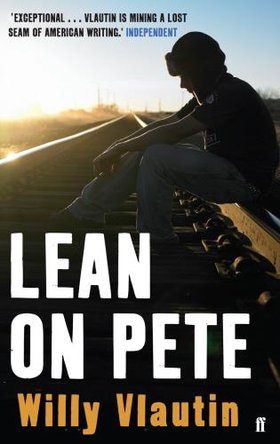 Some of you may remember me waxing lyrical about Willy Vlautin’s new novel, Lean on Pete, a few weeks back. At the time I was planning to write a rather longer post about it, and about Willy’s fiction more generally, but before that could happen I was asked to review it, which put paid to the post.
Anyway – the review was in this weekend’s Australian, and you can read it on their website, but if you want the potted version, the book’s an absolute gem: gentle, shocking, sad and hopeful all at once.
What’s particularly fascinating about the book to me is the fact that Vlautin’s skills as a songwriter so obviously underpin the success of the fiction. You often hear songwriters like Paul Kelly being celebrated as storytellers, but in fact the qualities that lend Kelly’s songs their particular magic are quite different to those that underpin fiction. Partly this is a question of scale: even relatively brief fictional forms such as the short story dwarf the lyrical component of most songs, allowing them a degree of complexity songs are denied. But it’s also about the relative simplicity of song lyrics: whereas fiction tends to use narrative as a thread to explore the interior lives of characters, and more particularly the tensions, contradictions and discontinuities, songs usually shy away from these qualities, preferring to communicate feeling in a more direct manner (if you’re interested, I talked a bit about more these questions last year, in my post about Don Walker’s memoir, Shots).
What’s interesting about Vlautin’s songs is that they are, in some deep sense, highly literary creations. Despite the relative simplicity of their lyrics, their effect is usually dependent upon the manner in which what is being said and what we understand are at odds with each other. In my review I mention ‘The Boyfriends’, from We Used To Think The Freeway Sounded Like A River, and its narrator’s anguished cry of ‘I ain’t like that’ upon realising the child of the woman he has picked up in a bar has been watching them having sex, but many of Vlautin’s songs rely upon this sort of irony. What makes songs like ‘The Boyfriends’ (or indeed songs such as ‘$87 And A Guilty Conscience That Gets Worse The Longer I Go’ or ‘I Fell Into Painting Houses In Phoenix, Arizona’) so powerful is the fragility of their narrators’ self belief, and Vlautin’s keen eye for the deceptions that sustain it, and more importantly, the moments at which that belief finally – and painfully – gives way.
Last time I looked, Vlautin was listed as one of the guests at this year’s Sydney Writers’ Festival, where, amongst other things, he’s being interviewed by my old pal, Richard Fidler, but you can hear him reading from Lean on Pete in the video before (and yes, I know I’ve posted it before). And if you’re interested in the music, you’ll find a live version of ‘The Boyfriends’ beneath it, together with a video for ‘Capsized’, one of my favourite songs from my favourite Richmond Fontaine album, Thirteen Cities. Enjoy.

Apr 6
Ah, Elvis. And two of my all-time favourite songs.
Break text
Break text
Break text
Who says perfect pop is wrong?
Break text
Break text
Feb 18
My thanks to Crikey! for this outstanding video. Is that actually Victor Willis from the Village People on vocals? Or is that just wishful thinking on my part?
Break text
Break text



 city of tongues