Skip to content

Posts from the ‘Books’ Category

Best Books 2014

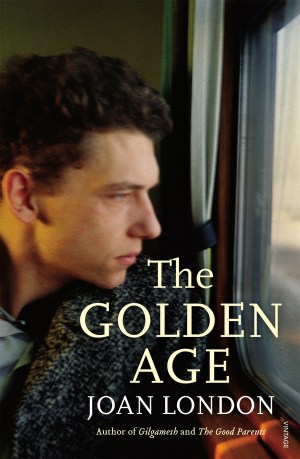
The Golden AgeI’d hoped to get this up last Friday, but I ended up holding off because The Weekend Australian’s Best Books feature didn’t run until Saturday and I didn’t want to preempt my contribution to it. If you’ve got a few minutes I strongly suggest you take the time to check that list out, since it’s crammed with great stuff. You might also want to check out the lists in The Sydney Morning Herald and The Age, as well as the excellent Books of the Year feature in Australian Book Review (which I also contributed to but isn’t online and is available for the price of a couple of cups of coffee).

As I said in the Oz and ABR, two of the books that stood out for me this year were Ceridwen Dovey’s wonderful suite of short stories, Only The Animals and Joan London’s luminous new novel, The Golden Age. I suspect both sound like slightly odd propositions at first blush – the Dovey is a series of stories about animals whose lives cross over with literary figures such as Tolstoy and Kerouac and Lawson, and the London is about two teenagers in a polio hospital in the 1950s – but they’re both fantastic books, and I’d be very surprised if the London wasn’t all over award shortlists here and overseas in 2015.

Staying with Australian books for a moment, there were three others I enjoyed enormously. The first is Chris Flynn’s The Glass Kingdom. I loved Flynn’s debut, Tiger in Eden, but the often very funny The Glass Kingdom shows Flynn stretching himself imaginatively and technically as he interrogates the various ways men perform masculinity. I was also very impressed by Fiona McFarlane’s tautly written debut, The Night Guest, and the fabulous P.M. Newton’s gritty and brutally unsentimental take on Sydney and crime, Beams Falling.

I also loved two books I’ve already written about but hope to write something longer about soon, David Mitchell’s The Bone Clocks and Michel Faber’s The Book of Strange New Things. I know I’m not alone in being deeply impressed by the Faber, which is both very strange and deeply affecting, but I was also very moved by the Mitchell, which seemed to be deeply and productively engaged with a series of questions about time and loss.
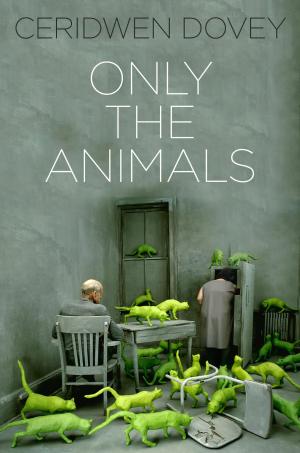
Only the AnimalsMoving further afield I also completely adored Ali Smith’s smart, sexy and very moving How to be both, Jenny Offil’s wonderfully fragmented and very witty Dept. of Speculation, and Will Eaves’ marvellous The Absent Therapist, and while half the stories in Lorrie Moore’s Bark had already been published in Faber’s Collected Stories a few years ago, even four new stories by Moore are something to celebrate. Something similar is true of Hilary Mantel’s The Assassination of Margaret Thatcher, almost all of which I’d read elsewhere (and sometimes as non-fiction, which gives the book an even more unsettling frisson) but gathered together the pieces form a powerful and troubling whole. And Margaret Atwood’s Stone Mattress is exactly as smart, funny and wicked as you’d expect, and I can’t recommend it enough.

Whether Richard Ford’s new Frank Bascombe book, Let Me Be Frank With You, is a novel or four short stories is an interesting question, but either way it sees Ford back on top form as he depicts the now retired Bascombe not quite adrift in the aftermath of Hurricane Sandy. Next to Ford Colm Toíbín’s writing can seem deliberately unshowy, but his new one, Nora Webster’s portrait of a woman rebuilding her life after the death of her husband offers a reminder of just how good he is. And while it didn’t make the Booker shortlist Richard Powers’ new novel, Orfeo sees Powers interweaving classical music and biology and terrorism in typically brilliant fashion (just quietly, if I could write a novel like Orfeo I’d die happy).

As I mentioned the other day you can catch me, Jonathan Strahan and Gary K. Wolfe chatting about our favourite science fiction and fantasy books on the Coode Street Podcast’s Year in Review special, but as I say there, I was enormously impressed by William Gibson’s new novel, The Peripheral, which is both brilliantly written and grounded in a fully lived social reality in a way his last couple of books haven’t been, and Adam Roberts’ darkly witty, deeply literate and very unsettling riff on talking animals, Bête. I also adored the second part of Sean Williams’ Twinmaker trilogy, Crashland (which has one of the most jaw-dropping endings I’ve read in ages), Simon Ings’ creepily visceral exploration of virtuality, Wolves, and although I think it’s an almost wilfully unlikable book, I was deeply impressed by Peter Watts’ chilly follow-up to the terrifying Blindsight, Echopraxia. And while I didn’t think Ann Leckie’s sequel to last year’s Ancillary Justice, Ancillary Sword was as successful at a narrative level as its predecessor it was no less thoughtful and uncompromising in its depiction of the nature of power.

Of the debut science fiction novels I read this year the one I loved the most was Monica Byrne’s jagged and sensual The Girl in the Road. And while I’m not sure whether it’s really a genre novel at all, I hugely admired Mountain Goats’ frontman John Darnielle’s awkward and deeply distressing study of trauma and the possibilities of the imagination, Wolf in White Van.

And finally, turning to fantasy, two novels stood head and shoulders above everything else I read. The first was Garth Nix’s wonderful new Old Kingdom novel, Clariel, a book that comes at the world of the Old Kingdom from a new angle, and which doesn’t just provide a reminder of just how wonderful that world is, but of how rich and magical and funny Nix is when he’s working at full throttle. And the second was the emotionally expansive and deeply satisfying conclusion Lev Grossman’s fabulous Magicians trilogy, The Magician’s Land.
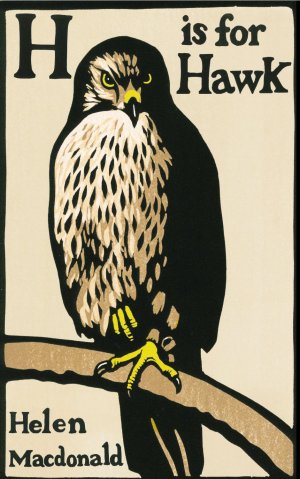
H is for HawkOn the non-fiction front I loved Iain McCalman’s passionate and thrilling history of the Great Barrier Reef, Reef, and slightly closer to home, Ian Hoskins’ wonderful history of the New South Wales coastline, Coast. I also very much enjoyed James Nestor’s descent into the world of freediving and fringe science, Deep (a book I want to write something more about soon) and . But the two non-fiction books I loved the most this year were Helen MacDonald’s sometimes strained, sometimes eerily beautiful H is for Hawk (and interestingly the third book engaged by T.H. White’s legacy I’ve read in the last couple of years) and Sophie Cunningham’s tense, terrifying and frighteningly prescient study of Cyclone Tracy and its aftermath, Warning.

Of the graphic things I read I loved a number of the quirkier titles Marvel has been producing, in particular Warren Ellis, Declan Shalvey and Jordie Bellaire’s brutal and brooding Moon Knight, Mark Waid and Chris Samnee’s Daredevil, Matt Fraction and David Aja’s Hawkeye, G. Willow Wilson’s joyous Ms Marvel and Charles Soule’s now-sadly cancelled She-Hulk, but I think the thing I enjoyed most was Emily Carroll’s fabulously creepy collection of shorts, Through the Woods, a book that brilliantly marries a finely tuned affection for the pulp comics of the 1950s, an awareness of the cruelty of fairy tales and a wonderfully acute grasp of the darker corners of the human psyche. It’s great stuff.

Of course as always there are a number of things I haven’t got to yet but am looking forward to very much, in particular Marilynne Robinson’s Lila, the third part of Karl Ove Knausgaard’s My Struggle, Boyhood Island, Roz Chast’s Can’t We Talk About Something More Pleasant?, Dave Hutchinson’s Europe in Autumn, Rjurik Davidson’s Unwrapped Sky, Jane Bryony Rawson’s A Wrong Turn at the Office of Unmade Lists, Cixin Liu’s The Three-Body Problem, Hassan Blasim’s The Corpse Exhibition, Rebecca Solnit’s The Faraway Nearby, Angela Slatter’s The Bitterwood Bible and Ben Lerner’s 10:04, a number of which I hope to get read over the break.

On the subject of which I hope the holiday season brings good things to all of you, and the year ahead is full of good things. Peace and goodwill to you all.
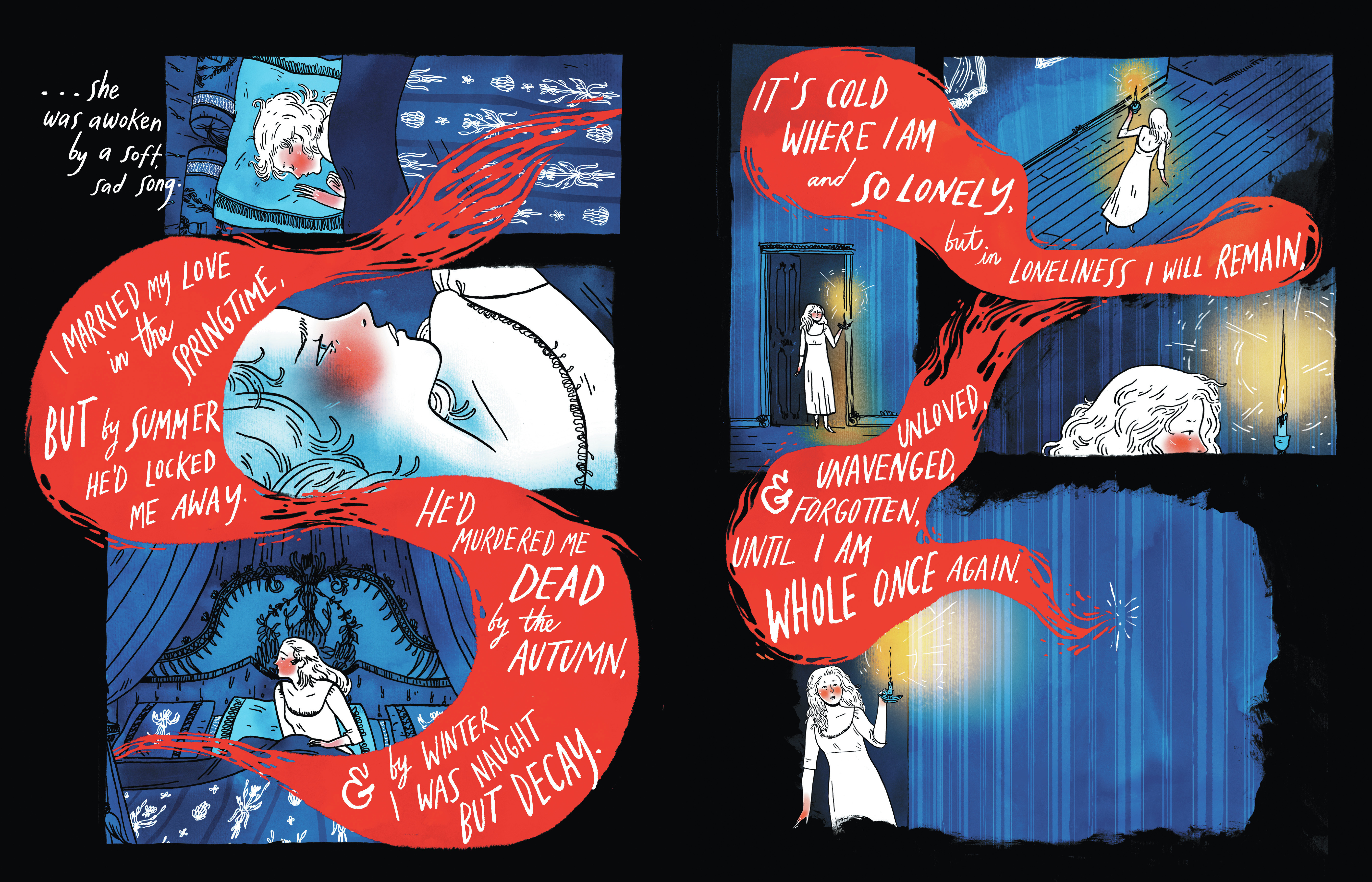
Emily Carroll, Through the Woods
Emily Carroll, Through the Woods

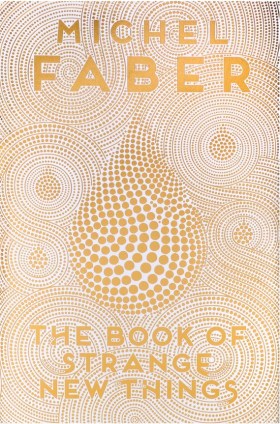
The Book of Strange New Things

Book of Strange New ThingsAt first blush, science fiction and religion might seem curious bedfellows, the one priding itself on its hard-headedness and rationality, the other giving primacy to faith and the acceptance of mystery.
But dig a little deeper and the differences are less obvious, and not just because of the tradition of books such as James Blish’s A Case of Conscience and Mary Doria Russell’s The Sparrow that explore questions about religion, but because Christianity’s eschatological underpinning is given literal form in many of science fiction’s most famous images of transcendence. After all, what are the final moments of Kubrick’s 2001, or the uploaded consciousnesses and singularities of the cyberpunks and their inheritors but updated versions of the Rapture?

Yet there’s little doubt there have been few science fiction novels as explicitly concerned with the meaning of faith as Michel Faber’s The Book of Strange New Things, a book that features a missionary despatched to an alien world to preach the Gospel to the natives while what looks suspiciously like the end of days consumes our own.

For the missionary, the aptly named Peter Leigh, the position is an extraordinary opportunity, even if it means being separated from his wife, Bea. Although surprisingly little is understood about the planet – Oasis – or its inhabitants, the aliens have specifically requested a missionary be sent, in order that they might learn more about the teachings of the Bible – or as they know it, The Book of Strange New Things – and more particularly its promises of eternal life.

Yet the task quickly proves more difficult than Peter anticipated. For although many of the Oasans are receptive to what he has to say, he finds himself overwhelmed not just by the strangeness of the planet, its oppressive humidity, altered colours and 72 hour days and nights, but by the problems of communicating his message in a way that treats the Oasans as equals.

The situation is not helped by the fact every other human on the planet is an employee of the company in charge of the colonisation, a faceless transnational called USIC (at one point Peter admits he doesn’t know what the letters stand for and is told it doesn’t really matter, “all the meaningful names have been taken”), and seem to have been selected precisely because they have no desire for meaningful contact with the people around them.

But the real problem is back on Earth, where a string of disasters and economic crises lead a newly pregnant Bea to begin to question first Peter, then their relationship, and finally her faith.

These sections – and indeed Faber’s incredibly tender depiction of Peter and Bea’s relationship more generally – are deeply affecting in their own right. But they’re made even more affecting by the fact the novel was written in the shadow of Faber’s wife Eva Youren’s struggle with cancer (Youren died earlier this year, and Faber has said in interviews The Book of Strange New Things will be his last novel). Indeed in one sense The Book of Strange New Things is perhaps best understood as a study of that most undramatic of things, a happy marriage.

At another level though the novel is engaged with a series of questions about religion and its fantasies of salvation and ending. These fantasies are embodied in the book itself, which in a sort of eschatological grace note takes the title of each of its chapters from the last line of that chapter, reinforcing the suggestion that all actions are, in the end, driving toward a particular conclusion. But this structural device is subverted by the resolutely homely nature of Peter and Bea’s faith, and their determination to do good in this life, not merely as a path to rewards in the next, but because by helping others we make both ourselves and the world a better place.

Simultaneously though there’s more than a whiff of Conrad about Peter’s journey and the colonial ambitions of USIC (despite a lovely bit of misdirection in the afterword it’s difficult to believe Peter’s predecessor, who disappeared after going native, is called Kurtzenberg by accident). Yet despite the allusions to Heart of Darkness (and indeed Robert Silverberg’s Downward to the Earth) the novel’s method is never to derange or unsettle in any direct way. Indeed even the Oasans themselves, whose faces resemble “two foetuses curled up” never seem particularly alien or Other in any meaningful way.

It’s tempting to regard this as a failing, of a piece with the book’s oddly cursory attention to the mechanics of its science fictional bells and whistles. How one wants to ask, was Oasis discovered? Why does there only seem to be one group of Oasans? Aren’t there other communities, other cultures elsewhere on the planet? Why does Earth’s economy and environment collapse so suddenly and completely?

Yet I suspect asking these sorts of questions is to miss the point. Because despite its title The Book of Strange New Things isn’t interested in communicating or capturing strangeness at all, quite the reverse. Instead it seeks to demonstrate how inimical the modern world is to the miraculous, how inured it is against true beauty.

This interest in the deadening effects of contemporary culture is not new in Faber’s writing – indeed it’s front and centre in both his first novel, Under The Skin (to which The Book of Strange New Things seems to nod in its opening chapter’s depiction of Peter and Bea’s journey toward the airport along a series of anonymous motorways and layovers), and his third, The Fire Gospel, which was published as part of Canongate’s Myth Series in 2008. But in The Book of Strange New Things it is woven into the fabric of the book, captured not just in the careful affectlessness of the prose but in the USIC employees’ lack of desire to engage not just with questions of faith, but with questions of any kind. Against this backdrop Peter’s faith, like the simple happiness he shares with Bea, seems quixotic at best, an act of folly. Yet it is the triumph of this deeply strange yet strangely affecting novel that it also seems a kind of grace.

This is an extended version of a review that appeared in The Sydney Morning Herald and The Age on 13 December 2014.


The Coode Street Year in Review

the-coode-street-podcastI’m planning on getting a Best Books post up in the next week or so, but if you’ve got an hour to kill in the meantime you can catch the Coode Street Podcast’s Year in Review special, which features Jonathan Strahan, Gary K. Wolfe and me chatting about some of our favourite science fiction and fantasy books of the year. Books discussed include Lev Grossman’s The Magician’s Land, Ann Leckie’s Ancillary Sword, Adam Roberts’ Bête, David Mitchell’s The Bone Clocks, Nnedi Okorafor’s Lagoon, Garth Nix’s Clariel, William Gibson’s The Peripheral and Monica Byrne’s The Girl in the Road.
You can listen to the show via Podbean or iTunes. And congratulations to Jonathan and Gary on the new partnership between Coode Street and Tor.com: it’s very exciting news for all concerned.


The larger realities of Ursula Le Guin

“We live in capitalism. Its power seems inescapable. So did the divine right of kings.”

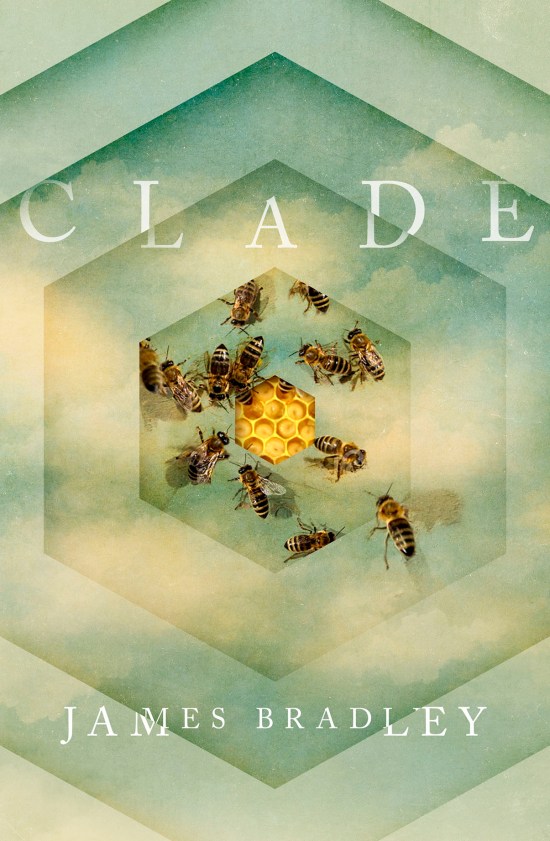
Clade cover and preorders!

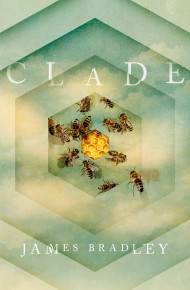
So it’s official. My new novel, Clade, will be released by Penguin in Australia on 28 January. As the blurb says, “A provocative, urgent novel about time, family and how a changing planet might change our lives, from the acclaimed author of The Resurrectionist and editor of The Penguin Book of the Ocean.”

You can feast your eyes on the very sexy cover below, and if you’d like to preorder a copy you can do so through Booktopia and Bookworld. I’ll pop up more links as it becomes more widely available, and post some more details soon. [Update: you can also preorder through Boomerang Books]

Very exciting!

Clade

Fearsome Magics

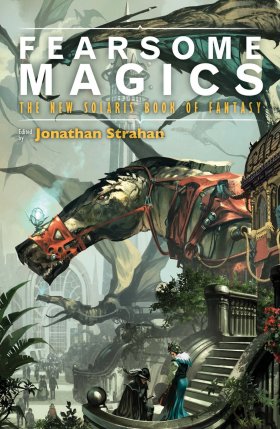
Fearsome MagicsJust a quick note to say I’ve got a story in editor extraordinaire Jonathan Strahan’s new anthology, Fearsome Magics, which is due out today. The follow-up to Jonathan’s World Fantasy Award-nominated Fearsome Journeys, it’s also the second in his New Solaris Book of Fantasy series.

I haven’t read all of it yet, but the bits I have are terrific. You can check out the full table of contents over at Coode Street, but there are new stories by Garth Nix, Karin Tidbeck, Kaaron Warren, Frances Hardinge, Christopher Rowe, Isobelle Carmody and a bunch of other fabulous people. I think – I hope – my story, ‘The Changeling’, is interesting: to my mind it’s less fantasy than a sort of anti-fantasy, although I’m not going to say more than that.

Australian readers who’d like to pick up a copy can check prices on Booko; otherwise you can check out your favourite independent bookseller, head to Amazon or Amazon UK, or pick up the ebook for iBooks, Google Books and Kobo. In the words of the immortal Molly Meldrum, ‘Do yourself a favour …”.

A new novel, a new story and a new anthology …

It’s been a while since I posted, and given how much I’ve got to get through over the next few months it may be a while before I get back to posting more regularly, but I wanted to announce a couple of things.

The first – and most important – is that Penguin will be publishing my new novel, Clade, in Australia in February next year, with other territories to follow. I’ve posted a few bits and pieces about it here and there, but it’s a book I’ve been thinking about and working on for a while now, and I think it’s pretty special. At some point I’ll pop up a proper description, but for now it’s probably enough to say it’s about time, and family and climate change, it moves from the very near future to the end of the 21st century, and that it’s got birds, floods, bees and aliens. I rather love it and I hope other people will as well.

Although I’m currently deep in the process of editing Clade, I’ve also spent the first half of the year working on a couple of other projects. The first is another new stand-alone novel, which is slowly taking shape; the second is a trilogy of new novels. I can’t talk much about either just yet, except to say that the first novel of the trilogy is written and the next two are underway, and I’m hoping I’ll have drafts of both the standalone novel and all three books in the trilogy by the end of next year.

In the meantime I’ve got a couple of other bibs and bobs around the place. One is a new story, ‘Skinsuit’, which you’ll find in Island Magazine 137. The full text of the magazine isn’t online but you can pick up the print version at good bookstores here in Australia or order print and digital versions from Island directly (while you’re there you might want to think about supporting the magazine and its investment in Australian writing and culture by subscribing). The issue also features fiction by Tegan Bennett Daylight, Angela Meyer and Sunil Badami, as well as non-fiction by Alison Croggon and Damon Young, so you’re guaranteed value for money.

The other is a piece in if:book Australia’s The N00BZ: New Adventures in Literature. Edited by Simon Groth, the collection is the culmination of a project that saw fifteen writers including attempt to stretch or challenge their writing practice in different ways. Sometimes the challenges were personal – Sean Williams participated in a sleep deprivation study, and charted the effects on his writing – sometimes, as with Benjamin Law’s decision to learn shorthand, they were technical, and sometimes, as with Jeff Sparrow’s exploration of the experience of not writing, they involved an examination of the author’s writing practice more generally. For me the challenge revolved around trying to develop and write the script for a comic, a project that was both about exploring my lifelong fascination with comics and beginning the process of learning to work in a new form.

It was a great project, and one I enjoyed being involved in immensely, and having read the contributions of the other writers I’m confident they enjoyed being involved in the process as much as I did. If you’d like a taster you can read my contribution online, but I really do recommend you check out the entire collection, which is currently available in digital form with the print version to follow in August.

Best Books 2013

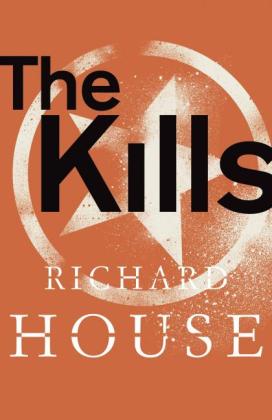
The KillsBecause it’s Christmas Eve and I’m sure everybody’s mind is focussed on matters literary I thought I’d take a moment to pull together a list of some of the books I’ve most enjoyed over the past twelve months. As usual I’ve already made a start in my contributions to the annual roundups in The Australian and The Sydney Morning Herald and The Age, which also have contributions from Delia Falconer, David Malouf, Geordie Williamson, Felicity Plunkett and a lot of other people: if you have a chance I really do recommend checking them out.
As I said in my list for The Australian, I don’t think there’s any doubt in my mind that the best new book I read this year was Richard House’s 1000 page metafictional thriller, The Kills, a book I’ve been proselytising about ever since I read it back in August. In a time when it’s occasionally difficult to make a case for the novel House’s book (or books, I suppose, since it’s really four short novels) is a reminder of exactly why fiction matters: smart, savage, politically ferocious, it’s also technically and formally audacious, pushing the boundaries of what novels are by incorporating video and sound into its structure.

I was also hugely impressed by Rachel Kushner’s dazzling study of art and politics, The Flamethrowers, a book that’s distinguished both by its intelligence and by the electric energy of its prose, Margaret Atwood’s occasionally frustrating but ferociously funny Maddaddam, Karen Joy Fowler’s characteristically smart, self-aware chimpanzee experiment novel, We Are All Completely Beside Ourselves, Philipp Meyer’s sprawling Texan saga, The Son and Patrick Flanery’s brilliant, angry and thrillingly unstable exploration of contemporary America, Fallen Land.

Another book I liked very much but which seemed to receive less attention that I would have expected was Julian Barnes’ Levels of Life. Although I’m a big admirer of Barnes I was a bit underwhelmed by The Sense of an Ending. But Levels of Life is a remarkable book, exhibiting both extraordinary control and a palpable sense of the raw, unprocessed (and largely unprocessable) nature of grief.

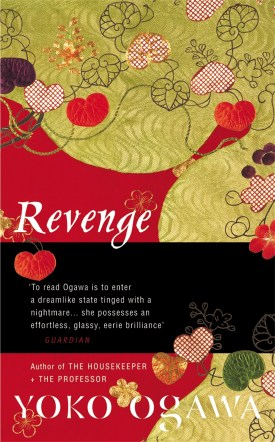
RevengeMeg Wolitzer’s The Interestings is another book that seems to have found a while to attract the attention it deserves, so it’s pleasing to see it turning up on a number of best of the year lists. Warm, capacious and very smart about the nature of friendship and the way age and success alters the dynamics of relationships, it’s also one of the most consistently enjoyable things I’ve read this year. And while I suspect it slipped under a lot of people’s radar, I loved Yoko Ogawa’s splendidly sinister matryoshka doll of a collection, Revenge.
There are also a couple of books I came to late, but which blew me away. The first is A Death in the Family, the first part of Karl Ove Knausgaard’s epic six-volume autobiographical fiction, My Struggle. I’ve yet to read the second, A Man in Love, which was released in an English translation earlier this year, but I was mesmerised by A Death in the Family. The Sydney Review of Books has just published a brilliant review of the two of them by editor James Ley; if you only read one piece about Knausgaard it’s the one to read, not least because it’s very articulate about the reflexiveness of Knausgaard’s project, and about the Proustian edge to the books, which seems to me to have been mostly misunderstood. I suspect a lot of the impact of A Death in the Family is due to the power of the final third, and its unflinching depiction of the narrator’s father’s death of alcoholism and its aftermath, but the book is also fascinating for the way it explores the tension between mimesis and banality.

The other book I came to late was the late Ian MacDonald’s thrilling study of The Beatles, Revolution in the Head, which I read alongside Pete Doggett’s whip-smart account of the lead up to and aftermath of their breakup, You Never Give Me Your Money and Tune In, the first volume of Mark Lewisohn’s huge but often fascinating biography of the band and its members, All These Years. While the others are all good, MacDonald’s book is hands-down the best book of pop music criticism I’ve ever read, although it’s given a run for its money by one of the other standout books I read this year, Bob Stanley (late of pop group, Saint Etienne)’s endlessly absorbing, occasionally problematic and constantly delightful history of pop, Yeah Yeah Yeah. I want to write something longer about Yeah Yeah Yeah at some point: for now I’ll just say that while Stanley lacks MacDonald’s deep critical intelligence he’s never less than engaging and his command of his extraordinarily diverse material is remarkable, and like many such works my arguments with it only added to the pleasure of reading it.

Caspar HendersonI have to confess I didn’t read as much Australian fiction as I should have this year, but of the things I did read a couple of books really stood out. One was Tim Winton’s Eyrie, a book that in its portrait of the contradictions underlying the West Australian boom was more explicitly engaged with contemporary Australia than a lot of Winton’s fiction, but the real standout was Richard Flanagan’s The Narrow Road to the Deep North. Flanagan seems to have spent most of his career looking for a way to marry his family history to the national narrative; in The Narrow Road to the Deep North he’s done just that, with remarkable results.
On the genre side of things I very much enjoyed Neil Gaiman’s The Ocean at the End of the Lane, Graham Joyce’s slyly unpredictable follow-up to the wonderful Some Kind of Fairy Tale, The Year of the Ladybird, and Ann Leckie’s terrific debut, Ancillary Justice, as well as Paul McAuley’s final Quiet War novel, Evening’s Empires and Madeline Ashby’s queasily acute exploration of the line between human and Other, iD, but I think the thing I enjoyed most was Guy Gavriel Kay’s gorgeous, allusive sequel to Under Heaven, River of Stars. All Kay’s books are terrific but I suspect River of Stars is the best thing he’s written to date.

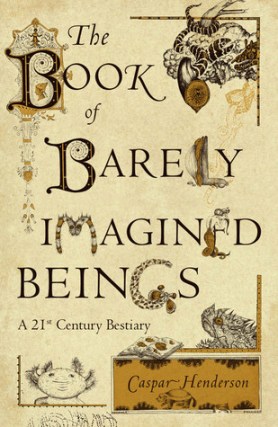
Of the non-fiction I read this year the best thing was Caspar Henderson’s prismatic exploration of our ways of thinking about animals, Nature and ourselves, The Book of Barely Imagined Beings, but I was also dazzled by Mark Cocker and David Tipling’s astonishingly beautiful compendium of bird lore, Birds and People. I admired Cocker’s last book, Crow Country, very much, but Birds and People is a much more singular creation, and, interestingly, one that has more than a few resonances with The Book of Barely Imagined Beings. Other non-fiction books I enjoyed include Tim Dee’s deeply disquieting study of four spaces, Four Fields, Philip Hoare’s peripatetic exploration of the ocean and its meanings, The Sea Inside, psychiatrist Stephen Grosz’s wonderfully humane and psychologically sophisticated The Examined Life and John Ogden’s magnificent study of Sydney’s southern beaches, Saltwater People of the Fatal Shore (if you’ve got a moment the interview with Ogden on the ABC’s Late Night Live is well worth a listen).

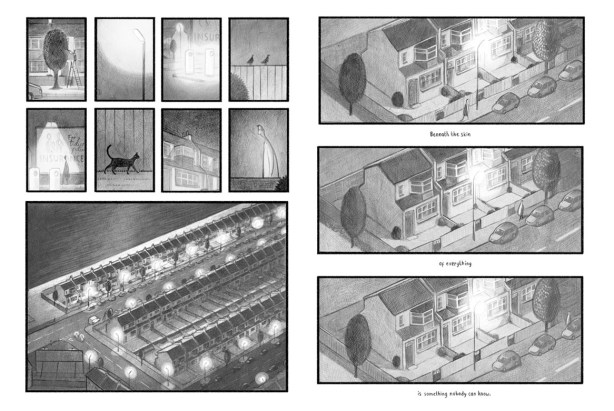
And last, but not least, a book I came to late but loved quite immoderately, Stephen Collins’ delightfully weird contemporary fable, The Gigantic Beard That Was Evil. As I said in my piece for The Australian on the weekend, even if you don’t normally read comics please take the time to track one down; you won’t be sorry.

And finally my best wishes to all of you for the holiday season: I hope you’ve had a great year and the twelve months ahead are full of life, love and all good things.

Stephen Collins, The Gigantic Beard That Was Evil

Stephen Collins, The Gigantic Beard That Was Evil

Best Australian Stories 2013

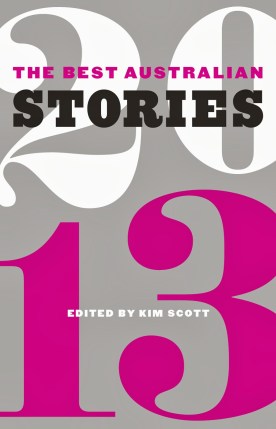
Best Stories 2013Just a quick note to say how delighted I am that my story, ‘Solstice’, has been selected for Best Australian Stories 2013. Originally published as part of The Big Issue’s Fiction Issue, it’s also the first part of my new novel, Clade, which will, with a bit of luck, be published later next year.
My copy of the collection only turned up in the mail an hour or so ago, so I haven’t had a chance to read it yet. But this year’s collection, which was edited by two-time Miles Franklin-winner, Kim Scott, and includes stories by Kalinda Ashton, Tony Birch, Georgia Blain, Tegan Bennett Daylight, Ashley Hay, Andy Kissane, Wayne Macauley, Ryan O’Neill and Favel Parrett to name just a few, looks particularly impressive.

There’s a full list of contributors on the Black Inc website. Alternatively you’ll find copies at any decent bricks and mortar or online bookstore. I’m not sure if the electronic versions are available internationally, but if you’d rather go electronic it’s available for Kindle, KoboGoogle Play and iBooks.

And while I’m here, I should mention how pleased I was a little while back to see my Rapunzel novelette, Beauty’s Sister making the Recommended Reading List for The Year’s Best Australian Fantasy and Horror 2012, edited by Liz Grzyb and Talie Helene. The full list, which includes works by writers including Joanne Anderton, Margo Lanagan, Jason Nahrung and Kaaron Warren is available on the Ticonderoga website and is well worth a look.

World War Z and the River of the Dead

World War Z

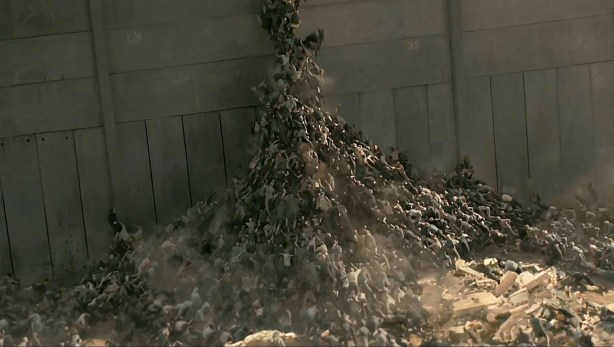
The other night I watched World War Z (which I didn’t hate, although that’s another story) and in the course of watching it I was struck by a couple of things. The first is the fact that the fast zombies actually aren’t as scary as the slow, shuffling ones on The Walking Dead, which is interesting, because it suggests to me that as with John Wyndham’s triffids, the scariness of zombies is more about their inexorability than their savagery (although even as I say that I’m reminded of how scary the fast zombies are in 28 Days Later and of the fact that some the scariest moments in The Walking Dead are those in which we glimpse walkers which seem to retain some intelligence).

But I was also very struck by the two scenes in which the zombies pass around people in the streets of Jerusalem, parting, as Brad Pitt’s character puts it in a moment of surprising poetry, like a stream about a stone. We’re meant to notice it because it’s a plot point, but it’s a powerful image, and interestingly one that’s reiterated in the film’s use of aerial shots to capture the cataracts of zombies pouring through the streets of Manhattan and Jerusalem. Think, for instance, of the scenes of the great tide of walkers gathering and moving along the roads in the final episodes of Season 3 of The Walking Dead, or more potently, the way the motifs of rivers, oceans and tides recur in Colson Whitehead’s Zone One (a book which continues to haunt me, two years later), not just in the final, very moving descriptions of the dead flowing through the streets of New York, but in what remains for me the book’s most ineradicable moments, that of the stream of the dead moving along the road below the window of the toy shop in which two of the characters are holed up.

There is, I suspect, something significant in the way these images of water, of flows and tides and streams recur, because they’re all images that emphasise the way becoming one of the dead is to be submerged, subsumed, one’s individuality, history, volition washed away.

Exactly why it’s such a potent image is a complex question. On his blog a while back M. John Harrison argued that the appeal of zombies lies in their blank otherness, the fact that we can kill them without compunction. I think he’s partly right (let’s not lose sight of the fact The Walking Dead is basically a Western), but I’d suggest the appeal of them lies less in the fact we can kill them than in the way they speak to our own anxieties about loss, about being swept away. I’ve written before about the way our fantasies of apocalypse recur and mutate, but when you get down to it the real power of zombie films isn’t in the visceral charge of the chasing and the biting, or even in the way they speak to survivalist fantasies, but in their evocation of an empty Earth, the same image that underpins science fiction from Wells’ The Time Machine to George R. Stewart’s Earth Abides and Margaret Atwood’s Maddaddam trilogy (the final instalment of which I reviewed recently and keep meaning to write more about). They’re not about fantasies of power but fantasies of powerlessness and anxieties of decline (as I’ve suggested before, I suspect they’re also about the anxieties of empire, but that’s a story for another day).

Nor, I suspect, is it coincidental that they speak to the other ways water pervades our cultural imagination. Isn’t the image of water parting, of the way it washes us clean, also what we seek to access when we wash for prayer, when we wash away our sins in baptism? How can we see people stand inviolate amidst a river of death and not be struck by the way their survival invokes that idea in strangely altered form? Or by the fact that the river lies at the heart of our culture’s conception of time, and therefore the passing away of things? Or that these streams of the dead are themselves echoes of the River Lethe? For in all we feel the way time bears us up and on, sweeping everything before it.

Coode Street and Me

the-coode-street-podcastA little after the fact, but if you get a chance you might want to check out Episode 154 of the Coode Street Podcast, which features me chatting with Jonathan Strahan and Gary K. Wolfe about subjects ranging from Neil Gaiman’s The Ocean at the End of the Lane and Paul McAuley’s Quiet War series to Margaret Atwood, Tolkien and the future of science fiction.

I’m a big fan of Coode Street, which I think is necessary listening for anybody interested in science fiction or fantasy, so it was great fun to be a part of it. You can download the episode from Podbean or from iTunes.

If you’re interested I’d also very much recommend taking the time to check out M. John Harrison’s recent appearance on the show (available via Podbean and iTunes), in which he demonstrates he’s exactly as brilliant in person as on the page, and the conversations with Graham Joyce (whose new book, The Year of the Ladybird, is a delight (again, Podbean, iTunes)) and Ursula Le Guin (Podbean) from a while back.

Brisbane Writers Festival

brisbane writers festivalJust a quick note to say I’ll be appearing at this year’s Brisbane Writers Festival, which runs from Tuesday 3 September to Monday 9 September.
I’m on three panels. The first, Fables and Folktales, also features Kate Forsyth (who just wrote a lovely review of Beauty’s Sister), Donna Hancox and Angela Slatter, and is fairly self-explanatory. The second, A Sense of Wonder, which also features Ashley Hay and Bianca Nogrady, is about science and communication, and the third, Future Imperfect, which also features Sean Williams and Antony Funnell, is about science fiction and the future. Fables and Folktales is at 2:30pm on Saturday 7 September, A Sense of Wonder is at 4:00pm on Saturday 7 September and Future Imperfect is at 2:30pm on Sunday 8 September.

I’m really excited about the panels and about the Festival in general, which seems to have gone out of its way to develop a program that isn’t ashamed to schedule literary writers like Philip Meyer and Ruth Ozeki alongside speculative and comic writers like Matt Fraction (writer of the brilliant, brilliant Hawkeye), Dylan Horrocks and Marjorie M. Liu. The latter are all appearing as part of the Well Drawn event on Sunday 8 September, and I’m very much looking forward to catching their sessions.

Information on the Festival and details of all events are available on the BWF website. More information about my sessions and ticketing is available on my profile page.

Charles Dickens as Morrissey

This is completely fabulous, especially if you’re a Dickens tragic like me.

And once you’ve stopped giggling, this piece about literary fakery and the strange story of the time Dickens didn’t meet Dostoyevsky is very worth a read.

Recent Reviewage

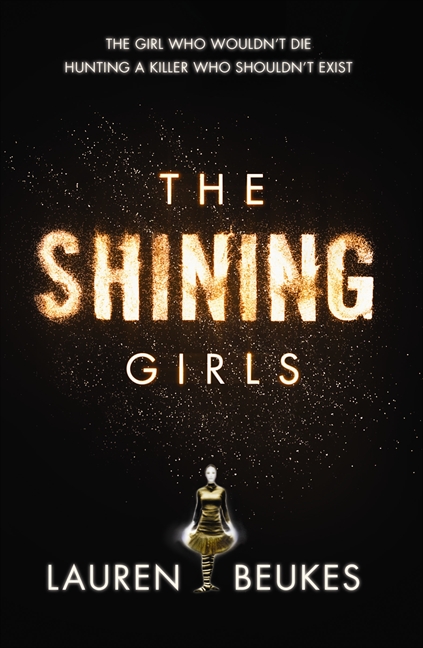
Shining GirlsDeep in the final stages of the second draft of my new novel, so no time to post, but thought I might link to a few recent reviews. First up I’ve got a long piece on Patrick Ness’ The Crane Wife in the Sydney Review of Books, in which I talk a little bit about about folk tales and the way contemporary writers tend to (mis)read them. It was a fun piece to write and I’m really pleased to be a part of the SRB, which – much to the credit of its editor, James Ley – seems to have come into the world pretty much fully formed, delivering one fantastic piece after another.

Over in today’s Weekend Australian I’ve got a piece on Lauren Beukes’ science fiction-inflected riff on the serial killer novel, The Shining Girls, and going back a few weeks, a longish piece on Jami Attenberg’s The Middlesteins and Michael Kimball’s Big Ray, both of which feature obese characters. And if you’re interested you can also check out my reviews of Ron Rash’s Nothing Gold Can Stay and Sean Howe’s excellent and extremely entertaining history of Marvel Comics, Marvel Comics: The Untold Story.

I’ve got several more pieces due out over the next few weeks, as well as a story I’m really pleased with, so will link to them as they appear.

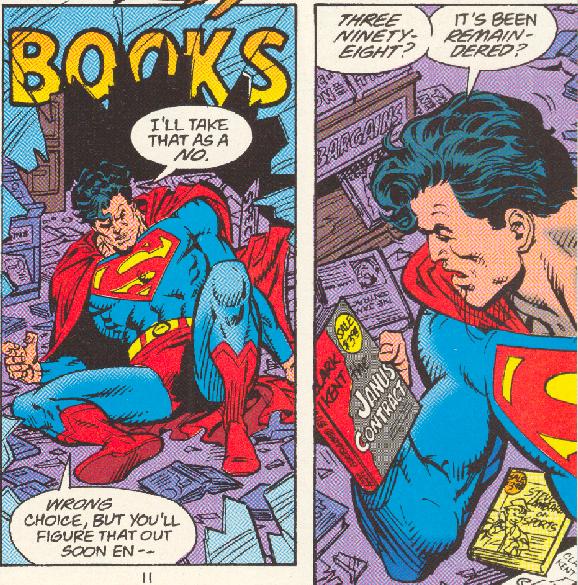
Even Superman gets remaindered

Superman remainder