Skip to content

Posts from the ‘Books’ Category

When Giants Walked The Earth

Saturday’s Guardian has a long piece by broadcaster Mark Lawson about Capturing America, a new BBC Radio 4 series on the history of American literature. Judging by the article the series will be well worth checking out, but in the meantime the BBC have posted extended versions of the interviews on which the series is based on their website. I’ve only managed to listen to the Marilynne Robinson interview thus far, but there are more than twenty others there, ranging from Stephen King to John Updike and Don Delillo (whose new novel, Point Omega, was reviewed in Saturday’s New York Times). If you’ve got a few minutes I highly recommend taking a look: it’s an amazing resource.

Break text

The Book of the Ocean

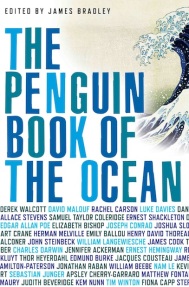
As I mentioned a while back, one of the projects I’ve been working on for a while now is an anthology of writing about the ocean for Penguin. It’s been a fascinating process, both because it’s given me a chance to revisit a number of books that have meant a great deal to me over the years and because it’s forced me to acquaint myself with many more I didn’t know, or only knew by reputation.

As the imbroglio over the Macquarie/PEN Anthology demonstrates, assembling anthologies is a perilous business. The bigger the subject, the more people have invested in it, the more likely you are to come in for a bucketing for mistaken emphases and omissions. And since the literature of the ocean is one of those subjects which is both vast and weighed down by its history it’s one that offers plenty of pitfalls.

As a result I decided early on that I had no desire to be either definitive or exhaustive. Instead my intention has been to assemble a relatively personal collection, which draws together a selection of writing I love. As someone whose life has been spent on the shores of the Southern and Pacific Oceans I also decided I wanted to put together a collection that spoke to and about that experience, rather than concentrating on the exploration of the northern seas that has traditionally preoccupied collections of this sort. In practice that’s meant letting go of a number of things I wanted to use, but it’s also helped give the collection a shape and cohesiveness it might not otherwise have had.

All of which brings me to the point of this post. The book’s now largely done, but I’ve still got space for a few more pieces, so I thought I might call upon all of you out there for suggestions. Is there anything you can think of that absolutely, definitely should be in a book of this sort? Or do you have ideas for things I might have overlooked? Because if you do I’d love to hear them.

A few caveats. I’m not looking for unpublished work or submissions. And while it doesn’t have to be Australian I’m very keen for a couple more pieces by Australians. Likewise, given the fact most of the pieces I’ve got so far are by men, I’m very interested in suggestions about work by women which might be suitable. And in the interests of preserving my sanity I’ve also limited the collection to writing in English, so no Jules Verne or Bachelard.

And please don’t assume I’m only after prose. Although the collection is predominantly prose it contains poetry, so suggestions for poems (especially Australian poems!) about the ocean are very welcome. Likewise I’m relaxed about whether it’s fiction or non-fiction, though since this is a book aimed at the general reader I’m not after academic writing, or monographs (which has, much to my regret, precluded a couple of idols of mine like Greg Dening I was hoping to include). What matters is that it feels urgent, and necessary, and – though obviously this isn’t something any of you are able to gauge – that it fit with what’s already in place.

I’ll look forward to your ideas.

Break text

Invasion of the Bodysnatchers

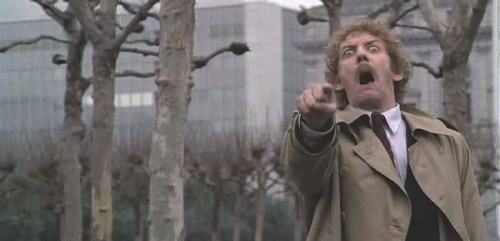
Donald Sutherland as Matthew in Philip Kaufman’s Invasion of the Bodysnatchers

I was reminded this morning (during a Twitter exchange about the iPad) of Philip Kaufman’s fantastic 1978 version of Invasion of the Bodysnatchers, a film which must rank as one of my all-time faves.

Kaufman’s wasn’t the first film based on Jack Finney’s 1955 novel, The Body Snatchers, nor was it the last. In fact there have now been four big-screen versions, beginning with Don Siegel’s classic 1956 version and ending with the lugubrious 2007 Nicole Kidman/Daniel Craig vehicle, The Invasion (if you’re interested in watching the set there’s also Abel Ferrara’s charmless 1993 version, a film whose chief distinction is that it’s mercifully short). But I think there’s little doubt it’s the best (with the original 1956 version running a close second).

While Kaufman would quickly go on to make his name as a director with films such as The Right Stuff and The Unbearable Lightness of Being, at the time of Invasion of the Bodysnatchers’ release he was mostly known for his low budget 1972 Jesse James film, The Great Northfield Minnesota Raid. Yet he nonetheless attracted a remarkable cast, headed up by Donald Sutherland and Brooke Adams as Matthew Bennell and Elizabeth Driscoll, Leonard Nimoy as self-help guru Dr David Kibner, and a then relatively unknown Jeff Goldblum as Jack Bellicec.

For those unfamiliar with the story, it’s devastatingly simple. Alien pods drift to earth, bringing plants which grow into copies of human beings, latching onto people as they sleep and absorbing their memories and appearance but none of their humanity. Gradually, but inexorably, they begin to infiltrate the population, replacing them, until the last vestiges of human individuality are wiped away.

A lot of the film’s pleasure lies in its understatedness. Set in a wintry San Francisco, amidst the already alien-looking buds of cropped plane trees and shot in a muted palette of browns and greys, it takes the anonymity of urban life and uses it to unsettling effect. As the characters go about their lives people push past them in the streets, their relentless movement and anonymity becoming increasingly disturbing; occasionally the steady, and increasingly deliberate movement of the passers-by is disturbed by a figure breaking and running, but for a long time the city might be any city, anywhere.

Pulling against this ordinariness Kaufman injects one horrible detail, which is the scream the replicants use to identify ordinary, unaffected humans, and which makes the film’s final, terrible denouement so chilling. I had hoped to provide a video of one of the characters screaming, but sadly the only one I could find is cut from close to the film’s end, and so I was reluctant to use it for fear of spoiling what is, surely, one of the great cinematic moments.

But there are other, wonderful details as well, not least the omnipresent garbage trucks, little emblems of ordinariness which take on a quite different meaning as the film progresses, and it becomes clear they are being used to dispose of the bodies of the replicated, or the bizarre use of bagpipes playing ‘Amazing Grace’.

Like John Wyndham’s The Day of the Triffids, which I’ve written about on this site before, part of what makes Invasion of the Bodysnatchers so chilling is the inexorability of it all. There is no plan, no strategy, there is just arrival and assimilation. Like the Borg in Star Trek, the pods seem to have no purpose but to absorb humanity, to make us like them.

But I suspect the real horror of the story in all its incarnations lies in the way it plays upon deepseated anxieties about absorption and loss of individuality. It’s not just that there’s something horrible and uncanny (in the full, Freudian sense of the word) about these emotionless copies, it’s that our anxieties about the erasure of individuality are so deep that any vehicle which triggers them can be redeployed over and over again in different contexts, bouncing off whatever fears are circulating in the culture. In the 1950s it was Communism (or its dark passenger, McCarthyism), the 1970s blank-faced hippies and Moonies, in the 2000s it was the notion of surveillance, of revealing oneself (a theme taken up to similar, but much more powerful effect in Richard Powers’ brilliant 2007 novel about brain damage and individuality in post-9/11 America, The Echo Maker): as a man advises the increasingly terrified and desperate Nicole Kidman on a train in The Invasion, “Don’t show any emotion, just look ahead. They can’t tell who you are if you don’t show any emotion”.

Break text

Lean on Pete

Is Richmond Fontaine frontman Willy Vlautin the greatest writer you’ve never heard of? Judging by what I’ve read of his forthcoming novel, Lean on Pete, the answer may well be yes. I’m planning a longer post about Willy and his books and music sometime soon, but in the meantime you might want to check out this lovely little video of him reading from Lean on Pete, with backing music by Richmond Fontaine. And if you like what you hear, I thoroughly recommend checking out his first two novels, The Motel Life and Northline at Amazon, Readings or Book Depository, or dropping past Richmond Fontaine’s Myspace page. Or you could just go the whole hog and and download a copy of Richmond Fontaine’s fantastic 2009 album, We Used To Think The Freeway Sounded Like a River via their Bandcamp page. I promise you won’t be disappointed.

Break text

Break text

Fair suck of the sav (or the revenge of the poo dinosaur)

"Grr, baby."

On Twitter the other day, Angela from Literary Minded pinged me for wrongly attributing her quip about this year’s male-dominated Miles Franklin shortlist being a sausagefest to Kerryn Goldsworthy.

Angela was joking, but I know where she’s coming from. Every writer’s got stories about having ideas pinched or misattributed. And though it happens less often than a lot of people think, it does happen. I keenly remember pitching a story to a TV show and being told it wasn’t for them, only to see the same story turn up a few eps later in the season, virtually unchanged.

For the most part though, I try not to get too hung up about these things. But a few years ago I had the very disconcerting experience of sitting down to read a new book of essays by a highly celebrated Australian writer, only to come across two pages that had been transcribed pretty much verbatim from a conversation I’d had with them at Adelaide Writers’ Week a year or 18 months previously.

It’s difficult to know what to do in this sort of situation, since squealing just makes you look over-sensitive, so I just copped it. But it meant that when my friend Delia Falconer called me a couple of weeks later to ask whether I wanted to be acknowledged as the source for a section in her novel, The Lost Thoughts of Soldiers, I told her I did. Definitely. No questions asked.

The catch was that the section in question was based on a story from my brother’s time working as a bouncer in an Adelaide pub. One night, at closing time, he went to check the toilets, and there on the cistern was a sleekly glistening brown dinosaur crafted from human shit. Disgusting, yes, but what was worse was the care its creator had lavished upon it, inserting little sticks for arms and match-heads for eyes. That and the fact that the tap in the toilet was broken, so whoever had made it had gone back out into the pub without washing their hands.

Of course in Delia’s hands the story gained a literary patina the original lacked, but all the same I was pleased when my copy of the novel arrived to see my name in black and white in the acknowledgements page. This time at least I’d kept control over my material.

Or so I thought. A couple of weeks later I went to the launch of the book, and quickly became aware people were looking at me strangely. At first I thought I was being paranoid, but then, during the speeches I realised what was going on. Having read the story and the acknowledgements people had put two and two together and decided it was me personally who’d made the dinosaur. Appalled at the notion I might have become known as some sort of demented coprophiliac, crafting little animals out of poo in between writing books, I told people they were wrong, it was a story my brother had told me, to which they smiled patronisingly, and said, ‘Oh right, whatever you say’.

But worse was to come. A few months later, when the book came out in the US, Delia did an interview about it which mentioned the story, and namechecked me as the source. which meant that for a long time afterwards if you googled my name and “poo dinosaur” you pulled up multiple hits (all gone now, I note with relief).

Oh yes, me and Auguste Rodin, artists of the living clay.

Break text

Why are all the best bloggers women?

Why are all the best bloggers women? What is it about the online space that allows women's voices to predominate?

Read more

Sunday ephemera

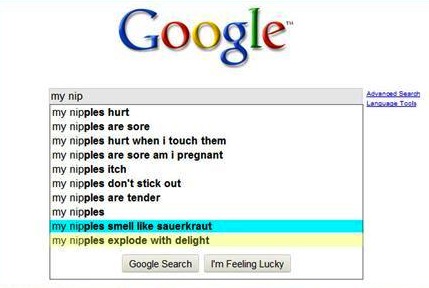
"my nipples smell like sauerkraut"

After a very rewarding morning washing a tub of Vaseline out of my three year-old’s hair (in case you’re interested shampoo is useless but talcum powder and then shampoo seems to have helped) I thought I’d chuck up a few links to liven up your Sunday.

The first is a delicious new site called Autocomplete Me, which I found via Spike (who found it via The Millions), which uses the Google’s autocomplete function as a device to peer into the murky depths of the collective subconscious. Having confessed before to the voyeuristic pleasures of eavesdropping on other people’s search terms it’s the sort of site I can’t help but enjoy, but I challenge anybody not to be both fascinated and bemused by the fragmentary glimpses of people’s private worlds the site throws up. Some are cute (“What do you feed a Yeti anyway?”), a lot are weird (“Cheese is the devil’s plaything”) and  some are just plain worrying (“I’ve just had a conversation with my cat in the shower about pancakes. We both like them a lot”).

I also thought in the light of my post a few weeks back about the death of the letter it might be worth pointing to Stacy Schiff’s wonderful review of Thomas Mallon’s equally wonderful-sounding Yours Ever: People and their Letters, a book written in the shadow of the disappearance of the form to which it is devoted. Schiff reads Mallon’s book as an elegy for a dying art, suggesting in closing:

“It is next to impossible to read these pages without mourning the whole apparatus of distance, without experiencing a deep and plangent longing for the airmail envelope, the sweetest shade of blue this side of a Tiffany box. Is it possible to sound crusty or confessional electronically? It is as if text and e-mail messages are of this world, a letter an attempt, however illusory, to transcend it. All of which adds tension and resonance to Mallon’s pages, already crackling with hesitations and vulnerabilities, obsessions and aspirations, with reminders of the lost art of literary telepathy, of the aching, attenuated rhythm of a written correspondence.”

To which, my suggestion that blogs and Twitter might, in a very small way, be replacing the letter notwithstanding, I can only say, ‘Amen’.

And finally, a little Sunday song. I know this video’s done the rounds a lot of times already, I know it’s just marketing, but it’s a wonderful thing all the same. Enjoy.

Break text

Break text

Audiofile’s Best Voices of 2009

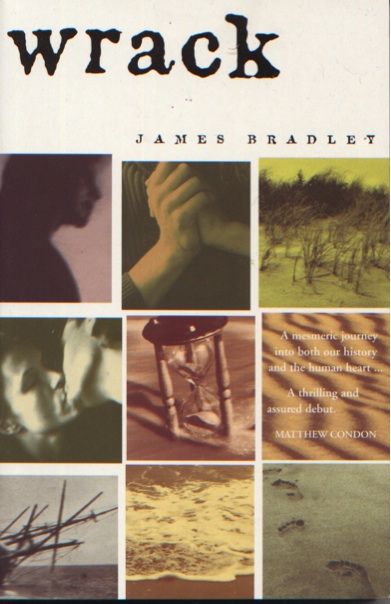
Just a quick note to say congratulations to Humphrey Bower for being chosen as one of US Audiofile Magazine’s Best Voices of 2009 for his work on the Audio Book of my first novel, Wrack, produced by Australia’s Bolinda Publishing. Perth-based Humphrey, who’s built quite a reputation in recent years for his work voicing novels by Sonya Hartnett, Gregory Roberts and Tim Winton, also works as an actor and director on stage and screen (anyone who was watching John Safran’s Race Relations over recent weeks may have caught him in episode 3 as Rabbi Packouz) and voiced the Audio Book of my third novel, The Resurrectionist, back in 2007 (if you’d like to know more about Humphrey there’s a bio at Audiofile).

I suspect the world of Audio Books isn’t one that intrudes into many people’s lives, but it’s an incredibly important industry. My grandmother began to lose her sight in her 70s, and was basically blind for most of the last decade of her life. I’m not sure she was a great reader before she lost her sight, but once it was gone she found great solace in Audio Books, even though, as the years went on, her hearing became worse and worse.

Looking back, I wish one of my books had been recorded in time for her to listen to it. I’m not sure she would have enjoyed it particularly, but I think it would have meant a lot to her, and it would certainly have meant a lot to me. So while I’m congratulating Humphrey, and Bolinda, I’d like to extend a larger thank you to the Audio Book industry in general for all their efforts. I don’t know much about the economics of it but I’m pretty certain publishing Audio Books in Australia faces all the same challenges the Australian publishing industry in general faces, only more so, which makes their work all the more praiseworthy.

If you’re interested you can listen to a sample of Humphrey’s recording of Wrack here, and of The Resurrectionist here (for what it’s worth I particularly like his work on Wrack).

Break text

Books of the Year

What were your favourite books of the year? I ask because a few weeks ago I spent half an hour pulling together a list of my books of the year for the December issue of Australian Book Review, which hit the shops this week. Writing these sorts of lists is always a slightly odd process, not least because it’s often difficult by November or December to remember what you read in January (though I’ve been using Facebook’s Virtual Bookshelf app to track my reading lately, which has helped a bit with that part of the process). But it also throws up other problems. Does a book count if it was published last year but you didn’t read it until this year? What happens if you had a dud year, and nothing much lit your fire? And, much as I hate to admit it, there’s always the need to look like I’m a slightly more serious person than I actually am.

Unfortunately ABR’s lists aren’t online, but if you all promise to run out and buy a copy I don’t think they’ll mind if I reveal my picks, which were (in no particular order) Hilary Mantel’s Wolf Hall, A.S. Byatt’s The Children’s Book, J.M. Coetzee’s Summertime and Marilynne Robinson’s Home.

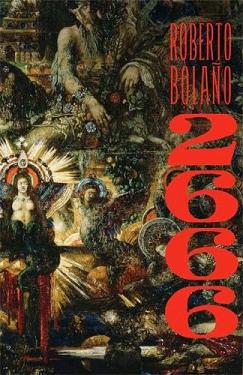
Looking at the list I’m painfully aware of how conservative it looks. But I’m also reminded that about two minutes after I sent it off, I realised I’d left off the two books which should, by rights, have headed the list, Roberto Bolano’s 2666 and Jonathan Littell’s opus, The Kindly Ones.

What interests me about both is that they’re both immense, and immensely flawed, yet simultaneously both are works that test the limits of what the novel can do. The Littell – ostensibly the more conventional of the two, and not dissimilar in its way from William Vollman’s similarly immense and semi-factional Europe Central – is, in a formal sense, a failure, unable to resolve the tension between the stories of the Oresteia which are invoked by its title, and the historical material in which it is grounded. Yet despite that it is a powerful and deeply disturbing work, not just because of its many graphic and oddly numbed scenes of violence and degradation, but because the textures of its narrator, Aue’s, consciousness are so repulsive, and, more importantly, because it demands, both by virtue of its extraordinary synthesis of historical and documentary sources, and its curiously uninflected observation of the monstrosities it depicts, that the reader look at the Holocaust anew.

At a formal level, 2666 is even more problematic than The Kindly Ones. Unfinished at the time of Bolano’s death in 1999, it has been translated with great fluidity and care by Natasha Wimmer. As Musil’s Man Without Qualities demonstrates, a novel does not need to be complete to be great, but 2666 is incomplete in a deeply indeterminate way. Pieced together from several manuscripts after Bolano’s death, its current incarnation was supposed, at least at the time of publication, to be a good approximation of Bolano’s intentions. But in the year or so since it was published more sections have appeared, suggesting that judgement might be premature.

Exactly where these new sections fit isn’t clear. Certainly the book as it stands seems complete, and it’s difficult to imagine how new sections could be incorporated into the whole. Yet like Bolano’s similarly dazzling The Savage Detectives, the novel celebrates a particular form of uncertainty and fascination with the outer limits of meaning by incorporating them into its fabric, qualities that suggest its form is mutable in a way the form of most novels most definitely is not.

What’s remarkable about both is that they question the very idea of the novel, in the case of The Kindly Ones by eliding the boundary between the novel and history, in the case of 2666 by creating a book which through its textual game-playing and multiplicity deliberately (or presumably deliberately) denies the reader the satisfactions of resolution and closure we normally associate with fiction.

I’m not sure how I managed to forget two books which so infuriated and delighted me when I was doing my list for ABR, but I think the fact I did should be a reminder of how provisional any list of the best books is. Because when I think about it, there are easily half a dozen more I could have included. Richard Holmes’ joyous The Age of Wonder, for instance, or Esther Woolfson’s wonderful Corvus. Or Robert Charles Wilson’s Spin. Or David Malouf’s Ransom. Or James Lasdun’s It’s Beginning to Hurt. The list goes on and one.

Which brings me back to the question I asked at the outset. What are the best things you’ve read this year? Are there books I should have read I haven’t? Any remarkable and unexpected discoveries? Can you confine yourself to just three, or five, or do you need to list more? Either way, I’d love to know.

Break text

The day after

Honey I Blew Up The Party?

I’m sure I’m not the only one who’s finding this morning a bit of a letdown after the madness of the last few days. Lunchtime already and no challenges for the Liberal leadership? No open treachery or attacks upon colleagues? Even the ABC’s no longer broadcasting live from Canberra. It’s a bit like the day after Christmas.

Anyway, if you’re after something to brighten up the emptiness of your post #spill day, you might want to hustle down to the shop and pick up the December issue of the Australian Literary Review, which is available free in today’s Australian. As usual some of the highlights are available online, not least Inga Clendinnen’s on Noel Pearson’s manifesto to rebuild indigenous communities, Peter Pierce on Thomas Keneally and Rowan Callick on criminal justice in China, as well as a long piece by yours truly about the Australian lit mag scene (obviously the real highlight of the issue) but a lot isn’t, so if you can lay your hands on a copy of the print edition, do.

Break text

Running Silent

Mars

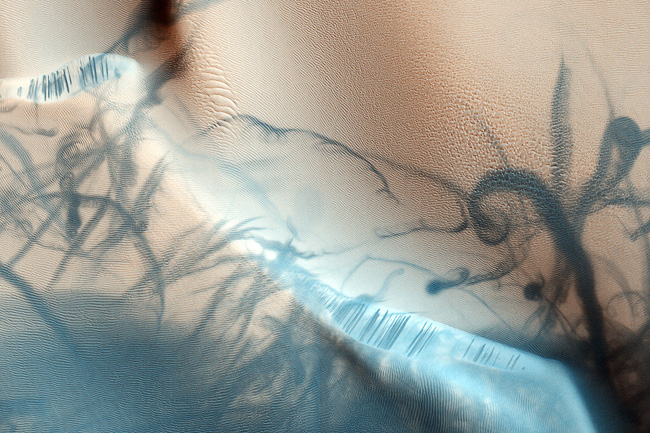
The trails of dust devils on the Martian surface

Just a quick note to say sorry things have been a bit quiet around here, and to apologise in advance for the fact it’s likely to stay that way for another couple of weeks. If it’s any excuse I’m in the midst of something of a perfect storm of work and personal commitments (we moved house last Monday, and my partner is about to give birth to our second child in the next couple of days. And I’m still working at the Uni and have a book to finish, as well as all my normal freelance work, so it really is all a bit silly at present). But with a bit of luck I’ll get a few things up in the next little bit and then get back to posting properly in December.

In the meantime I’ll offer you three little tidbits from the last week. The first is the fact that while I was listening to a lecture about Flannery O’Connor the other day I realized that since she was only 39 when she died in 1964, she’d only be 84 if she were still alive today, which is not that much older than Philip Roth (76), Cormac McCarthy (76), Shirley Hazzard (78) or David Malouf (75) all of whom are not just alive but at the peak of their powers. So if O’Connor hadn’t died young there’s a good chance she’d still be writing, and even if she wasn’t she would have been until very recently. Which is strange, at least to me, since in my mind she’s very much a writer of the mid-20th century, and not the 21st.

The second is this broadcast about intelligent bacteria from the ABC’s All in the Mind program, which is very definitely worth a listen. I’ve long been aware of evidence that colonies of bacteria seem to possess organizational abilities beyond what we’d expect of individual bacteria, but I had never run across the suggestion that they themselves might be intelligent, either collectively or individually, so the talk of nanobrains in the program was exciting stuff. Want a refocussing of your perspective on the place of humans in the universe? I reckon this might be a place to start.

And finally there’s this rather magnificent gallery of images of the Martian surface. You can see black basalt sanddunes, organically curling dust devil tracks and the tracks of the Rovers, and while I’m a bit of a Mars tragic, it’s wonderful, almost painfully beautiful stuff. If you want to see more you might want to check out The University of Arizona at Tucson’s High Resolution Imaging Science Experiment.

Break text

addthisTweet this

A birdless world

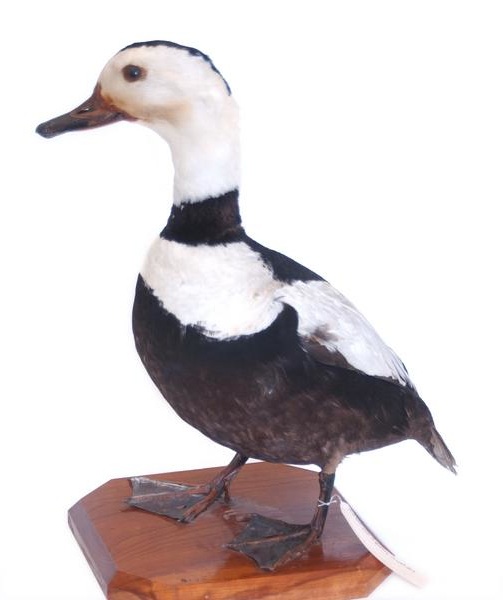
Labrador Duck

Labrador Duck, Museum of Zoology, University of Michigan, © Phil Myers

A couple of weeks ago I reviewed Glen Chilton’s new book about his quest to see every known specimen of the extinct Labrador Duck, The Curse of the Labrador Duck, for The Sydney Morning Herald. It’s an pleasingly oddball little book, and while I don’t think Chilton is interested enough in exploring the larger issues his story raises, there’s something incredibly sad about the spectacle of Chilton making his way from museum to museum to inspect the often misidentified skins and eggs that are all that remain of the species.

But the detail from the book that’s stayed with me is an aside in the middle about the fact that even when kept in perfect conditions in museums stuffed birds last about 500 years. Put them out on display, expose them to daylight and changes in temperature and they perish even more quickly. All of which means that once a species is gone, it’s not just the living bird that’s gone, but, in reasonably short order, all physical trace of them.

Obviously there’s an anthropocentrism at work here, an assumption that somehow our knowledge of a species has larger meaning, but in this context I don’t think it’s wholly misplaced. After all, most of the species that have vanished in the last few centuries, and certainly almost all of the thousands more that are likely to vanish in the near future have been wiped out by humans. But speaking as someone who’s been woken at 4:30am every morning for the last week by the primal whoops and screams of Koels, Black Cockatoos and Channel-Billed Cuckoos, it also seems difficult to reconcile the silence of vanished birds with their raucous, vital presence, or to avoid the feeling a world without them would be a much smaller, and less joyous place.

Break text

addthisTweet this

Parrot and Olivier in America

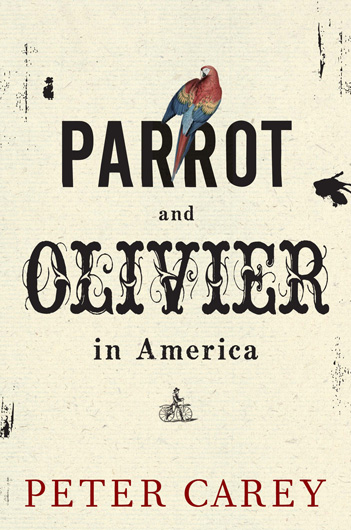
parrot-olivier-ausJust a quick note to say my review of Peter Carey’s new novel, Parrot and Olivier in America, is available on The Australian’s website.

It’s been interesting speaking to people who’ve read the piece, not least because it’s difficult to escape the feeling Carey’s burned through some of his goodwill in recent years. The reasons for that seem to be complex – certainly there’s a view the last few books have been a bit patchy – but I also suspect changing literary fashion has left his brand of big, rough-hewn post-modernity looking a little awkward in the contemporary landscape (I’d say something similar about Doctorow and Rushdie, though I have to say I think Carey’s streets ahead of either of them). Of course that’s always a problem for writers as distinctive as Carey, but I do hope it won’t stop readers seeking out this new one, not least because it’s his best book in years, and definitely up there with early masterpieces like Illywhacker. Nor am I alone in this judgement: in Saturday’s Sydney Morning Herald Andrew Reimer calls it a tour de force (not online), and Jennifer Byrne says something similar in Saturday’s Age.

And if you’re interested in reading more about Carey you might like to check out this piece I wrote for Meanjin a while back. It’s a bit long in the tooth these days but it’s got some good moments.

Break text

addthisTweet this

Work in progress

work-in-progressThe other day I mentioned a couple of events I was speaking at, one at Gertrude and Alice Bookshop in Bondi, the other at the National Library of Australia. At the time it slipped my mind that I’m also reading as part of the UTS Centre for New Writing’s Work in Progress event, next Wednesday 4 November at 6:00pm.

It’s should be a fun evening, not least because it’s deliberately designed as a showcase for unpublished work by established writers, and will feature Frank Moorhouse reading from his new novel, as well as readings by John Dale, Delia Falconer, Anthony Macris, Mandy Sayer, Gabrielle Carey, Martin Harrison, and others. In keeping with the spirit of the event I’m planning to give my new novel, Black Friday (which I was talking about here a week or two ago) its first airing.

Event details:

Date: Wednesday 4 Nov 2009, 6:00 PM – 8:00 PM
Location: The Loft, Broadway Campus, The University of Technology, Sydney
Contact: John.Dale@uts.edu.au
Admission: Free

Break text

addthisTweet this

Hang the DJ goes to America

To celebrate the US release of his delightfully idiosyncratic book of music lists, Hang the DJ, Angus Cargill is pulling together a series of songs and clips featuring some of his favourite American music. Today’s offering is ‘Roll on Arte’, by the incomparable Felice Brothers, and I’m sure tomorrow’s will be of an equal calibre, so if you’d like a tour of some bands and music you may not have heard before (and most definitely should) it might be worth keeping an eye on his site over the next week or two.

And if you haven’t got a copy of the book, track one down. It’s a wonderfully peculiar compilation of rants and raves about music from writers like DBC Pierre, Rick Moody and Ali Smith, and it’s not just a fascinating window into the musical likes and dislikes of a truly eclectic bunch of writers, it’s a lot of fun.

Break text

Break text

addthisTweet this