Skip to content

Posts from the ‘Books’ Category

Man Booker Prize 2010 Longlist Announced

The Longlist for this year’s Man Booker Prize was announced yesterday in London. It comprises 13 books, drawn from a field of 138. For Australians the big news is likely to be the inclusion of Christos Tsiolkas’ The Slap, which was released in the UK earlier this year, but the list also features some notable omissions, in particular Martin Amis’ The Pregnant Widow and Ian McEwan’s Solar.

The full list is:

Peter Carey, Parrot and Olivier in America
Emma Donoghue, Room
Helen Dunmore, The Betrayal
Damon Galgut, In a Strange Room
Howard Jacobson, The Finkler Question
Andrea Levy, The Long Song
Tom McCarthy, C
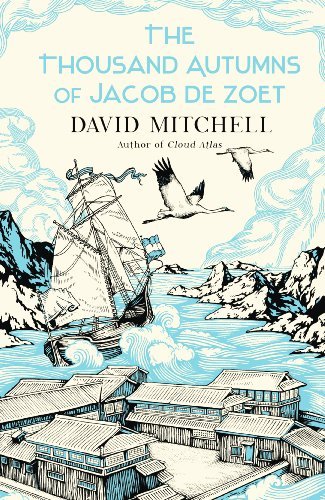
David Mitchell, The Thousand Autumns of Jacob de Zoet
Lisa Moore, February
Paul Murray, Skippy Dies
Rose Tremain, Trespass
Christos Tsiolkas, The Slap
Alan Warner, The Stars in the Bright Sky

I always find longlists fairly inscrutable documents, but this one seems more so than most, not least because I’ve only read three and a half of the books on it (I’m in the middle of Skippy Dies at present). The exclusion of both the Amis and the McEwan strikes me as highly commendable – I’ve made my views on the McEwan clear, and as my review for the ALR a while back probably made clear, I wasn’t a fan of the Amis either (I’m sorry, Martin, but as political analysis, “Women are cocks,” just doesn’t cut it in 2010) – but it has to be said that without them the list feels a little underpowered, despite the inclusion of repeat shortlistees and former winners Rose Tremain, Helen Dunmore and Howard Jacobson (obviously Peter Carey adds a bit of wattage, but less than he might once have). It’s possible the crowd-pleasing David Mitchell makes up for that, and the Murray deserves more attention than it’s had, but beyond a general feeling there seems to be a trend towards sprawling, energetic books dependent upon pastiche (Carey, Mitchell, Murray) on the one hand, a preference for energy over refinement (Carey, Tsiolkas) and a preference for established writers over new talent I’m going to have to hold back until I’ve read a few more of them.

As for the shortlist and the eventual winner? Despite my qualms about it, my money’s on the Mitchell, which has been reviewed with great excitement around the world, not least because of the longstanding view that Mitchell should have won in 2004. The Slap might well make it through as well, though that may just be my preference for the home team speaking. Despite the fact I’m enjoying it, I’m less sure about the Murray’s chances of making the shortlist, and I’d say the Carey was about 60/40 to make it through.

Please discuss . . .


New Voices Festival

Just a quick note to let those of you in Melbourne know I’ll be speaking this weekend at the New Voices Festival in Eltham. I’m giving the keynote at 10:00am, and will be speaking about blogging and the way new media is transforming the way we write and read. That session will be followed by a panel discussion with Damon Young, Penni Russon and Karen Andrews. Other guests include Jon Bauer and Catherine Cole. I think it should be a great day and I’m looking forward to it very much.

You can book by phone on 03 9439 8700 or by email. And a copy of the program can be downloaded here.

Break text

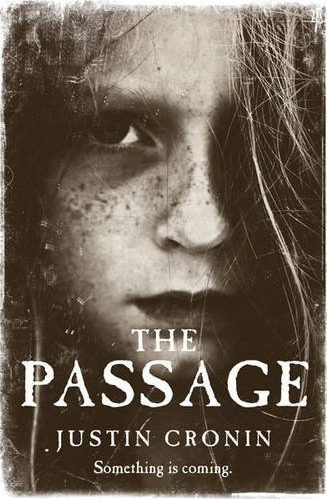
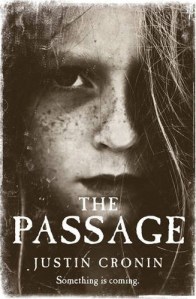
Dracula meets The Road in Justin Cronin’s The Passage

I’m always a little uncertain as to whether repurposing print reviews as blog posts really works, but I’m going to make an exception for my review of Justin Cronin’s The Passage, which appeared in this morning’s Sydney Morning Herald.

As books go it’s a pretty improbable one: the first part of a massive, millennia-spanning vampire saga, moving from America a few years from now to a distant future in which the vampire menace has (or just possibly has not) been defeated, with extended detours to a vampire-ravaged future that’s equal parts The Road and The Stand (what is it with these big books and the definite article?).

But despite a few wobbles and some fairly heavy-handed pump-priming here and there, it’s also one of the most entertaining things I’ve read in a while. All of which is a long-winded way of saying that it’s one of those “event” books that actually lies up to its hype, and well worth checking out.

If you’d like to know more you can visit the book’s website. Alternatively you might want to check out my piece, ‘Bloody Beauties: The Rise and Rise of Vampire Lit’, which appeared in The Australian Literary Review last year. And my review of The Passage is below:

Break text

The Passage
Justin Cronin

A while back I was asked on radio when I thought the vampire sensation would burn itself out. I laughed, and said I thought it must surely be past its peak if we were talking about it on Radio National. After all, there’s nothing more fatal to anything with even a whiff of cool than being embraced by the mainstream.

A little less than a year later and it seems I couldn’t have been more wrong. Post the near-universal “meh” that greeted Stephanie Meyer’s companion novella, The Short Second Life of Bree Tanner, the Twilight phenomenon may have degenerated into women’s magazine fantasies about Rob and Kirsten’s romantic entanglements, but elsewhere the undead are doing very nicely, thank you. On television True Blood’s third season premiered to ratings not seen on cable since The Sopranos, and while critical acclaim has eluded them, there are a host of True Blood/Twilight knockoffs in production. Likewise Dead in the Family, the most recent installment in The Southern Vampire Mysteries series that inspired True Blood sits at the top of the bestseller lists around the world.

And if they weren’t enough, now there’s Justin Cronin’s mammoth summer blockbuster, The Passage, the first part in a projected trilogy that was reportedly bought for a staggering US$3.75 million by Random House and is already being developed into a movie by Ridley Scott and his Gladiator co-writer, John Logan.

Not bad, especially for a man whose previous books, a critically-acclaimed novel and award-winning book of short stories were the sort of minutely-observed tales of quiet intensity set in Maine fishing camps that usually set an author up for a life of quiet obscurity teaching creative writing in a minor American university.

Like Stephen King’s The Stand, to which Cronin’s novel owes more than a little, The Passage inverts the usual notion of the vampire as something dreadful on the fringes of perception, and imagines a future where vampires rule. In King’s novel it is a bioweapon that causes the plague that writes humanity’s death warrant; in The Passage it’s a scientific project hoping to use a virus to cure disease and prolong life.

Thankfully, given its sheer size, the novel is broken up into twelve sections of varying length. The first few, which take place in America a little less than a decade from now, depict the events leading up to the release of the virus.

These first sections are undeniably creepy, conjuring a growing and almost palpable sense of unease as its elements are lined up: the doomed expedition to the jungle to recover the virus, the secretive project to develop a usable form, the group of death row inmates assembled to serve as subjects, the young girl co-opted by the program, the stirring darkness of the first, and most powerful of the subjects, Patient Zero, and his psychic subjugation of one of the reformed sex offenders recruited to work as attendants in the program.

Ironically, much of what makes these sections so unsettling is the way they embed the story in a larger, and more unsettling reality. Unlike the sections after the Fall, they inhabit a world on the fringes of contemporary society, a place where children are abused, and there is more than enough human evil and alienation without going looking for evil of a more supernatural bent.

These early sections might make a powerful novel in their own right, in particular the latter parts, after the virus is released, and Wolgast, the FBI Agent formerly charged with recruiting subjects for the program escapes with the girl, Amy, to the mountains to try and wait out the destruction in the cities and towns.

The narrative then jumps almost a hundred years into the future. The old world is gone, replaced by a barren, silent planet where isolated communities eke out a diminished existence behind high walls and powerful lights, trying and often failing to stay one step ahead of the Virals outside.

For those born into these societies, there is little to look forward to. Those who tend the machines know the end is coming when the last power runs out, and the Virals invade. But that changes when Amy, aged by only a few years despite the passage of more than nine decades, walks unarmed into one colony, and leads a small group of young men and women to set out to set off across a now-ruined landscape in search of a way of breaking the virals’ stranglehold on the Earth.

If much of the above sounds familiar it should, for in a very real sense The Passage is a Frankenstein’s Monster of a book, assembled from offcuts from sources ranging from The Stand to The X-Files, The Road and Dracula (to which it owes not just its vampires, or its use of documents such as diaries and emails to tell its story, but also its fascination with the tension between ancient, atavistic evil and modernity). Even the Virals themselves, with their rows of teeth, hypertrophic musculature and loping, apelike gait are a direct appropriation of Spiderman’s nemesis, Venom.

This sort of cannibalization has been part of the vampire tradition for almost as long as it has existed, each new entrant incorporating elements of its predecessors. Occasionally that process is intertextual, as in Elizabeth Kostova’s grinding pastiche of Dracula, The Historian, but more often these days it is ironic, the mythology internalized and deployed to comic or other effect, as it is when characters in films such as Fright Night or the more recent Lesbian Vampire Killers draw upon knowledge gleaned from movies to defeat vampires in “real” life.

Sadly this sense of play is seldom evident in The Passage. But in a way that hardly matters. For while Cronin’s control of his narrative occasionally falters, and there are moments where the writing strains towards a lyricism it cannot sustain, the book as a whole is never less than disgracefully, compulsively enjoyable. Indeed so addictive is its allure that my chief reaction, even after almost 800 close-set pages, was disappointment that the sequel is not already available.

Reproduced with the permission of The Sydney Morning Herald.


The Prime Minister’s Literary Awards

Just a quick note to let you know that the Prime Minister’s Literary Awards shortlists were announced in Melbourne this morning. The full shortlists are below, but before I get to them I’d make a few very quick observations.

First of all it’s worth noting that this is the first time awards have been offered for Children’s and Young Adult Fiction, and while I’m in no position to make judgements about the books included on those lists I’m pleased to see my old pal from Uni days (and one of the world’s nicest human beings) Andrew Joyner turn up in the children’s list for he and Ursula Dubosarsky’s The Terrible Plop (a book whose title still makes me smile every time I read it).

Then there are the notable omissions. I’m sure others will know their way round the other shortlists better than me, but on the Fiction shortlist, it’s interesting to note the judges have omitted both Peter Temple’s Truth, which won the Miles Franklin Award only a couple of weeks ago, and Peter Carey’s Parrot and Olivier in America.

On the flipside it’s interesting to see Deborah Forster’s The Book of Emmett has made this shortlist as well as the Miles Franklin shortlist, which is a pretty serious achievement for a first novel (and one which, to my shame, I still haven’t read).

It’s also refreshing to note how outward looking the Fiction shortlist is: whatever else you can say about the Miles there’s little doubt the “phase of Australian life” term drives an insularity that certainly isn’t evident in this list, which includes books set in Troy, South Africa, France and Moscow.

And finally, I’m delighted to see Coetzee’s Summertime has been included on the Fiction shortlist: neither its author nor his writing are easily accommodated within the national or literary conventions that underpin most Australian literary awards, but if there was a funnier, more intelligent or more audacious book published in Australia in recent years I don’t know what it is.

Anyway, the shortlists are:

Fiction
J. M. Coetzee, Summertime
Deborah Forster, The Book of Emmett
Alan Gould, The Lakewoman
Eva Hornung, Dog Boy
David Malouf, Ransom
Alex Miller, Lovesong
Alison Wong, As the Earth turns Silver


Non-fiction
Michael Cathcart, The Water Dreamers: The Remarkable History of Our Dry Continent
Will Elliott, Strange Places: A Memoir of Mental Illness
Grace Karskens, The Colony: A History of Early Sydney
John Keane, The Life and Death of Democracy
Mark Tredinnick, The Blue Plateau: A Landscape Memoir
Shirley Walker, The Ghost at the Wedding


Young adult fiction
Lucy Christopher, Stolen
Judith Clarke, The Winds of Heaven
Bill Condon, Confessions of a Liar, Thief and Failed Sex God
Cassandra Golds, The Museum of Mary Child
Phillip Gwynne, Swerve
David Metzenthen, Jarvis 24
Gabrielle Williams, Beatle meets Destiny


Children’s fiction
Kate Constable, Cicada Summer
Ursula Dubosarsky and Andrew Joyner (illustrator), The Terrible Plop
Andy Griffiths and Terry Denton (illustrator), Just Macbeth
Leigh Hobbs, Mr Chicken goes to Paris
Alison Lester, Running with the Horses
Lorraine Marwood, Star Jumps
Martine Murray and Sally Rippin (illustrator), Mannie and the Long Brave Day
Jen Storer, Tensy Farlow and the Home for Mislaid Children
Margaret Wild and Freya Blackwood (illustrator), Harry and Hopper

More information, including Judges’ comments, is available on the Prime Minister’s Literary Awards website.


SlushPile Hell

Whether you’ve been a slush pile reader or not, you need to read SlushPile Hell, the site that does for publishing what Regretsy did for the craft scene. I laughed so much I choked.

And if you’d like a slightly more serious take on the subject, I can recommend Laura Miller’s excellent piece about the often forgotten question of what the breakdown in traditional mechanisms for identifying and developing literary talent means for readers. After all, in a world where anybody can get published how are we to sort the wheat from the chaff? Are Facebook and Good Reads really going to take up the slack?

Thanks to Spike for the link.

Break text

How to make literature interesting again

In the words of Team America, ‘F*ck yeah!’.

Break text


Peter Temple wins Miles Franklin Award

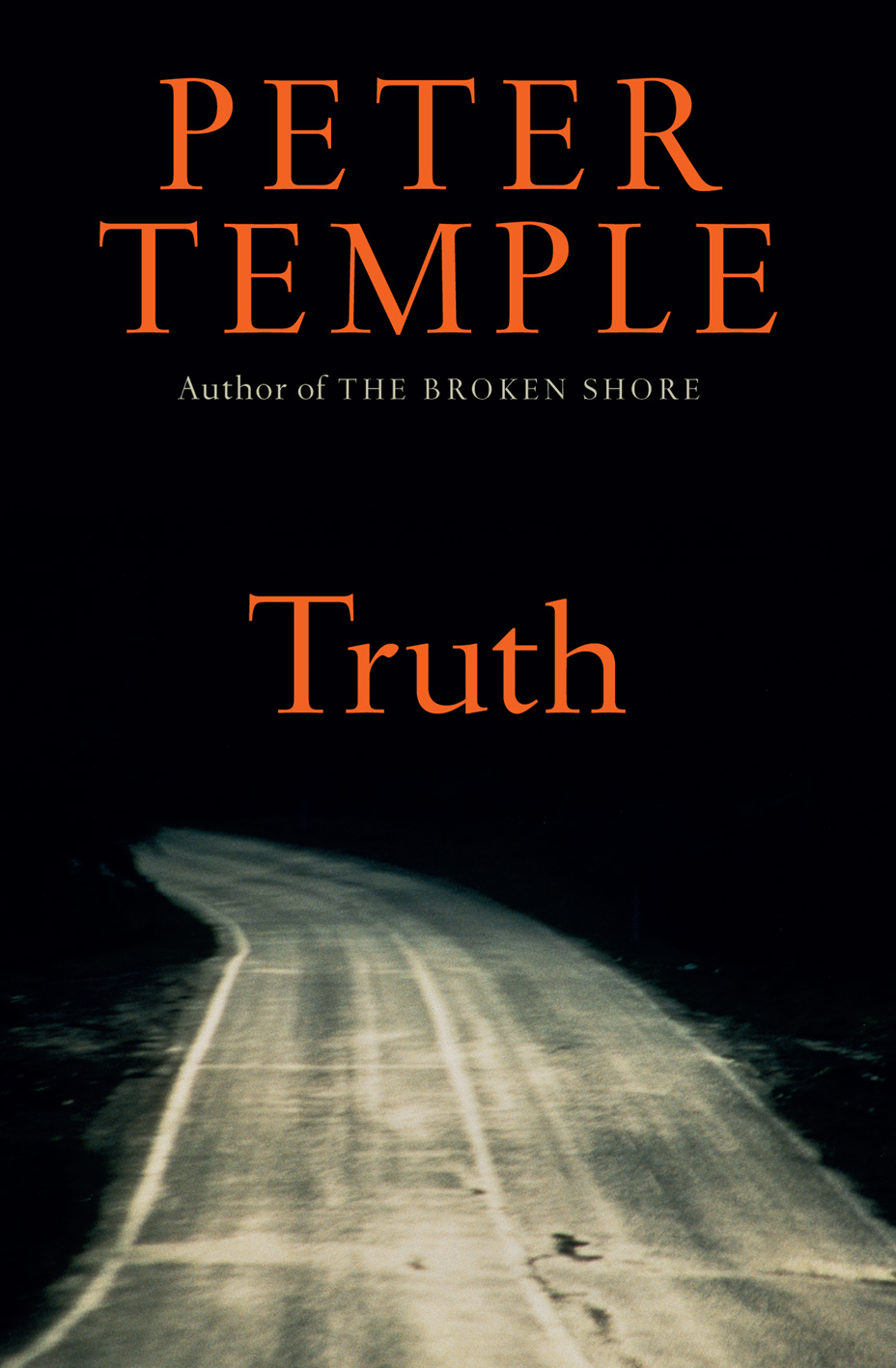
Some of you may have caught up with last night’s announcement that Peter Temple has won the 2010 Miles Franklin Award for his novel, Truth.

I want to post something about the award and its profile later this week, but for now I think it’s worth saying I think it’s an interesting decision. There’s no doubt Temple’s a truly gifted writer, and while I suspect his last novel, The Broken Shore, is probably marginally better, Truth is a very impressive piece of work (to my mind the unrelenting darkness is a bit overwhelming, and the highly stylized language actually gets in the way of Temple’s real strength, which is his uncanny ear not just for the Australian vernacular, but for the darkness below the surface of Australian society).

But simultaneously, Truth is, at its heart, a piece of genre fiction. Now before you all leap down my throat, let me point out that I don’t mean that as criticism, and neither am I suggesting that there’s a hierarchy at the pinnacle of which sits the literary novel. What I am saying is that it’s possible to recognise and define forms of writing that operate within particular conventions, and which are, to a greater or lesser extent, judged by their success within those conventions. Crime fiction is one such genre, as is SF. I’m generally resistant to the notion that literary fiction constitutes another but I recognise many people believe it does. These genres aren’t better or worse than literary fiction, nor are they absolute (in fact they’re actually highly fluid). Nor, despite the tendency to dismiss them as such, are they mere marketing devices. What they are is a kind of critical shorthand, a system that provides ways of understanding and appraising the success or otherwise of different kinds of novels.

Understood like this, I hope no-one will take it askance if I say that whatever else it is, Truth is basically a crime novel, and therefore a piece of genre fiction. That’s not to say it’s not an extremely good crime novel, but it’s still a crime novel, and operates within the conventions and constraints of the genre. And that, in turn, makes it an unusual choice for an award like the Miles Franklin, which has traditionally been reserved for literary fiction.

I suspect the decision is actually a good one, since it goes some way towards breaking down the apartheid between genre and literary fiction, but I also think it’s one that may turn out to be more problematic than the judges realise. That’s partly because it demands they begin making quite difficult choices between different sets of criteria. After all, the quality of a piece of genre fiction is at least partly a function of its success at fulfilling the expectations that define the genre, but is a book that meets those expectations as “good” as a literary novel that meets the expectations we place upon literary fiction by successfully taking risks with language and structure, or challenging the expectations of its readers in interesting ways?[1]

My point isn’t that one’s more significant, or more important than the other, simply that they’re very different sorts of questions, and balancing them is likely to present real challenges. After all, it’s not snobbery that’s seen the development of awards designed specifically for crime novels, but a recognition that crime fiction is a recognisable form, and deserves to be celebrated on its own terms.

But more deeply, opening the door to crime fiction also raises the question of why the judges haven’t opened the door to other genres. Does this decision mean they’ll be reading Greg Egan’s new novel, Zendegi, for next year’s award (assuming, of course, it features an Australian character)? Or Margo Lanagan’s new one (assuming the same thing)? Because surely if they’re prepared to admit crime novels they should be admitting SF and Fantasy? Or indeed Horror, and Romance.

One answer might be that Truth is just a really good novel, and stands comparison with the literary fiction that also made the shortlist. Certainly the judges are at pains to emphasise they think it possesses “all the ambiguity and moral sophistication of the most memorable literature”. And while I think that’s true, it might just as easily be read as an admission the judges are a little uneasy about the basis of their decision. And, more problematically, isn’t this assertion a way of tacitly suggesting “genre” sits somewhere lower on the hierarchy of quality than “literary” fiction, because what you’re really saying is that Truth isn’t just a crime novel (with the emphasis very much upon the “just”)?[2]

As I said above, my point here isn’t to detract from Temple’s win, or to suggest Truth isn’t a worthy winner. But I do think it’s worth registering that it’s a decision that throws up some difficult questions the judges will need to work through in years to come, and one that emphasises the way our criteria for literary quality, and the categories they give shape to, are changing. Is that a good thing? Probably. But it’s definitely a thing, and one that deserves to be recognised, and not hidden away behind shifty notions about Truth being more than “just” a crime novel.

Update: I’ve just noticed that in the time it’s taken me to write this post, Culture Mulcher’s whipped up something on exactly the same point. It’s the quick and the dead, obviously.

1 Just for the record I think Truth fulfils both these criteria.
2 More deeply, you’re also denying the fact that unlike the novels of a writer such as Richard Price, which really do exceed the genre we tacitly group them within, much of Truth’s power derives from its success as a crime novel, so to pretend its generic elements are irrelevant is to place a good part of what makes it a success beyond scrutiny.

Break text

Peter Carey an inane literary snob?

It’s not often a literary story gets above the fold on the front page, but yesterday Bryce Courtenay managed it by serving up an extended spray at Peter Carey in Crikey!. Beginning by observing, “Peter Carey is a perfect example of . . . inane literary snobbery,” Courtenay goes on to deride Carey’s sales figures (“[i]f I’m a popular writer then Peter Carey is an unpopular writer . . . [i]f I’m a best-selling writer than he’s a worst-selling writer”), his education (“my education is every bit as good as Peter’s, possibly better”), the “self-perpetuating club” of government-funded snobs who force students to read books they hate instead of books they love (presumably the latter is code for books by Bryce Courtenay), before really throwing down the gauntlet by declaring, “unequivocally I could write his kind of stuff”.

Unfortunately the article itself is only available to subscribers, though as Stephen Romei points out over at A Pair of Ragged Claws, if you’re desperate to read it in its entirety you can always take out a trial subscription for free. That said, I’m not sure the full piece adds a lot to what’s above.

Courtenay’s remarks were prompted by Carey’s argument in both his closing address to the Sydney Writers’ Festival and in his appearance on ABC 1’s Q&A that there is a connection to be made between declining educational standards, the rise of popular fiction, and the increasing triviality of public debate, vectors which, in combination, are eroding the foundations of civil society. Put simply, “[w]e are getting dumber every day, we are really literally forgetting how to read . . . consuming cultural junk . . . is completely destructive of democracy”.

Putting aside the rights and wrongs of Carey’s argument (for what it’s worth, I have sympathy with a lot of what he says, but the issues he’s touching upon are complex and deserve rather fuller attention than I’m able to give them now), what interests me about Courtenay’s spray (aside from how utterly self-serving it is) is that it’s part of a rather larger shift in the cultural landscape, and one which is connected to the sorts of issues I was discussing a while back in a post about the rise of genre.

Back then I was arguing that the retreat of the “literary” can be understood, at least in part, in terms of the loss of the critical vocabulary that enables us to make meaningful judgements about quality. That’s partly about changes in what and how students are taught, partly about a broader unease about imposing cultural judgements, and partly about the rise of the consumer/reader which is being driven by consumer capitalism and the manner in which the internet is breaking down traditional loci of cultural authority. In such a context it becomes very difficult to mount a defence to the argument that the real test of a book’s quality is its popularity.

You probably won’t be surprised to learn that I actually don’t think the test of a book’s quality is its popularity. Nor that I don’t think much of Courtenay’s books (and yes, I’ve read several of them). But I’m not sure that makes me a snob, and neither does it mean I’m riven with envy about the hordes of readers who throw themselves at the feet of the Bryce Courtenays of the world. Quite the reverse in fact: I have immense respect for many “popular” writers.

What it does mean is that I think there are many forms of literary expression and literary pleasure, and while I respect the skill and craft of a writer such as George Pelecanos or James Lee Burke, that doesn’t preclude me from dismissing Dan Brown (for instance) as crap. Nor (and I think this is the point of Carey’s Courtenay completely fails to engage with) does it stop me from believing that serious writing is important, both because it makes intellectual and moral demands of us, and because it enlarges our understanding of ourselves and the world we inhabit by doing so. I’m not sure I agree that the chatter of the new world, and the changes in our reading habits are necessarily or purely corrosive, but I do think the increasing antipathy to writing that forces us to think , and the celebration of writing that exists purely to entertain is. We all know the increasingly trivial and self-serving nature of the media is bad for public life, so why is literature any different? Because that is, in the end, what Courtenay and others like him are claiming.

Obviously I’m keen to hear your views on all of this, but I’d be remiss if I didn’t direct you to Tony Martin’s hilarious rant about the odious Lee Child’s performance on First Tuesday Book Club a few weeks back. You think Bryce is bad? Wait till you see Child in action.

Break text

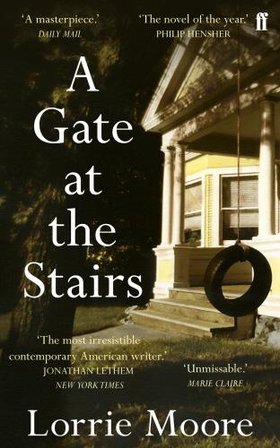
A Gate at the Stairs

I’ve spent the last day or so reading Lorrie Moore’s A Gate at the Stairs, a book I’ve been meaning to knock over for a while. Besides a few of the more-anthologized stories I’ve not read much Moore until now, so she’s come as something of a revelation, not least because of the effortlessness with which she allows her characters to be at once sad, ridiculous and painfully real, a combination which lends the book a luminosity and a wit that don’t often go together. But the line that had me laughing out loud this afternoon was this, awful, hopeless, hilarious out-take from a marriage:

“You emptied the top rack of the dishwasher but not the bottom, so the clean dishes have gotten all mixed up with the dirty ones – and now you want to have sex?”

How can one not love this woman?

Break text

Mark Mordue wins Pascall Prize

Mark Mordue

I’m not sure anything’s brightened my day up lately quite as much as the weekend’s news that Mark Mordue has been awarded the 2010 Pascall Prize for Critical Writing. Set up in 1988 in memory of the journalist Geraldine Pacall, the prize is Australia’s only major award for critical writing or reviewing, and is awarded in recognition of a significant contribution “to public appreciation, enjoyment and understanding of the area or areas of the arts in which he or she is involved”.

I know Mark a bit, so it’s difficult not to feel pleased for him at a personal level, especially since he’s one of the world’s good people. But it’s also exciting because I’ve long been an admirer of Mark’s writing. Mark is – in the best sense of the word – a Romantic. In a time when people are increasingly uneasy talking about the transformative power of art, Mark embraces it, both as a writer and a critic.

There’s something salutary about being reminded that books and films and music matter, in some deep sense, but Mark’s writing goes one step further, and makes itself an expression of the same belief in the transformative power of art.

I almost always find the results both fascinating and strangely intense. Whether Mark’s writing about Nick Cave, John Hillcoat’s adaptation of The Road, or growing up in Newcastle, he’s always also questing after a sort of transcendence in his own writing as well. And that, to my mind, is what makes him so exciting to read, since in so doing he puts himself at risk. Which is, in a way, the most important thing you can ask of a critic (or indeed any writer): that they be prepared to demand the same things of themselves they demand of their subjects.

Anyway, I’ll stop raving. My heartfelt congratulations to Mark, and kudos to the judges for a great choice. And if you’re not familiar with Mark’s writing I heartily recommend checking out his website (which looks like it’s been a bit dormant for a while). And if you haven’t read his wonderfully unconventional travel narrative/memoir, Dastgah: Diary of a Headtrip, try and lay your hands on a copy.

Break text

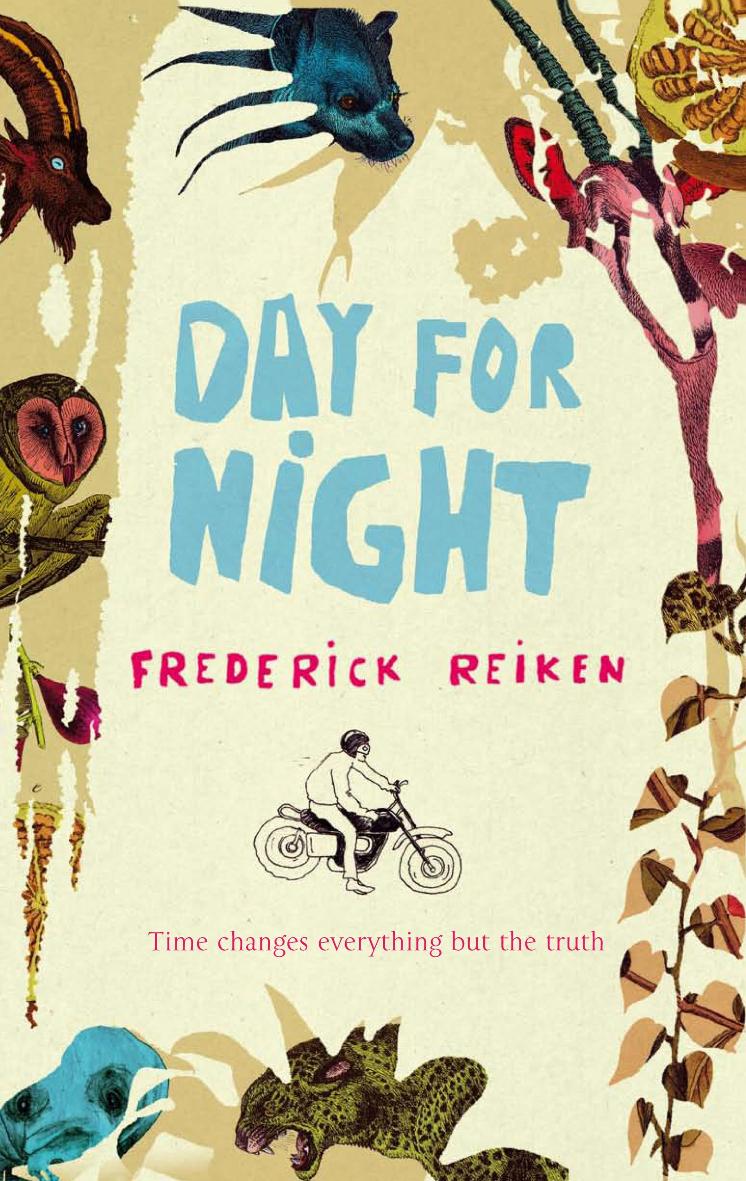
Frederick Reiken’s Day for Night

My apologies for the somewhat sporadic posting over the last couple of weeks, but I’ve just been completely overwhelmed by work and domestic responsibilities (sick children, impending delivery dates etc). I’m away for a chunk of this week so that’s unlikely to improve immediately but hopefully things will be back to normal soon.

In the meantime I thought I’d link to my review of Frederick Reiken’s Day for Night, which appeared in last Saturday’s Weekend Australia. I’ve just had a poke round online, and I’m not really clear whether it’s a book that’s got a big push behind it or not, or whether it’s likely to get much media attention, but even if it doesn’t, it’s worth a look. It’s not a perfect book (I could have done without the cult plotlines and the weird superhuman 1960s radical/angel/golem) and it’s quite an odd one in many ways, but because it’s so dependent upon the intricate web of coincidence and layered imagery that holds its disparate pieces together it’s also the sort of book which creeps up on you in subtle and unexpected ways.


Vale Peter Porter

I descended from Sydney Airport’s Arrivals Lounge last night to the sad news that Peter Porter has died aged 81. I only met Porter once, and briefly, at an awards dinner, where I was mostly struck by how out of place he seemed in that context: despite being one of the guests of honour, there was a diffidence about him that made it seem he would have been happier away from the press of the crowd.

I came to Porter’s actual writing relatively late; other than odd poems in anthologies I’d read almost nothing of his until 2001, when I bought a copy of Max is Missing. As you get older those moments when you realise you’ve discovered a major writer become less frequent, but they’re no less thrilling when they arrive. Porter’s poetry is often praised for its depth of learning, and its fascination with the metaphysical, but I’ve always thought its power lay as much in the way that depth of learning and philosophical insight is worn so lightly: for a poet of such range and vision Porter’s poetry has an extraordinary lightness of touch, a conversational poise that belies its seriousness. In this it naturally recalls Auden, but Porter was, in many ways, a more contemporary poet than Auden, as likely to draw inspiration from the television as Tacitus.

I’m sure in the coming days and weeks there will be many, many appraisals of his life and work, but for now there are terrific obituaries in the Telegraph and The Independent, and another, much shorter one in The Guardian, as well as brief mentions in the local media. You might also want to take a look at Sarah Crown’s profile of Porter, which was published in The Guardian last year.

For my part I’d just like to express my admiration for Porter and his work, by recalling his reminder in ‘Last Words’, that “Death/Has only one true rhyme,” a line that in its haunting simplicity captures something of the way a single line of Porter’s poetry could open worlds of possibility.

Update: Stephen Romei has set up a tributes page at A Pair of Ragged Claws, which already includes a lengthy and heartfelt contribution by Jaya Savige. If you knew Porter, or admired his poetry you might want to head over and leave a note.

Break text


Is that a turkey in your pocket or are you just pleased to see me?

Brush Turkey phone home?

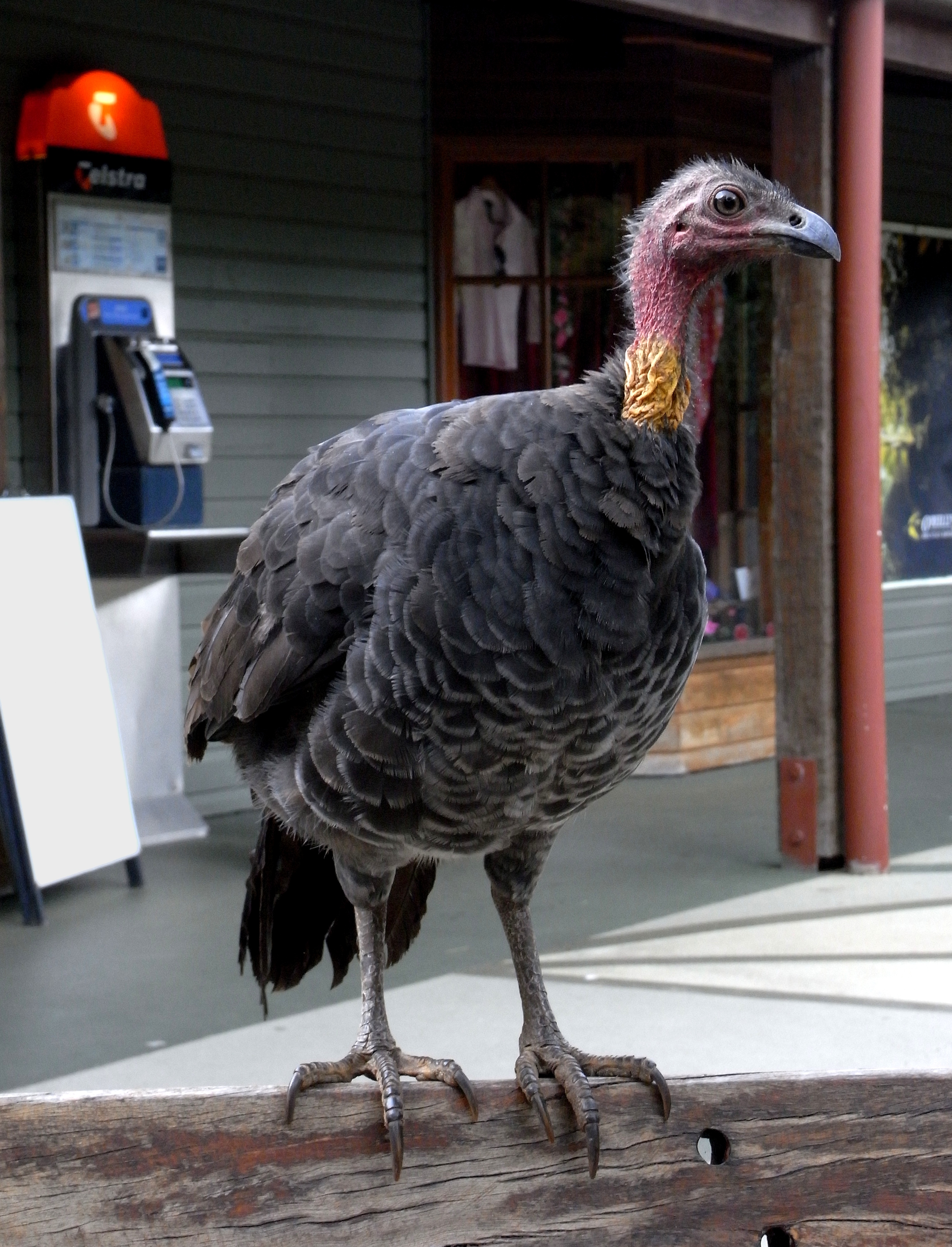
So, I’m driving through East Sydney at about 5:15 last night, on my way to pick my daughter up from childcare, when I look out the window and see a Brush Turkey trotting along the footpath. Not a bird that looked like a brush turkey, or some other random Megapode, but an honest-to-Betsy, full-grown, black and red Brush Turkey.

Now I have to confess that threw me a bit. Sydney’s blessed with an abundance of bird life, including a number of quite large birds (Black and Sulphur-Crested Cockatoos, Channel Billed Cuckoos, even the omnipresent Sacred Ibises) but a Brush Turkey? In the inner city? If nothing else Brush Turkeys are pretty much flightless, so it would have to cross the road on foot to get anywhere. And where on earth would it nest? (for those of you overseas, Brush Turkeys nest in huge (and I mean HUGE) mounds of leaves and sticks). Bizarre.

Pleasingly though, it reminded me of one of my favourite stories, which concerns the bird painter John Gould, and is to be found in Isabella Tree’s biography, The Bird Man. The story stems from Gould’s visit to Sydney in the late 1830s, a visit which saw Gould visit many of the local worthies, including one (who if memory serves was Alexander Macleay, one of the founders of the Australian Museum and the original owner of Elizabeth Bay House) who Gould was delighted to discover had a Brush Turkey nesting in his garden.

Gould spent some time observing the turkey and made some sketches of it, but the real treat comes later in a footnote by Tree, in which she notes (rather sardonically if I remember correctly) that despite its success on the day of Gould’s visit, the Brush Turkey later met with an unfortunate end, when it drowned attacking its own reflection in a bucket of water, a fate that suggests a degree of focus that’s not so much admirable as alarming.

Break text

Willy Vlautin, Lean on Pete and the literary song

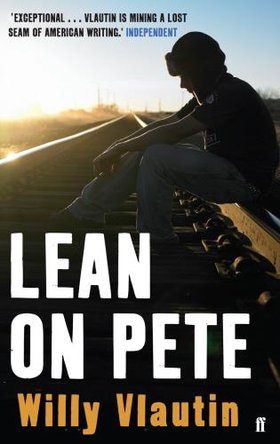
Some of you may remember me waxing lyrical about Willy Vlautin’s new novel, Lean on Pete, a few weeks back. At the time I was planning to write a rather longer post about it, and about Willy’s fiction more generally, but before that could happen I was asked to review it, which put paid to the post.

Anyway – the review was in this weekend’s Australian, and you can read it on their website, but if you want the potted version, the book’s an absolute gem: gentle, shocking, sad and hopeful all at once.

What’s particularly fascinating about the book to me is the fact that Vlautin’s skills as a songwriter so obviously underpin the success of the fiction. You often hear songwriters like Paul Kelly being celebrated as storytellers, but in fact the qualities that lend Kelly’s songs their particular magic are quite different to those that underpin fiction. Partly this is a question of scale: even relatively brief fictional forms such as the short story dwarf the lyrical component of most songs, allowing them a degree of complexity songs are denied. But it’s also about the relative simplicity of song lyrics: whereas fiction tends to use narrative as a thread to explore the interior lives of characters, and more particularly the tensions, contradictions and discontinuities, songs usually shy away from these qualities, preferring to communicate feeling in a more direct manner (if you’re interested, I talked a bit about more these questions last year, in my post about Don Walker’s memoir, Shots).

What’s interesting about Vlautin’s songs is that they are, in some deep sense, highly literary creations. Despite the relative simplicity of their lyrics, their effect is usually dependent upon the manner in which what is being said and what we understand are at odds with each other. In my review I mention ‘The Boyfriends’, from We Used To Think The Freeway Sounded Like A River, and its narrator’s anguished cry of ‘I ain’t like that’ upon realising the child of the woman he has picked up in a bar has been watching them having sex, but many of Vlautin’s songs rely upon this sort of irony. What makes songs like ‘The Boyfriends’ (or indeed songs such as ‘$87 And A Guilty Conscience That Gets Worse The Longer I Go’ or ‘I Fell Into Painting Houses In Phoenix, Arizona’) so powerful is the fragility of their narrators’ self belief, and Vlautin’s keen eye for the deceptions that sustain it, and more importantly, the moments at which that belief finally – and painfully – gives way.

Last time I looked, Vlautin was listed as one of the guests at this year’s Sydney Writers’ Festival, where, amongst other things, he’s being interviewed by my old pal, Richard Fidler, but you can hear him reading from Lean on Pete in the video before (and yes, I know I’ve posted it before). And if you’re interested in the music, you’ll find a live version of ‘The Boyfriends’ beneath it, together with a video for ‘Capsized’, one of my favourite songs from my favourite Richmond Fontaine album, Thirteen Cities. Enjoy.


Yet More Chaos

John Wyndham

In case you’re interested the ABC has posted audio of my Bookshow interview about John Wyndham’s “new” novel, Plan for Chaos.

As I say in the interview (and indeed in my post a while back) I don’t think the book’s much chop, but it’s not without interest, not least because of the way it prefigures many of the themes and ideas that animate Wyndham’s later work, and in particular The Day of the Triffids.

And I know I’ve mentioned it before, but if you have a moment do take the time to read David Ketterer’s fascinating introduction to the Liverpool University Press edition of the novel: I’m not sure I accept his larger thesis that Wyndham intended Plan for Chaos and The Day of the Triffids to be the first two parts in an uncompleted trilogy of novels, but the article offers a rich and fascinating portrait not just of the intensely private Wyndham’s personal life, but of the connections between that life and the larger world of his fiction, and is well worth reading in its own right.

The audio of the interview is available on the ABC website. You might also want to check out my article in The Australian about Wyndham from a few weeks back or my post about The Day of the Triffids and the differences between British and American visions of the apocalypse (which also appears in Miscellaneous Voices 1: Australian Blog Writing).

Break text